两斜率在线租赁问题是经典的在线租赁问题的一种自然的推广.基于在线租赁问题的研究分为离散时间和连续时间,鉴于已有文献对连续时间情况下两斜率在线租赁问题进行了讨论,本文研究离散时间情况下两斜率在线租赁问题.我们的讨论包括确定性竞争策略和随机性在线策略.关于确定性策略,一个竞争因数为2-[1+(s-1)a]/s的最优策略被给出.对于随机性策略,本文提出了风险均衡策略,并通过竞争分析的方法证明了该策略是唯一最优策略.最后,对两种策略的竞争性能做了分析和讨论.分析和讨论的结果表明:考虑两斜率能改善经典问题的竞争比,考虑离散性能比连续性提高决策效率.
现实租赁市场中,企业同时租赁多台设备的现象大量存在,但经营者面临的最大难题是如何对这多台设备进行在线租赁的组合优化,从而降低决策成本,而通货膨胀又进一步增加了决策难度.本文运用在线算法和竞争分析法建立多设备投资的风险控制策略,并分析通胀对决策的影响.首先在Karp经典模型上给出通胀因素下多设备投资的最优在线和离线策略;接着建立设备租赁在连续可分情形下的最优风险控制模型,进一步结合实际投资中设备必须以离散整数租赁的特点,对CR策略进行调整和优化,得到近似的CRJ策略,使得策略更符合实际投资活动.最后给出具体实例分析,结果显示,当物价指数逐渐增大时,最优决策日期相应提前,对应最优策略的竞争比也逐渐增大,进一步说明物价指数因素和多设备投资因素的引入对投资者的决策有着重要的影响,为多设备在线租赁问题的研究提供了新的解决思路.
This paper describes a kind of mixed non-linear Butterworth filter based on the detailed analysis of the Butterworth low pass filter and that of the Butterworth high pass filter,and also,experiments are executed separately using these three types of filter to verify the intuitive validity of them.Besides,the criterion of Signal-to-Noise Rate SNR and signal-to-noise improving factor R are implied in the experiments in which the images are mixed with Gaussian,salt pepper,speckle noises to compare the filtering effects of them from the view of statistics.The results show that the mixed non-linear Butterworth filter can depress the noise,maintain the details of the image,and it takes both the merits of Butterworth low-pass filter and high-pass filter,and also,the calculation is not complex,and therefore it turns out to be an active method to be realized.
Since 2008,as China's legal holidays adjusted for the two "big holiday" and five "small holiday",there have been lots of in-depth changes in consumers' perception,business marketing mode,market structure,holiday travel pattern,and so on.
This paper described an algorithm named DSUSAN(Decision Smallest Univalue Segment Assimilating Nucleus) for edge feature detection after checking and analyzing the defects of the approach SUSAN for edge and corner detection in the image processing area,and then the detection procedure was developed.After that,a comparison experiment on Matlab was made taking an original image and the same image with noises added.The method does not enlarge the calculation mass,and has the advantages of precise and high efficient detection,ease to realize the real-time operation,and good noise reduction ability.
An atom-centered protocol based method for surface sampling in grid space is proposed. Van der Waals, solvent-accessible and solvent-excluded surface can be generated in a unified framework. A spherical hash function is used to mark whether the points are inside a sphere, and the hash tables are used to record which spheres the surface points locate on. The proposed method can be modified to apply in the parallel computation directly, which is useful for molecular dynamics simulation, docking and surface comparison and so on. Our tests indicate that the proposed method is efficient and the generated surfaces are suitable for quantitative analysis and visualization.
In this paper, image inpainting based on single image is proposed, which is the problem of filling in the occluded or damaged regions of an image by the visible information from other part of the image. The key problems are how to convert the visible information in the image to consistence and to use available information to repair the target part. The first step of our method is to divide all images into different scene planar regions and to retrieve all regions from the projective distortions, so that the visible information can be directly used; then a new inpainting algorithm with a pyramid approach to sub-pixel image fusion based on mutual information is applied. The experiments show that the approach can repair the target image seamlessly. Our theory also develops the techniques of image fusion and makes it more practically.
We try to evaluate the sequential and non-sequential and flexible structural alignment methods on SCOP 1.71. Firstly, we compare the flexible method with rigid methods and compare the sequence order dependent methods with sequence order independent methods by two typical cases. Secondly, the performances of the above methods are evaluated using ten protein pairs which are considered as "hard to detect" similarities. Thirdly, we evaluate the methods by comparing the ROC curves based on their native score and geometric measure Qscore. Then we compare the methods directly using geometric match measure Qscore, which also allows the creation of a 'Best- of-All' method. The main conclusions are: (1) we find that the best alignments found by sequential methods are more consistent with the SCOP classification; (2) we show that ROC curves are of limited value and that their ranking of the methods is not consistent with the ranking implied by the quality of the alignments the methods find; (3) we also find that the alignments of flexible method and non-sequential methods are better than the corresponding alignments of rigid sequential method from the viewpoint of geometric superposition, and flexible method and non-sequential methods can find more cross-fold similarities.
A PDE (partial differential equation) based method, 3D active contour model, is presented to model the surface of protein structure. Instead of generating a single molecular surface, we create a series of surfaces associated with the atomic energy inside the protein, which describe different resolutions of molecular surface. Our results indicate that the surfaces we generated are suitable for shape analysis and visualization. So, when the solvent-accessible surface is not enough to represent the features of protein structure, the evolution surface sequence may be an alternative choice. Besides, if the initial surface is smooth enough, the generated surfaces will preserve this property partly, because the evolution of the surfaces is controlled by the PDE.
In this paper, a technique for the extraction of roads in a high resolution synthetic aperture radar (SAR) image is presented. And a three-step method is developed for the extraction of road network from space borne SAR image: the process of the feature points, road candidate detection and connection. Roads in a high resolution SAR image can be modeled as a homogeneous dark area bounded by two parallel boundaries. Dark areas, which represent the candidate positions for roads, are extracted from the image by a Gaussian probability iteration segmentation. Possible road candidates are further processed using the morphological operators. And the roads are accurately detected by Hough Transform, and the extraction of lines is achieved by searching the peak values in Hough Space. In this process, to detect roads more accurately, post-processing, including noisy dark regions removal and false roads removal is performed. At last, Road candidate connection is carried out hierarchically according to road established models. Finally, the main road network is established from the SAR image successfully. As an example, using the ERS-2SAR image data, automatic detection of main road network in Shanghai Pudong area is presented.
Baseline is very important for spaceborne interferometric SAR system design and data processing. In this paper, spatial baseline in spaceborne interferometric SAR is analyzed in details. The equations to determine the critical baseline and the optimal baseline are deduced, and the existence of an optimal baseline is demonstrated. Finally, the results of computer simulation are presented to testify the correctness of the analysis. The simulated results confirm the real parameters. The effects of some system's and geometric parameters on the critical baseline and the optimal baseline are discussed also.
It is well established that synthetic aperture radar (SAR) interferometry can be used to perform surface elevation mapping and change detection. This paper gives a technical description and performance analysis of the system, interferometric data processing flow as well as experimental results of the airborne X-band InSAR system, developed by East China Research Institute of Electronics Engineering. The system operates in X-band range and is configured as a dual-antennae cross-track interferometric SAR with main parameters: 9.6 GHz operating frequency, 200 MHZ bandwidth, 1.7 m baseline, 1 mtimes1 m ground resolution, and excelled 2-5 m height accuracy in mountain area. In this paper, the airborne X-band single-pass InSAR system was analyzed in details from the height of ambiguity and coherence. Finally, the processing results of the airborne X-band InSAR were presented to testify the good performance of the system.
The objective of this paper is the classification of textured materials unifying filter approach.Firstly,the filter bank is exploited to generate features,and the filter responses are described as the feature of texture.Secondly,the two classification approaches: the maximum weight dependence trees and the naive bayes classification are explored.Finally,the experiments demonstrated that the method of maximum weight dependence trees(MWDT) has a better result. And MWDT can be a powerful tool for texture classification.
Predicting protein function is one of the most challenging problems of the post-genomic era. The development of experimental methods for genome scale analysis of molecular interaction networks has provided new approaches to inferring protein function. There are various approaches available for deducing the function of proteins of unknown function using protein information. In this paper, the reliable methods for assigning protein function are given based on the network of physical interactions. The characteristics of the method are: Function assignment is proteome-wide and is determined by the global connectivity pattern of the protein network. To validate the method, the yeast Saccharomyces cerevisiae protein-protein interaction network is analyzed. Comparing with the current protein function prediction based on network, our method can improve the quality of prediction substantially with multiple data sources. The precision has achieved 82% in the stringent functional classification and 96% in the less detailed classification.
The problem of aligning, or establishing, a correspondence between residues of two protein structures is fundamental in computational structure biology. With a rapidly growing pool of known tertiary structures, the importance of protein structure comparison parallel and surpass that of sequence alignment, since protein structure is more conserved than sequence alignment. But updating structural alignment is typically based on the Euclidean distance between corresponding residues (C-alpha atom), and because the corresponding points are not known, the algorithms have to search the whole residues along the main chain of the proteins. This means all the algorithms are heuristics and NP hard. In this paper, a novel protein structure alignment algorithm for optimal pairwise alignment is provided. The method is based on comparing the invariants of three-dimensional structure instead of atom distance and the corresponding atoms are established through the invariants, which are, for example, the volumes or angles of four atoms along the residues on the backbone. As it is well known, the volume of an object is independent of the coordinate system, so it is same under any rotation or translation. If two structures have the same conformation, they should have the same volume; and if the invariants are different, they must have different structures. By comparing the volume series along the main chain, which can be realized through dynamical programming, the local similarity can be found, and the protein structures are aligned according to these local similarities. The algorithm is intrinsically local-versus-local, and can be extended to all-against-all alignment. Our method transforms alignment of three-dimensional data into the comparison of two one-dimensional series, so the structure alignment can be solved within polynomial time by dynamical programming methods. It also searches the local similarity instead of comparing the whole protein, which are more suitable in finding the conserved residues and protein folds than the current alignment programs. The algorithm can also take the side chain into consideration. And the computation time is greatly reduced compared to current structure alignment programs, so it can be implemented online. We have compared our algorithm with the currently popular protein structure alignment methods on two different kinds of data, the results from which show the superior performance of our algorithm.
In this paper, Image inpainting based on different displacement view images is proposed, which is the problem of filling in the occluded or damaged regions of an image by the visible information from other different displacement view images. The key problems are how to convert the visible information in different displacement view images to consistence and to use available information to repair the target image. The first step of our method is to divide all images into different scene planar regions and to transform all image regions into current view by projective transformation computed from the matched points; thus the visible information can be directly used, then a new inpainting algorithm based on image fusion with spatial frequency is applied. The experiment shows good and harmonious results for the repaired image.
The objective of this paper was the classification of textured materials from a single image obtained under unknown viewpoint and illumination.There were a lot of papers about 2D texture,less about 3D.The author set out to develop a texture representation that was invariant to geometric transformation that can be locally approximated by an affine model.Experiments show that the algorithm has more feasibility and availability of texture classification.
Image matching is the first step in almost any 3D computer vision task, and hence has received extensive attention. In this paper, the problem is addressed from a novel perspective, which is different from the classic stereo matching paradigm. Two images with different resolutions, that is high resolution versus low resolution are matched. Since the high resolution image only corresponds to a small region of the low resolution one, the matching task therefore consists in finding a small region in the low resolution image that can be assigned to the whole high resolution image under the plane similarity transformation, which can be defined by the local area correlation coefficient to match the interest points and rectified by similarity transform. Experiment shows that our matching algorithm can be used for scale changing up to a factor of 6. And it is successful to deal with the point matching between two images under large scale.
A defect detection method for texture image is presented in this paper.This method is based on Markov random field model and extracts the texture features from the model parameters.Detection of defects within the inspected texture image is performed by feature training on defect free samples and classification with the Euclidean distance classifier.
This paper studies 3D surface integration from novel angle. The authors consider the construction to the multiple surface patches, not one surface, from the Gauss map. The algorithm takes as its input a 2D field of surface normal estimates, delivered, for instance, by a shape-from-shading or shape-from-texture procedure. The authors disintegrate the Gauss map into two functions by the spherical coordinates, and then borrow the ideas from routine image processing theory to filter the two functions and to segment the space surface into several subsurface, at last the authors use the integrability to recover the subsurface individually. The method only exploits the general techniques in image processing, but can supply better results than the previous researches, which are only based on one function model, especially in the preservence the edges between different surfaces. The method is evaluated on synthetic and real data delivered by a shape-from-shading algorithm. The approach provides an actually way to use the normal maps of the surface.
 Sui Wei (韦穗)合作论文数10ZhangYao Zhang (张长耀)合作论文数6
 Shipeng Xie (谢世朋)合作论文数School of Communications and Information Engineering, Nanjing University of Posts and Telecommunications5Junping Xiang合作论文数4
 Long Sun (孙龙)合作论文数4Shi-hang LI (李世航)合作论文数3XiaoXiang Fan (樊晓香)合作论文数3
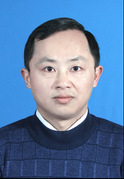 Quanbing Zhang (章权兵)合作论文数School of Electronics and Information Engineering, Anhui University3Ma Wenjuan合作论文数2DaMing Zhang (张大明)合作论文数2
 Weijun Xu (徐维军)合作论文数Schoo of Business Administration, South China University Technology2Dahong Wang (王大红)合作论文数2
 Zongcai Ruan (阮宗才)合作论文数School of Biological Science & Medical Engineering, Southeast University2Xiaoli Chen (陈晓丽)合作论文数1Xiangwei Ruan合作论文数1Changyao Zhang合作论文数1ShangJun Yang (杨尚骏)合作论文数1LiXiang Wang (王礼想)合作论文数1YouZhu Liu (刘幼珠)合作论文数1Jian Shu (舒坚)合作论文数1HongYan Li (李洪岩)合作论文数1Lei Ruan合作论文数1Pengxue Cheng合作论文数1Hong Fang合作论文数1Damin Zhang合作论文数1Li Gao (高丽)合作论文数School of Mathematics, South China University of Technology1
 Dawei Ding (丁大为)合作论文数School of Electronics and Information Engineering, Anhui University1
 Dengdi Sun (孙登第)合作论文数School of Artificial Intelligence, Anhui University1
 Yanhong Bao (鲍炎红)合作论文数School of Mathematical Sciences, Anhui University1Hailin Yang (杨海林)合作论文数1Li-feng YANG (杨利峰)合作论文数1Yi Xiong合作论文数1
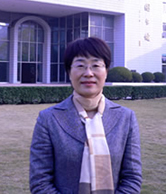 Juanjuan Lin (林娟娟)合作论文数College of Chemistry & Materials Engineering, Wenzhou University1Pengyong Hu合作论文数1Signal Processing合作论文数1




