Trajectory planning plays a pivotal role in robotic motion control to minimize execution time and suppress joint vibrations while providing stable reference trajectories for controllers. To increase the operational efficiency of collaborative robots while reducing joint vibration, this paper proposes an improved adaptive multi-objective particle swarm optimization (IAMOPSO) algorithm. By integrating dynamic learning factors, adaptive weights, and a mutation operator, the algorithm avoids local optima and improves the diversity of non-dominated solutions while maintaining stable motion. On the generated Pareto front surface, the average optimal solution is chosen using the normalizing function, which can significantly increase the collaborative robots’ joint stability and operational efficiency. Seven-order B-spline curves are used to interpolate the robotic arm’s trajectory in order to guarantee that the position, velocity, acceleration, and jerk of each joint are smooth and continuous while also precisely controlling the movement’s beginning and ending states. Experimental and simulation results show that, compared with conventional optimization algorithms, the proposed IAMOPSO method achieves shorter execution time and lower joint jerk while maintaining a more uniform and continuous Pareto front. The grasping experiment conducted on a collaborative robotic arm further verifies the effectiveness and stability of the proposed method in practical applications.
The performance of the path tracking control system is poor when vehicles navigate under extreme conditions of high speed and large curvature due to the uncertainty of vehicle model parameters, modeling errors and disturbances. To address this issue, this paper introduces a Linear Model Predictive Controller (GP-SOMPC) based on Gaussian Process (GP) and Snake Optimizer (SO) to achieve high-performance trajectory tracking control under large curvatures through learning. This algorithm adopts a two-degree-of-freedom vehicle dynamics model and models disturbances and unmodeled dynamics as Gaussian Processes (GP) using collected experimental data. Additionally, an Adaptive Weighting Coefficient Model Predictive Controller based on the Snake Optimizer (SO) method is presented to improve the poor adaptation of vehicle trajectory tracking accuracy according to reference path curvature under fixed weighting coefficients in traditional Model Predictive Control (MPC), which results in inadequate trajectory tracking precision. The simulation experiments have verified that the proposed GP-SOMPC algorithm can enhance trajectory tracking precision under high-speed, large curvature conditions and exhibits good adaptability to variations in path curvature.
This paper proposes an MPC stability control strategy based on phase-plane stability domain boundaries to address the issue of poor accuracy of control sequences computed by model predictive control (MPC)-based stability controllers due to constraint accuracy limitations. The stability domain boundary function is added to the state quantity constraints of the MPC stability controller by dividing the phase-plane linear stability domain of the center-of-mass lateral deflection and the swing angle velocity of the moving vehicle. This generates MPC constraints in real-time along with the current driving state of the vehicle, resulting in more accurate stability control of the vehicle. The simulation results show that compared with the traditional MPC stability control strategy, the MPC controller that introduces the boundary function of the phase plane stability domain plays with the limits of vehicle dynamics and has a better stability control effect.
Controlling a two-arm robot presents a multidimensional and intricate challenge, further compounded by the overlapping workspace of the arms, which significantly complicates trajectory planning. Therefore, in this paper, we propose a trajectory planning approach based on the neural network Soft Actor-Critic (SAC) algorithm tailored for a 7-degree-of-freedom dual-arm robot. To improve the efficiency of SAC-based methods for trajectory planning in dual-arm cooperation, we introduce a novel hybrid reward function. This function integrates the artificial potential field method with the posture reward function. Additionally, we incorporate the hindsight experience replay (HER) algorithm to optimize the utilization of neural network training data. Moreover, experiments were carried out using both the Baxter robot and the Coppeliasim simulation model to validate the effectiveness of our proposed method. Our results demonstrate that the introduced hybrid reward function significantly enhances the convergence rate of the SAC algorithm, thereby improving the overall performance of trajectory planning for dual-arm robots.
Accurately predicting the trajectories of vehicles in a driving environment composed of various traffic participants is very significant for the driving safety of intelligent vehicles. The critical difficulties of trajectory prediction lie in clarifying the interaction between traffic participants and describing the uncertainty of a vehicle's driving intention. This article proposes a vehicle trajectory prediction method based on the combination of a serial dual attention mechanism and a sampling generation model in graph structure mode. The serial dual attention mechanism describes the impact of different types of traffic participants on the vehicle. The edge attention mechanism in the serial structure considers the features of nodes and the direction of interaction simultaneously to analyse the vehicle's degree of attention to each agent of the same kind of traffic participant. In addition, a driving intention representation module based on a conditional variational autoencoder (CVAE) maps the aggregated features of the vehicle and its surrounding nodes into the latent variable space to describe the distribution of the vehicle's driving intention. Experimental results on the nuScenes dataset indicate that our method is superior to state-of-the-art prediction frameworks. Our method can consider the impact of traffic participants on the vehicle at different levels and reasonably predict the multimodal trajectory of the vehicle according to its driving intention. The result of the real-vehicle experiment shows that our method can guarantee high prediction accuracy in the practical application as well.
Short-term load forecasting (STLF) is a critical component of smart grid operations, yet it is a challenging task due to the high uncertainty of electrical loads. This paper proposes a novel STLF model by combining the fuzzy c-means (FCM) clustering and an improved long short-term memory (LSTM) neural network. The load profiles of two consecutive days are extracted as a single sample and their dimension is reduced by principal component analysis (PCA). The FCM clustering algorithm is then used to group the load profiles into similar patterns from a historical load data set. For each pattern, an LSTM-based forecaster is constructed and optimized using the load profiles that belong to it. The periodicity of the load profiles at the same time of two days is taken into account when designing the forecaster, resulting in a new LSTM model. The experimental results on two commonly used electrical load data sets demonstrate superior effectiveness and performance compared to other models in terms of the MAPE metric.
Accurately inferring the future motion of neighboring vehicles is an indispensable capability for safe driving of intelligent vehicles. High-definition (HD) maps containing scene constraint information can dramatically improve the performance of trajectory prediction methods. In this paper, a prediction method via map nodes search is proposed to precisely predict the future movement of vehicles. The travelable path search strategy is proposed to search for travelable map nodes in a map that incorporates traffic flow information after graph attention (GAT) aggregation, and the set of map nodes obtained from the search is employed to guide the generation of predicted trajectories. In addition, the designed goal node search mechanism finds the goal node based on map nodes and considers it as a reference for the end point of the vehicle's future movement. Experimental results on nuScenes dataset illustrate that our prediction method is superior to baseline methods. Moreover, the map nodes search strategy can greatly improve the trajectory prediction accuracy and ensure the rationality of the predicted trajectory.
Freezing of Gait (FOG) is the most common and disabling gait disorder in patients with Parkinson’s Disease (PD), which seriously affects the life quality and social function of patients. This paper proposes a FOG recognition method based on the Variational Mode Decomposition (VMD). Firstly, VMD instead of the traditional time-frequency analysis method to complete adaptive decomposition to the FOG signal. Secondly, to improve the accuracy and speed of the recognition algorithm, use the CART model as the base classifier and perform the feature dimension reduction. Then use the RUSBoost ensemble algorithm to solve the problem of unbalanced sample size and considerable limitations of a single classifier. Finally, the hyperparameters of the ensemble classifier are optimized by Bayesian optimization, and the experiment proves that the RUSBoost algorithm can complete the gait recognition task well. Compared with the Adaboost, Tomeklinks-Adaboost and ROS-Adaboost ensemble algorithms, the RUSBoost ensemble algorithm can complete the FOG recognition task more efficiently. When the maximum number of splits is 1023, and the number of base classifiers is 100, the performance of the RUSBoost ensemble algorithm can reach the best. The accuracy of the time recognition algorithm was 87.8%, the sensitivity was 89.7%, and the specificity was 87.5%.
Aiming at the problems of low success rate and large damage in grasping spherical fruits and vegetables, this paper proposed a novel end-effector system based on data-driven control (DDC). According to the actual working conditions, the mechanical structure of the end-effector is designed. The 3D model establishment, kinematics analysis and physical testing of its mechanical structure are completed. Then, using the DDC algorithm, a PID controller and a partial-format dynamic linearization model-free adaptive controller (PFDL-MFAC) are designed to realize the force-tracking control of end-effector system. RecurDyn and Matlab machine-control co-simulation is completed by means of joint modeling and coupling calculation of mechanism and control. It verified the rationality of the mechanical structure and the effectiveness of the control method. The results indicate that the end-effector system designed in this paper can track the desired grasping force well. In terms of end-effector structure and control system design, the problem of non-destructive grasping of spherical fruits and vegetables can be solved.
提出了一种新的基于预测控制的转矩优化控制方法,以协调控制紧急制动工况下的四轮轮毂电动汽车复合制动(液压制动和再生制动)系统.其转矩优化控制器可快速地跟踪车辆在不同路面附着条件下的最佳滑移率稳定区域;同时,在控制目标函数中加入能量回收趋势优化项,用于能量回收目标的快速动态调整,通过调节优化目标函数权值的大小,实现制动安全的同时提高车辆的能量回收能力.在Carsim中建立了车辆模型并和Simulink运行环境进行了联合仿真,验证了提出的转矩优化方法的有效性.
The change of throttle viscous and coulomb frictions often cause inaccuracy or malfunction in electronic throttles, and lead to degradation of reliability of vehicles with internal combustion engines. A fault detection fault tolerant control scheme is proposed in this work to tackle the problem. A nonlinear dynamic model is derived for the throttle. A disturbance observer is designed based on the model to diagnose the fault, and a sliding mode control combined with an adaptive neural network estimator is developed for fault tolerant control. The system stability is ensured after the fault occurs and the throttle position tracking is maintained by the applied Lyapunov method. A Simulink model is developed for the throttle with real physical parameters to evaluate the performance. Abrupt and incipient changes are simulated in the throttle friction torque and the simulation results show that the developed method is effective in fault diagnosis and fault tolerant control.
To enhance the reliability of wind turbine generation systems that are generally located in the remote area and subjected to harsh environment, we design the pitch angle control for variable speed wind turbines with the function of fault diagnosis and fault tolerance. The main fault targeted in this research is the mechanical wear and possible break of the blade, pitch gear set or shaft, which cause shaft rotary friction change. The proposed method uses a disturbance observer to diagnose the fault. The estimated fault is used for component assessment and later maintenance. The fault-tolerant control is achieved using a full-order terminal sliding mode control combined with an adaptive neural network estimator. With the compensation of the adaptive estimator, the post-fault states can be driven onto the sliding surface and converge to a small area around the origin. The full-order terminal sliding mode control ensures the state convergence in finite time. The Lyapunov method is used to derive the control law, so that the closed-loop post-fault stability and the convergence of the adaptive estimator adaptation are both guaranteed. The computer simulations of the pitch angle control based on a 5-MW variable-speed variable-pitch angle wind turbine model are conducted with different types of fault simulated. A third-order nonlinear state space model with fault term is derived, and real physical parameters are applied in the simulations. The simulation results demonstrate the feasibility and effectiveness of the proposed scheme and the potential of real-world applications.
为减少日益增长的交通安全问题,车辆碰撞预警及避碰控制系统必不可少.本文提出了一种结合车辆横纵向动力学的复合控制避碰方法,以达到减少交通事故发生的目的.首先,分别建立了车辆逆纵向和横向动力学模型,纵向控制器通过安全距离模型来判断车辆是否处于危险状态并进行碰撞预警,采用分层控制方法设计了上层模型预测控制器和底层单神经元PID控制器.横向上结合不同时速时的参数约束设计模型预测控制器.最后,在不同工况下进行了仿真实验,表明本文控制系统能成功避碰,提高了车辆的安全性、稳定性、舒适性.
Some physical parameters of a hub motor-driven four-wheel electric vehicle will change when the vehicle turns or maneuvers and the parameter change is caused by the change of the driving conditions. An adaptive sliding mode control is proposed in this paper to maintain the vehicle’s stability by compensating for the change of these parameters. The control parameter being adapted is the converging rate of the system state towards the sliding mode. As the Lyapunov method is used, so both the vehicle stability and adaptive rate convergence are guaranteed. Moreover, the hierarchical control structure is adopted for this vehicle stability control system. The above adaptive sliding model control forms the upper-layer; while the lower-layer control is to distribute the upper torque to the four wheels in an optimal way, subject to several constraints. In addition, the best feasible reference of the yaw rate and the vehicle side slip angle are obtained and used in the control system. The developed method is simulated under the CarSim/MATLAB co-simulation environment to evaluate the system performance. The simulation results are compared with the non-adaptive existing sliding mode control, and show that the proposed method is superior under different conditions.
目前我国对于发动机振动参数的故障检测技术仍采用传统的人工经验与技师测试的方法,在检测过程中存在一定的主观性问题.针对此现象设计了一种基于微机电系统(MEMS:Micro-Electro-Mechanical System)加速度传感器和蓝牙无线通信的无线三轴振动测试系统,并配备有上位机,可以用于发动机的故障检测与状态诊断.首先通过安装在发动机外侧的传感器得到振动曲线;然后通过无线模块发送至相应的上位机中,继而进行相应振动参数的判断,确定发动机的运行状态.经过振动系统测试和实际现场实验表明,该无线三轴振动测试系统性能指标满足发动机振动检测要求,能应用于发动机在线故障的监测和故障诊断,同时,设计的无线三轴振动测试系统具有易安装、测量快速准确等特点.
In this paper, the modeling and adaptive sliding mode control methods of an onboard craning manipulator are proposed based on extension control theory. The dynamic model based on Lagrange principle is derived while the impacts of both gravity and coupling effect are simultaneously considered. Combining with the designed dynamic model, a trajectory tracking control method is proposed through the extension control theory, because the boundary of parameters uncertainties and external disturbances could not be attained easily in the actual system. The extension adaptive sliding mode controller is designed to realize the trajectory tracking performance of system using only the measurement of joint position. And then the adaptive laws are presented to ensure the convergence of approximation errors. Finally, simulations are performed for a specific type of onboard craning manipulator system to study the effectiveness of the proposed method.
In this paper, a hierarchical control method is proposed to design the vehicle longitudinal collision avoidance controller. After establishing the vehicle inverse longitudinal dynamics model, the upper layer acceleration model predictive controller and the underlying single neuron PID controller are designed respectively. The simulation results show that the controller can successfully avoid collision and satisfy the safety, stability and comfort.
This paper proposes a new fault tolerant control scheme for a class of nonlinear systems including robotic systems and aeronautical systems. In this method, a sliding mode control is applied to maintain system stability under the post-fault dynamics. A neural network is used as on-line estimator to reconstruct the change rate of the fault and compensate for the impact of the fault on the system performance. The control law and the neural network learning algorithms are derived using the Lyapunov method, so that the neural estimator is guaranteed to converge to the fault change rate, while the entire closed-loop system stability and tracking control is guaranteed. Compared with the existing methods, the proposed method achieved fault tolerant control for time-varying fault, rather than just constant fault. This greatly expands the industrial applications of the developed method to enhance system reliability. The main contribution and novelty of the developed method is that the system stability is guaranteed and the fault estimation is also guaranteed for convergence when the system subject to a time-varying fault. A simulation example is used to demonstrate the design procedure and the effectiveness of the method. The simulation results demonstrated that the post-fault is stable and the performance is maintained.
Aiming at the characteristics of diesel engine fault vibration signals which are generally nonlinear and non-stationary, and the difficulty in extracting fault frequencies, a diesel engine fault diagnosis method based on Complementary Ensemble Empirical Mode Decomposition (CEEMD) and Least Square Support Vector Machine (LSSVM) was proposed. CEEMD was used to decompose the original signals, and a number of inherent mode functions (IMF) were obtained. The IMF components were screened by the correlation coefficient method. In order to extract features from vibration signals, we made normalized energy as the features which were inputted into LSSVM for training and testing. Finally we realize the identification and diagnosis of diesel engine misfire fault.
针对横摆角速度及质心侧偏角在车辆稳定控制中的重要作用,提出一种分层结构,在上层系统采用滑模变结构策略对汽车稳定性进行操纵.参考二自由度车辆模型计算控制变量名义值,针对横摆角速度及质心侧偏角偏差和偏差导数,设计汽车稳定操纵系统,由控制参量决策出最优附加横摆力矩.利用李雅普诺夫判定方法判断所设计的闭环系统的稳定性.试验结果表明,本文设计的滑膜变结构控制器在紧急工况下能够明显改善车辆稳定性能,提高行车安全.
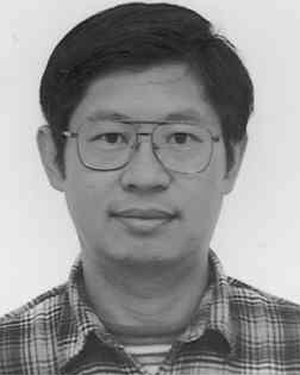 Ding-Li Yu合作论文数13
 Yongxue Ma合作论文数10
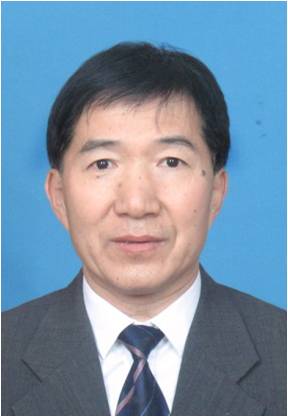 Yantao Tian (田彦涛)合作论文数College of Communication Engineering, Jilin University9
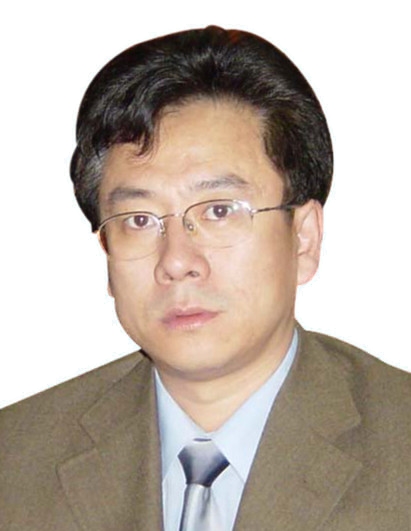 Yuanchun Li (李元春)合作论文数Changchun University of Technology7
 Gordon Lee合作论文数Department of Electrical and Computer, College of Engineering, San Diego State University6Xinglong Pei合作论文数6Luyu Zhang合作论文数5Haiying Qi合作论文数Changchun Univ Architecture & Civil Engn, Sch Elect Informat 130022, Changchun 130607, Jilin, Peoples R China5
 Changfu Zong (宗长富)合作论文数College of Automotive Engineering, Jilin university5wei jiang合作论文数4Hui Xu合作论文数4
 Hao Zhang (张浩)合作论文数College of Computer Science and Technology, Jilin University4
 Pengcheng Guo (郭鹏程)合作论文数Xi'an University of Technology4
 Di Zhao合作论文数4LiShu Guo (郭立书)合作论文数3Ya-bin Fu合作论文数3
 Hongyan Guo (郭洪艳)合作论文数College of Communication Engineering, Jilin University;State Key Laboratory of Automotive Simulation and Control, Jilin University3
 Yiran Shi (石屹然)合作论文数College of Communication Engineering, Jilin University3Ruikang Shi合作论文数2
 Qingyu Meng (孟庆瑜)合作论文数College of Communication Engineering, Jilin University2SUN Peng-peng (孙鹏鹏)合作论文数2
 Yujia Zhai合作论文数2Feng HAN (韩风)合作论文数2Hui DING (丁辉)合作论文数2
 Zhiguo Tang (唐志国)合作论文数College of Communication Engineering, Jilin University2Jun Lin (林军)合作论文数College of Communication Engineering, Jilin University2
 Zhenze Liu (刘振泽)合作论文数College of Communication Engineering, Jilin University2
 Dejun Wang (王德军)合作论文数College of Communication Engineering, Jilin University2
 Shuangxin Wang (王爽心)合作论文数School of Mechanical,Electronic and Control Engineering, Beijing Jiaotong University2
 Fu Liu (刘富)合作论文数College of Communication Engineering, Jilin University2Li-Na Li合作论文数2Lihua Tao合作论文数2Lianbing Wang (王联兵)合作论文数2w z cui合作论文数1Liman Han (韩丽曼)合作论文数1
 Qiaoliang Liu合作论文数1
 Yanran Liu (刘嫣然)合作论文数1Ying Lv合作论文数1
 Tian Dong合作论文数1Tan Qinggui合作论文数1
 Hui Liu合作论文数1Peng ZHANG (张鹏)合作论文数1Yan-mei ZHANG (张艳梅)合作论文数1
 Tianming Zhao合作论文数State Key Lab Multispectral Informat Proc Technol, Huazhong Univ Sci Technol1Peng-tao SHI (史朋涛)合作论文数1Rui Wang合作论文数1




