Appearance quality inspection of fresh corn is a critical step to ensure product quality during its deep processing, but existing deep learning models often struggle to accurately detect subtle or multiscale defects. This study proposed a novel appearance quality detection method for fresh corn, in which a fresh corn detection model improved based on GELAN (FCD-GELAN) was used to detect targets in images generated through weighted fusion of visible and near-infrared images. By incorporating an efficient aggregation attention module into the baseline model, it enhanced the model's ability to extract and retain features in shallow network layers. Additionally, to optimize the model for focusing on subtle targets, pinwheel-shaped convolution was employed to partially replace convolutional layers in the backbone and neck. Furthermore, a multiscale spatial attention module was added before the detection head to strengthen the model's perception of targets across different scales. Experimental data demonstrated that the proposed model achieves an mAP@0.5 of 90.2% on a self-constructed dataset, with an inference time of 24.0 ms, meeting real-time performance requirements. Compared to EfficientDet, D-FINE, RT-DETR, YOLOv10, and YOLOv11, the proposed model improved mAP@0.5 by 11.2%, 3.2%, 5.3%, 3.6%, and 4.0%, respectively, validating its superior performance in the fresh corn appearance quality detection. This paper provides an efficient detection approach for fresh corn appearance recognition that balances real-time performance with accuracy.
Bearing, as a critical component in industrial production, directly dictates equipment performance. Bearing surface defects are typically minute in scale, indistinct at their boundaries, and prone to interference from surface textures and light reflections, thereby posing substantial challenges to detection. This paper proposes a novel deep segmentation network, Bearing-TFUNet, which incorporates the skip connection structure of U-Net to preserve low-level detail information, introduces an enhanced feature pyramid network (UFPN) to bolster multi-scale feature representation capabilities, and integrates a lightweight LE-Transformer for efficient modeling of global contextual information. This triple-fusion mechanism enables the decoder to concurrently integrate skip connection features from the encoder, upsampled features, and multi-scale information furnished by UFPN, facilitating comprehensive feature interaction and fusion. The DWConv-based LE-Transformer attention module effectively augments the model’s capacity for collaborative modeling of local texture details and global dependencies. Experimental results demonstrate that, compared with the baseline U-Net model, Bearing-TFUNet achieves a 12.19% improvement in the Dice coefficient, a 21.94% increase in the IoU metric, and a reduction in Hausdorff Distance from 5.6 to 4.3.
The saliency detection of the same kind of stacked fruits can assist robots in completing sorting tasks, which is an important prerequisite for the grading and packing of fruits. In order to accurately obtain saliency targets of fruits in the same kind of stacked state under overexposure, non-uniform illumination, and low illumination, a method for detecting stacked fruits under poor illumination based on RGB-D visual saliency was proposed. Based on the Res2Net network, features from each layer of two images were obtained. To realize the complementary advantages between RGB features and depth features, the input RGB images were preprocessed using depth weighting to obtain purified RGB features. To increase the information interaction between branches of different scales and better balance the fusion features and modal exclusive features, a multi-scale progressive fusion module was proposed. To minimize the difference between the initial saliency maps generated by different features and improve the accuracy of the final predicted saliency maps, a multi-branch hybrid supervised method was used. The comprehensive experiments on the self-made dataset of the same kind of stacked fruits show that the proposed algorithm is superior to five state-of-the-art RGB-D SOD methods in four key indicators: S value, F value, and MAE value, which are 0.979, 0.992, and 0.006, respectively, and the P-R curve, which is also closer to the upper right corner of the graph. These values demonstrate that the proposed algorithm can accurately obtain saliency targets in the same kind of stacked fruits. The results of this study can promote the automatic development of the fruit production and packaging industry.
The lap welding process for 304L stainless steel welded using the pulsed gas tungsten arc welding (P-GTAW) procedure was studied, and the effects of the pulse welding parameters (the peak current, background current, duty cycle, pulse frequency, and welding speed) on the macroscopic morphology, microstructure, and mechanical properties of the resultant lap joints were investigated. Tensile tests, hardness measurements, and SEM/EDS/XRD analyses were conducted to reveal the characterization of the joint. The relationships between the welding parameters; certain joint characteristic dimensions (the weld width, D; the weld width on the lower plate, La; the weld depth on the lower plate, P; and the minimum fusion radius, R); and the maximum tensile bearing capacity were studied. The weld zone was primarily composed of vermicular ferrite, skeletal ferrite, and austenite, and no obvious welding defects, precipitation, or phase transformations were evident in the weld. Microhardness tests demonstrated that the weld microhardness was highest in the base metal zone and lowest in the weld zone. As the heat input increased, the average microhardness decreased. The hardness difference reached 17.6 Hv10 due to the uneven grain size and the transformation of the structure to ferrite in the weld. The fracture location in welded joints varied as the heat input changed. In some parameter combinations, the weld tensile strength was significantly higher than that of the base material, with fractures occurring in the weld. Scanning electron microscopy results exhibited an obvious dimple morphology, which is a typical form of ductile fracture. XRD revealed no significant phase changes in the weld zone, with a higher intensity of the austenite diffraction peaks compared to the ferrite diffraction peaks.
A defect detection model based on improved YOLOv7-tiny is proposed herein to address the problem of different detection methods for different defects on apple surface.Combined with RGB+NIR multispectral images collected by a camera,various defects on the apple surface are detected and classified.First,to extract more effective feature information and improve the ability to locate defects,coordinate attention(CA)is used to aggregate coordinate information in the backbone network,and a contextual transformer(CoT)module is added behind the backbone network to increase the global receptive field.Second,it is combined with the weighted bidirectional feature pyramid to adjust the proportion of each branch in the structure to enhance the feature fusion ability of efficient layer aggregation networks.Finally,the loss function is replaced by Focal-EIoU loss to solve the problem of unbalanced samples.The mean average precision(mAP)@0.5 of the improved network increases by 1.2 percentage points to 93.2%,and the recognition speed is 89.3 frames/s.The research content of this paper provides a more efficient method for apple surface defect detection and a more accurate basis for apple grading.
For lawn, weeds are one of the important factors that cause its degradation and endanger agricultural production. In order to achieve accurate application of herbicides for lawn weed management, aiming at the problem that weeds are difficult to be segmented due to the similar color between weeds and lawns in natural environment, this paper proposed an improved fuzzy C-means (FCM) clustering segmentation algorithm. Firstly, the region of interest was extracted by extra-green segmentation and converted to HSV space for multi-channel difference fusion for image preprocessing to expand the feature difference between weeds and lawns. Secondly, the median filtering was carried out under the constraint of area area to remove the lawn background noise in the preprocessed image while maintaining the details of weed leaves. Then, an anisotropic detection operator of difference of gray distribution(DGD) was proposed, which introduces the features of different directions of gray distribution around pixels in the clustering process to achieve lawn weed segmentation. Finally, one versus rest support vector machines(OVR SVMs) were constructed to solve the multi classification problem of lawn weeds. To solve the problem that weeds overlap and occlude each other, which leads to the reduction of local area identification, an optimization method of extracting feature information from image blocks is proposed. The experimental results show that, compared with the traditional FCM algorithm, the algorithm in this paper has a better suppression effect on most noise areas, can effectively segment and identify weeds in the natural environment, which has practical application value.
针对电梯导轨安装过程中繁多的钻孔操作,使用钻孔机器人代替人工作业.为提高钻孔机器人的作业效率和减少作业过程中的冲击振动,提出一种使用多目标遗传算法来优化钻孔机器人关节空间轨迹的方法.首先,使用七阶B样条曲线在钻孔机器人关节空间中进行插值;其次,以时间和冲击性能为优化目标,通过使用带约束处理的NSGA-Ⅱ算法对B样条的插值轨迹进行优化;最后,设计一种"综合比较算子"的轨迹方案选择标准来获取综合最优解.结果表明,使用带约束处理的NSGA-Ⅱ的轨迹优化方法获得的Pareto解集分布性和收敛性较好.与时间性能最优解和冲击性能最优解相比,综合最优解分别在冲击性能和时间性能上提升了66.7%和22.26%,表明使用综合比较算子获得的最优解在时间性能和冲击性能上都较为优良.
数控系统作为电火花加工机床的核心之一,对提高机床机械加工精度、效率和稳定性具有重要意义.针对传统电火花小孔机床数控系统老旧、人机交互不友好等问题,设计并实现了一种集成化电火花小孔机数控系统.梳理了电火花小孔机的加工需求并进行了合理分类,确定了一种新的小孔机数控系统软件整体架构与运行方式,基于QT软件实现了数控系统的各个功能模块并进行了仿真测试,搭建了电火花小孔机加工平台进行控制加工实验,验证了该数控系统控制加工的能力和优势,为研制集成化、网络化的新一代电火花小孔加工平台提供了良好的参考.
针对电梯导轨校准机器人校准电梯导轨时,校准精度低和校准力不可控等问题,提出一种基于改进的粒子群-模糊PD(PsoFuzzyPD)的电梯导轨校准机器人力位控制方法.首先,根据力位控制需求设计了电梯导轨校准机器人的整体控制框架;其次,设计了基于改进的粒子群-模糊PD控制器作为机器人力位控制器的内环控制器;最后,根据机器人的力控制需求设计了阻抗控制器、sigmoid函数的阻抗控制判别模块和期望力控制模块.仿真结果表明,所提方法的力控响应超调更小,震荡更少,笛卡尔空间的轨迹跟踪偏差也更小,可以有效控制导轨校准力和导轨校准精度,在电梯导轨安装领域拥有很好的推广应用价值.
Aiming at the problem of citrus identification in different growth periods, this paper proposes a detection method improved manifold ranking based on graph to realize the status monitoring and yield evaluation of green citrus in growth periods; to realize target recognition of mature yellow citrus and help automatic picking. Firstly, aiming at the problem of uneven image brightness, this paper uses a method combining fuzzy set theory and local contrast to enhance the image. Then, to solve the problem of inaccurate detection caused by the traditional manifold ranking algorithm relying on the prior edge, a method combining the relative total variation and local complexity is used to extract the foreground to remove the boundary foreground hyperpixel blocks. After manifold ranking, the saliency map is obtained. Subsequently, the saliency map is merged with the foreground and then the final saliency map is obtained by manifold ranking again. In addition, experiments have found that there is a problem of edge information loss during citrus segmentation. Therefore, this paper proposes a segmentation optimization method that combines Otsu method and hyperpixel segmentation map. The experimental results show that the algorithm can effectively recognize green and yellow citrus regions, and the recognition accuracy of yellow citrus is slightly higher than that of green citrus, in which the segmentation accuracy of green and yellow citrus is 94.87% and 97.08% respectively.
微小孔加工是精密型零件制造的重要组成部分,针对传统电火花小孔机床体积大、成本高、结构复杂等问题,设计了一种基于嵌入式平台的电火花小孔机.机床本体结构主要由框架、主轴模块、工作台模块、工作液系统等部分组成,通过将系统精简化和集成化,实现整体结构的小型化.小型化机床不仅能有效降低生产成本,提高机床的性价比,还能提供相关实践平台,很好地满足高校进行电火花加工桌面式教学演示及科学研究的需求.
随着个性化医疗的发展,定制化药物受到了越来越多的关注,为了生产定制化药物,需要制备指定浓度的药物混合溶液.本研究首次提出了一种随机变宽度(RVW)结构的微流控浓度梯度芯片,并通过卷积神经网络算法实现芯片的性能预测.首先,设计了一种RVW微流道结构并通过仿真模拟得到出口浓度和出口流速.其次,根据卷积核分解原理设计了KD-MiniVGGNet深度学习模型,使用仿真模拟得到的浓度和流速数据训练模型并预测更多浓度梯度芯片的出口浓度和出口流速.最后,通过实验验证了KD-MiniVGGNet深度学习模型预测结果的准确性.研究结果表明:相较于随机等宽度(REW)浓度梯度芯片,RVW浓度梯度芯片的出口集中流速范围提高了66.7%,三个出口的出口浓度分布范围分别拓宽了9%、16%和11%,三个出口的出口流速分布范围分别拓宽了29%、28%和30%;KD-MiniVGGNet模型在出口浓度和出口流速测试集上的模型准确率分别达到91.5%和92.7%;出口浓度的KD-MiniVGGNet模型预测结果与实验结果之间的平均误差为4.3%.本研究中所提出的设计方法可提高浓度梯度芯片结构的多样性,进一步优化浓度梯度芯片的性能范围,更好地为药物定制提供溶液制备服务.
The distance of the obstacles ahead is the information that needs to be acquired first for technologies such as automatic driving and robot perception. Aiming at the problems of high mismatch rate and low measurement accuracy of the traditional binocular vision measurement method based on feature point matching, this paper proposes a binocular ranging method based on ORB feature and random sample consensus (RANSAC). First, in order to initially screen the correct matching point pairs, the method of combining epipolar constraint based on binocular position information and feature matching based on Hamming distance is used to delete mismatched points. Secondly, in order to further obtain high-reliability RANSAC interior points, the sequential consistency constraint method of nearest neighbors based on kd-tree is used to screen out the initial interior point set, and the iterative pre-check method is used to improve the matching speed of RANSAC. Finally, in order to obtain a higher precision distance, the sub-pixel point disparity is obtained by quadric surface fitting, and calculated actual distance. Experiments show that the algorithm in this paper improves feature matching and measurement accuracy, and meets real-time requirements.
Current visual saliency detection algorithms based on deep learning suffer from reduced detection effect in complex scenes owing to ineffective feature expression and poor generalization. The present study addresses this issue by proposing a recurrent residual network based on dense aggregated features. Firstly, different levels of dense convolutional features are extracted from the ResNeXt101 network. Then, the features of all layers are aggregated under an Atrous spatial pyramid pooling operation, which makes comprehensive use of all possible saliency cues. Finally, the residuals are learned recurrently under a deep supervision mechanism to achieve continuous optimization of the saliency map. Application of the proposed algorithm to publicly available datasets demonstrates that the dense aggregation of features not only enhances the aggregation of effective information within a single layer, but also enhances external interactions between information at different feature levels. As a result, the proposed algorithm provides better detection ability than that of current state-of-the-art algorithms.
[目的]为了实现草坪杂草管理的精准化施药,针对自然环境中杂草与草坪颜色相近导致杂草难以分割的问题,提出一种改进模糊C均值(Fuzzy C-means,FCM)聚类的分割算法.[方法]利用超绿算子提取感兴趣区域,融合HSV空间的多通道信息进行图像预处理,扩大杂草与草坪的特征差异.使用区域面积约束滤波范围,去除预处理图像中的草坪背景噪声,降低中值滤波造成的目标区域灰度级损失.提出一种各向灰度分布差异(Difference of gray distribution,DGD)检测算子,在聚类过程中引入像素周围不同方向的灰度分布差异特征实现草坪杂草分割.[结果]与传统FCM、FCM-S2、FCMNLS以及RSFCM算法相比,本文算法对大多数噪声区域抑制效果较好,可以实现较为理想的杂草分割效果.本文算法能有效分割草坪杂草,平均分割准确率达到91.45%,比FCM、FCM-S2、FCMNLS和RSFCM算法分别提高16.35%、4.12%、6.80%和8.06%.[结论]本文算法可有效地分割自然环境中的草坪杂草,为草坪杂草精准化施药提供了条件,具有实际应用价值.
The present describes a porous electrode for electrical discharge machining (EDM) that can decrease the concentration of corrosion products in the discharge gap. The electrode is prepared by high-temperature sintering of copper particles. A large number of red copper particles become connected together through sintering necks to form a structure with a large number of pores that act as flushing channels. By exploring the preparation method, material, sintering temperature, and holding time, a porous electrode is prepared such that copper particles do not fall off during the discharge process. The flow of the flushing medium is simulated in the porous electrode, and the action of the flushing flow field in the discharge gap on erosion products is identified. In agreement with the simulation results, experimental results for the EDM of the titanium alloy Ti6Al4V show that the material removal rate with a porous electrode is 3 times higher than that for traditional EDM with a solid electrode. Moreover, the electrode wear is lower due to the effective discharge of the corrosion products by the flushing liquid. Experimental results when rough machining a complex semi-closed cavity show that the porous electrode can greatly shorten the machining time by 47 %, which demonstrates that a porous electrode improves the machining of a complex cavity in a titanium alloy.
Most of the current feature generation modules based on infrared and visible modal are independent of each other, lacking long-term dependence between the modalities. It results in large differences between different modal features, which affects fusion effects, and leads to false and miss detection of targets. To tackle the problem, a pedestrian detection network with multi-modal cross-guided learning was proposed. First, the paired multi-modal images were sent to the feature generation module to generate deep and shallow features. Starting from the middle stage, the paired multi-modal features were sent to the designed weight-aware module, which output the weighted features of each modal, together with the fusion features. Then the weighted features of each modal were returned to the feature generation module of another modal, which enabled the weighted information gradually transmitted to the next stage in a joint cross-guidance manner to establish long-term dependence between modalities. At the same time, the fusion features were also input to the weight-aware module of the next stage to strengthen the connection between the fusion features at different stages and obtain more discriminative features. Finally, both the modal-specific features and the fusion features were sent to the detection module to generate the position and classification score of pedestrian targets. The experimental results indicated that the average precision on Kaist multispectral pedestrian detection dataset reached 77.16%, and the log-average miss rate dropped to 25.03% which reduced by 29.77% compared with the baseline.
Aiming at the inaccuracy of Non-Local Means (NLM) algorithm for measuring the similarity of neighborhood blocks, an improved Non-Local Means denoising algorithm based on Difference Hash (dHash) algorithm and Hamming distance is proposed. The traditional algorithm measures the similarity between neighborhood blocks by Euclidean distance, so the ability to preserve edges and details is weak, which leads to the blurred and distorted images after filtering. To this end, the Difference Hash algorithm containing the gradient information is introduced, the difference hash images are generated from neighborhood blocks, and the Hamming distance of the difference hash images is calculated to measure the similarity of the neighborhood blocks. Finally, the Euclidean distance is improved. Experiment results show that the proposed method can preserve edges and details while denoising the low-noise images. Compared with other improved algorithms, the running speed of the proposed algorithm is also greatly improved, which has a certain application value.
This research proposes a saliency detecting approach based on an improved manifold ranking algorithm, aiming at the problem that green citrus has similar color features to the background in the natural environment, making the citrus difficult to be recognized. First, to avoid the increasing difficulty of recognizing caused by the uneven brightness of the green citrus images, the brightness improvement approach based on fuzzy set theory was employed to preprocess the orange images. Second, to resolve the issue that the traditional graph-based manifold ranking saliency detection algorithm relies on the boundary background to obtain the foreground seeds, resulting in the unsatisfactory effect of the saliency map, an approach combining relative total variation and local complexity was employed to extract more accurate foreground seeds. Finally, to sort the manifolds, the extracted foreground seeds were combined with the a priori saliency map of the boundary background without foreground seeds and the final saliency map was obtained. Experimental findings indicate that the proposed algorithm can recognize the green citrus region more effectively, and the segmentation accuracy, falsepositive rate, and false-negative rate are 94%, 3. 19%, and 1.64%, respectively.
Owing to the complex structures of welding materials, special welding conditions, and challenges during the automatic welding of the liquefied natural gas (LNG) ship Mark III’s membrane tank, a series–parallel–series hybrid structure mobile welding robot having sufficient adaptability for welding corrugated plates in membrane tanks was designed in this study. The configuration of the hybrid robot had good workspace characteristics, and it could always maintain a certain distance and angle between the end of the welding torch and the weld line because of its detection and control system coordination. In this study, degrees of freedom, kinematic characteristics, workspace, and adaptability analyses were conducted for the hybrid mechanism. A simulation verification was performed, and a ripple-trajectory-following experiment was conducted using real objects. The simulation and experimental results showed that the welding robot had a reasonable mechanism design, smooth motion, and good terminal distance and angle control, thus meeting the requirements for automatic welding of corrugated plates in membrane tanks.
 Ying Chen (陈莹)合作论文数School of Internet of Things Engineering, Jiangnan University;Key Laboratory of Advanced Process Control for Light Industry (Ministry of Education), Jiangnan University38
 Shengdun Zhao (赵升吨)合作论文数School of Mechanical Engineering, Xi'an Jiaotong University14
 Jianfeng Yu合作论文数13Yun-jian LU (陆云健)合作论文数9Xue-mei Xiong合作论文数8
 Qiuju Zhang (张秋菊)合作论文数江南大学7Haojing Ren (任皓靖)合作论文数6
 Chaofan Wang (王超凡)合作论文数5ZHANG Airong (张爱榕)合作论文数4
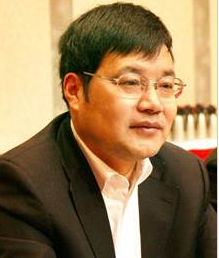 Zhicheng Ji (纪志成)合作论文数School of Internet of Things Engineering, Jiangnan University4
 Meng Ning (宁萌)合作论文数Jiangnan University Junyuan College4
 Lei Su (宿磊)合作论文数Jiangnan University Junyuan College4
 Haiwei Chen (陈海卫)合作论文数Jiangnan University Junyuan College4Cheng-jun Fang合作论文数3Jinke Ma合作论文数3SUN Mingchun (孙明春)合作论文数3YUAN Hao (袁浩)合作论文数3RuiLin Bai (白瑞林)合作论文数3XueLai Zhang (张学来)合作论文数3
 Yi Jiang合作论文数ByteDance Ads GenAI3
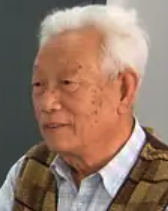 Guangxian Shen (申光宪)合作论文数School of Mechanical Engineering, Yanshan University3Haiying Zhou (周海英)合作论文数3Yubing Xia (夏语冰)合作论文数3Sun Kang-kang (孙康康)合作论文数2HAN Qingqing (韩晴清)合作论文数2YU Junnan (俞俊楠)合作论文数2Ling-lei KONG (孔令蕾)合作论文数2Hao Yuan合作论文数2Rui PAN (潘瑞)合作论文数2WU Liang (吴亮)合作论文数2Tao Song (宋涛)合作论文数2Wei Liu合作论文数2
 Weifeng Sheng (盛卫锋)合作论文数Jiangnan University Junyuan College2
 Deqiang Zhou (周德强)合作论文数Jiangnan University Junyuan College2
 Wansheng Zhao (赵万生)合作论文数School of Mechanical Engineering, Shanghai Jiao Tong University2Xiaoyu Zhou (周小渔)合作论文数2Yun Feng (封云)合作论文数2
 Chen-hao Qian (钱陈豪)合作论文数2Xintong Zou合作论文数1Pan Rui合作论文数1Zhonghua Huo合作论文数1Ke LI (李可)合作论文数1Chao-sheng DENG (邓朝省)合作论文数1WANG Yi-ping (王益平)合作论文数1LIU Wei (柳伟)合作论文数1JingJing Wu (吴静静)合作论文数1




