Objective To address the shortcomings of conventional Lorentzian curve fitting for Brillouin frequency shift (BFS) extraction- namely, long processing time and sensitivity to initial values-this paper proposes a fast and high-accuracy extraction method based on an attention-enhanced residual network (AERN). Temperature and strain information are retrieved using a single-ended Brillouin optical time-domain analysis (BOTDA) sensing system. By integrating channel attention and spatial attention mechanisms, AERN adaptively highlights salient features relevant to BFS extraction while suppressing redundant noise. Meanwhile, residual connections alleviate the vanishing-gradient issue in deep networks and ensure lossless feature propagation. Experimental results show that AERN requires only 0.0134 ms per point for BFS extraction, achieving an improvement of nearly two orders of magnitude compared with Lorentzian fitting (1.1 ms). In addition, AERN exhibits superior continuity in BFS distribution and enhanced noise robustness. In a 1-km four-mode fiber experiment, the temperature and strain measurement accuracies reach 1.58 degrees C and 39.15 mu epsilon, respectively. The proposed method provides an effective technical approach for fast and accurate BFS extraction in distributed fiber-optic sensing. Methods A single-ended Brillouin optical time-domain analysis (BOTDA) sensing system was constructed using a 1 km four-mode graded-index few-mode fiber (4GI-FMF) and a photonic lantern for simultaneous temperature and strain measurement. AERN was proposed for fast and accurate BFS extraction, integrating channel/spatial attention mechanisms to highlight key features and suppress noise, with residual connections alleviating gradient vanishing in deep networks. Experiments were conducted by applying temperatures (35-70 degrees C ) and strains (273.5-1641 mu epsilon) to specific segments of the 4GI-FMF, and BFS data from six linear polarization modes were collected. Performance was evaluated using mean absolute error (MAE) and root mean square error (RMSE), with traditional Lorentz curve fitting (LCF) serving as a baseline for comparison. Results and Discussions The BFS extraction results obtained by the proposed AERN algorithm and traditional LCF were compared. AERN demonstrated superior precision and efficiency: the processing time per data point is approximately 0.0134 ms, while traditional LCF takes about 1.1 ms. As the number of data points increases, the computational time for LCF based on nonlinear least-squares iteration grows significantly. AERN completed the extraction of the entire 1-km 4GI-FMF BFS in--0.084 s, whereas LCF required--7 s, representing a speed improvement of nearly two orders of magnitude. In a 1-km 4GI-FMF, the BFS temperature/strain coefficients differ across modes due to distinct optical-acoustic mode overlaps and differing overlaps of higher-order modes with the cladding, leading to distinct response coefficients. Evaluations using MAE and RMSE further confirmed that AERN outperforms LCF, demonstrating high efficiency and robustness in BFS feature extraction. Conclusions Addressing the demand for fast and high-precision BFS extraction in distributed Brillouin optical fiber sensing, this paper proposes an AERN algorithm based on a single-ended BOTDA dual-parameter measurement system, enabling rapid and effective BFS extraction. Through the synergistic modeling of channel and spatial attention mechanisms, combined with the design of multi-layer residual connections, AERN can effectively suppress noise and redundant information while ensuring high-fidelity feature transmission. Experimental results demonstrate that the prediction time of AERN is only 0.084 s, which significantly improves the speed compared with Lorentz curve fitting. Meanwhile, AERN exhibits superior performance in terms of BFS distribution continuity and noise resistance. In a 1 km-long few-mode fiber experiment, the temperature and strain measurement accuracies are approximately 1.58 degrees C and 39.15 mu epsilon, respectively. These results verify the feasibility and effectiveness of the proposed method, providing a fast and accurate solution for efficient BFS extraction.
Few-mode fibers contain a limited number of orthogonal modes, and the Brillouin frequency shift of different modes has different sensitivities to temperature and strain, which provides the possibility of realizing multi-parameter sensing. This paper proposes a novel single-ended Brillouin optical time domain analysis (BOTDA) sensing system that uses Rayleigh backscattered light in the fiber as the probe light, and uses a four-mode graded-index few-mode fiber (4GI-FMF) and a photonic lantern to realize two-parameter sensing. The mechanism of single-ended BOTDA based on FMF is investigated, the modes of 4GI-FMF and the principle of two-parameter measurement are analyzed, and an experimental setup utilizing single-ended BOTDA system with 4GI-FMF is constructed. The performance of the sensing system is analyzed by characterizing and evaluating the Brillouin scattering spectral of different modes and the sensitivity of Brillouin frequency shift to temperature and strain. The proposed sensing system realized reliable temperature and strain discrimination on a 1 km long 4GI-FMF, with temperature and strain accuracies of 1.9 degrees C and 43.7 mu epsilon, respectively.
Traditional single-mode Brillouin optical time-domain analysis systems are inherently limited in terms of sensing capacity, susceptibility to bending loss, and spatial resolution. Multi-core fibers present a promising approach to overcoming these limitations. In this study, a seven-core fiber was utilized, with the central core and three asymmetrically positioned off-axis cores selected for sensing. The temperature coefficients of the four selected cores were experimentally calibrated as 1.103, 0.962, 1.277, and 0.937 MHz/°C, respectively. By employing differential pulse techniques within the Brillouin distributed sensing system, temperature-compensated bending measurements were achieved with a spatial resolution of 20 cm. The fiber was wound around cylindrical mandrels with diameters of 7 cm, 10 cm, and 15 cm. Experimental results demonstrate effective decoupling of temperature and bending strain, enabling accurate curvature reconstruction. Error analysis reveals a minimum deviation of 0.04% for smaller diameters and 0.68% for larger diameters. Cross-comparison of measurements conducted at varying temperatures confirms the robustness and effectiveness of the proposed temperature compensation method.
Objective In recent years, fiber shape measurement technology has advanced rapidly. However, shape measurement technology based on fiber Bragg grating (FBG) cannot achieve completely distributed shape measurement due to limitation in the number and spacing of FBGs. The traditional single-mode fiber Brillouin optical time-domain analysis system, which suffers from low spatial resolution, limited communication capacity, and high bending loss, can no longer meet the current research requirements. Multi-core fibers (MCFs) have shown promising potential in bending strain measurement, especially due to the off-core fibers that are not located on the neutral axis of the fiber. In this paper, we employ differential pulse Brillouin optical time-domain analysis system, with a spatial resolution of several centimeters, to measure the bending of seven-core fibers. In addition, recognizing that the temperature characteristics of each core in seven-core fibers may vary due to differences in production and processing, we calibrate the temperature coefficients of each core. A novel temperature compensation method is proposed to address the cross-sensitivity issue between temperature and strain in multi-core fibers during bending measurements. We hope that the proposed temperature method can more accurately determine the bending curvature of the fiber. Methods In this study, a differential pulse Brillouin optical time-domain analysis system with a spatial resolution of 20 cm is used. Seven intermediate cores and three asymmetric cores are selected for experimental measurement. First, we conduct temperature calibration experiments on four selected fiber cores over a temperature range of 20-70 degrees C (with 10 degrees C increments), and the temperature coefficients for each of these four cores are determined. Then, we apply both temperature and bending strain at the 17.5 -18.5 m position on the fiber to measure temperature-compensated curvature. The proposed temperature compensation method involves extracting the Brillouin frequency shift from the intermediate core, calculating the fiber temperature using the previously measured temperature coefficients, and subtracting the Brillouin frequency shift caused by temperature from the actual measured shift. This allows the bending strain information of the core to isolated. From the resulting Brillouin frequency shift, the curvature of the bending section of the fiber can be reconstructed. Results and Discussions Cores 1, 3, 5, and 7 of the seven-core fiber are selected for experiments, yielding temperature coefficients of 1.103, 0.962, 1.277, and 0.937 MHz/degrees C respectively, which are comparable to those of single-mode fiber. Using these temperature coefficients, the fiber is wrapped around a disc with a bending radius of 4.9 cm and heated in water bath to simultaneously induce temperature and strain effects. The curvature of the bending section is calculated using a parallel transmission frame algorithm. The results show that the maximum curvature obtained is 20.593 m(-1), while the average curvature is 19.910 m(-1). To reduce experimental error, we repeat the experiment for three times, and the final measurement used is the average of these three trials. The actual curvature of the bending section is 20.408 m(-1). The error between the maximum measured curvature and the actual curvature is 0.91 degrees o, while the error between the average curvature and the actual curvature is 0.24%. Conclusions Analysis of the experimental results demonstrate that the proposed temperature compensation method for bending measurement can more accurately separate temperature and bending strain effects, and more precisely reconstruct the curvature information of the fiber. The main sources of error in curvature reconstruction are the limited spatial resolution and sampling rate of the system, which leads to a sparse dataset, and the artificial control of bending and strain application in the experiment, which introduces minor deviations. These issues will be the focus of future work to improve the accuracy of curvature measurement.
To address the issue of spatial resolution limitations in traditional Brillouin optical time-domain analysis systems due to phonon lifetime constraints, we employed pre-pumped pulse technology. Additionally, to mitigate the double-peak phenomenon observed in pre-pumped Brillouin optical time-domain analysis systems, we implemented a two-sided band interference method to reduce the linewidth of the double-peak fitting. We conducted bending measurements on three eccentric cores and intermediate cores spaced 120° apart. Our results demonstrate that the system described in this paper can achieve a spatial resolution of 30 cm, with bimodal linewidths of 23.1 MHz and 16.0 MHz. Using the parallel transmission frame algorithm, we determined the curvature of a seven-core fiber with a curvature diameter of approximately 10 cm to be 20.67 m−1, with an error margin of 3.2%.
Rayleigh Brillouin optical time domain analysis (BOTDA) uses the backscattered Rayleigh light generated in the fiber as the probe light, which has a lower detection light intensity compared to the BOTDA technique. As a result, its temperature-sensing technology suffers from a low signal-to-noise ratio (SNR) and severe sensing unreliability due to the influence of the low probe signal and high noise level. The pulse coding and LMD denoising method are applied to enhance the performance of the Brillouin frequency shift detection and temperature measurement. In this study, the mechanism of Rayleigh BOTDA based on a few-mode fiber (FMF) is investigated, the principles of the Golay code and local mean decomposition (LMD) algorithm are analyzed, and the experimental setup of the Rayleigh BOTDA system using an FMF is constructed to analyze the performance of the sensing system. Compared with a single pulse of 50 ns, the 32-bit Golay coding with a pulse width of 10 ns improves the spatial resolution to 1 m. Further enhanced by the LMD algorithm, the SNR and temperature measurement accuracy are increased by 5.5 dB and 1.05 °C, respectively. Finally, a spatial resolution of 1.12 m and a temperature measurement accuracy of 2.85 °C are achieved using a two-mode fiber with a length of 1 km.
In this paper, we presented a 47.5 in. 8K2K AMOLED MNT employing a low temperature poly-silicon (LTPS) backplane, top emissive inkjet printing (IJP) OLED devices, and gate driver on array (GOA) supporting independent 32 * 9 zone control and internal compensation driving. By combining printed RGB units with a common evaporative blue stack, we proposed the hybrid tandem IJP devices that improved both device efficiency and operation load balance. In the local boosting GOA design, a novel architecture for independent display partition control was developed. The GOA cascading and timing scheme was carefully considered by reusing several clock signals to support both TFT internal compensation and display zone control. It is so far the first prototype AMOLED MNT integrating inkjet printing process and local high frame rate (up to 960 Hz) driving. Thanks to the 8K2K high resolution, local frame rate data processing, and IJP OLED EL reaching HDR brightness up to 580 nits with superior optical performance, it shows a brand-new approach to deliver a premium display. Hybrid tandem strategy is applied to inkjet printing OLED with an additional EVP blue stack connecting. The boosting of driving frequency of the screen partition is realized with the help of a novel GOA design. Both technologies are applied on a 47.5 '' OLED MNT. image
In this paper, an innovative decoder‐type gate driver on array (GOA) model employing IGZO TFTs is proposed, which is suitable for intelligent split‐screen (ISS) and external compensation technology. At the same time, we explored a new multi‐frequency driving method through this model, and through the verification of panel actual measurement, this new multi‐frequency driving almost eliminates the Mura caused by different frequencies in split‐screen. Finally, we successfully used this model to light up a 5‐inch AMOLED display with 170PPI bottom emission, and achieved a border of only 5mm.
Based on the theory of the microwave photonic filter (MPF), to our knowledge, a novel fiber Bragg grating (FBG) wavelength demodulation method based on time-domain detection is proposed. The method uses VNA (vector network analyzer) to measure the S21 parameter of the sensor system, and converts them to the time-domain through inverse discrete Fourier transform (IDFT), The wavelength demodulation and positioning of FBG can be realized by measuring the amplitude and position of the time-domain peak. In order to improve the number of FBG multiplexes, a method is proposed to eliminate the effect of spectrum overlap by normalization in the case of two FBGs and three FBGs. The experimental results show that the temperature sensitivity is 0.00503 RAC/degrees C, the positioning resolution of the system is 1.25 cm, and the limit of the wavelength difference between two FBGs allowed by the system is 0.25 nm. This method has the advantages of high demodulation precision, strong multiplexing ability and high precision positioning, and has broad application prospects.
AbstractWith the continuous growth of electricity demand, the safe and stable operation of distribution lines is crucial for power transportation. Unmanned aerial vehicle (UAV) inspection has been widely used for the maintenance and repair of distribution lines. Due to the limitations of computational power and endurance, it is difficult for UAVs to independently complete data processing. Combined with mobile edge computing (MEC), this paper proposes a computing offloading strategy based on multi‐agent reinforcement learning and double‐layer offloading mechanism, which can further utilize the computing power of non‐task devices and edge servers. Firstly, three‐layer system architecture, named MEC‐U‐NTDC (MEC‐UAV‐Non‐task Device Cloud), is built. Secondly, double‐layer offloading mechanism is designed to comprehensively utilize the computing power of edge servers and neighbouring non‐task devices. Finally, a multi‐agent algorithm DLMQMIX is proposed to minimize the total cost for UAV inspection. Simulation experiments show that the proposed algorithm can effectively solve the task offloading problem of UAV‐aided distribution line inspection, and compared with algorithms such as PSO, GA, and QMIX, it performs better in terms of average delay, system cost, and load balancing, achieving a smaller total system cost.
In this paper, we proposed a novel stacked OLED device, which consists of a single layer of RGB units stacked vertically together. In the stacked OLED display, each pixel comprises only one unit OLED, with independent red, green and blue emissive units. Meanwhile, the pixel aperture ratio is about triple of traditional displays. The color gamut with DCI-P3 (CIE1931) of the stacked device reaches 99% without color filter. In addition, we explored a pixel circuit suitable for the device, which theoretically improves the lifetime of the device by about 300% in this drive mode.
Based on the theory of the microwave photonic filter (MPF), to our knowledge, a novel fiber Bragg grating (FBG) wavelength demodulation method based on time-domain detection is proposed. The method uses VNA (vector network analyzer) to measure the S21 parameter of the sensor system, and converts them to the time-domain through inverse discrete Fourier transform (IDFT), The wavelength demodulation and positioning of FBG can be realized by measuring the amplitude and position of the time-domain peak. In order to improve the number of FBG multiplexes, a method is proposed to eliminate the effect of spectrum overlap by normalization in the case of two FBGs and three FBGs. The experimental results show that the temperature sensitivity is 0.00503 RAC/°C, the positioning resolution of the system is 1.25 cm, and the limit of the wavelength difference between two FBGs allowed by the system is 0.25 nm. This method has the advantages of high demodulation precision, strong multiplexing ability and high precision positioning, and has broad application prospects.
In this work, a transparent OLED Display Products with improves imaging quality. Display Products provided the better imaging uniformity and high imaging. The transparent 55‐inch OLED Display Products is fabricated by using RIB structure auxiliary electrode process and dark pixel reduction process.
It's well-known that the medium size OLED panel of high resolution, heavy RC load, and high refresh rate has a short period of 1 line (1 H), so it can't compolete internal compensation and refresh data steps in 1 H time. This article elaborates on a method of separating compensation and refreshing data using oxide TFTs,which can take a long time for compensation, and its PWM GOA can work within the range of-2V<TFT Vth<4V.After internal compensation, the uniformity of panel can be increased from 40% to over 80%. We demonstrated the 6inch AMOLED panels successfully, and they have sufficient stability during operation at 60° for over 500 hours and 60°&90% humidity for over 240 hours.
To develop the internal compensation for medium size OLED display with high resolution, heavy RC load, and high refresh rate based on oxide TFTs, we employed the pixel of separating compensation and refreshing data, a new PWM‐GOA circuit and a new scan‐GOA circuit. After compensation, the uniformity can be increased from less than 40% to over 80%. We successfully demonstrated 6 inch Panels, which have sufficient stability during operation at 60℃for over 500 hours and 60℃&90% humidity for over 240 hours.
In this paper, we presented a 47.5 inch 8K2K AMOLED MNT employing a LTPS backplane, top emissive inkjet printing (IJP) OLED devices and gate driver on array (GOA) supporting independent 32*9 zone control and internal compensation driving. It is so far the first prototype AMOLED MNT integrating inkjet printing process and local high frame rate (up to 960Hz) driving. Thanks to the high resolution, local frame rate data processing and superior IJP OLED EL, it shows a brand new approach to deliver a premium display.
In recent years, optical fiber shape sensing technology has been widely studied in various fields, and has been widely used in robot, medical, aerospace, industrial equipment structure monitoring and submarine cables. With the change of application scenarios and the gradual improvement of measurement performance requirements, the research needs of optical fiber shape sensing technology are becoming increasingly urgent. At present, the research on fiber shape sensing is mainly divided into two directions. One is the shape sensing technology based on FBG, which takes advantage of the wavelength drift of FBG under strain and realizes shape measurement by writing FBG on multi-core fiber, which has the advantages of high precision and simple data processing. In this direction, some scholars have done more in-depth research, but this technology is limited by the number and interval of FBG writing, and cannot achieve long-distance distributed shape measurement. The other direction is the shape sensing based on the distributed optical fiber measurement system. As a medium of shape sensing technology, optical fiber is small in size, light in weight, and has strong electromagnetic interference resistance and corrosion resistance. It can be either a transmission medium or a sensing medium. When the light wave is transmitted in the optical fiber, the optical intensity, phase, frequency and other parameters of the optical fiber will change with the change of environmental parameters such as strain and temperature. The data processing equipment is used to demodulate the modulated light, and then the information of strain and temperature of the optical fiber is obtained. In this paper, the Brillouin scattering in the fiber is used to reconstruct the shape of the fiber or the measured object in contact with it, and the strain change values of more than two fiber cores in the shape sensor are measured at the same time. Then the shape reconstruction algorithm is used to reconstruct the shape of the sensor or the measured object. In this paper, the BOTDA system is built with a spatial resolution of 1 m. A homogenous low-crosstalk seven-core fiber from Changfei Company is selected as the distributed shape sensor. The total length of the fiber is 300 m, the core diameter is 8 mu m, the cladding diameter is 150 mu m, and the protective layer diameter is 245 mu m. The remaining six cores are located at a distance of 42 mu m from the middle core and are symmetrically distributed around each other at 60 degrees. At the same time, the seven pigtails of the multi-core fiber are labeled and separated by a fan-in fan-out coupler. By using the BOTDA system, the Brillouin gain spectra of the intermediate core and the off-core are measured, and it is verified that the intermediate core is not affected by bending, and the strain values of each two symmetric off-core are negative to each other. Three unsymmetrical cores with 120 degrees distribution were selected, and the intermediate cores were used as temperature compensation to demodulate the induced variables of each core at different curvature radii. Finally, parallel transmission frame shape reconstruction algorithm is used to reconstruct the shape of seven-core fiber when the curvature diameter is 0.112 m and 0.052 m. When the curvature diameter is 0.112 m, the curvature reconstruction error is 0.375%, which is mainly due to the low spatial resolution of the construction system and the torsion problem in the winding process. Distributed fiber shape sensing technology has a very large application prospect, but there are still many technical difficulties that need to be overcome by researchers. The work in this paper has laid the research foundation for the subsequent distributed fiber shape sensing, and has certain practical significance.
In this paper, we demonstrate a novel GOA (gate driver on array) circuit which has a self‐compensation function. This circuit not only reduces the number of TFTs but also improves the reliability characteristics of AMOLED panels. Meanwhile there is no additional cost compared to conventional structure. The proposed GOA circuit in 5‐inch experiment panel had passed 1000 hours of high temperature (60°C;) reliability test.
A method for reducing the coherent Rayleigh noise (CRN) in a Rayleigh and Brillouin (RB) self-heterodyne detection Brillouin optical time domain reflectometer (BOTDR) system using phase shift keying (PSK) pulse encoding is proposed and verified experimentally. A phase modulator and an electro-optic modulator driven by the same arbitrary function generator perform PSK pulse encoding modulation on the signal, and the traces obtained by PSK encoded pulses with different encoding patterns are superposed and averaged to reduce the CRN. The experimental results show that, in the case of 10,000 times average to eliminate other random noise effects, after using PSK pulse encoding, the amplitude fluctuation and signal-to-noise ratio at the fiber end of the RB self-heterodyne detection BOTDR sensing system are reduced by 1.12 dB and improved by 3.01 dB, respectively. In addition, the measurement accuracy and measurement stability of the Brillouin frequency shift and temperature are effectively improved. The proposed method offers a robust solution for reducing the CRN in the RB self-heterodyne detection BOTDR sensing system, facilitating high-precision and long-distance sensing capabilities.
 Lixin Zhang (张立欣)合作论文数Department of Electronic & Communication Engineering, North China Electric Power University (Baoding)49
 Anqiang Lv (吕安强)合作论文数Department of Electronic & Communication Engineering, North China Electric Power University26
 Zhi Yang (杨志)合作论文数Department of Electronic & Communication Engineering, North China Electric Power University (Baoding)26
 Guozhen Yao (姚国珍)合作论文数Department of Electronic & Communication Engineering, North China Electric Power University25
 Lijuan Zhao (赵丽娟)合作论文数Department of Electronic & Communication Engineering, North China Electric Power University (Baoding)22
 Jianwei Yu合作论文数21Xiaojuan Li合作论文数19
 Yujun He (何玉钧)合作论文数Department of Electronic & Communication Engineering, North China Electric Power University (Baoding)18
 Qi An合作论文数18ChengQun Yin (尹成群)合作论文数17Haijun Fan合作论文数15Xue Dong合作论文数14
 Zhongyuan Wu合作论文数13Lei Wang合作论文数13XiaoJuan Li (李晓娟)合作论文数13
 Hanbo Fan (范寒柏)合作论文数Department of Electronic & Communication Engineering, North China Electric Power University (Baoding)12
 Jianjian Wang (王健健)合作论文数Department of Electronic & Communication Engineering, North China Electric Power University (Baoding)11
 Shue Zhang (张淑娥)合作论文数Department of Electronic & Communication Engineering, North China Electric Power University (Baoding)10
 Zhiniu Xu (徐志钮)合作论文数Department of Electrical Engineering, North China Electric Power University10Xuehuan Feng合作论文数9Huai-Ting Shih合作论文数8Zhidong Yuan合作论文数8Liangchen Yan合作论文数8Pan Xu合作论文数8LIU Zijuan (刘紫娟)合作论文数8Ze Yuan合作论文数8BaoYi Yuan (苑宝义)合作论文数8FeiLong Wu (吴飞龙)合作论文数8
 Wenmiao Song (宋文妙)合作论文数Department of Electronic & Communication Engineering, North China Electric Power University (Baoding)8
 Baogang Li (李保罡)合作论文数Department of Electronic & Communication Engineering, North China Electric Power University8Can Yuan合作论文数7Hao Zhang合作论文数7Xuelian Cheng合作论文数6Ying Han合作论文数6Yuqing Peng合作论文数6LI Rong-wei (李荣伟)合作论文数6Huan Li (李欢)合作论文数6XingRong Li合作论文数6
 Fangcheng Lv (律方成)合作论文数Department of Electrical Engineering, North China Electric Power University(Baoding)6
 Jingfang Sun (孙景芳)合作论文数Department of Electronic & Communication Engineering, North China Electric Power University (Baoding)6
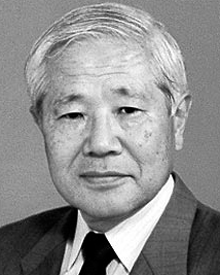 Toshihiko Yoshino合作论文数Faculty of Engineering, Gunma University6Tianji Li合作论文数5Song Meng合作论文数5WANG Shaokang (王少康)合作论文数5Hailong Xue合作论文数5
 Qiufeng Shang (尚秋峰)合作论文数Department of Electronic & Communication Engineering, North China Electric Power University (Baoding)5Guang Yan合作论文数5Wenchao Bao合作论文数4




