The milking manipulator is the primary operator of the Automatic Milking System (AMS), capable of automating processes such as cup attachment, teat massage, and milking to reduce labor intensity and enhance production quality and efficiency. However, current manipulators generally suffer from issues such as excessive size, insufficient flexibility, and low efficiency. This paper mainly presents a dexterous manipulator with a RigidFlexible Coupling End-Effector (RFCE), featuring flexible finger mechanisms that can switch between various states to accommodate different cup attachment stages and adapt to teats in various spatial orientations. Firstly, through an introduction to the structural design, hardware architecture, and software system of the robot, the design philosophy and operational principle of the robot system are comprehensively elucidated. Subsequently, the forward kinematic model of the manipulator is proposed and the inverse kinematic model based on the semianalytical method is established. The workspace, dexterity, and efficacy of the inverse solution algorithm were analyzed through simulation. Then, a static model of the flexible joint was formulated based on the Cosserat theory. The deformation behavior of the flexible joint was analyzed, and the kinematic model was adjusted accordingly. Finally, experiments are conducted to validate the static model, the manipulator's positioning accuracy, and the actual task performance. Experimental data shows that the manipulator's absolute positioning accuracy is 1.32 mm, with a single cup attachment time of no more than 6 s and a success rate of no less than 95 %. Simulation and experimental results indicate that the developed dexterous manipulator possesses excellent flexibility and the capability to perform milking operations.
In recent years, mechanization and greening have become the inevitable trend of agricultural development. Plant factories have the advantages of high planting area efficiency, stable crop growth and continuous production. Although its demand and scale are increasing, there is still a lack of low-carbon research on the layout of plant factory, which leads to the restriction of actual production capacity and unnecessary waste of resources and environmental burden. Therefore, this paper takes a leafy vegetable processing plant factory as the research object and puts forward a plant layout design based on the improved system layout planning (SLP) method for the design requirements of high yield, high efficiency and low carbon. In this paper, the initial layout plan of a vegetable processing plant is output by combing the plant foundation data (PQRST) needed for layout planning, analyzing and quantifying the logistic, carbon emission, and non-logistic relationships among the operating units. And draw the position correlation map and the area correlation map based on the integrated relationship, and correct them according to the actual constraints and restrictions. For the three alternative layout schemes of the plant factory based on the improved SLP method, the material flow volume and carbon emission factors of the schemes are calculated and analyzed, and the optimal layout scheme 2 is determined according to the results. Combined with the parameter design scheme of the production line, the layout scheme of the vegetable processing plant and the factory simulation software, the detailed design of the layout factory simulation model is established, and the original scheme is compared with the new scheme to verify the design effect.
Acoustically actuated bubbles provide a versatile and non-invasive approach for manipulating microorganisms in fluid. However, the susceptibility of the bubble volume to environment and the complex intersecting vortices of the oscillation of hemispherical bubbles reduce the stability of micromanipulation of ellipsoid-like organisms. This study involves an on-chip rotational manipulation device for rotating ellipsoid-like organisms, which utilizes parallel microstreaming vortices that are generated with acoustically actuated semi-capsule-shaped bubbles. In addition, a relatively stable volume of the semi-capsule-shaped bubble with tolerances about 5% is realized by adjusting the gas diffusion between the bubble and the gas channel. Characterized experiments using polystyrene particles of 10 μm demonstrate that two pairs of significant out-of-plane parallel microstreaming vortices can be generated near the short or long side of a semi-capsule-shaped bubble at acoustic driving frequencies of 11.23kHz and 13.97kHz, respectively. The vortices effectively induce rotation both for the spherical particles and the ellipsoid-like paramecia in fluid. Compared to oscillating hemispherical bubbles, acoustically actuated semi-capsule-shaped bubbles offer a more stable attitude of the rotation axis and even rotation velocity for paramecia. The acoustically actuated semi-capsule-shaped bubbles offer a label-free method for rotational manipulation of ellipsoid-like organisms, characterized by good stability, adaptability, and biocompatibility.
Stakeholder Value Networks (SVN) is a method for identifying and prioritizing stakeholders and their associated requirements in complex engineering systems. Academics and companies have made great strides in the theoretical research and case studies of constructing the Stakeholder Value Networks Model (SVNM). However, most of the developed cases lack a modularized, scalable and traceable construction method to codify SVNM for stakeholders and requirements prioritization, which leads to problems such as low reuse rate of the model elements, poor configuration flexibility and lack of ability to connect with the analysis platform and system model. To address these issues, we propose a construction method of the SVNM based on Model-Based Systems Engineering (MBSE) from the perspective of model reusability, consistency and continuity. In this method, a SVNM is gradually constructed by using the MBSE modeling method “ARCADIA”, the MBSE modeling software “Capella” and some open-source add-ons. The model includes two steps of the mapping and quantifying in SVN method and can be connected to an analysis platform named Dependency Structure Matrix (DSM) modelling platform to implement the remaining steps of searching and analyzing. Furthermore, the results of the search and analysis can be used to prioritize stakeholders and requirements and recorded in the MBSE environment by modeling stakeholder requirements (SHRs). Then, we demonstrate the applicability of this method based on a case study of robotic vertical farming systems (RVFS). Finally, the RVFS-SVNM are modeled and analyzed in ARCADIA/Capella and DSM modeling platform, and the RVFS-SHRs are recorded in ARCADIA/Capella. The method can enable the prioritization of stakeholders and requirements to trace the entire system model and drive requirements engineering toward Model-Based Requirements Engineering (MBRE).
In confined multi-obstacle environments, generating feasible paths for continuum robots is challenging due to the need to avoid obstacles while considering the kinematic limitations of the robot. This paper deals with the path-planning algorithm for continuum robots in confined multi-obstacle environments to prevent their over-deformation. By modifying the tree expansion process of the Rapidly-exploring Random Tree Star (RRT*) algorithm, a path-planning algorithm called the continuum-RRT* algorithm herein is proposed to achieve fewer iterations and faster convergence as well as generating desired paths that adhere to the kinematic limitations of the continuum robots. Then path planning and path tracking are implemented on a tendon-driven four-section continuum robot to validate the effectiveness of the path-planning algorithm. The path-planning results show that the path generated by the algorithm indeed has fewer transitions, and the path generated by the algorithm is closer to the optimal path that satisfies the kinematic limitations of the continuum robot. Furthermore, path-tracking experiments validate the successful navigation of the continuum robot along the algorithm-generated path, exhibiting an error range of 2.51%-3.91%. This attests to the effectiveness of the proposed algorithm in meeting the navigation requirements of continuum robots.
A new type of continuous harvester is designed to address the problems of high labor cost and low efficiency in the process of harvesting lettuce in greenhouse hydroponics. The designed harvester is mainly composed of three parts, namely, reciprocating cutter, driving mechanism, and belt conveyor. The response surface method is used to establish the mathematical model between the force acting on the lettuce roots and the reciprocating speed of the cutter, the inclination angle of the cutter, and the conveying speed of lettuce. The reliability of the mathematical model is verified, and the optimal parameter combination of the force on the lettuce root is obtained. Considering the actual harvesting method, the destruction rate, damage rate, and success rate of lettuce are used as the design indexes in the experiment. Results showed that the force on the lettuce stem is the smallest under the optimal parameter combination of the reciprocating motion speed of the cutting blade (100 mm/s), the inclination angle of the cutting blade (2.31°), and the conveying speed of the lettuce (64.49 mm/s). When the minimum force is 1.91 N, the destruction rate of lettuce harvest is 1.85%, the damage rate of lettuce is 3.71%, and the success rate of lettuce harvest is 94.44%. This study offers a potential solution for the automatic harvesting of hydroponic lettuce in a greenhouse.
玉米果穗分配器是玉米收获机中剥皮机的重要组成部分,直接决定了玉米果穗的分配效果和剥皮胶辊的使用寿命.针对设施蔬菜收获劳动强度大和成本高等问题,结合目前我国设施蔬菜收获的机械化和全自动化程度低的现状,设计了一台多槽连续自动收获机,可实现设施蔬菜聚拢拔起、夹持输送、根茎切除全自动一体化收获.首先,阐述了设施蔬菜收获机整机结构设计及工作原理,根据成熟蔬菜的几何参数完成了关键机构的设计;然后,探索通过离散元的方法进行切割过程仿真试验与分析,搭建了刀具-蔬菜摩擦因数测试平台,对刀具与蔬菜根茎间的动、静摩擦因数进行测量,最终建立了离散元蔬菜切割模型.进行样机试验并结合正交试验方法对刀具的结构及运动参数进行优化,结果表明:切割刀具所对应的最佳结构及运动参数为双刀片距3 mm、刀片转速800r/min、辅助固定刀片刀尖角度18°.
The advantages of biaxial polypropylene (BOPP) film make it very valuable to use, but the bottleneck of its production line hinders the development of its production capacity. In this paper, based on the plant simulation computer simulation platform, taking BOPP production line as a case study, the identification and solution of production bottleneck of serial production line are studied. The results show that the production bottleneck exists in the film production line, and the three optimization schemes can alleviate the production bottleneck to a certain extent. The feasibility of some optimization and bottleneck identification methods and computer simulation methods are verified.
This paper presents a conceptual product design method that considers the carbon emission factors of mechanical and electrical products. This method aims to consider low carbon issues prior to product design. Based on a comprehensive analysis of conventional product design procedures, the study extracts design information related to greenhouse gas (GHG) emissions, itemizes and quantifies the information, and ultimately uncovers the relationship among carbon emissions, function, and economic factors of newly designed products. This study explains the proposed concepts of carbon efficiency (CE) and carbon factor and combines them with the product design process to present a low-carbon design process of mechanical and electrical products. Furthermore, this paper presents a low-carbon design method of mechanical and electrical products, drawing on the product family design idea, with GHG efficiency and cost constraint. In particular, GHG efficiency pays attention to product function realization efficiency and economic factors. The potential value of the method is demonstrated in a case study of a tomato picking robot.
Tomato localization is the main difficulty of tomato picking robots vision system. To provide robots vision system with the accurate position of tomatoes, this paper collects images with a binocular camera, provides the principle of binocular ranging, and improves the census stereo matching algorithm. The improved algorithm betters the area matching process: only the areas containing tomatoes are matched, more constraints are applied on the area matching, and the Localization of tomatoes in overlapping areas is optimized. Compared with stereo processing by semiglobal matching and mutual information (SGBM) algorithm and pyramid stereo matching network (PSMnet), the improved algorithm achieved an extremely small disparity error. The absolute error maximized at 4 pixels. The matching time for a single image was 10 ms at the most. In this way, the matching time is improved significantly. Experimental results show that the improved census matching algorithm provided tomato picking robots vision system with more accurate localization information, and greatly improved the picking efficiency.
针对灾害救援的复杂性、危险性,提出一种高负载自重比的救援机械臂构型,建立三维模型,通过Denavit-Hartenberg方法对五自由度机械臂建立正逆运动学模型,利用MATLAB机器人工具箱构建救援机械臂的仿真模型,验证运动学模型的正确性,采用10输入、5输出、3层的BP神经网络进行逆运动学解的预测,对用解析法得到的4组运动学逆解进行筛选,从而得到唯一的精确逆解,为后续机械臂的轨迹规划的实现奠定了基础.
Environmental problems are common challenges in today's world. Under the requirements of emission peak and carbon neutrality, the research on energy saving and carbon reduction of manufacturing system is the general trend. In the design stage of production system, the demand of capacity and low carbon emission should be taken into account. In this paper, the leafy vegetable production system in protected agriculture is taken as the research object, and the quantitative mathematical model of carbon emission of production system is established based on the whole life cycle analysis, and the digital simulation model of production system is established by Tecnomatix Plant Simulation 15.2. Combining the mathematical model with the simulation model, by designing multi-factor and multi-level simulation experiments, this paper explores the relationship between the design parameters of production system,production capacity and carbon emission, so as to guide the optimal decision of low-carbon design scheme. In the future, the carbon footprint-production system model proposed in this paper can be used to predict and trace the carbon emissions. This paper has certain theoretical and practical significance for the low-carbon research of production system.
玉米果穗分配器是玉米收获机中剥皮机的重要组成部分,直接决定了玉米果穗的分配效果和剥皮胶辊的使用寿命.为此,针对玉米收获机剥皮阶段中分配器分配不均、剥皮胶辊磨损严重等问题,基于TRIZ理论对现有玉米果穗分配器进行优化设计,并对玉米果穗受力分析,确定了影响玉米果穗下落的几个主要参数.运用EDEM仿真软件进行了100组仿真实验,运用DPSv7.05对实验数据进行数据拟合,得出影响参数与分配均匀度之间的解析关系,确定最优工作参数,即导板间夹角θ=37°,螺纹滚轴转速n=115r/min,螺纹间距L=64mm.实验结果表明:玉米果穗分配基本均匀且效果稳定,验证了优化设计的可行性.研究结果可为解决物体分配不均问题提供参考.
The current traditional method of plant layout is still relied upon in design and does not take into account factors such as facilities and equipment, personnel and materials. In order that the problem of interaction and integration between the virtual and physical worlds in the plant design process can be solved, this paper proposes a layout and simulation technique based on the SLP method to carry out the analysis of the digital design of a tomato plant plant as an example.First, the tomato digital factory is studied, and the layout scheme is obtained by combining the SLP design method in a comprehensive way. Then, the digital modeling of parametric modular one-to-one correspondence is performed to integrate the digital twin model. Finally, the feasibility of the design scheme is verified by using PlantSimulation modeling simulation, which provides a new design idea for the digital design of intelligent factory.
With the rapid development of electronic information technology, tomato picking intelligence and mechanization are getting higher and higher attention. In this paper, the author analyzes the tomato growing environment, picking characteristics, and related products, and then proposes a design method combining KANO-FAST-FBS. Firstly, the author obtains user requirements through field research and user research. Secondly, the author classifies the importance of user requirements through KANO model. Thirdly, the author uses FAST to sort out the product functions and uses FBS to establish the mapping from user requirements to product structure. Through the above research, the design strategy of picking robot is put forward.
In the complex environment of greenhouses, it is important to provide the picking robot with accurate information. For this purpose, this paper improves the recognition and detection method based on you only look once v5 (YOLO v5). Firstly, adding data enhancement boosts the network generalizability. On the input end, the k-means clustering (KMC) was utilized to obtain more suitable anchors, aiming to increase detection accuracy. Secondly, it enhanced multi-scale feature extraction by improving the spatial pyramid pooling (SPP). Finally, non-maximum suppression (NMS) was optimized to improve the accuracy of the network. Experimental results show that the improved YOLO v5 achieved a mean average precision (mAP) of 97.3%, a recall of 90.5%, and an F1-score of 92.0%, while the original YOLO v5 had a mAP of 95.9% and a recall of 85.6%; the improved YOLO v5 took 57ms to identify and detect each image. The recognition accuracy and speed of the improved YOLOv5 are much better than those of faster region-based convolutional neural network (Faster R-CNN) and YOLO v3. After that, the improved network was applied to identify and detect images take in unstructured environments with different illumination, branch/leave occlusions, and overlapping fruits. The results show that the improved network has a good robustness, providing stable and reliable information for the operation of tomato picking robots.
Because of the global competition of greenhouses and the importance of the global food safety, designing higher yield and efficiency greenhouse systems becomes a hot spot problem. A greenhouse designed for industrial head lettuce production not only can increase yield by using A-Frame systems, but can also improve efficiency through an operation process of alleviating human labor by machines. However, the facility layout problem (FLP) of greenhouse with complex crop production system and multi machines was always ignored in the past decades. In order to maximize production capacity and efficiency, the FLP of greenhouse should be considered as an essential section at the conceptual design phase. To overcome these problems, a framework integrating systematic layout planning (SLP) and simulation is proposed to design and evaluate facility layout in greenhouses. When applying the framework to the facility layout for industrial head lettuce production, we can get the optimal layout plan which lead to a daily production of 7752 head lettuces within about 98 min in a greenhouse of 14,784 m(2) and an efficiency improvement of 67.31% compared with another initial layout plan. These research results can help the designer find a more effective layout and the managers to support decisions before greenhouse construction.
In order to recognize and detect tomatoes for providing accurate location information for tomato picking robot under the complex environment of facility greenhouse, the recognition and detection method based on YOLOV5 was adopted in this paper. The data enhancement method was used to improve the generalization ability of network model. The binocular camera was also used to collect images to match and calculate the central pixel of the detected tomatoes, according to the binocular ranging principle. At the same time, the parallax value of the detected tomatoes was compared with the real value in different environments. It is proved that the mAP of YOLOV5 method is 96%, the absolute value of stereo matching error is less than 3 pixels, and the matching time of single image is less than 10ms, which effectively improves the accuracy and efficiency of picking robot.
This paper presents a new vaporizing liquid microthruster (VLM), which is driven by the vaporizing liquid with planar induction heating. The developed microthruster mainly consists of an inlet, a microchannel, a vaporizing chamber, a micronozzle, a microheating plate and an external excitation coil. Experiments of the apparent power required to achieve a complete vaporization of the propellant with different flow rates were carried out. Thrust forces of the new VLM were characterized with water as the propellant. A maximum thrust of 970 mu N was obtained with 5.30 mg/s propellant consumption and an apparent power of 9.31 VA. (C) 2020 Elsevier B.V. All rights reserved.
This paper presents a study of a new tubular vaporizing liquid micro-thruster (VLM) with induction heating. The developed micro-thruster consists of a micro-heater core, an excitation coil, a vaporizing chamber, a nozzle and a micro-channel, all integrated in a glass tube with a dimension of 3 mm (outer diameter) × 18 mm (length). The temperature of the micro-heater core is tested with experiments and an optimal AC frequency is selected for the VLM based on the experimental tests. Vaporization of water-propellant feeding with different flow rates range of 0.1 ml/min − 0.3 ml/min is demonstrated. A maximum thrust force of 680 μN at 0.3 ml/min propellant consumption rate is realized measured with a pendulum thrust stand. Comparing with other VLMs, one merit of the new VLM is that there is no physical connection between the micro-heater core and the power supply. Other merits of the new VLM proposed by this paper is that it can work with a larger input power, provide more heat energy and generate a relative larger thrust force.
 Yu Zhu (朱煜)合作论文数Institute of Mechatronics Engineering, Department of Mechanical Engineering, Tsinghua University9
 Zihua Zhang (章子华)合作论文数School of Civil and Environmental Engineering, Ningbo University7
 Yongbing Feng合作论文数5
 Bendong Liu (刘本东)合作论文数College of Mechanical Engineering and Applied Electronics Technology, Beijing University of Technology5
 Guanghong Duan (段广洪)合作论文数Department of Precision Instrument, Tsinghua University5Xiaona Sun (孙晓娜)合作论文数4Shuangyou Wang合作论文数4Jiahui Yang合作论文数4
 Fei Ma (马飞)合作论文数School of Metallurgical Engineering, University of Science and Technology Beijing4Zhenjiang Zhu合作论文数3LianShi Li (李炼石)合作论文数3Ciyin Shuai合作论文数3Yingxing Fang合作论文数3Tian Yuxuan (田钰瑄)合作论文数3Zengya Dong (董增雅)合作论文数3Shuai MA (马帅)合作论文数3Yuezong Wang (王跃宗)合作论文数College of Mechanical Engineering and Applied Electronics Technology, Beijing University of Technology3
 Desheng Li (李德胜)合作论文数College of Mechanical Engineering and Applied Electronics Technology, Beijing University of Technology3
 Hao Wang (王皓)合作论文数School of Mechanical Engineering, Shanghai Jiao Tong University3JiChao Liu (刘继超)合作论文数Beijing Sanyuan Foods Co.,Ltd.3Han Ren合作论文数3
 Qixiao Xia (夏齐霄)合作论文数北京联合大学机电学院3Shiyue Pan合作论文数2Xinyue Du合作论文数2WEI Xiao-quan合作论文数2Weidong Zhao (赵韦东)合作论文数2Yuhang Zheng合作论文数2Bowen Li合作论文数2Juan Huang合作论文数2Haifeng Xie (谢海峰)合作论文数2DeQiu Yang (杨德秋)合作论文数2Ming Gao (高鸣)合作论文数2
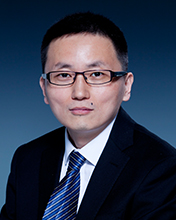 Ming Zhang (张鸣)合作论文数Department of Mechanical Engineering, Tsinghua University2
 Jing Zhao (赵京)合作论文数Beijing University of Technology2
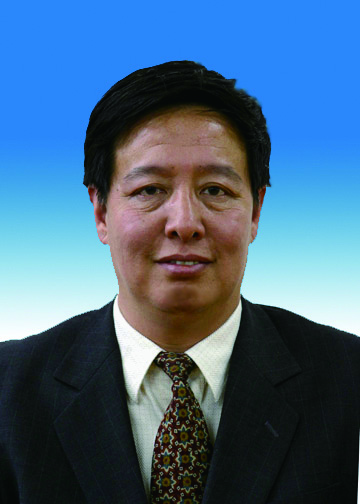 Weidong Luo (罗维东)合作论文数School of Mechanical Engineering, University of Science and Technology Beijing2
 Jing Liu (柳靖)合作论文数School of Civil and Resource Engineering, University of Science and Technology Beijing2Duan Guanghuang合作论文数2Xu Yang合作论文数1Binglong Liu合作论文数1Yongzhi Liang合作论文数1Boxing Tian (田博兴)合作论文数1Xinrui Li合作论文数1Yongzhong Zhang合作论文数1yang xing (杨行)合作论文数1Xue Yang合作论文数1Qun LIU (刘群)合作论文数1Yikang Du (杜以康)合作论文数1Li Fengjun (李峰军)合作论文数1Kai WANG (王凯)合作论文数1




