This paper adopts a latent forest model for mixed data analysis. Unlike traditional latent tree model, the adopted model is more flexible with several trees, and observed variables are allowed to appear as internal nodes. This model can capture more complex potential mechanisms behind data. We address the latent structural learning and the parameter estimation for this model. For structural learning, we propose a consistent bottom-up algorithm and provide a theoretical guarantee on a finite sample size bound for the exact structural recovery. For parameter estimation, we introduce a moment estimator algorithm and demonstrate that the estimator is asymptotically normal. The simulation studies indicate that our algorithms performed well for learning the mixed latent forest model. The real data analysis shows that the learned model captured the hierarchical structure and latent information behind the Changchun mayor hotline data.
Causal discovery and representation involving latent variables and structures have attracted growing interest in the era of artificial intelligence, particularly for their critical role in understanding real-world data. While many existing methods focus exclusively on either purely continuous or purely discrete data, this paper addresses the challenge of learning latent structures from mixed data. We propose a novel semi-parametric tree model capable of handling mixed data and develop an algorithm for learning the structure of this model using additive information distances. We demonstrate that this algorithm efficiently and accurately recovers the true structure, given the information distances. Additionally, the sample-based version of the structural learning algorithm achieves probabilistic approximate correctness, with a finite sample bound established for exact structural recovery. Both simulated and real data are used to assess the performance of our proposed algorithm, with experimental results showing that our algorithm can effectively discover latent hierarchical structures behind mixed data.
Independence testing involves determining whether two variables are independent based on observed samples, which is a fundamental problem in statistics and machine learning. Existing testing methods, such as HSIC, can theoretically detect broad forms of dependence, but may sacrifice statistical power when applied to limited samples with background knowledge of the distribution. In this paper, we focus on the linear non-Gaussian data, a widely supported model in scientific data analysis and causal discovery, where variables are linked linearly with noise terms that are non-Gaussian distributed. We provide a new theoretical characterization of independence in this case, showing that constancy of the conditional mean and variance is sufficient to guarantee independence under linear non-Gaussian models. Building on this result, we develop a kernel-based testing framework with provable asymptotic guarantees. Extensive experiments on synthetic and real-world datasets demonstrate that our method achieves higher power than existing approaches and significantly improves downstream causal discovery performance.
Variable clustering is an important tool for mining association rules and explaining the latent mechanisms responsible for generating data. In this work, we aim to study the hierarchical variable clustering algorithm based on the paralinear distance between discrete variables. Firstly, we study the paralinear distance with the multinomial distribution, and point out that any distance with additivity on the graphical tree model has a unique form on the paralinear distance. And then, we suggest a novel hierarchical clustering algorithm, which can determine the local relationships of observed variables as sibling groups and singletons in each level, where the hierarchical structures are indicated between the levels. Furthermore, we show the probably approximately correct (PAC) property of the algorithm, and find out that its sample complexity is sensitive to the diameter of the tree. Finally, by using GPU computation, we demonstrate our discoveries and the applications of our learning algorithms through large-scale experiments on both synthetic and real-world data. Extensive empirical results show that the proposed method is efficient for discovering local structures and latent information.
In the field of coherent diffraction imaging, phase retrieval is essential for correcting the aberration of an optic system. For estimating aberration from intensity, conventional methods rely on neural networks whose performance is limited by training datasets. In this Letter, we propose an untrained physics-driven aberration retrieval network (uPD-ARNet). It only uses one intensity image and iterates in a self-supervised way. This model consists of two parts: an untrained neural network and a forward physical model for the diffraction of the light field. This physical model can adjust the output of the untrained neural network, which can characterize the inverse process from the intensity to the aberration. The experiments support that our method is superior to other conventional methods for aberration retrieval.
In recent years, mixed Bayesian networks have received increasing attention across various fields for probabilistic reasoning. Though many studies have been devoted to propagation computation on strong junction trees for mixed Bayesian networks, few have addressed the construction of appropriate strong junction trees. In this work, we establish a connection between the minimal strong triangulation for marked graphs and the minimal triangulation for star graphs. We further propose a minimal strong triangulation method for the moral graph of mixed Bayesian networks and develop a polynomial-time algorithm to derive a strong junction tree from this minimal strong triangulation. Moreover, we also focus on the propagation computation of all posteriors on this derived strong junction tree. We conducted multiple numerical experiments to evaluate the performance of our proposed method, demonstrating significant improvements in computational efficiency compared to existing approaches. Experimental results indicate that our minimal strong triangulation approach provides a robust framework for efficient probabilistic inference in mixed Bayesian networks.
Inverse synthetic aperture LiDAR (ISAL) can create high-resolution images within a few milliseconds, which are employed for long-range airspace target identification. However, its optical signal characteristics incur the non-negligible higher-order kinematic parameters of the target and phase errors due to atmospheric turbulence. These higher-order parameters and phase errors make it challenging for imaging the ISAL signals. In this paper, we propose an approach integrating the RD algorithm with an image translation network. Unlike the conventional methods, our approach does not require high accuracy in estimating each target motion and atmospheric parameter. The phase error of the RD image is fitted by an image translation network, which greatly simplifies the computational difficulty of the ISAL imaging model. The experimental results demonstrate that our model has good generalization performance. Specifically, our method consistently performs well in capturing the target information under different types of noise and sparsity aperture (SA) rates compared to other conventional methods. In addition, our approach can be applied to the measured data after training the network by using simulated data.
With the development of space detection technology, the detection of long-range dark and weak space targets has become an important issue in space detection. Cross-strip anode photon imaging detectors can detect weak light signals with extremely low dark count rates and are well suited to applications in long-range target detection systems. Since cross-strip anode detectors are expensive to develop and fabricate, a theoretical analysis of the detection process is necessary before fabrication. During the detection process, due to the dead time of the detector, some photon-generated signals are aliased, and the true arrival position of the photon cannot be obtained. These aliased signals are usually removed directly in the conventional research. But in this work, we find that these aliased signals are not meaningless and can be applied to center of mass detection. Specifically, we model the probabilistic mechanisms of the detection data, compute the average photon positions using aliased and non-aliased data and prove that our method provides a lower variance compared to the conventional method, which only uses non-aliased data. Simulation experiments are designed to further verify the effectiveness of the aliasing data for detecting the center of mass. The simulation results support that our method of utilizing the aliasing data provides more accurate detection results than that of removing the aliasing data.
The Latin hypercube design (LHD), because of its one-dimensional projection uniformity, is commonly used in computer experiment. The randomly generated LHD may have too many concentrated design points, and factors may be highly correlated. In this article, we suggested a local greedy strategy for searching optimal LHDs. Our strategy consists of two parts. One is a swap process for doing a local greedy search in a polynomial time. The other is a simulated annealing process for jumping out of the possible local optima. Our strategy is flexible and adapts to various space-filling criteria of LHDs. The simulated experiments illustrated that our proposed algorithm can produce LHDs with well space-filling property and orthogonality. Compared to other classical design algorithms, our algorithm performed better on the criteria related to the point distance and the column correlation. Moreover, for the response surface approximation, the Kriging model using our produced optimal LHD performed more robust on the surface prediction.
In this paper, we deal with the Cauchy image restoration problem under the maximum a posteriori framework. We propose a novel image prior, weighted hyper-Laplacian prior with overlapping group sparsity on the image gradient. This prior allows us to simultaneously promote the structural and pixel-level sparseness of the natural image gradient. The performance can be further improved by introducing the in-group-weights to balance the different scales of the components within each group. To tackle the corresponding optimization problem, we present a novel quadratic majorizer for majorization-minimization. We adopt the non-convex alternating direction method of multipliers as the main algorithm framework. The proposed regularizer can be reduced to the related variational regularizers including the total variation, the hyper-Laplacian, and the total variation with overlapping group sparsity. The comparative experiments with those existing gradient-based regularizers demonstrate the effectiveness of the proposed method in terms of PSNR and SSIM values.
Zernike expansion is an important tool for aberration retrieval in the optical field. The Zernike coefficients in the expansion can be solved in a linear system from those focal region intensity images, which can be modeled by the extended Nijboer–Zernike approach. Here we point out that those coefficients usually follow from different prior distributions, and especially, their variances could be dramatically diverse. To incorporate the prior information, we further introduce customized penalties to those Zernike coefficients and adopt a global adaptive generative adjustment algorithm for estimating coefficients. Based on both simulated and real data, numerical experiments show that our method outperforms other conventional methods, and provides an estimate of Zernike coefficients with a low mean square error.
The aim of cognitive diagnosis is to classify respondents' mastery status of latent attributes from their responses on multiple items. Since respondents may answer some but not all items, item-level missing data often occur. Even if the primary interest is to provide diagnostic classification of respondents, misspecification of missing data mechanism may lead to biased conclusions. This paper proposes a joint cognitive diagnosis modeling of item responses and item-level missing data mechanism. A Bayesian Markov chain Monte Carlo (MCMC) method is developed for model parameter estimation. Our simulation studies examine the parameter recovery under different missing data mechanisms. The parameters could be recovered well with correct use of missing data mechanism for model fit, and missing that is not at random is less sensitive to incorrect use. The Program for International Student Assessment (PISA) 2015 computer-based mathematics data are applied to demonstrate the practical value of the proposed method.
Charge dissociation in the active layer is one of the key factors for the power conversion efficiency of bulk heterojunction organic solar cells (OSCs). Numerous charge-transfer mechanisms have been proposed based on one of few microscopic models. Here, we would explore possible charge-transfer mechanisms for 155 models of donor/acceptor (D/A) interfaces, built via materials D-CV-1 and C-60 as the donor and acceptor, respectively. After the calculations of the key parameters related to the charge dissociation and a statistical analysis for the correlation between these parameters were carried out, we can obtain a more robust description of the charge dissociation in practical OSCs. The complicated relationship among the key parameters not only illustrates the important correlation between the D/A stacking pattern and charge-transfer mechanism but also suggests that different charge-transfer mechanisms take place more likely depending on the specific arrangements of the donor and acceptor.
Due to the ill-posed nature of image restoration, seeking a meaningful image prior is still a great challenge in the field of image processing. The total variation with overlapping group sparsity (OGS-TV) has been successfully applied for image denoising/deblurring. In this paper, we further study the overlapping group sparsity of the image gradient. The sparsity is measured by the l(q) quasi-norm (0 < q < 1). The proposed regularizer comes down to the well-known hyper-Laplacian prior if the overlapping group size is 1. Although it seems to be a simple extensive study compared with the previous works, its regularization capability and corresponding mathematical problems are still in demand for imaging science. To solve the non-convex and non-smooth minimization problem, we use the alternating direction method of multipliers as the main algorithm framework. The difficult inner subproblem is tackled by the majorization-minimization method with the sophisticatedly derived majorizer. We carry out some numerical experiments to demonstrate the effectiveness of the proposed regularizer in terms of PSNR and SSIM values. (C) 2020 Elsevier B.V. All rights reserved.
Latent structural learning has attracted more attention in recent years. But most related works only focuses on pure continuous or pure discrete data. In this paper, we consider mixed latent tree models for mixed data mining. We address the latent structural learning and parameter estimation for those mixed models. For structural learning, we propose a consistent bottom-up algorithm, and give a finite sample bound guarantee for the exact structural recovery. For parameter estimation, we suggest a moment estimator by exploiting matrix decomposition, and prove asymptotic normality of the estimator. Experiments on the simulated and real data support that our method is valid for mining the hierarchical structure and latent information.
Many traditional signal recovery approaches can behave well basing on the penalized likelihood. However, they have to meet with the difficulty in the selection of hyperparameters or tuning parameters in the penalties. In this article, we propose a global adaptive generative adjustment (GAGA) algorithm for signal recovery, in which multiple hyperpameters are automatically learned and alternatively updated with the signal. We further prove that the output of our algorithm directly guarantees the consistency of model selection and signal estimate. Moreover, we also propose a variant GAGA algorithm for improving the computational efficiency in the high-dimensional data analysis. Finally, in the simulated experiment, we consider the consistency of the outputs of our algorithms, and compare our algorithms to other penalized likelihood methods: the Adaptive LASSO, the SCAD and the MCP. The simulation results support the efficiency of our algorithms for signal recovery, and demonstrate that our algorithms outperform the other algorithms.
In this paper, we discuss the acceleration of the regularized alternating least-squares (RALS) algorithm for tensor approximations. We propose a fast iterative method using an Aitken-Stefensen-like update for the regularized algorithm. Through numerical experiments, a faster convergence rate for the accelerated version is demonstrated in comparison to both the standard and regularized alternating least-squares algorithms. In addition, we analyze global convergence based on the KurdykaŁojasiewicz inequality, and we show that the RALS algorithm has a linear local convergence rate.
The goal of this paper is to find a low-rank approximation for a given tensor. Specifically, we give a computable strategy on calculating the rank of a given tensor, based on approximating the solution to an NP-hard problem. In this paper, we formulate a sparse optimization problem via an l_1-regularization to find a low-rank approximation of tensors. To solve this sparse optimization problem, we propose a rescaling algorithm of the proximal alternating minimization and study the theoretical convergence of this algorithm. Furthermore, we discuss the probabilistic consistency of the sparsity result and suggest a way to choose the regularization parameter for practical computation. In the simulation experiments, the performance of our algorithm supports that our method provides an efficient estimate on the number of rank-one tensor components in a given tensor. Moreover, this algorithm is also applied to surveillance videos for low-rank approximation.
In this paper, we discuss the acceleration of the regularized alternating least square (RALS) algorithm for tensor approximation. We propose a fast iterative method using a Aitken-Stefensen like updates for the regularized algorithm. Through numerical experiments, the fast algorithm demonstrate a faster convergence rate for the accelerated version in comparison to both the standard and regularized alternating least squares algorithms. In addition, we analyze the global convergence based on the Kurdyka- Lojasiewicz inequality as well as show that the RALS algorithm has a linear local convergence rate.
The article raised a user-friendly interactive approach-Attraction Propagation (AP) in segmentation of colorectal polyps. Compared with other interactive approaches, the AP relied on only one foreground seed to get different shapes of polyps, and it can be compatible with pre-processing stage of Computer-Aided Diagnosis (CAD) under the systematically procedure of Optical Colonoscopy (OC). The experimental design was based on challenging distinct datasets that totally includes 1691 OC images, and the results demonstrated that no matter in accuracy or calculating speed, the AP performed better than the state-of-the-art.
 Jianhua Guo (郭建华)合作论文数School of Mathematics and Statistics, Beijing Technology and Business University;School of Mathematics and Statistics, Northeast Normal University9
 Bin Wang合作论文数Medtronic4
 Carmeliza Navasca合作论文数Department of Mathematics, Clarkson University3
 Jun Liu (刘俊)合作论文数School of Mathematics and Statistics, Northeast Normal University2
 Wensheng Zhu (朱文圣)合作论文数School of Mathematics and Statistics, Northeast Normal University2
 Stefan Kindermann合作论文数Industrial Mathematics Institute, Johannes Kepler University2
 Yiqing Li合作论文数Department of Machine Learning, Mohamed Bin Zayed University of Artificial Intelligence1
 Boyang Sun合作论文数Mohamed Bin Zayed University of Artificial Intelligence1Shuo Li (李烁)合作论文数School of Computer Science and Technology, Fudan University1
 An Qichang合作论文数1Na Shan合作论文数1Ning Du合作论文数1
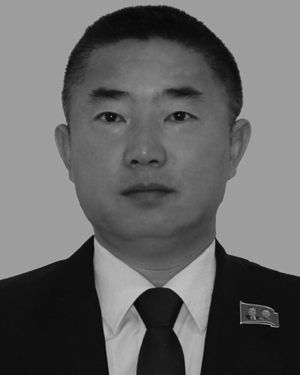 Kyongson Jon合作论文数Northeast Normal Univ, Sch Math & Stat, Key Lab Appl Stat MOE, Changchun 130024, Peoples R China1
 Xing Yu (邢宇)合作论文数1
 Alessandro Troisi合作论文数Department of Chemistry, School of Physical Sciences, Faculty of Science and Engineering, University of Liverpool1
 Peixian Chen合作论文数Dept Comp Sci & Engn, Hong Kong Univ Sci & Technol1
 Lizhu Hao (郝立柱)合作论文数School of Mathematics and Statistics, Northeast Normal University1
 Yun Geng (耿允)合作论文数School of Chemistry, Northeast Normal University1Ying Sun (孙颖)合作论文数Faculty of Education, Northeast Normal University1
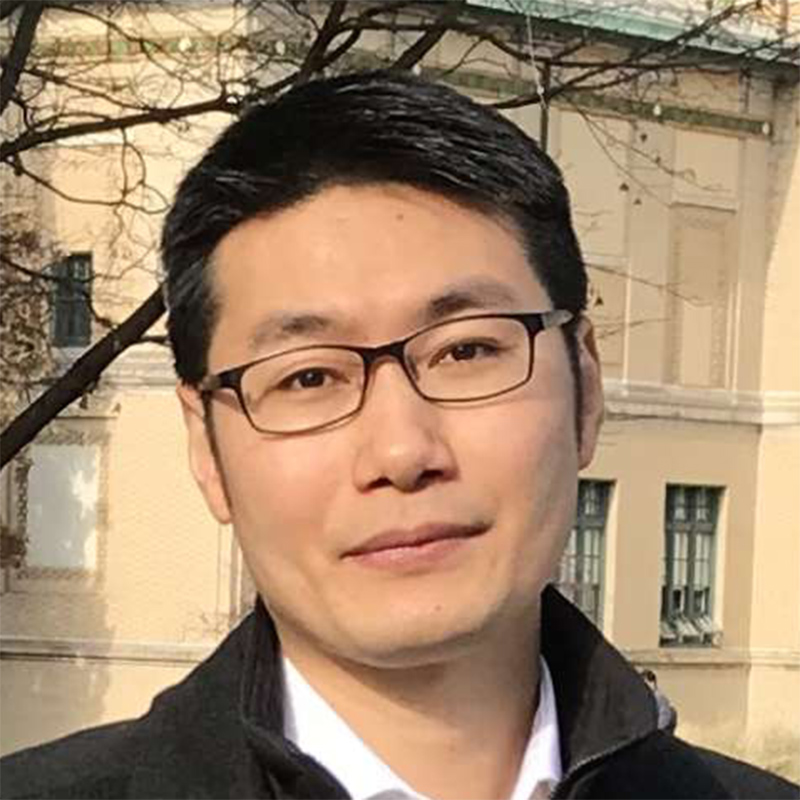 Kun Zhang合作论文数Department of Philosophy, Dietrich College of Humanities and Social Sciences, Carnegie Mellon University;Center for Integrative Artificial Intelligence, Mohamed bin Zayed University of Artificial Intelligence1
 Qiliang Ni (尼启良)合作论文数Changchun Institute of Optics, Fine Mechanics and Physics, Chinese Academy of Sciences;University of Chinese Academy of Sciences1
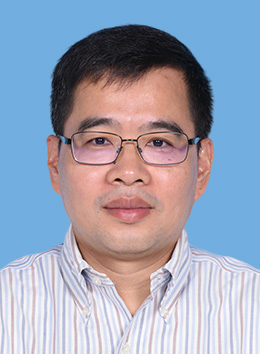 Nevin L. Zhang (張連文)合作论文数Department of Computer Science and Engineering, School of engineering, Hong Kong University of Science and Technology1
 Zhongmin Su (苏忠民)合作论文数College of Chemistry, Jilin University;State Key Laboratory of Supramolecular Structure and Materials, Jilin University1
 Xuming He (何旭铭)合作论文数Department of Statistics and Data Science, College of Arts & Sciences, Washington University in St. Louis1
 Meidong Xu (徐美东)合作论文数School of Medicine, Tongji University;East Hospital Affiliated to Tongji University1
 Zhi-Wen Zhao合作论文数1




