The Yangtze Platform is one of the most important tectonic units holding sedimentary-type phosphorite deposits in the world.The orebodies of phosphorite deposits are mainly hosted in the Upper Sinian-Lower Cambrian strata in the Yangtze Platform.Among them,the Yankong deposit in the northern Guizhou are rich in U,REE,and V,and is a representative phosphorite-type uranium deposit in China.In order to identify the occurrence and enrichment mechanism of uranium of the deposit,in this paper,we have conducted studies of mineralogy,elemental geochemistry and organic carbon contents of relevant samples from the deposit.Results of the EMPA WDS analysis and EDS Mapping show that uranium was mainly enriched in apatite in the form of isomorphic substitution,partly occurred as micron-sized independent uranium minerals,and partly adsorbed by clay minerals and organic matters.The phosphorite samples have Y/Ho values ranging from 55 to 66,obvious Ce-negative and Y-positive anomalies in the chondrite-normalized REE distribution patterns,indicating that the ore-forming materials in the Yankong deposit were mainly originated from the seawater authigenic sedimentation.The phosphorites are enriched in redox-sensitive elements,with average contents of 492×10-6,19.1×10-6 and 4611×10-6 for U,Mo and V,respectively,and average value of 1338,156 and 330 for the UEF,MoEF and VEF,respectively,suggesting that the P-U mineralization of the Yankong deposit occurred in a reduced environment.Compared with the contemporary phosphorite deposits in the region,it is suggested that the relatively reduced sedimentary environment and the relatively low sedimentary rate could be the important factors for the significant enrichment of REE and U in the Yankong deposit.
The Western Kunlun is a composite orogenic belt,formed through the tectonic assembly of multiple terranes or microcontinents of different geological eras.The most prominent tectonic activity is the multiple-stage convergence of the Tethys Ocean.The crustal-derived granites were formed by magmas of the remelting and metasomatism of crustal materials which resulted from the plate subduction,collision,and rifting processes.Alternatively,granites of various ages and types were formed by the magmatic differentiation,remelting differentiation,and crust-mantle co-melting triggered by the uplifted mantle materials into the crust.Based on a comprehensive analysis of diagenetic tectonic environments,material sources,and diagenetic processes,the genesis of granites in the Western Kunlun can be classified into five types including the crust-mantle co-melting,crustal metasomatic,crustal remelting,mantle-sourced remelting magmatic differentiation,and mantle-sourced magmatic differentiation ones.This classification scheme of granitoids is more based on their geological factors.It is helpful for deepening our fundamental understanding of geological processes and offering valuable insights for studying granitoids in the composite orogenic belts.This paper has integrated many research achievements of granitoids in the western Kunlun by researchers of the Institute of Geochemistry Chinese Academy of Sciences,and reviewed the petrological characteristics and genetic types of granitoids in the western Kunlun.
The Huichizi granite pluton,which is widely exposed in the Eastern Qinling tectonic belt,contains associated highly differentiated granite,pegmatite(dykes)and high-purity quartz deposits.However,the diagenetic connection between the pluton and its peripheral pegmatites and whether there is potential of the quartz in the pluton as a raw material for high purity quartz deserves to be further explored.In this paper,on the basis of field geological investigation,the cathodoluminescence(CL)imaging and in-situ trace element analysis of the quartzs of the Huichizi pluton have been carried out.The results show that the CL images of quartz grains are generally uniform and dark CL images,with no growth zones and rings,indicating that the quartz had not experienced the late stage modification.The quartzs have Ti contents varying from 2.05×10⁻⁶ to 26.4×10⁻⁶,with the corresponding Ti saturation temperatures vaying from 427℃ to 609℃,showing that the Huichizi granite pluton had undergone a relatively slow crystallization cooling process during the evolution of its magma.Compared with the pegmatites in the peripheral area,quartzs of the Huichizi pluton have relatively low Al/Ti and Ge/Ti ratios,indicating that there are obvious differences in the differentiation degree and evolution trend between magmas of these two types of rocks.This means that there is no genetic relationship between the pegmatites and the Huichizi granite pluton.In general,the average contents and average total amounts of Na,K,Ca,Fe,B,P,Li,Al and Ti of the quartzs from the Huichizi granite pluton are less than the threshold of the high-purity quartz,indicating that the Huichizi pluton has the potential to be the high-purity quartz raw material deposit.
Sedimentary phosphorites are widely distributed in Lower Cambrian strata across the Yangtze Platform. Notably, the phosphorites of the Laobao Formation in the Tongren area (eastern Guizhou Province) exhibit concurrent enrichment of uranium (U), lanthanides and yttrium (REY). Mineralogical analyses identified two distinct fluorapatites (Fap1 and Fap2) within these specific phosphorites: (i) Fap1 is widely distributed and exhibits a porous microstructure, whereas (ii) Fap2 is compositionally homogeneous and occurs as vein-like infillings within Fap1, suggesting that Fap1 represents primary sedimentary fluorapatite, while Fap2 reflects hydrothermal overprint. UPb dating of Fap1 yielded an age of similar to 525 Ma, constraining the formation of these phosphorites in eastern Guizhou to the early Cambrian. LA-ICP-MS analyses indicated that Fap1 and Fap2 displayed comparable concentrations of Na, Sr, Ba, REEs, Y, and U, suggesting minimal mobilization of these elements during fluid-rock interactions. Fap1 showed consistently elevated Y/Ho ratios, negative Ce anomalies, high Nd concentrations, and high F/P2O5 ratios. It indicated that these phosphorites were initially precipitated under oxic conditions, and highly efficient scavengers of REY during the deposition stage and facilitated the exceptional enrichment of U from the anoxic water during the deep burial stage, possibly facilitated by the relatively low sedimentation rates. This study demonstrated that persistent redox-evolution and low sedimentation rates were critical for facilitating the exceptional U-REY enrichment observed in the Tongren deposits as compared with coeval phosphorite deposits in the Meishucun and Zhijin areas. These findings provide a process-based framework for understanding the genesis of U-REY-enriched sedimentary phosphorites.
The East Qinling is one of the important pegmatite producing areas, and it is also a key area for the exploration and research of pegmatite rare metal minerals. The most important discovery in recent years is that a number of pegmatites in the Longquanping area are important raw material mines for high-purity quartz. However, there is still a lack of in-depth research on the specific lithological characteristics and zoning of these pegmatites. In this paper, mineralogical, chronological and isotope geochemical analyses of the No. 1 high-purity quartz-bearing pegmatite in this area are carried out on the basis of systematic field geological investigations. The U-Th-Pb dating results of zircon, monazite and columbite indicate that the pegmatite No. 1 was formed in the Early Devonian (398 similar to 404Ma), which is similar to the generation of highly differentiated magmatism on the region. The epsilon(Hf)(t) and epsilon(nd)(t) values of zircon and monazite are -5.9 similar to -5.2 and -13.7 similar to -11.5, respectively, suggesting that the pegmatite No. 1 is a product of partial melting of the ancient crust. The pegmatite vein is one of the largest pegmatites in the Longquanping area with 400 meters long and 5 meters wide, and mainly contains quartz, potassium feldspar, albite, tourmaline and mica. The No. 1 vein has obvious symmetrical structural zoning, which can be divided into quartz-potassium feldspar-albite-mica-biotite-tourmaline outer zone, quartz-potassium feldspar-albite-mica inner zone, and quartz core zone from outside to inside. Detailed microscopic observations revealed two types of quartz are developed in all three phases. Quartz (I) is massive and located in the core, with brighter cathodoluminescence images, indicating a primary crystallization property; quartz (II) is granular and located in the edge, with darker cathodoluminescence images, suggesting a recrystallization property. LA-ICP-MS analyses show that quartz (I) is more enriched in Li, Al and Ti than quartz (II) in different lithologies, which is relatively unfavorable to high-purity quartz, suggesting that the later modification recrystallization can effectively reduce the content of impurity elements in quartz. Compared with the outer zone and the core, the inner zone quartz has significantly lower contents of Li and Al, and comparable contents of Ti, B, Na, and Ge, suggesting that the quartz in this zone has more potential to become high-purity quartz. The above studies show that the obvious composition changes of quartz in pegmatites with different zoning are important problems for high-purity quartz exploration.
This study presents new cathodoluminescence images and trace element data for zircon from the Carboniferous Oytag pluton in the West Kunlun Orogenic Belt, northwest China. We identify oscillatory and sector-zoned zircon grains that reflect equilibrium and disequilibrium crystal growth within the same trondhjemite pluton. The oscillatory zircon grains display negative correlations between Hf (10,638-13,648 ppm) and Ti (1.95-4.18 ppm) contents, highlighting the dominating role of fractionation in evolving magmas. In contrast, the sector-zoned zircon grains exhibit highly variable Ti contents (0.72-6.07 ppm) uncorrelated with Hf (8951-10,085 ppm), likely reflecting rapid cooling. At a fast growth rate with high undercooling, compatible elements (e.g., Hf) are not efficiently incorporated into the crystal lattice, while incompatible elements (e.g., Nb) are not promptly removed from the crystallizing front. Hf/Nb ratios in the light prismatic sectors are higher than those in the dark pyramidal sectors but overlap with those in the equilibrium oscillatory zircon. It is suggested that the light prismatic sectors are closer to the equilibrium with melts than dark pyramidal sectors. We attribute the formation of sector-zoned and oscillatory zircon to fast and slow cooling rates at the margin and interior of the Oytag pluton, respectively. We further infer that early, small magmatic systems may solidify at faster cooling rates than their postdating counterparts during the development of the Oytag back-arc basin.
This study investigates the mercury (Hg) isotope geochemistry of pyrite from the Aketashi volcanic hosted massive sulfide (VMS) deposit in the West Kunlun Orogenic Belt, China, aiming to elucidate the sources of ore-forming fluids and the behavior of Hg isotopes during mineralization. The Aketashi deposit is located within a Late Paleozoic back-arc basin, which is characterized by extensive Carboniferous magmatism and hydrothermal activity. Analysis of 19 pyrite ore samples revealed Hg isotope composition with δ202Hg values ranging from −2.48‰ to 0.87‰ and Δ199Hg values from −0.02‰ to 0.40‰. The negative δ202Hg values are indicative of isotopic fractionation resulting from hydrothermal processes, whereas the positive Δ199Hg values imply a mixed fluid source comprising both magmatic and seawater-derived components. This study highlights the unique advantage of Hg isotopes in tracing multi-source fluid interactions (e.g., magmatic vs. seawater-derived) in VMS systems, providing a novel methodology for global metallogenic studies. Our findings not only resolve the long-standing debate on fluid origins at Aketashi but also establish a framework for applying Hg isotopes to other VMS deposits worldwide.
The precise location and closure timing of the Paleo-Tethys oceanic basin in the West Kunlun orogenic belt (WKOB), China, remain controversial. This study reports a newly identified biotite granite intrusion with zircon U-Pb ages of 250.0 +/- 1.3 Ma, representing the earliest Triassic magmatism associated with the consumption of the Paleo-Tethys Ocean. The Oytag granites exhibit I-type granite characteristics with negative Eu anomalies, low zircon saturation temperature (668-753 C-degrees) and supra-chondritic zircon epsilon Hf(t) values (+6.54 to + 11.7), suggesting derivation from partial melting of juvenile crust under low pressures and low temperatures. We employed the whole-rock La/Yb ratios of compiled granitoids and zircon Eu/Eu* ratios to reconstruct crustal thickness variations in the WKOB from Carboniferous to Triassic. Results indicate crustal thickening initiated during Middle Triassic, reaching approximately 70 km at the early stage of Late Triassic (230-220 Ma). This crustal thickening, coupled with negative zircon Hf isotope shift, supports a continent-continent collision. Triassic magmatism and crustal thickening were predominantly concentrated along the Mazha-Kangxiwa Suture, indicating that the Paleo-Tethys Ocean was located between the South Kunlun and Tianshuihai terranes and closed during Middle Triassic. Comparable crustal thickening in the WKOB, East Kunlun, and South Qinling suggests that the Late Triassic Paleo-Tethyan orogenesis formed continuous >4000 m high mountain ranges along the Central China Orogenic Belt.
Early Paleozoic magmatism in the West Kunlun Orogenic Belt (WKOB) preserves important information about the tectonic evolution of the Proto-Tethys Ocean. This paper reports whole-rock compositions, zircon and apatite U-Pb dating, and zircon Hf isotopes for the Qiaerlong Pluton (QEL) at the northwestern margin of WKOB, with the aim of elucidating the petrogenesis of the pluton and shedding insights into the subduction-collision process of this oceanic slab. The QEL is mainly composed of Ordovician quartz monzodiorite (479 ± 3 Ma), quartz monzonite (467–472 Ma), and syenogranite (463 ± 4 Ma), and is intruded by Middle Silurian peraluminous granite (429 ± 20 Ma) and diabase (421 ± 4 Ma). Zircon εHf(t) values reveal that quartz monzodiorites (+2.1 to +9.9) and quartz monzonites (+0.6 to +6.8) were derived from a mixed source of juvenile crust and older lower crust, and syenogranites (−5.6 to +4.5) and peraluminous granites (−2.9 to +2.0) were generated from a mixed source of lower crust and upper crust; diabases had zircon εHf(t) values ranging from −0.3 to +4.1, and contained 463 ± 5 Ma captured zircon and 1 048 ± 39 Ma inherited zircon, indicating they originated from enriched lithospheric mantle and were contaminated by crustal materials. The Ordovician granitoids are enriched in LILEs and light rare-earth elements, and depleted in HFSEs with negative Nb, Ta, P, and Ti anomalies, suggesting that they formed in a subduction environment. Middle Silurian peraluminous granites have the characteristics of leucogranites with high SiO2 contents (74.92 wt.
In the northern part of the West Kunlun,due to the convergence of the Paleo-Tethys,back-arc extensional tectonic belts and a series of Late Paleozoic sedimentary basins were formed.The following issues have been emphatically reviewed in this paper.1)The Tamu-Kalangu basin belt,in which the Middle Devonian-Late Permian strata were deposited continuously due to the depression,on the southern margin of the Tarim Block is tectonically equivalent to the far-field continental back-arc environmental basin.The Oytag-Kuerliang basin belt,in which the Middle Devonian-Late Permian strata were deposited intermittently due to the rifting,on the northern margin of the West Kunlun Block,is tectonically equivalent to the back-arc basin.Although these two basins are separated by the Tiekelike uplift,they have simultaneous evolutionary processes.2)There are two stages of magmatic rocks in the basin.The first one is the bimodal igneous rocks which coincide with the basin expansion period(339-291 Ma),and the second is the intermediate-acidic magmatic rocks(265-206 Ma)related to the basin closure.3)In the basin evolution process,syngenetic sedimentary deposits,mainly including marine sandstone copper deposits,sedimentary manganese deposits,and VMS type copper deposits,were formed in closed basins locally in the depression under anoxic environment condition during the period of basin expansion from the Middle Devonian to the Early Permian.During the basin closing period from Middle Permian to Early Triassic,the basin-mountain transition resulted in the folding of sedimentary basement,magmatic activities,and tectono-hydrothermal and mgmatic-hydrothermal metallogenesis.In conclusion,the Late Paleozoic extensional tectonic environment of the region was controlled by the Paleo-Tethys convergence.Sedimentary deposits,magmatic-hydrothermal deposits as well as tectono-hydrothermal deposits were formed in these basins in the basinal expansion-closing evolution process.
Paleoproterozoic A-type granites are widely distributed in the southern margin of the North China Craton (SNCC), providing important information for understanding the Paleoproterozoic tectonic regimes in this area. This paper reports newly obtained whole-rock compositions and zircon U-Pb ages for the Tieluping syenogranite porphyry (TLP) and Huoshenmiao alkali granite porphyry (HSM) in the SNCC. Zircons from the TLP and HSM have U-Pb ages of 1 805 ± 12 and 1 792 ± 14 Ma, respectively. These ages are taken to date the emplacement of these intrusions. They had high total alkali contents (K2O + Na2O > 7.13 wt.
The Longwan uranium deposit in Sansui County,Guizhou Province,is a large-scale uranium deposit discovered by exploration in recent years.Its orebodies occurred in layered and quasi-layered forms in the black rock series of the Sinian-Cambrian Laobao Formation.Previous studies on the geology and geochemistry of the deposit were conducted.However,the occurrence status of uranium,the source of ore-forming materials,and the metallogenic environment of the deposit are still unclear.In this study,the Laopeng profile located in the southern part of the Longwan deposit has been selected as the research object for studying its mineralogy and whole-rock elemental geochemistry.The results reveal that uranium occurred mainly in the form of independent uranium minerals such as pitchblende and brannerite in edges,fissures and holes of apatite grains,or partly in the form of isomorphism in the crystal lattice of apatite.The results of whole-rock geochemical analyses reveal that samples from the Laobao Formation have Y/Ho values ranging from 16.3 to 63.2(with an average of 40.3),Zr/Hf values ranging from 33.6 to 79.3(with an average of 42.3),which are similar to those of the upper crust.These samples have relatively flat REE distribution patterns,with no or weak Eu positive anomalies(δEu values ranging from 0.27 to 1.19,at an average of 0.82).The siliceous rocks have Ge/Si values ranging from 1.23× 10⁻⁶ to 0.15× 10⁻⁶(with an average of 0.47× 10⁻⁶),which are similar to those of the modem seawater,suggesting that the lithogenous and ore-forming materials of the Longwan deposit were mainly sourced from the continental weathering clastic materials which were limitedly affected by the seafloor hydrothermal fluid.The samples from the Laobao Formation have V/(V+Ni)values ranging from 0.43 to 0.98(with an average of 0.80),and Ni/Co values ranging from 1.80 to 58.0(with an average of 12.7),with significantly negative Ce anomalies(δCe values ranging from 0.31 to 0.81,at an average of 0.60)on their REE distribution patterns,suggesting that the Longwan uranium deposit was formed in a reduced sedimentary environment.Our comprehensive research shows that the Longwan black rock series uranium deposit was formed under the reduced condition by U-bearing clastic materials sourced from the continental weathering in the eastern Guizhou in the period from Late Neoproterozoic to early Late Paleozoic.
South China hosts a large number of Middle Permian marine sedimentary Mn deposits (MSMDs) coeval to the eruption of the Emeishan Large Igneous Province (ELIP). The linkage between these MSMDs and ELIP eruption remains unclear. Here, we observed anomalously high Hg concentrations and Hg/TOC ratios, and a shift of & UDelta;199Hg to near-zero at the base of the Middle Permian Zunyi MSMD. These results suggest ELIP eruption as a possible driving force for the deposition of the Zunyi MSMD. Principal component analysis (PCA) of trace element concentrations of the Zunyi MSMD samples revealed three clusters of trace elements. Cluster A elements (Cr, Zn, Mo, Sb, and Tl) are anomalously high at the basal of the Zunyi MSMD, confirming ELIP as a driver for the formation of this deposit. Cluster B elements (Ba, Rb, and Cu) are high in the entire deposit, supporting elevated oceanic productivity. A stepwise increase in Cluster C elements (Li, Ga, Sn, Zr, Nb, Hf, Ta, and W) concentrations in the Zunyi MSMD suggests enhanced terrestrial weathering. We infer that the ELIP eruption triggered an increased input of terrestrial nutrients to the ocean, causing increased oceanic productivity and rising dissolved O2 levels in the surface water of the middle Permian ocean in South China, favoring Mn deposition and MSMDs formation.
Shagou is one of the largest Ag-Pb-Zn deposits with the highest grade of Ag (Ag 1754 t @284 g/t Ag, locally up to 20,000 g/t) in the Southern North China Craton. Four mineralization stages have been identified, with assemblages of: (I) quartz + siderite + pyrite, (II) quartz + dark-brown sphalerite + fine galena + silver minerals, (III) quartz + ankerite + light-brown sphalerite + coarse galena + silver minerals, and (IV) quartz + calcite (IV). Silver minerals were mainly deposited during stage III, in which polybasite and freibergite were the dominant Ag-bearing ore minerals. He-Ar isotope compositions suggest that the ore-forming fluids of the Shagou deposit were derived from a mix of crustal and mantle sources. In situ Pb isotope comparison with regional strata, magmatic rocks, and sulfides from nearby ore deposits indicate that Pb and other metals (e.g., Ag and Zn) of the Shagou deposit originated from both the Mesozoic granite, the surrounding Taihua Group and the Meso-Neoproterozoic marine sediments. LA-ICP-MS analyses revealed that the Ag content of the dark-brown sphalerite was one order of magnitude higher than that of the light-brown sphalerite, suggesting that fluid cooling coupled with decreases in logfO2 and logfS2 were the major factors that promoting extensive Ag deposition. Dark-brown and light-brown sphalerites were enriched in In (up to 474 ppm), consistent with magmatic-related deposits. The newly obtained data in this study, combined with previous results, support a magmatic-hydrothermal origin for the Shagou Ag-Pb-Zn deposit.
The East Sulawesi Ophiolite, one of the three largest ophiolites in the world, contains important podiform chromitites. However, the origin of these chromite deposits is not well constrained. Here, we present the detailed mineralogy and in situ chemistry of chromite and solid inclusions within chromite for podiform chromitites from the Kabaena Island, Southeast Sulawesi. Chromite grains have low TiO2 (0.17–0.27 wt%) and Al2O3 (13.4–15.1 wt%) contents and high Cr# [Cr/(Cr+Al), molar] of 0.70–0.74 and Mg# [Mg/(Mg+Fe2+), molar] of 0.69–0.75, which resemble those of other high-Cr podiform chromitites worldwide. The MORB-normalized patterns for some selected major-trace elements of chromite show slightly positive slopes from Al2O3 to Mn. Chromite-hosted silicate inclusions include olivine, clinopyroxene, orthopyroxene and amphibole and are characterized by higher Mg/Fe ratios than those of host peridotites. The geothermobarometry of chromite-hosted clinopyroxene-orthopyroxene pairs indicates that the estimated T-P conditions of the parental magma of the Kabaena chromitites are 950–1010°C and 7.0–8.4 Kbar. The extreme-Mg-rich olivine inclusions (Fo >96) with extremely high Ni (5300–8200 ppm) and Cr (1500–6700 ppm) contents are interpreted to have crystallized from high-Mg and Cr boninitic melts, and the Fo contents were then elevated by subsolidus re-equilibration (Fe–Mg and Fe–Ni exchange) with chromite. Sulfide inclusions contain base metal minerals containing millerite with rare pentlandite and chalcopyrite, and platinum-group minerals that include the laurite-erlichmanite series, Ir–Ni monosulfide, irarsite and cuproiridsite. This sulfide assemblage reveals that their parental magmas experienced the evolution of high T and low f(S2) to low T and high f(S2) from the early to late stage. Finally, combined with the palaeogeographic reconstruction in Sulawesi, we propose that the high-Cr chromitites in this region were formed by the reaction of depleted mantle and boninitic magma beneath a juvenile island arc, implying the initiation of a new subduction in the Miocene.
Proto-Tethyan orogenic processes prior to the late Ordovician collision remain unclear. Both whole-rock La/Yb- and zircon Eu/Eu*-based crustal thickness proxies along with petrological and geological observations were used to reconstruct mountain-building history for the West Kunlun orogenic belt, China, over the span of Early Palaeozoic. Here, we demonstrate that Proto-Tethyan West Kunlun crust has observed significant accretionary orogeneses at 520-480 Ma and 480-450 Ma and collisional orogenesis at 450-400 Ma. The 520-480 Ma accretionary orogenesis in West Kunlun together with the coeval Delamerian accretionary contractional orogenesis in eastern Australia were simultaneously induced by continent-continent collisions that welded the Gondwana landmass. Ca. 440 Ma docking of Tarim and its eastern neighbouring blocks along the northern margin of Gondwana in turn triggered the Lachlan accretionary orogenesis along the opposite margin. This study highlights that accretionary orogenesis could be a manifestation of far-field compressional stress from continent-continent collision.
黔东铜仁地区广泛发育早寒武世黑色岩系,已发现多个中小型含铀磷块岩型矿床,为探究其成因,文章选取矿化现象较好的大坳、牛角冲、溪门口和新冲等地出露的老堡组-牛蹄塘组剖面开展系统采样,进行岩石地球化学特征研究.分析结果显示老堡组硅质岩、磷块岩和牛蹄塘组碳质页岩具有介于陆源物质和海底热液之间的Fe2O3/TiO2、Al2O3/(Al2O3+Fe2O3+MnO)、Zr/Hf、Y/Ho值,以及相对平坦的稀土元素配分模式,揭示铜仁地区磷块岩型铀矿形成于受陆源物质输入影响的正常海相沉积环境,部分受到海底热液影响;硅质岩、磷块岩和碳质页岩具有高δU值(>1)、低Th/U值(<2)、高V/(V+Ni)值(>0.6)和明显的Ce负异常,进一步表明这些含铀磷块岩型形成于贫氧-缺氧的还原环境.综合分析认为由于Rodinia超大陆裂解,受大陆风化和海底热液共同作用,在还原条件下形成了具有正常海水沉积和海底热液作用混合成因的含铀磷块岩.
The Oytag pluton in the West Kunlun orogenic belt of China comprises predominant trondhjemite with minor tonalite. New zircon U–Pb results suggest an emplacement age of 327–324 Ma for trondhjemite, which slightly predated tonalite (~314 Ma). Oytag trondhjemite is subdivided into high-Rb trondhjemite and low-Rb trondhjemite. Low-Rb trondhjemite is more depleted in K 2 O, Ba and Rb than high-Rb trondhjemite, and its zircon grains show higher Hf contents and lower Eu/Eu* and Th/U ratios. In addition, low-Rb trondhjemite has whole-rock Sm–Nd isotopes (e Nd (t) = +4.56 to +7.57) slightly less radiogenic than high-Rb trondhjemite (e Nd (t) = +6.14 to +8.01), although they share almost overlapping zircon Hf isotopic compositional ranges (e Hf (t) = +10.1 to +15.5). The chemical variations suggest assimilation and fractional crystallization (AFC) processes involving plagioclase, biotite and monazite separation. Tonalite has less-evolved chemical signature (e.g., SiO 2 <72.4 wt.%) than trondhjemite, however, its lower whole-rock Sm–Nd isotopes (e Nd (t) = +4.68 to +6.15) and zircon Hf isotopes (e Hf (t) = +6.63 to +12.8) indicate more incorporation of crustal contaminants. Zircon trace elements of tonalite also show inconsistency with the evolutionary trend defined by trondhjemite zircons. Oytag trondhjemite thus could not be directly evolved from magmas parental to Oytag tonalite via crystal-melt separation. Rather, their distinctions of intruding ages and geochemical evolution lead us to conclude that the Oytag pluton was built by different batches of low-K magmas. This study suggests an origin of the partial melting of wet juvenile crust for the Oytag low-K magmas even though intra-crustal differentiation may occur.
The newly discovered stratiform Mn-carbonate ore from the Zhuwuluke deposit occurs within the fine-grained clastic rocks-carbonate of the Lower Carboniferous Talong Group. Here we utilize petrographical, mineralogical and geological data to shed light on the ore-forming materials sources and metallogenic mechanism of the manganese carbonate mineralization. The ore minerals are composed mainly of Fe-rhodochrosite, rhodochrosite, Ca-rhodochrosite, and kutnahorite. The positive Eu anomalies (average 3.03) of Mn-carbonate ores and Mnbearing limestones reveal a hydrothermal source. The MoEF (from 2.09 to 196.18) and UEF (from 0.74 to 3.60) values of most Mn-bearing limestone and wall rock sample suggest that they were deposited under reducing conditions where sulfide was restricted to the pore waters. The higher UEF values of Mn-carbonate ores (mean 24.19) and incomplete separation of Fe from Mn suggest that they were deposited under rapid oxidation conditions. The negative S isotope compositions of pyrite (834Spy) and Mn-bearing carbonates (average -10.16%o and -7.17%o, respectively) indicate the microbially mediated diagenetic sulfate reduction (BSR) and a relatively sufficient supply of sulfate in hemipelagic conditions. The C isotope compositions of Mn-bearing carbonates (813Ccarb, average -10.92%o) and its negative correlation with Mn content suggest that the initial Mn precipitated as Mn (oxyhydr)oxides, followed by reduction during burial diagenesis. Apart from that, paragenetic relationships indicate some Mn-carbonates were formed during authigenesis. We suggest that the high contents of Fe in Mn-carbonates were due to rapid oxidation conditions and relatively enough sulfate supply. The redox conditions and relatively stable sedimentary environment during the Early Carboniferous collectively facilitate the formation of manganese carbonate deposit.
高纯石英砂是高科技行业关键性原料之一(Platias et al.,2013;黄琳等,2018),对脉石英和花岗伟晶岩中的石英进行提纯加工是制备高纯石英砂的主要途径,而高纯石英矿物的特性是影响高纯石英砂产品质量的关键因素(田青越等,2016;汪灵,2019;吴逍等,2017).
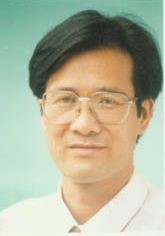 Zhengwei Zhang (张正伟)合作论文数中国科学院地球化学研究所矿床地球化学国家重点实验室44
 Chaofei Zheng合作论文数22
 Jinhong Xu合作论文数20
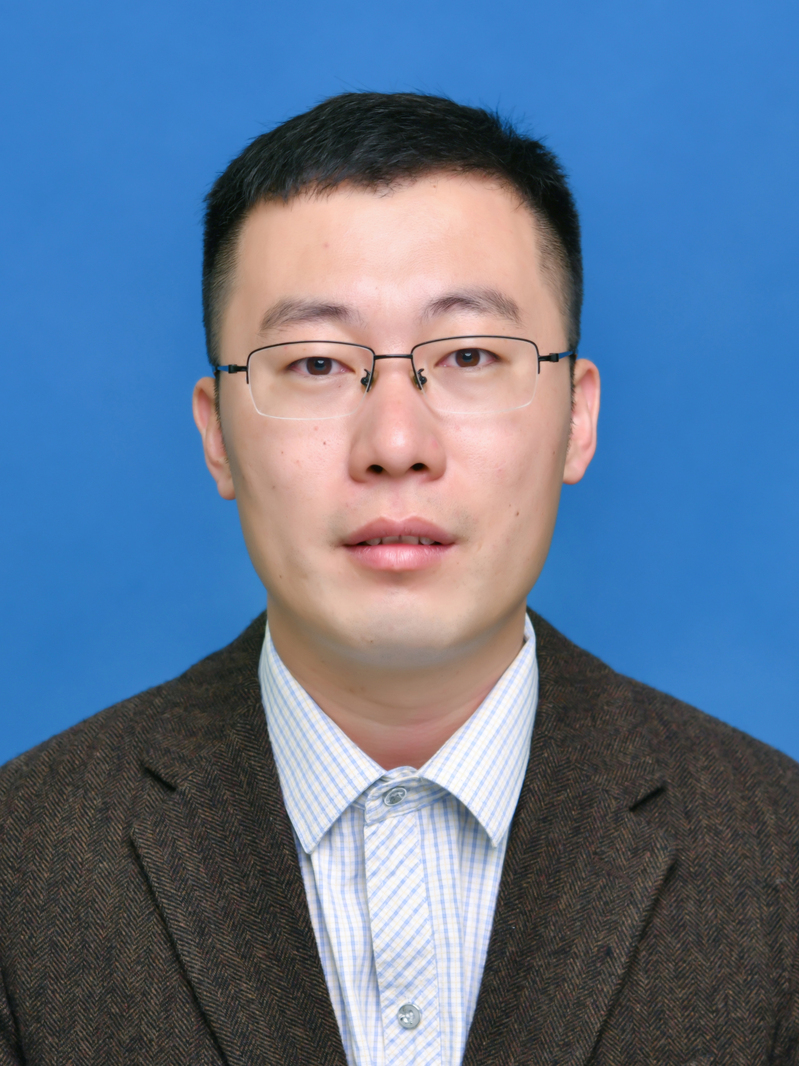 Xiyao Li (李玺瑶)合作论文数College of Marine Geosciences, Ocean University of China20
 Ziru Jin合作论文数14Jun-Hua Yao合作论文数11Yujiao Li合作论文数8Jiafei Xiao (肖加飞)合作论文数7LingJie Zhou (周灵洁)合作论文数6
 Weiguang Zhu (朱维光)合作论文数Institute of Geochemistry, Chinese Academy of Sciences;University of Chinese Academy of Sciences5
 Xiaoyong Yang (杨晓勇)合作论文数School of Earth and Space Sciences, University of Science and Technology of China5
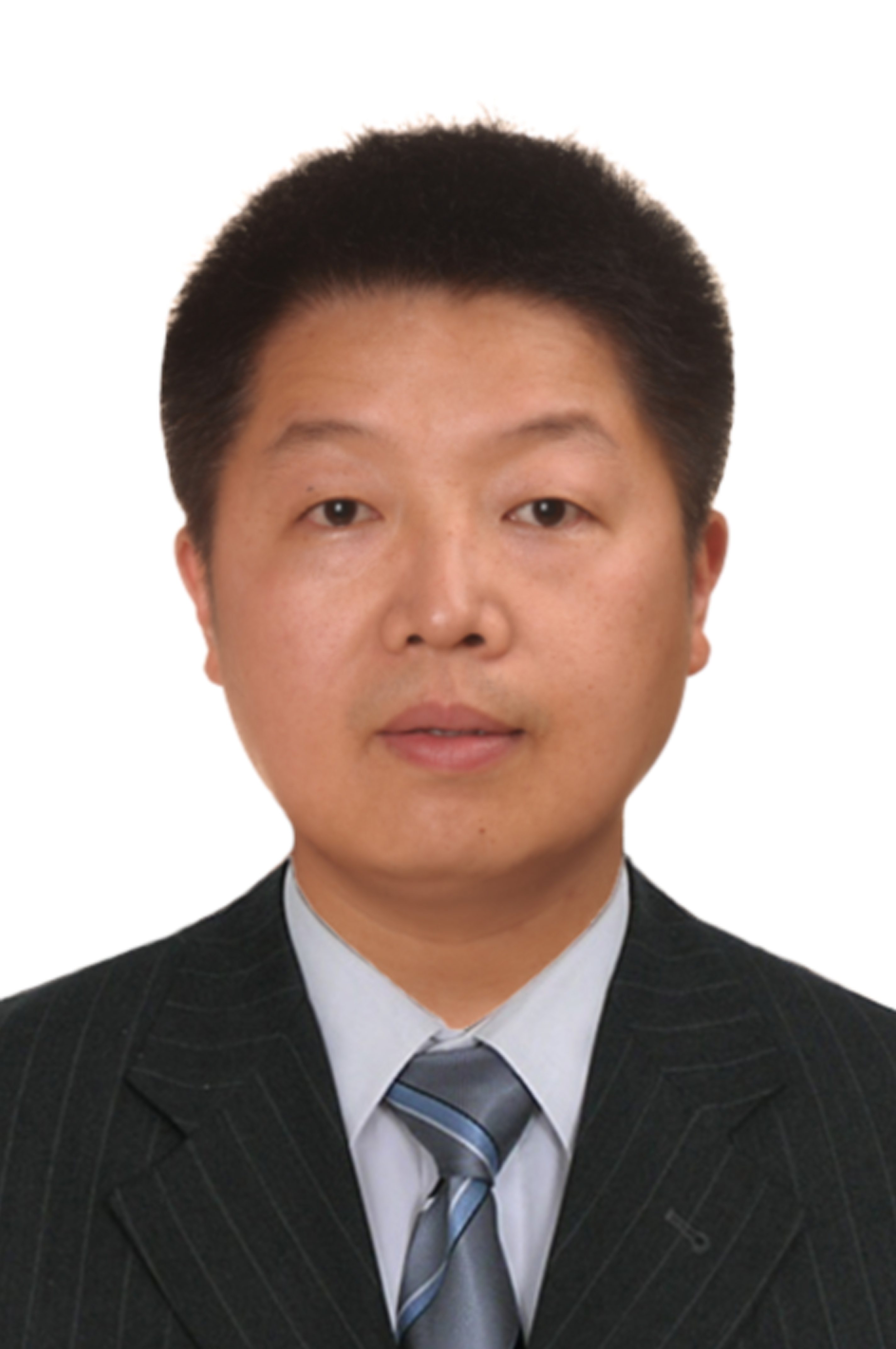 Yazhou Fu (符亚洲)合作论文数Institute of Geochemistry, Chinese Academy of Sciences;University of Chinese Academy of Sciences5
 Qiao Shu (舒巧)合作论文数Institute of Geochemistry, Chinese Academy of Sciences;University of Chinese Academy of Sciences4Peng-Cheng Hu合作论文数4Shuxun Shao (邵树勋)合作论文数4
 Chengbiao Leng (冷成彪)合作论文数Institute of Geochemistry, Chinese Academy of Sciences4
 Taiyi Luo (罗泰义)合作论文数Institute of Geochemistry, Chinese Academy of Sciences3
 Chaoyi Xiao合作论文数2Sensen Zhang合作论文数2JingYang He合作论文数2LU Ping (卢平)合作论文数2
 Yan-Jun Wang合作论文数2
 Haiying Yang合作论文数2Song PENG (彭松)合作论文数2Yuan Cheng (程远)合作论文数2Qiong Wang (王琼)合作论文数2
 Guangwei Zhu (朱广伟)合作论文数Nanjing Institute of Geography & Limnology, Chinese Academy of Sciences;University of Chinese Academy of Sciences2Yunfei Fan (范云飞)合作论文数1. State Key Laboratory of Mineral Deposit Geochemistry, Institute of Geochemistry, Chinese Academy of Sciences 2. School of Earth Sciences, University of Chinese Academy of Sciences2
 Mega fatimah Rosana合作论文数1
 Jianbing Duan合作论文数1Chuang Yang合作论文数1WANG Anshu (王安书)合作论文数1
 Runsheng Yin (尹润生)合作论文数University of Chinese Academy of Sciences;Institute of Geochemistry, Chinese Academy of Sciences1Yuping Jiang合作论文数1Yantao Li合作论文数1Jianbing Xu合作论文数1WANG Shuilong (王水龙)合作论文数1Haisong Shi (石海松)合作论文数1ZHAO Dehuai (赵德怀)合作论文数1Lin-feng WU (吴林锋)合作论文数1Ya-tao ZHOU (周亚涛)合作论文数1ZhongKun Zhang (张忠坤)合作论文数1FuHua You (游富华)合作论文数1KaiKun Liu (刘开坤)合作论文数1
 Lianchang Zhang (张连昌)合作论文数Institute of Geology and Geophysics, Chinese Academy of Sciences1
 Qunzi Jia (贾群子)合作论文数China Geological Survey1
 Huiqing Huang合作论文数Guangzhou Institute of Geochemistry Chinese Academy of Sciences, Chinese Academy of Sciences1Yanjun Wang合作论文数1Hai Xu (徐海)合作论文数College of Computer Science and Technology, Guizhou University1




