Film cooling and heat transfer performances on transonic turbine rotor passage of cylindrical holes and fanshaped hole with constant export area are studied. Effect of blowing ratio, compound angle and film-hole axial position are studied. Results show that end-wall cooling and heat transfer performances determined by the interaction between coolant jet and vortex. The fan-shaped holes are very sensitive to variety in compound angle and blowing ratio. For row 1, the eta of fan-shaped holes (baseline) is reduced by 34.5 % at maximum compared to the fan-shaped holes (compound angle). At low M, the fan-shaped holes (compound angle) achieved better adiabatic film-cooling performance compared to the cylindrical holes. When taking into account both film cooling and heat transfer, due to the suppression of cross flow by the jet at high M, the heat transfer of the endwall is reduced, resulting in better cooling performance for the cylindrical holes (baseline) for the row 1 and row 2 than fan-shaped holes (compound angle). The NHFR of the row 1 and row 2 is increased by 16.5 % and 10.2 %, respectively. Therefore, in the appropriate area of the rotor passage, consider using cylindrical holes with larger diameters instead of fan-shaped holes.
Gas turbines play an important role in power generation and propulsion. The simplification of the real-engine condition during turbine design results in substandard gas turbine performance. Further improvement in understanding of the corresponding effects is essential. At present, the mechanism of the deterioration in turbine aerodynamic performance caused by the full-annulus scale turbine inlet temperature inhomogeneity in real engine are still unclear. In this paper, the corresponding effects are investigated through both gas turbine experiments and full-annulus URANS simulation. The experimental results show that the impact of cold streak on multistage turbine efficiency is about -0.3 %, which is in good quantitative agreement with the simulation results. The simulation results also show a complex reduction of blade work extraction occurs in the cold streak. A strong correlation between angle of attack and Mach number and the deterioration of turbine efficiency is found. It is also found that the "squeezing" effect induced by the cold streak azimuthal migration capability causes differences in Mach number, through-flow capability, and flow field radial distribution on both sides of the cold streak. This paper can help to the understanding of turbine performance characteristics and can also further contribute to improve gas turbine energy efficiency.
The aerodynamic, heat transfer and film cooling characteristics of three tip configurations (including pressureside partial squealer tip, suction-side partial squealer tip and cavity squealers tip) with cooling are evaluated on transonic turbine, and the effect of the jet and shroud motion are talked. The flow and heat transfer mechanisms of three cooled tip configurations are analyzed. Results show that both the jet and shroud motion alter the tip gap flow, which is found to have a different impact on the aerothermal and film cooling performances of three tip configurations. The addition of cooling significantly increases the overall heat transfer coefficient of the SS tip, but has a relatively small impact on that of the PS tip and Squealers tip. As a result, the total h of SS cooled tip is even increased by 9.0% compared to Squealers cooled tip. The shroud motion increases the film cooling effectiveness of PS cooled tip and Squealers cooled tip, but reduces that of SS cooled tip. Under the moving shroud condition, Squealers cooled tip have significant advantages in aerodynamic, heat transfer and film cooling performances compared to the other two cooled tip structures.
研究生课程考核既是一种检验手段,也是一种评价工具,能够全面评估学生对课程内容的掌握和理解程度.传统的课程考核方式已难以适应新形势下培养创新人才的需要.因此,首先从多个角度分析了现有研究生课程考核存在的问题,在此基础上,提出研究生课程考核方式改革思路,并以高等流体力学课程为例,对改革措施进行了具体阐述.相关研究对于建立研究生多元化的考核方式具有一定的参考意义.
为了提高水下动力装置的能量密度,基于金属铝水反应高能量密度的特点,联合闭式布雷顿循环与固体氧化物燃料电池(Solid oxide fuel cell,SOFC)构造了一种闭式无空气推进(Air indepen-dent propulsion,AIP)动力装置,以100kW输出功率为设计目标进行数学模型的建立,通过布雷顿循环与SOFC循环换热特点进行迭代分析,分别以最大化铝水放热量和提高铝水反应热品质为目标搭建了两个动力系统,并确定了联合动力装置的功率分配和主要参数的设计.结果表明:以提高铝水反应热品质为目标的系统在效率和能量密度方面更具优势.SOFC输出功率占50.98kW,布雷顿循环占49.13kW,系统发电效率为40.02%.
该文采用文献资料法、实践教学法和专家访谈法对以形意拳为主的传统武术在高校的推广进行研究,探索形意拳进校园的主要发展模式.针对大学生知识面逐渐宽广,知识体系逐渐丰富,对现代信息技术手段使用不断娴熟等特征,该文认为对形意拳在校园内的传播应遵循科学、客观的基本原则,将形意拳课程体系的科学建设、形意拳教学内容合理化安排以及校园内推广武术协会和武术竞赛等几个方面做为侧重点,以学校平台为基础有效传播传统武术,培养全面发展的合格人才.
为提高无空气推进闭式动力装置的热效率和续航能力,建立了一种基于金属铝水反应的固体氧化物燃料电池(SOFC)/氦氙布雷顿双闭式循环联合动力系统.首先建立了该系统的数学模型,将系统输出功率设计为100 kW,对系统主要参数进行了敏感性分析,分析结果表明:影响系统工况性能的主要参数包括SOFC的工作温度、工作压力和布雷顿循环压气机压比;在固定系统输出量级的情况下,提高SOFC的工作温度与压力增加了其工作效率和功率分担比,对SOFC的增益影响大于对布雷顿循环的增益;压气机压比的变化影响了布雷顿循环的功率分担比,对SOFC效率也呈现先升高后下降的影响趋势,总体看来,压气机压比对布雷顿循环功率分担比的提高存在一个峰值.采用遗传算法对该系统的工作参数进行优化设计,优化设计后,系统总效率较原型设计提高了2.53%,?效率较原型设计提高了2.55%,有效提升了系统的热效率.
为解决燃气轮机涡轮在端区二次流动造成的流动损失,对叶身/端壁融合(Blended Blade and End Wall,BBEW)技术在涡轮气动优化中的有效性进行研究,以E3模型高压涡轮第一级叶栅为研究对象,对涡轮叶片吸力面下端壁进行不同形式的叶身/端壁融合造型.设置入口总温为709 K,总压为344.74 kPa.通过数值模拟研究叶身/端壁融合技术在降低端壁气动损失及提高涡轮级效率和做功能力方面的贡献.研究结果表明:融合技术的应用能够有效减少端区局部流动损失,提升涡轮级做功能力,但同时会增加最大融合圆角半径位置处的流动损失;当静叶最大融合圆角相对半径和相对轴向弦长位置分别为0.16和0.47时,涡轮得到最佳的整体提升效果,此时等熵效率提高了0.010%,比功率提升了0.141%.
In the turbine passage, the secondary flow makes the film cooling jets driven from the pressure side to the suction side, resulting in the corner region of the pressure surface is difficult to cool. In this paper, end-wall film cooling performance and aerothermal performance with the three cases, which include the cylindrical cooling scheme, the swirling cooling scheme and the compound cooling scheme, at different axial positions of the turbine passage are studied respectively. Results show that significant improving the cooling performance for the swirling case at corner region of pressure surface is found. Furthermore, its overall adiabatic averaged cooling effectiveness at different axial positions are all increased. Compared with the compound and cylindrical cases, the swirling cooling effectiveness of the first row is increased by 77.4% and 63%, respectively, at M = 2.2. The physical mechanism of the improvement end-wall cooling performance is that the pair anti-vortex produced by the swirling coolant are twisted and squeezed each other, which makes the coolant injections attached to the wall and achieves a larger coolant coverage in lateral direction. Although the swirling cooling scheme increases the heat transfer of the endwall, it still has the best overall endwall cooling performance.
The flow structure of the submerged gas jet in liquid currents is important to engineering applications. In the present study, the development of a submerged gas jet subjected to liquid current is experimentally investigated to evaluate the effects of the current on the underwater gas jet evolution. A full-scale experimental setup is designed for submerged gas jet release and dispersion in the liquid currents with different velocities. The flow structures of the gas jet are captured by shadow photography combined with a high speed video camera. The experimental images are processed to extract the parameters and perform Proper Orthogonal Decomposition (POD) analysis to reveal the characteristics of different modes standing for different flow structures. It turns out that the flow structures of the gas jets submerged in liquid currents with different velocities are affected by the liquid currents and gas jet pulsation, and the analysis will provide credible assessment and opportunity to take prompt response to control potential accidents caused by the submerged gas jet release in liquid current.
为了探究气膜冷却的优化设计方法,研究并搭建了气膜冷却优化设计平台.利用该优化设计平台能够实现气膜冷却结构的参数化设计、网格自动生成、自动CFD计算及后处理和自动优化寻优过程.同时在该优化平台下,利用试验设计(DOE)方法挑选出了对目标函数影响最大的几个变量.最后利用该优化平台,实现了对某型高压涡轮第一级导叶前缘气膜孔的单目标优化,优化后叶片综合平均冷却效率提高了18.8%,叶片前缘的平均温度降低了40 K.
The aero-thermal-elastic coupled simulations of an air-cooled turbine vane were carried out by a developed coupled solver, HIT3D, employing the finite difference method. The pressure on the vane surface and the temperature in the solid vane were obtained by the coupled heat transfer simulation, then the single-way aero-elastic and thermal-elastic analysis on the turbine vane were performed. It shows that the predicted profile temperature employing the transition model agrees well with the measured one, the blade deformation caused by aerodynamic force is negligible, and that the greater thermal deformation and thermal stress locate at the blade leading edge pressure side and at the blade trailing edge, as the result of the strong temperature gradient and the constraint at the vane endwalls.
欧盟《通用数据保护条例》对反兴奋剂领域的个人信息保护规则产生了很大的影响,迫使世界反兴奋剂机构做出法律改革,但依然存在许多争议.最引入注目的是反兴奋剂信息处理的合法性问题,是否要在反兴奋剂领域引入被遗忘权和数据可携带权问题,反兴奋剂信息的跨境传输问题.只有厘清反兴奋剂领域自治与法治的关系,才能找到解决上述问题的正确路径.在反兴奋剂领域,应当进一步提高个人信息的保护标准,以必要性原则对反兴奋剂机构的信息处理和跨境传输做出限制,同时引入被遗忘权和数据可携带权,加强对信息主体的法律保护.
基于2003~2015年长江三角洲(以下简称长三角)城市群26个城市工业废水和工业SO2排放数据,采用标准差椭圆、地理集中指数、工业环境绩效指数、空间形态差异指数等方法从宏观和微观视角对长三角城市群工业污染时空演化进行分析,同时采用对数平均迪氏分解(LMDI)模型对其工业污染排放主要驱动因素进行分解.研究发现:2003~2015年工业废水和工业SO2排放量分别下降了16.97%和28.79%,但占全国比重仍然较高,尤其是工业废水对生态环境胁迫较大.2种工业污染空间形态均呈现出北(偏西)-南(偏东)的空间分布形态,而2种工业污染重心移动轨迹并不一致,工业废水重心总体上朝向东(偏南)方向迁移了12.85km,而工业SO2重心总体上朝向西(偏北)方向迁移了26.89km.此外,2种工业污染主要集中分布于长江沿岸城市且污染集中度指数由高到低大致呈半圈层状向周围递减.工业发展与工业污染空间形态演变具有一致性,工业废水重心和工业SO2重心与工业发展重心距离均在逐渐缩小,而2种工业污染-环境绩效空间分布格局并不完全一致.驱动因素方面,环境规制引起的技术改善效应是工业污染排放量减少的主要原因,而由环境规制引起的产业结构效应对工业污染排放量的影响则取决于区域发展政策,经济发展效应是工业污染排放量增加的主要原因,人口规模效应对工业污染排放量的影响较小.
In this paper, a new-type coolant chamber with higher film cooling effectiveness is proposed based on the vortex reconstruction. Three different kinds of coolant chamber configuration based on the cylindrical hole are selected to develop the swirling flow structure of coolant, and the comparative investigations have been carried out to study the effect of different coolant chambers at blowing ratios ranging from 0.5 to 2.0. The results show that the coolant jet momentum is small at low blowing ratio, and the difference of the film cooling effectiveness for three kinds of coolant chamber configuration is little, but the advantage of swirling inflow coolant film cooling becomes obviously with the increase of blowing ratio. When the blowing ratio is 2.0, the jet momentum with original coolant chamber configuration is large and uniform, which leads to the lowest cooling effectiveness due to the formation of a strong kidney vortex. The first coolant chamber configuration has a low jet momentum region at upstream of the film hole, the coolant in this region interacts with high temperature mainstream and bypasses the large jet momentum coolant to attach cooling surface at downstream, the cooling effect is obvious at downstream. The second coolant chamber configuration is sprayed with the structure of unidirectional vortex, which forms a vortex pressing on other vortex, making the coolant in pressed vortex attach surface better. The coolant laterally velocity is large, producing the best coverage and the higher film cooling effectiveness. The average film cooling effectiveness of the first and second coolant chamber configuration are larger than original by about 10% and 25%, respectively (M = 1.0), or 50% and 550% (M = 1.5). From the distribution of average film cooling effectiveness of different blowing ratios, it can be concluded that the optimal blowing ratio of swirling coolant flow film cooling is in the range of 1.8 to 2.1.
The variable geometry turbine technology is one of the effective ways to improve acceleration and deceleration characteristics and low-working-condition performance for gas turbines. However, the design of variable geometry turbines is very difficult, and its design point efficiency is always lower than that of fixed geometry turbines. Moreover, regardless of whether the variable vane is open or closed, the turbine efficiency is significantly reduced, which partially offsets the gas turbine cycle benefits caused by turbine variable geometry. In order that the turbine variable geometry technology can be successfully applied to marine and other gas turbines, the research on the high-efficiency variable geometry turbine aerodynamic technology naturally has very realistic significance of national defense and important engineering application prospects. The development of the research about gas turbine variable geometry turbine aerodynamic technology is reviewed in three aspects: variable geometry turbine characteristics, variable geometry turbine endwall flow mechanisms and loss control as well as variable geometry turbine design features. Besides, the existing issues for variable geometry turbine researches are systematically summarized, and the key trends and future research priorities regarding gas turbine variable geometry turbine aerodynamic technology are presented.
Ports play an important role in the economic development of a region and the country,therefore the research on the evolution of port system has always been a hot topic in port geography area. Based on the port container throughput and container port number data of 14 container ports in the Yangtze River Delta during1990-2015,and using Gini coefficients and offset-share analysis,this study analyzes the general concentration trend and spatial evolution of the container port system in this area. Also the main points of the evolution model,and its influential factors are investigated. The results show that the container port system in this area has experienced two trends of decentralization and centralization,and there are four different stages with distinct characteristics. Generally,the spatial pattern in this area is reoriented toward regional concentration. Then the evolutionary model of "original single-nuclear→polarization core→dual-core development→multi-core cooperative development"is finally defined. The evolution of the Yangtze River Delta container port system is affected by various factors,including natural conditions,technical progress,regional economy,policy and politics,and global value chain and supply chain. And the key drivers,their order and magnitude of these factors are different,depending on the development stage. This study contributes to further improve the evolution model of container port system,and the results are helpful for the construction of the Yangtze River delta container port system.
The turbine blade tip leakage flow has significant influences on aerodynamic losses,heat transfer and even overall efficiency of the turbine,and is thus one of the key factors in deteriorating the turbine aerothermal performance.The flow and heat transfer mechanisms and the aerothermal control of the tip leakage have been a hot and difficult issue in the research on gas turbines.The research progresses on turbine blade tip aerodynamics and heat transfer over the past decade are reviewed in five aspects:blade tip leakage flow mechanism and its influencing factors,tip leakage flow control methods,blade tip heat transfer and cooling mechanism,influencing factors and control methods,blade tip aerothermal optimization,and blade tip clearance variation,blade tip modeling and its control at transient operations.Furthermore,the turbine blade tip leakage flow research methods,including flow and heat transfer tests and numerical methods are briefly summarized.The key trends and future research priorities regarding turbine blade tip aerodynamics and heat transfer are presented.
Trailing-edge mixing flows associated with coolant injection are complex and result in significant aerodynamics losses. A series of tests on a high-pressure turbine vane cascade with trailing-edge injection were conducted to study the effects of trailing-edge injection on the loss characteristics of the turbine profile. Wake traverses with a five-hole probe and tests of the static pressure distributions on the turbine profile were carried out for test Mach numbers of 0.7, 0.78, and 0.84 and injection mass-flow ratios of 0, 2, 3.6, and 5.5%. Wake total pressure losses and flow angles as well as pressure distributions on the turbine profile were compared with tests without trailing-edge injection, indicating a significant influence of trailing-edge injection on the profile wake development and its blockage effect on the vane passage flow. As the test Mach number increases, there are few variations in the flow angle downstream of the cascade without trailing-edge injection, but its circumferential unevenness is enhanced. Trailing-edge injection of 2% increases the static pressure value in the rear part of the vane suction side, and then reduces the vane loading, but causes increased wake losses at different test Mach numbers. However, the aerodynamic losses start to be reduced as the injection mass-flow ratio increases to 3.6%. (C) 2017 American Society of Civil Engineers.
Three different kinds of coolant chamber configuration for film cooling are proposed to develop the swirling coolant flow at blowing ratios ranging from 0.5 to 2.0. The results show that the difference of film cooling effectiveness for three kinds of coolant chamber configuration is little at low blowing ratio, but the advantage of swirling film cooling becomes obviously with the increase of blowing ratio. When the blowing ratio is 2.0, the jet momentum of original coolant chamber configuration is large and uniform, which leads to the lowest cooling effectiveness due to the formation of a strong kidney vortex. The first coolant chamber configuration has a low jet momentum region at upstream of the film hole, the coolant in this region interacts with high temperature mainstream and bypasses the large jet momentum coolant to attach cooling surface at downstream. The second coolant chamber configuration is sprayed with the structure of unidirectional vortex, which forms a vortex pressing on other vortex, making the coolant in pressed vortex attach surface better, producing the best coverage and the higher film cooling effectiveness.
 Qun Zheng (郑群)合作论文数College of Power and Energy Engineering, Harbin Engineering University25
 Guoqiang Yue (岳国强)合作论文数College of Power and Energy Engineering, Harbin Engineering University16
 Jie Gao (高杰)合作论文数College of Power and Energy Engineering, Harbin Engineering University16
 Yuting Jiang (姜玉廷)合作论文数College of Power and Energy Engineering, Harbin Engineering University14
 Guotai Feng合作论文数11Zhaoyuan Guo合作论文数7
 Hongyan Huang (黄洪雁)合作论文数School of Energy Science and Engineering, Harbin Institute of Technology7WANG Jia-bin (王佳宾)合作论文数4Wang Qiang合作论文数4Hu Xu (徐虎)合作论文数4Weiliang Fu合作论文数3feilong yu合作论文数3
 Yuqi Lu (陆玉麒)合作论文数School of Geography, Nanjing Normal University3Yunning Liu合作论文数2Fukai Wang合作论文数2Chi Zhou合作论文数2Zheng Guo (郭政)合作论文数2
 Hai Zhang (张海)合作论文数College of Power and Energy Engineering, Harbin Engineering University2Wanjin Han (韩万金)合作论文数School of Energy Science and Engineering, Harbin Institute of Technology2
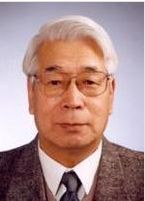 Zhongqi Wang (王仲奇)合作论文数Harbin Institute of Technology2
 Peigang Yan (颜培刚)合作论文数School of Energy Science and Engineering, Harbin Institute of Technology2
 Yajun Guan (关亚军)合作论文数哈尔滨工业大学 体育部2Qingfu He合作论文数1TAO Chun-de (陶春德)合作论文数1HUANG Jia-hua合作论文数1Zhaolin Li合作论文数1Dong Cheng合作论文数1YANG Zhen'guo (杨震国)合作论文数1Qunfang Huang合作论文数1Qingfeng Deng合作论文数1Yingyi Ma合作论文数1Ming Wei合作论文数1Hongfei Lin合作论文数1yun bai (白云)合作论文数1BingJu Lu (卢丙举)合作论文数1YingZhuo Xiong (熊英灼)合作论文数1Ran Qin (秦然)合作论文数1Qian Chen (陈乾)合作论文数1ZhengYu Li (李征宇)合作论文数1
 Shuang Chen (陈爽)合作论文数Nanjing Institute of Geography & Limnology, Chinese Academy of Sciences;School of Geographical Sciences, Nanjing University of Information Science & Technology1Antar M M Abdala合作论文数Harbin Engineering University, Harbin Engineering University1Fifi N M Elwekeel合作论文数Harbin Engineering University, Harbin Engineering University1Mingcong Luo (罗铭聪)合作论文数College of Power and Energy Engineering, Harbin Engineering University1Yuejin Jiang (姜跃金)合作论文数1
 Qiang Wang (王强)合作论文数School of Astronautics, Harbin Institute of Technology;Department of Control Science and Engineering, Harbin Institute of Technology1Jing Fan (范静)合作论文数1Boyou Zhang (张伯友)合作论文数1
 Zhongran Chi (迟重然)合作论文数Institute of Turbomachinery, School of Mechanical Engineering, Shanghai Jiao Tong University1




