Online advertising compliance auditing is important for platform governance and regulatory enforcement, yet prior legal reasoning methods largely assume clean textual inputs and do not connect noisy platform-side evidence acquisition with fine-grained statutory review. We present Hierarchical Adversarial Refinement with Statutory Constraint Propagation (HAR-SCP), a multimodal advertising compliance auditing system that starts from a platform URL and converts heterogeneous advertisement evidence into clause-level statutory outputs. HAR-SCP parses the target page to acquire page text, visual creatives, and layout metadata, applies layout-aware OCR to recover embedded textual claims, and centralizes page-native text, OCR text, and source provenance into a structured compliance context. A legally constrained backend then performs Rule Codification (RC) over statutory provisions and refines candidate citations through multi-agent adversarial reasoning with explicit statutory constraint propagation. Under a unified evaluation protocol on AdLawBench-10, HAR-SCP built on the same Doubao1.5 backbone preserves article-level matching while increasing Full-Citation Match Accuracy from 26.42
To address the challenges of data privacy protection and heterogeneous data in multi-center collaborative modeling for network intrusion detection, this paper proposes a network intrusion detection model for multi-center privacy-preserving computation based on Mamba, named Federated Learning Intrusion Detection System-Mamba (FLIDS-Mamba). FLIDS-Mamba enables each client to conduct local training on independent heterogeneous datasets, which may differ in dimensionality and exhibit imbalanced class distributions. The proposed aggregation mechanism of federated learning optimizes a global model while protecting client data privacy and enabling collaborative modeling of heterogeneous data. The proposed model incorporates a heterogeneous feature adaptation module and a bidirectional feature extraction module to enhance the capture of sequential features and improve intrusion detection performance. Additionally, we effectively mitigate the issue of sample imbalance by dynamically adjusting the loss contributions of different classes. Experiments on the UNSW-NB15, CIC-IDS2017, NSL-KDD, and CSE-CIC-IDS2018 datasets validate the classification of multiple attack types, achieving nearly 95
The federated learning (FL) paradigm is well-suited for the field of medical image analysis, as it can effectively cope with machine learning on isolated multi-center data while protecting the privacy of participating parties. However, current research on optimization algorithms in FL often focuses on limited datasets and scenarios, primarily centered around natural images, with insufficient comparative experiments in medical contexts. In this work, we conduct a comprehensive evaluation of several state-of-the-art FL algorithms in the context of medical imaging. We conduct a fair comparison of classification models trained using various FL algorithms across multiple medical imaging datasets. Additionally, we evaluate system performance metrics, such as communication cost and computational efficiency, while considering different FL architectures. Our findings show that medical imaging datasets pose substantial challenges for current FL optimization algorithms. No single algorithm consistently delivers optimal performance across all medical FL scenarios, and many optimization algorithms may under-perform when applied to these datasets. Our experiments provide a benchmark and guidance for future research and application of FL in medical imaging contexts. Furthermore, we propose an efficient and robust method that combines generative techniques using denoising diffusion probabilistic models with label smoothing to augment datasets, widely enhancing the performance of FL on classification tasks across various medical imaging datasets. Our codes are released on GitHub, offering a reliable and comprehensive benchmark for future FL studies in medical imaging.
Collaborative training of foundation models across healthcare institutions is hindered by high communication costs, privacy constraints, and the heavy computational demands of large local models. One-Shot Federated Learning (OSFL) reduces communication overhead via single-round aggregation, but often suffers from degraded performance and is impractical for clients lacking resources to train large models. To address these challenges, we propose a privacy-preserving generative distillation framework that aggregates knowledge from multiple lightweight client models into a central foundation model through mutual distillation performed on generated data. The framework leverages Mask-Guided Rectified Flow (MG-RF) to generate medical images conditioned on semantic masks and an Adaptive Mutual Distillation (AMD) module to facilitate effective bidirectional knowledge transfer, allowing clients to inject domain-specific expertise while the server preserves general knowledge. Experiments on multiple Non-IID medical datasets show a 10.6% improvement over existing OSFL methods and performance close to multi-round federated learning, highlighting the framework’s practicality for scalable collaborative training of foundation models in healthcare domain.
In real-world machine learning scenarios, training data are frequently weakly annotated and distributionally misaligned with deployment environments. Specifically, label ambiguity may arise when each instance is associated with a set of candidate labels, and distribution shifts between training and testing are common in practice. Although Partial Label Learning (PLL) and Unsupervised Domain Adaptation (UDA) have been extensively studied individually, they frequently co-occur in practice. For instance, in cross-hospital medical image analysis, datasets may exhibit both inconsistent diagnostic labels due to variations in expert interpretation (label ambiguity) and significant differences in imaging equipment or patient demographics (distribution shift). However, Partial-Label Unsupervised Domain Adaptation (PLUDA) has received limited attention as a unified problem. In this paper, a unified generalization bound is established for Partial-Label Unsupervised Domain Adaptation (PLUDA) and three critical limitations causing existing approaches to fail: ambiguity degree, ideal joint error, and model complexity remain uncontrolled. Motivated by these theoretical insights, we propose Dual-Smoothing over Manifold and Parameter (DSMP) to control all three factors. DSMP employs manifold-based representation smoothing via Laplacian smoothing based on adaptive multi-kernel RKHS similarity and candidate set refinement to address the three critical limitations. Moreover, DSMP leverages sharpness-aware parameter smoothing to ensure stable optimization under weak supervision through loss landscape flattening. Extensive experiments demonstrate that DSMP outperforms existing baselines, achieving superior cross-domain generalization from weakly labeled sources. This work provides theoretical insights and a principled solution to the previously underexplored yet practically important PLUDA problem.
Real-world machine learning frequently confronts the dual challenge of partial labels, where training instances possess candidate label sets rather than definitive ground truth, and distribution shift between source and target domains. This Partial-Label Unsupervised Domain Adaptation (PLUDA) problem requires handling both label ambiguity and domain shift simultaneously. However, existing methods tend to handle these challenges separately, leading to error propagation and optimization conflicts. To overcome this, we propose Manifold-Guided Partial-Label Domain Adaptation (MGPDA), which leverages manifold structure to integrate both challenges. MGPDA uses adaptive multi-kernel similarity, confidence-driven candidate refinement, and manifold consistency regularization to enforce prediction consistency among similar cross-domain samples. This enables confident predictions to guide disambiguation while aligning semantic structure. Experiments on three benchmarks demonstrate consistent improvements over existing methods, validating manifold-guided learning under compound uncertainties.
Image Steganography without Embedding (SWE) is an emerging data hiding paradigm. Instead of embedding a secret message into a container image, SWE synthesises a novel image by using the secret message as a latent code. Current SWE methods have achieved high synthesis quality and strong resistance to steganalysis tools. However, it remains challenging to apply the SWE due to two reasons: (i) lack of synthesis diversity and (ii) recovery of secret messages under malicious image attacks. In this paper, we present a novel SWE framework with a disentanglement autoencoder to tackle the above challenges. Specifically, the autoencoder disentangles an image into a structure and texture representation. Then, we exploit the stability of the structure representation to improve secret message recovery reliability, while increasing synthesis diversity by randomising texture representations and employing a chaotic system for structure randomisation to enhance its security. To further achieve a robust message recovery under malicious attacks, an adversarial learning strategy is introduced into our framework, which guarantees high recovery accuracy. Our method outperforms other state-of-the-art SWE methods in terms of synthesis quality, synthesis diversity and secret message recovery accuracy under various image attacks.
Most of the current top-down multi-person pose estimation lightweight methods are based on multi-branch parallel pure CNN network architecture, which often struggle to capture the global context required for detecting semantically complex keypoints and are hindered by high latency due to their intricate and redundant structures. In this article, an approximate single-branch lightweight global modeling network (LGM-Pose) is proposed to address these challenges. In the network, a lightweight MobileViM Block is designed with a proposed Lightweight Attentional Representation Module (LARM), which integrates information within and between patches using the Non-Parametric Transformation Operation(NPT-Op) to extract global information. Additionally, a novel Shuffle-Integrated Fusion Module (SFusion) is introduced to effectively integrate multi-scale information, mitigating performance degradation often observed in single-branch structures. Experimental evaluations on the COCO and MPII datasets demonstrate that our approach not only reduces the number of parameters compared to existing mainstream lightweight methods but also achieves superior performance and faster processing speeds.
Physiological signals such as EEG, ECG, and PPG are widely used in clinical monitoring. Recent self-supervised learning (SSL) methods offer an attractive way to leverage unlabeled recordings, yet they still fall short in practice. In particular, current SSL methods struggle across heterogeneous datasets, often distorting clinically meaningful structures or learning shortcuts from temporal and cross-channel redundancy. Consequently, existing SSL methods often deliver limited performance under linear probing, a lightweight adaptation setting that better matches real-world medical scenarios. Moreover, most Transformer-based SSL models encode a flattened spatiotemporal token sequence, incurring high computation and memory cost, and are typically developed within a single modality. To address these limitations, we present SPOTR (Spatio-temporal Pooling One-Token Reconstruction), a compress-reconstruct pretraining framework that introduces a single-token global bottleneck for physiological signals. SPOTR compresses each waveform into a single-token representation and reconstructs the signal conditioned only on this representation. Meanwhile, SPOTR introduces an efficient spatio-temporal compaction module to reduce computation and memory cost. Pretrained on 20 datasets spanning EEG, iEEG, ECG, and PPG, SPOTR consistently outperforms the strongest baseline under linear probing, improving average AUC by 18.49%, 21.71%, 17.86%, and 4.64%, respectively. Compared with a representative general-purpose time-series foundation model, SPOTR achieves around 78% lower latency and 52% lower peak GPU memory on average. The code and supplementary material can be found at https://github.com/5GYYYYY/SPOTR.
One-shot federated learning (OSFL) reduces the communication cost and privacy risks of iterative federated learning by constructing a global model with a single round of communication. However, most existing methods struggle to achieve robust performance on real-world domains such as medical imaging, or are inefficient when handling non-IID (Independent and Identically Distributed) data. To address these limitations, we introduce FALCON, a novel framework that enhances the effectiveness of OSFL over non-IID image data. The core idea of FALCON is to leverage the feature-aware hierarchical token sequences generation and knowledge distillation into OSFL. First, each client leverages a pretrained visual encoder with hierarchical scale encoding to compress images into hierarchical token sequences, which capture multi-scale semantics. Second, a multi-scale autoregressive transformer generator is used to model the distribution of these token sequences and generate the synthetic sequences. Third, clients upload the synthetic sequences along with the local classifier trained on the real token sequences to the server. Finally, the server incorporates knowledge distillation into global training to reduce reliance on precise distribution modeling. Experiments on medical and natural image datasets validate the effectiveness of FALCON in diverse non-IID scenarios, outperforming the best OSFL baselines by 9.58\% in average accuracy.
Foundation Models (FMs) have demonstrated strong generalization across diverse vision tasks. However, their deployment in federated settings is hindered by high computational demands, substantial communication overhead, and significant inference costs. We propose DSFedMed, a dual-scale federated framework that enables mutual knowledge distillation between a centralized foundation model and lightweight client models for medical image segmentation. To support knowledge distillation, a set of high-quality medical images is generated to replace real public datasets, and a learnability-guided sample selection strategy is proposed to enhance efficiency and effectiveness in dual-scale distillation. This mutual distillation enables the foundation model to transfer general knowledge to lightweight clients, while also incorporating client-specific insights to refine the foundation model. Evaluations on five medical imaging segmentation datasets show that DSFedMed achieves an average 2 percent improvement in Dice score while reducing communication costs and inference time by nearly 90 percent compared to existing federated foundation model baselines. These results demonstrate significant efficiency gains and scalability for resource-limited federated deployments.
Denoising Diffusion Probabilistic Models (DDPMs) have shown potential for medical image generation, yet existing methods face two key limitations: they typically produce image-mask pairs for supervised learning rather than leveraging unlabeled data, and require computationally expensive training from scratch. To address these challenges, we propose Unlabeled Generated Images for Semi-Supervised Learning (UGI-SSL), a framework that integrates unlabeled generated images into Semi-Supervised Learning framework (SSL) for medical image segmentation. Our approach adapts nnU-Net to incorporate mainstream SSL methods, extending performance beyond fully-supervised baselines. For efficient image generation, we introduce MedInversion, a method that fine-tunes Stable Diffusion (SD) to produce diverse medical modalities without costly from-scratch training. Comprehensive experiments demonstrate that UGI-SSL consistently improves segmentation performance across CT, MRI, ultrasound, and natural-image-like medical datasets, achieving up to 6% Dice improvement By enabling SSL methods to learn from generated unlabeled images, our framework effectively expands the data distribution for model training.
Medical imaging foundation models have advanced rapidly and the associated privacy concerns have attracted increasing attention, so that machine unlearning for the models becomes an urgent and pressing issue. Machine unlearning aims to remove the influence of specific training data from a model while maintaining its performance on the remaining data. However, traditional unlearning methods are primarily designed for small-scale models, and emerging studies on foundation model unlearning mainly focus on models for generating natural language and images. It is noted that there is limited work addressing unlearning for medical imaging foundation models. To address this open issue, a novel unlearning framework based on cross-attention fusion and contrastive learning is proposed in this paper. In the proposed framework, we introduce an image unlearning module and a text unlearning module to perform unlearning through lightweight fine-tuning instead of updating the original model parameters, and we incorporate a contrastive loss term that preserves the model’s performance on the remaining data. Experimental results demonstrate that our method completes unlearning within an average of 613 seconds, significantly outperforming the 8 hours required for retraining. Compared with the SHs method, our approach improves the classification accuracy on the remaining set and the unlearning set by an average of 5.92% and 3.75%, respectively, thereby achieving a well balance between forgetting designated information and retaining useful knowledge.
With the rapid advancement of image tampering techniques, the authenticity of multimedia content is increasingly challenged, necessitating the development of robust Image Manipulation Localization (IML) technologies. This paper introduces a novel approach, Multi-Feature Dynamic Fusion for Image Manipulation Localization (MFDF-IML), which addresses the limitations of existing methods by integrating Error Level Analysis (ELM as a new forgery feature. ELA enhances feature diversity and robustness by capturing subtle variations through analyzing discrepancies at different compression levels. Additionally, NIFDF-IMI. employs a dynamic gating mechanism to adaptively fuse multiple features, including SRM, Bayar, Noiseprint++, and ELA, adjusting their weights according to various forgery scenarios. This method also integrates features from Convolutional Neural Networks (CNN) and Vision Transformers (ViT), leveraging CNN's local feature extraction and ViT's global dependency modeling to significantly improve forgery localization precision. Extensive experiments demonstrate that MFDF-IML outperforms existing methods across diverse forgery scenarios, highlighting its potential in image forensics.
Spiking Neural Networks are celebrated for energy efficiency and biological plausibility. Building on Spiking Self-Attention (SSA), Spiking Transformers are extensively studied due to their exceptional performance. However, SSA focuses solely on spatial dimension at each time step, overlooking the crucial features across temporal dimension. To address this, we propose the Spatial-Temporal Spiking Self-Attention (STSSA), a spike-driven mechanism that leverages both spatial and temporal information with negligible additional computational overhead. Specifically, we extract the Representative Spiking Temporal Tokens (RSTT) and apply temporal window masking to the RSTT. These tokens are inserted between the Query and Key to integrate temporal features. Furthermore, we design a Multi-dimensional Learnable Scaling Factor (MLSF) to adapt to STSSA. Our results consistently demonstrate that STSSA outperforms SSA across extensive experiments on sequential, neuromorphic, and static datasets. Notably, STSSA achieves performance improvements of 5.7% and 2.9% over SSA on Sequential CIFAR-100 and CIFAR-10DVS, respectively. STSSA provides a powerful alternative within the family of Spiking Self-Attention mechanisms.
Recent advancements in deep learning for medical image segmentation are often limited by the scarcity of high-quality training data. While diffusion models provide a potential solution by generating synthetic images, their effectiveness in medical imaging remains constrained due to their reliance on large-scale medical datasets and the need for higher image quality. To address these challenges, we present MedDiff-FT, a controllable medical image generation method that fine-tunes a diffusion foundation model to produce medical images with structural dependency and domain specificity in a data-efficient manner. During inference, a dynamic adaptive guiding mask enforces spatial constraints to ensure anatomically coherent synthesis, while a lightweight stochastic mask generator enhances diversity through hierarchical randomness injection. Additionally, an automated quality assessment protocol filters suboptimal outputs using feature-space metrics, followed by mask corrosion to refine fidelity. Evaluated on five medical segmentation datasets, MedDiff-FT's synthetic image-mask pairs improve SOTA method's segmentation performance by an average of 1% in Dice score. The framework effectively balances generation quality, diversity, and computational efficiency, offering a practical solution for medical data augmentation. The code is available at https://github.com/JianhaoXie1/MedDiff-FT.
Recently, significant progress has been made in seizure prediction, attributed to the advancement of basic models. Specifically, the structures combining convolutional networks with transformers can successfully extract both local and global features. However, the disadvantage of the transformer is also inherited, namely, the quadratic computational complexity with respect to the length of the sequence. Inspired by the recent model with linear complexity for long-distance modeling, named Mamba, we explore the potential of this state space model for the seizure prediction task in terms of effectiveness and efficiency in the paper. Nevertheless, directly applying Mamba yields poor performance since multi-scale global and local features are not taken into consideration. To address this issue, we propose a novel design called MambaFuse. Specifically, a parallel Mamba and CNN block is initially developed to extract multi-scale global and local features. Firstly, the multi-scale Mamba module is proposed to leverage the global modeling of Mamba at linear complexity. Secondly, the scale-adapt CNN module is proposed to extract local features through residual learning. Finally, the enhanced cross-attention fusion module is proposed to dynamically combine global Mamba features and local convolution features for a multi-scale globallocal representation. Experimental results on the dataset of CHB-MIT have demonstrated that MambaFuse outperforms state-of-the-art methods, providing a promising approach for seizure prediction.
Even though transformer-based networks have achieved remarkable progress in Image Manipulation Localization (IML), they may overlook subtle artifacts and forensic traces which are crucial for precisely identifying the manipulated regions in images. To address this issue, a Locality-guided Transformer Network (LoTraNet) for IML is proposed in this paper. In LoTraNet, a hierarchical dual-level distillation is developed to provide the transformer with multi-stage guidance while in each stage point-level and patch-level distillation are included, and a CNN is used as teacher model to enhance the local feature representation capabilities of transformers. Meanwhile, an attention guidance module is designed in patch-level distillation to explicitly provide adaptive locality guidance for the transformer within patches, which effectively bridges the gap between transformer and CNN. Our analysis and experimental results on various datasets have demonstrated that our proposed network can pay more attention to the local context while maintaining global modeling capabilities and have enhanced ability to locate manipulated regions at any scale compared to state-of-the-art image manipulation localization methods.
Seizure prediction has attracted significant attention due to its potential to greatly improve the quality of life for epilepsy patients. With the growing popularity of the transformer architecture, some studies have demonstrated its ability to enhance performance in seizure prediction. However, these studies have not utilized the multi-scale information in time-frequency features extracted from short-time Fourier transform (STFT). In this paper, we propose an end-to-end seizure prediction neural network model based on a multi-scale transformer with attention fusion. Taking into account that the time-frequency features of EEG signals extracted from short-time Fourier Transformation, contains different information at various scales, we aim to effectively utilize this multi-scale information. To achieve this, we extract patches at multiple scales and then process each patch of different sizes through separate transformer encoder branches to extract feature information. Furthermore, to reduce computational complexity, we propose a simple yet effective strategy for multi-scale information fusion. Each branch contains a classification (CLS) token representing global features. By enabling these tokens to exchange information, we can accomplish the fusion of multi-scale information. Ultimately, the prediction result is derived from a fully connected layer that takes as input the combined CLS tokens from each branch. Experimental results show that our proposed model achieves an average sensitivity of 98.01
 Zhenyu Weng (翁振宇)合作论文数Peking University39
 Zhiqiang Bai (白志强)合作论文数School of Electronic and Computer Engineering, Peking University26
 Xiyao Liu (刘熙尧)合作论文数School of Computer Science and Engineering, Central South University18
 Ruixin Liu合作论文数Animal Science and Technology College, Guangxi University16Ziqiang Sun (孙自强)合作论文数State Key Laboratory of Electronic Thin Films and Integrated Devices, School of Optoelectronic Information, University of Electronic Science and Technology of China16
 Shu Hung Leung合作论文数City University of Hong Kong,Department of Electronic Engineering,College of Science and Engineering12Bairong Li合作论文数Peking University11
 Zhaokun Zhou (周昭坤)合作论文数School of Electronic and Computer Engineering, Peking University10
 Wenyuan Yang (杨文元)合作论文数School of Cyber Science and Technology, Sun Yat-Sen University9Liu Zhen合作论文数9Yuqing Wang合作论文数8
 Zhengding Luo合作论文数Peking Univ, Shenzhen Grad Sch, Inst Big Data Technol, Beijing, Peoples R China8Biao Guo合作论文数7Dehao Wu合作论文数7Fengyong Qian合作论文数6Jiaqiyu Zhan合作论文数6
 Li Yuan (袁粒)合作论文数School of Electrical and Computer Engineering, Shenzhen Graduate School, Peking University6Boyu Sun合作论文数5Yifan Pan合作论文数5Ji Liu合作论文数5Chujun Qin合作论文数Peking University5Qinghua Gu合作论文数5
 Zhilin Huang (黄祉霖)合作论文数Tsinghua University5
 Beiji Zou (邹北骥)合作论文数School of Computer Science and Engineering, Central South University5Kwok-Wo Wong合作论文数Dept. of Comput. Sci. & Eng, Chongqing Univ5
 Wu Songtao合作论文数4Wu Y. T.合作论文数4chihping lee合作论文数4Zhaotian Li合作论文数4Jiahao Hu合作论文数4Yinghong Zhang合作论文数4
 Lei Hao合作论文数4Ma Limin合作论文数4
 Jiawei Zhan合作论文数Peking Univ, Shenzhen Grad Sch, Inst Big Data Technol, Beijing, Peoples R China4Zhaoguo Mo合作论文数4Wenqi Zhu合作论文数4Yang Fan合作论文数4
 Xiangyu Gao (高翔宇)合作论文数School of Electronic Science and Engineering, Faculty of Electronic and Information Engineering, Xi'an Jiaotong University4
 Jie Ruan合作论文数Peking University4Jianhao Xie合作论文数4Gege Qi合作论文数4
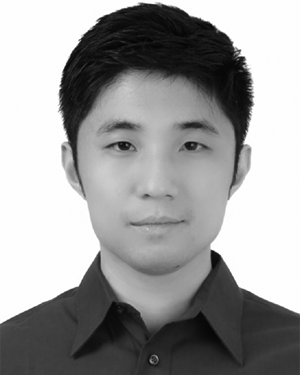 Ruikai Mai合作论文数4Hanchi Lin合作论文数4
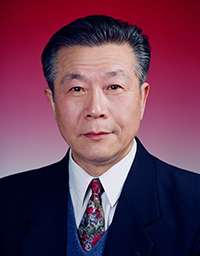 Hongyuan Chen (陈洪渊)合作论文数School of Chemistry, Nanjing University4
 Liming Zhang (張立明)合作论文数Faculty of Science and Technology,University of Macau4
 Lai-Man Po (布禮文)合作论文数Department of Electrical Engineering, College of Engineering, City University of Hong Kong4
 Shuai Yang (杨帅)合作论文数Wangxuan Institute of Computer Technology, Peking University;Institute for Artificial Intelligence, Peking University4Zhiwei Mo (莫志卫)合作论文数4Xiaomei Xing (邢小梅)合作论文数4




