The article presents the construction of a functional model of a biomedical protection system and conducting experimental studies of absorbing materials exposed to electromagnetic radiation. It is shown that the resistive absorbing material based on polystyrene foam with the addition of graphite has the feature that allows implementing the calculated laws of change in complex dielectric permittivity.
We study the optimal impulse control problem with quadratic perfomance functional for a descriptor system. The system evolution is described by a linear differential-algebraic equation not solved with respect to the derivative of the state. The system is controlled by changing the measurable control and the pure impulse control. The pure impulse control is characterized by impulse intensities and moments of impulse applications. The main restriction is that the characteristic matrix pencil corresponding to the state equation is regular. In terms of the characteristic matrix pencil, we establish the conditions for the existence and uniqueness of the optimal control and the corresponding optimal state. The optimal control and the optimal state are constructed by using the adjoint state, which is a solution to the adjoint two-point boundary value problem. The results are illustrated on an example of descriptor system that describes transient states in a radio technical filter. For this system, we consider an energetic perfomance functional with impulse intensities characterizing the energy of inertial elements and input voltage of the filter and also moments of impulse applications. Transient states under impulsive perturbations of currents and voltages are described by using the formula of variation of constants for the impulsive descriptor system.
The authors developed an experimental setup and conducted studies of the distribution of physical loads in the patient's foot, on the basis of which a model was developed for calculating vibrations acting on the human body. This information allows improving the quality of diagnostics of patients with lower limb injuries during their treatment and rehabilitation.
Commonly used color models are reviewed and analyzed, namely the RGB model and subtractive models, including CMY and CMYK. The characteristics of colorimeters based on the use of RGB, CMY and CMYK models have been studied. A comparative analysis of the advantages and disadvantages of RGB and CMYK models was carried out. The developed digital colorimeter allows for express control of color characteristics with high metrological accuracy and does not require a high level of qualification of service personnel. This device reproduces the perception of color by human vision, and its use is intended for both people with normal and impaired vision. The great advantage of this device is its mobility, the speed of measurements and the absence of the need for a specialized laboratory and highly qualified specialists. Full-scale measurements of the output voltage on the photodiodes of the colorimeter corresponding to red, blue and green colors were carried out.
The article examines the reaction of biological tissues based on the principle of measuring and analyzing signals in the frequency domain. It is shown that the shape of the frequency response can serve as an informative sign of the volumetric content of healthy cells in the studied volume of biological tissue and, therefore, can be a sign of its viability.
The article is devoted to the study of energy density as a standardized indicator for assessing the effectiveness of medical personnel protective systems against microwave radiation. The key feature of the proposed method is the ability to translate measurements of complex fields into equivalent values of the energy density of a plane wave, which allows them to be compared with existing measurements of power density. The results can be used in practice in conditions where it is necessary to assess the impact of electromagnetic radiation on medical personnel and the need to develop protective measures.
The electrical properties of biological tissues of a plant origin are studied using the microcontroller STM32f407vg. The formulation of the problem of identifying informative signs of the viability of biological tissues when using the method of impedance measurement is given. It is shown that since currently in medical diagnostic practice there is no instrument base that would allow in an operational setting to diagnose the ability of biological tissue to self-heal after injury and damage as a result of thermal exposure, a gunshot wound or prolonged compression, the development of methods and means of instrumental diagnostics in this area of knowledge is an important modern task. The results of experimental measurements of impedance characteristics in the frequency range of 20 Hz – 2.0 MHz are presented. The frequency dependences of the stress modulus of a biological tissue of a plant origin are analyzed in its intact state, as well as after exposure of samples of a biological tissue in a freezer. A comparative analysis of the obtained frequency dependences is carried out. A significant difference between the frequency dependences of the stress modulus on a biological tissue and the frequency dependence of the stress modulus on an isotonic solution is shown. The idea was proposed that the degree of difference in the frequency distribution of the impedance module of the biological tissue from the impedance module of the isotonic solution can serve as a criterion for assessing the degree of damage to the biological tissue.
The formulation of the task of detecting small unmanned aerial vehicles (drones) is presented, the expediency of building a drone detection system in the stm32 cubeide environment based on the principle of reception and analysis of acoustic signals emitted by drones during their flight mission is substantiated. The study of temporal fluctuations in the period of acoustic signals of a drone is carried out by the method of model-correlation analysis, as a result of which three-dimensional structures are formed: time – period – correlation coefficient of the acoustic signal with the model in the form of a time-limited sinusoidal function. The resulting structures are formed as matrices of correlation coefficient values. The members located along the columns are calculated by time shifting the model function along the signal sample. The members in each column are calculated with a constant period of the model function given from a series of values. It is shown that the correlation coefficients between the rows of the matrices calculated from drone signals are significantly higher than the same values obtained from background noise measurements. The functions showing the change in time of the correlation coefficients between the rows of the time-period matrix structures for drone signals and background noise do not overlap and show a consistently larger difference in correlation coefficients, which allows us to use the correlation coefficient as a feature that classifies the presence of drone signals.
The paper analyzes the cooperation of the Department of Microprocessor Technologies and Systems of the Kharkiv National University of Radio Electronics with ENSIL-ENSCI University of Limoges in the direction of educational activities related to the design of devices on microcontrollers and programmable logic integrated circuits.The results of the fruitful cooperation of universities regarding the implementation of training aimed at training specialists in the field of development of digital devices are shown.
The possibilities of the electromyography method for functional diagnostics of the nasal valve are considered. Methods for analyzing the electromyography signal of the nasal valve muscles are proposed. The possibilities and prospects of these methods for diagnosing nasal valve pathologies are discussed. The obtained research results make it possible to assess the degree of nasal valve rigidity by amplitude and frequency analysis of the electromyography signal, which shows the relationship between the voltage level of the EMG signal and the coefficient of elasticity of the nasal valve muscles.
The article is devoted to the presentation of the main issues of the theory and calculation of frequency stabilized generators. The creation of frequency stabilized generators with electrical frequency tuning is based on the use of high-Q resonators, the natural frequency of which is controlled by the adjustable capacitance of the varactor diode. The varactor frequency re-tuning of a semi-disk dielectric resonator was considered based on an electrodynamic model that takes into account the geometry of the resonator and its relationship with the varactor. The connection of the semi-disk resonator with the varactor diode was carried out by waveguides of rectangular and cylindrical cross-section. A technique for analyzing the equivalent circuit of a varactor in a waveguide-pin section is described. An analysis of the dispersion of the waveguide of the varactor section is given, which has a significant effect on the resonator re-tuning band and its nonlinearity. The presented calculations showed that the criticality of tuning the resonant system to linearity increases with an increase in the quality factor of the varactor section.
The peculiarities of modern higher technical education in the conditions of the rapid flow of new scientific and technical solutions within the framework of industrial revolutions are considered.It is shown that the cooperation of higher education institutions and leading industry companies allows to provide training of highly qualified specialists in modern conditions.The rationale for the feasibility of using GreenPAK Dialog Semiconductor as a laboratory basis for technical educational components aimed at designing devices on FPGAs is given.
Nowadays the system of engineering and technical education is facing acute challenges of today.Innovative technologies confidently occupy leading positions in society.But there is still a significant shortage of qualified specialists for STEM fields.The paper considers the introduction of elements of STEM education in the laboratory practice of designing devices on microcontrollers and programmable integrated circuits.The comprehensive approach of STEM education allows in the laboratory practice to expand the horizons and awareness of students in relation to the tasks of work.Also, these developments can be scaled to tangential educational components.
On the basis of formal systems the problem of creating knowledge models for the task of recognition of radio-emitting objects and their states in terms of a priori uncertainty is considered. As a formal system the first order predicate calculus extended by aletic modal logic operators is used. The mechanism of logical inference is developed using a modified method of resolutions. The examples of construction of knowledge models, implemented with the use of expert system are given and experimental studies, which confirmed their effectiveness and high reliability of the results achieved, are carried out.
—This article is a analysis on the design of systems based on FPGAs from different manufacturers based on OpenSource. Popular boards from leading manufacturers are considered. Options for creating a product using software from both FPGA developers and the developer community are proposed.
. In the presented work, a method is proposed for increasing the relative throughput of requesting radar systems for monitoring airspace in which a successive transition is made from servicing a separate requester of radar systems to servicing a network of requesters. They observe this air object by forming an analysis time interval on the aircraft's responder, detecting request signals at this time interval. If at least one request signal is detected in the time analysis interval, at the end of the analysis time interval, a response signal is emitted, which includes the spatial coordinates of the given air object. This makes it possible to exclude the possibility of paralyzing an aircraft transponder by a deliberate correlated interference of the required intensity by the interested party and, as a result, to increase the relative throughput of requesting radar systems for airspace monitoring.
Монографія присвячена вивченню теоретичних і практичних аспектів застосування інтелектуальних інформаційних систем для задоволення актуальних потреб суспільства в різних сферах діяльності: при формуванні інтелектуальних транспортних систем; у авіації – при розробці та удосконаленні методів контролю та діагностики технічного стану авіаційнихдвигунів та для модернізації механізмів управлінні економічною діяльністю авіакомпаній; у економіці; у галузі інтелектуальних обчислень; у медицині – з метою вдосконалення сучасних методів діагностики.Матеріали, викладені у даній монографії, можуть бути застосовані в освітньомупроцесі при викладанні навчальних дисциплін відповідних освітньо-професійних таосвітньо-наукових програм усіх рівнів спеціальностей 122 «Комп’ютерні науки»,126 «Інформаційні системи та технології», 151 «Автоматизація та комп’ютерно-інтегрованітехнології», 163 «Біомедична інженерія», 272 «Авіаційний транспорт», 275 «Транспортнітехнології (за видами транспорту»).
The synthesis of a single-channel broadband device for receiving and primary processing of radio signals that employs the pulse compression technique is presented given the case where its input signals are received in conditions of their structural-parametric a priori uncertainty. The synthesis was carried out based on the mathematical apparatus of the theory of statistical decisions and on the discrete signal representation in the time-frequency domain. The results of prototyping and experimental studies concerning the receiver that was synthesized in accordance with the structural-functional diagram on the basis of spectrum analyzer with pulse compression technique (SAPCT) are briefly presented. An experiment is described that allowed us to verify the possibilities of obtaining the Fourier transform with regard to the elements of input signals, as well as possibilities of detecting and measuring the frequency-time parameters of these signals. These parameters allow us to figure out the structure and characteristics of input signal bursts [6].
The presented work considers the place and role of wide-area multi-position airspace surveillance in the information support of airspace control and air traffic control systems. Classification of methods for estimating the coordinates of air objects using various primary measurements of the parameters of received signals in multi-position observation is given. A quantitative assessment of the accuracy in determining the air objects’ coordinates by the considered methods is also given. The capabilities of wide-area multi-position surveillance systems increase significantly when using the principles of constructing a secondary surveillance radar as a non-synchronous network, and an aircraft responder as an open single-channel queuing system with servicing the first correctly received request signal. An unauthorized request from an aircraft responder makes it possible to switch from completely passive methods for detecting and determining the coordinates of an air object to active-passive ones, which provide an increase in the accuracy of solving a coordinate task by dozens of times while maintaining the energy secrecy of a wide-area multi-position observation system. It is shown that the use of active and passive methods for constructing wide-area multi-position observation systems makes it possible to implement goniometric, difference-range, goniometer-range, total-range and goniometer-total-range methods for determining the coordinates of an air object. This increases significantly the number of options for estimating the coordinates of an air object. As a result, it allows improving the quality of information support for users by choosing the optimal method for estimating the coordinates of the observed air objects using various primary measurements of the received signals parameters.
The paper formulates the problem of forming a list of recovery measures to restore elements of the region's infrastructure from the consequences of natural disasters by automating the identification of problem areas and places that require repair. It is proposed to process information from unmanned aerial vehicles or high-resolution satellite images, using specially trained neural networks, to check the transport infrastructure and the integrity of power lines. Checking the integrity of the transport infrastructure is necessary to ensure that the repair crew can approach the place of rupture or breakdown. If there is no way to get to the repair site, the repair team should be reassigned to another location to keep downtime to a minimum. A neural network has been built and trained, which allows to determine the places of the rubble, fix their coordinates and plot on the map, as well as send the operator photographs of the areas that have raised doubts to correct the information. The neural network allows to determine the location of breaks in power lines and the integrity of the towers. A strategy for compiling a list of repairs is described, which takes into account the places of necessary repairs, access to them, repair time, travel time, time to eliminate congestion and the number of teams available. The results of computational experiments are analyzed.
 Oleg Avrunin合作论文数Department of Biomedical Engineering, Kharkiv National University of Radioelectronics43
 Iryna Svyd合作论文数Kharkiv National University14
 V. I. Leonidov合作论文数11
 Oleksandr Vorgul合作论文数Kharkiv National University10
 Filatov, V.合作论文数10Н.Г. Косулина合作论文数9Oleg Zubkov合作论文数Kharkiv National University of Radio Electronics7
 Yana Nosova合作论文数7Т. В. Носова合作论文数6
 т в носова合作论文数5Pavel Maksimchuk合作论文数5
 Oleksandr Maltsev合作论文数Kharkiv National University5
 Larisa A. Vlasenko合作论文数5
 A. G. Rutkas合作论文数Kharkov National University5Т.Д. Гуцол合作论文数4
 Natalia Boiko合作论文数4
 Valeriia Chumak合作论文数Kharkiv National University of Radio Electronics4
 Maksym Tymkovych合作论文数Kharkiv Natl Univ Radio Elect4
 Vladyslav Seminko合作论文数Institute for Scintillation Materials, National Academy of Sciences of Ukraine4
 Grygorova Ganna合作论文数4V. M. Kartashov合作论文数National Nuclear Center Institute of Nuclear Physics of Kazakhstan4
 Yurii V Malyukin合作论文数4Н. О. Шушляпина合作论文数3В. О. Філатов合作论文数3
 Yu Zheng合作论文数3Svetlana Sotnik合作论文数University of Kharkiv3Aleksandr Cherenkov合作论文数3
 Ivan Obod合作论文数Kharkiv National University3
 Kaliuzhnyi, M.合作论文数3
 Qiang Guo (国强)合作论文数College of Information and Communication Engineering, Harbin Engineering University3
 Igor Grebennik合作论文数Kharkov National University of Radio Electronics3Колесникова Т.А.合作论文数2
 Oleksandr Hnatenko合作论文数2A. A. Chikrii合作论文数2Oleksandr Avrunin合作论文数2Oleh Zolotukhin合作论文数2Yevhen Hubarenko合作论文数2Natalia Shushliapina合作论文数Dept Otorhinolaryngol, Kharkiv Natl Med Univ2
 Vladimir Beskorovainyi合作论文数Kharkiv National University of Radio Electronics2
 Ibrahim Younouss Abdelhamid合作论文数Dept Biomed Engn, Kharkiv Natl Univ Radio Elect2
 сергій макарович злепко合作论文数Vinnytsia Natl Tech Univ2т в жемчужкина合作论文数2Elena Okrushko合作论文数Inst Scintillat Mat, Natl Acad Sci Ukraine2
 Svitlana Gryshko合作论文数Department of Economic Cybernetics, Kharkiv National University of Radioelectronics2
 Andriy Yerokhin合作论文数Computer Science Faculty NURE, Kharkiv, Ukraine2
 Mariia Golovianko合作论文数Artificial Intelligence Department, Kharkiv National University of Radioelectronics2Kopot, M.A.合作论文数2
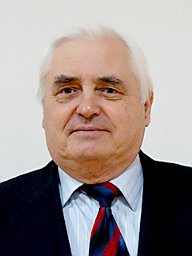 Valeriy Bezruk合作论文数Dept. of Telecommun. Networks, Kharkiv Nat. Univ. of Radio Electron.;c;Dept. of Telecommun. Networks, Kharkiv Nat. Univ. of Radio Electron.2
 Bondarenko, I.N.合作论文数Kharkiv Nat. Univ. of Radio Electron.;c;Kharkiv Nat. Univ. of Radio Electron.2




