Fingering front morphologies for water and non-aqueous phase liquids (NAPLs) infiltrating into homogeneous unsaturated porous media were quantitatively described based on the fractal assumption. Correlations of fractal dimensions with physical properties of the fluids were studied. The implications of fractal dimensions for environmental systems are further discussed. Fingering front morphologies had fractal properties, and diesels which with high capillary numbers experienced high fractal dimensions than water. Fractal dimension was suggested as an indicator for dye coverage and infiltration depth, which represent pollution area and depth, respectively. The pollution areas showed positive correlations with fractal dimensions while the infiltration depths showed negative correlations. This information is useful for contaminated soil risk management and important in the effective design of recovery and remediation schemes.
Currently, soil odor-active substance screening and evaluation methods for contaminated sites are underdeveloped, with unclear treatment objectives and areas. Consequently, some sites suffer from odor issues during and even after remediation. This study focused on an organophosphorus pesticide factory site in Guangdong Province, China. It established a method of determining the odorant control area using a comprehensive approach combining instrumental and olfactory soil sample analyses. The main odor-active substances identified were ethylbenzene, phenol, m, p-xylene, styrene, toluene, and o-xylene, with odorant control values (the limit of odor-active substance contents) of 35.2, 28.1, 8.0, 11.3, 40.2 and 89.3 mg/kg respectively. Instrumental analysis of soil samples revealed 11 sampling points where the main odor-causing substances exceeded standard levels. Among the substances, ethylbenzene (1.48E+04 mg/kg) had the highest content, exceeding the limit up to 421-fold. Olfactory analysis indicated 14 sampling points with odor intensity surpassing the standard (OI > 2). Based on the instrumental analysis results and the odorant control value, the initial estimated odor control area (area with the risk of odor nuisance) was 5.64E+03 m2. Incorporating the olfactory analysis findings, the control area was adjusted by 1.25E+03 m2, leading to a final calculated soil odor control area of 6.89E+03 m2 for the study site. The comprehensive approach to analyzing soil samples for odor control can help evaluate the extent of soil odor pollution in contaminated sites and provide a scientific basis for effectively removing and managing odor-causing substances in soil.
Surveys and assessments of contaminated sites primarily focus on hazardous pollutants in the soil with less attention paid to odorants. This makes the management of contaminated sites difficult. In this study, hazardous and odorous pollutants in the soil were assessed for a large site that was previously used for production of pharmaceuticals to determine the degree and characteristics of soil contamination at pharmaceutical production sites, for undertaking rational remediation measures. The main hazardous pollutants at the study site were triethylamine, n-butyric acid, benzo(a)pyrene (BaP), N-nitrosodimethylamine (NDMA), dibenzo(a,h)anthracene (DBA), total petroleum hydrocarbons (C10–C40) (TPH), and 1,2-dichloroethane; TEA, BA, and isovaleric acid (IC) were the main odorants. As the type and distribution of hazardous and odorous pollutants differ, it is necessary to separately assess the impact of these pollutants at a contaminated site. Soils in the surface layer pose significant non-carcinogenic (HI = 68.30) and carcinogenic risks (RT = 3.56E−5), whereas those in the lower layer only pose non-carcinogenic risks (HI > 7.43). Odorants were found at considerable concentrations both in the surface and lower layers, with the maximum concentrations being 29,309.91 and 41.27, respectively. The findings of this study should improve our understanding of soil contamination at former pharmaceutical production sites and should inform the assessment of the risks posed by contaminated sites, with problems associated with odour, and possible remediation strategies.
针对我国农药污染地块修复过程中异味扰民的突出环境问题,开展地块土壤中异味物质的筛查,明确异味物质在土壤中的分布至关重要.本文以某典型农药污染地块土壤为研究对象,通过对土壤气样品全扫描分析、异味清单比对、异味活度值计算、累计异味贡献率分析等方法,筛查确定土壤中主要的异味物质;基于筛查结果,通过土壤样品采集,应用GC-MS分析,查明土壤中主要异味物质的污染程度和空间分布.结果表明:①该典型农药污染地块土壤中涉及二甲基硫醚、二甲基二硫醚、甲苯、三氯乙烯、二硫化碳、氯仿、邻-二甲苯、间/对-二甲苯、苯、噻吩、甲基环己烷、正己烷、四氯乙烯、乙苯和四氯化碳15种异味物质,异味活度值分别为7287.5、2755.6、714.8、676.7、438.5、294.5、229.4、74.7、55.4、50.0、49.6、18.9、3.1、1.7和0.6.②累计异味贡献率超过90%的主要异味物质为二甲基硫醚、二甲基二硫醚、甲苯和三氯乙烯,四者最高含量分别为10.9、48.5、797.7和33000.0 mg/kg,主要分布在除草剂车间、菊酯车间、敌敌畏车间、氧化制氯车间、百草枯车间和氧乐果车间等生产区域.③异味物质含量普遍随土壤埋深的增加表现为先增后降,主要分布在1.8~6.8 m的粉质黏土和6.8~10.6 m的粉土中.研究显示,农药污染地块土壤中异味物质种类复杂,可采用累计异味贡献率分析法进行筛查;地块土壤中异味物质的空间分布主要与生产过程、土壤埋深和土壤性质有关.
Polylactic acid (PLA) is a highly promising bio-based polymer that can replace petroleum-based materials. The PLA-modified membrane has been found to effectively block soil odours in laboratory experiments, but its barrier effect at the excavated soil interfaces of actual pesticide sites requires further evaluation. This study investigates the barrier effect of the PLA-modified membrane on odours at the excavated soil interface of a pesticide-contaminated site in Guangdong Province, China. The membrane’s barrier effect on odours was comprehensively evaluated using the static chamber technique with three indicators: diffusion flux, odour concentration, and a health risk index. The results showed that the initial diffusion fluxes of six main odour substances: m- and p-xylene, o-xylene, toluene, ethylbenzene, n-propylbenzene, and cumene were 1.95 × 100, 2.88 × 10⁻¹, 7.27 × 10⁻³, 1.49 × 100, 2.97 × 10⁻³, and 3.89 × 10⁻³ mg/(m2·s) based on the contribution rate. After laying the PLA-modified membrane, the flux reduction rate of all six odour substances was generally >90%. The background odour concentration in the test area was 109.56, and the odour concentration after laying the membrane was <1.12. The initial non-carcinogenic and carcinogenic risk indices of the test area were 3.03 and 1.62 × 10⁻⁴, respectively. After laying the membrane, these indices were <0.05 and <3.78 × 10⁻⁷, respectively, indicating no health risk. Overall, the PLA-modified membrane had a good barrier effect on odours in the on-site application, effectively reducing the diffusion and nuisances of odours, as well as their health risks.
Despite a ban on the production and use of organochlorine pesticides (OCPs) after 1983, serious OCP pollution still exists in the soil in certain areas of China because OCPs degrade very slowly. Based on a systematic review, we identified 136 relevant papers focusing on soil contamination from hexachlorocyclohexane (HCH) and dichlorodiphenyltrichloroethane (DDT) in China (published from 2001 to 2019). We compiled scientific data, extracted and analyzed relevant information, and summarized the pollution characteristics of HCH and DDT in Chinese soils found in two land use types: agricultural land and land for construction. Related studies on HCH and DDT in Chinese soils focus on the Beijing-Tianjin-Hebei region and the Yangtze and Pearl River Deltas, where agricultural soils are predominant. The average concentrations of both HCH and DDT in agricultural soils were generally lower than the risk screening value (100 μg/kg) in most provinces in China, except for DDT concentrations in the Inner Mongolia autonomous region. However, in certain central and eastern regions, mean or maximum recorded DDT concentrations approaching or exceeding 100 μg/kg were recorded. Regarding land for construction, soils with excessive concentrations of HCH and DDT were primarily observed at sites of operational or defunct pesticide factories. According to isomer and metabolite compositions, HCH and DDT at most sites originated from historical residues, but others may have been new inputs after 1983. Since 2015, the concentrations of HCH and DDT in agricultural soils in China have been decreasing, and those in the soils of land for construction (except for sites of operational or defunct pesticide factories) have not exceeded the standard after 2005. This indicates that the measures to prohibit the production and use of OCPs in China have been effective. However, the management of operational or defunct pesticide factories polluted by OCPs requires further improvement.
Chlorinated solvents (CS)-contaminated groundwater poses serious risks to the environment and public health. Microorganisms play a vital role in efficient remediation of CS. In this study, the microbial community (bacterial and archaeal) composition of three CS-contaminated groundwater wells located at an abandoned chemical factory which covers three orders of magnitude in concentration (0.02-16.15 mg/L) were investigated via 16S rRNA gene high-throughput sequencing. The results indicated that Proteobacteria and Thaumarchaeota were the most abundant bacterial and archaeal groups at the phylum level in groundwater, respectively. The major bacterial genera (Flavobacterium sp., Mycobacterium sp. and unclassified Parcubacteria taxa, etc.) and archaeal genera (Thaumarchaeota Group C3, Miscellaneous Crenarchaeotic Group and Miscellaneous Euryarchaeotic Group, etc.) might be involved in the dechlorination processes. In addition, Pearson's correlation analyses showed that alpha diversity of the bacterial community was not significantly correlated with CS concentration, while alpha diversity of archaeal community greatly decreased with the increased contamination of CS. Moreover, partial Mantel test indicated that oxidation-reduction potential, dissolved oxygen, temperature and methane concentration were major drivers of bacterial and archaeal community composition, whereas CS concentration had no significant impact, indicating that both indigenous bacterial and archaeal community compositions are capable of withstanding elevated CS contamination. This study improves our understanding of how the natural microbial community responds to high CS-contaminated groundwater.
This study aims to determine the current remediation status of contaminated sites in China to support future decision-making for the cleanup of contaminated sites. A survey was conducted in which a questionnaire was administered to 76 remediation practitioners working across China. The major driving force behind remediation was the redevelopment of contaminated brownfield land for residential purposes, mostly funded by profit-driven developers, particularly in Beijing. A large proportion of brownfield sites have been contaminated with organic compounds, reflecting past land use by chemical plants. Risk assessments of contaminated sites are typically based on the guidelines from China’s Ministry of Ecology and Environment, the United States Environmental Protection Agency, and local governments. The most frequently used criteria to assess site contamination in China are environmental quality standards, screening values, or both. The majority of remediation efforts use low-technology approaches to treat contaminated soil (e.g., cement kiln, in situ and ex situ solidification/stabilization, landfill, and mechanical soil aeration), while sophisticated, high-technology approaches (e.g., in situ and ex situ thermal desorption, in situ chemical treatment, and bioventing) are less often used. The implementation of the latter, while limited, illustrates that the necessary technology exists to support optimal land remediation in China. In addition to high-technology remediation methods, 6W/1H ideology can be employed when assessing contaminated site for remediation.
Soil leaching, known as a new efficient soil remediation technology, has obtained rapid development in recent years. Focusing on the field of remediation of heavy metal contaminated soil using leaching technology, relevant publications and patents were analyzed with the method of bibliometric analysis. Then on this basis, the annual trends both at home and abroad were overviewed systematically, the distribution of major research institutions, regions and countries contributing to the papers and patents analyzed, and the gap between China and the major developed countries and regions in the world discussed. In the end, it was pointed that the key technologies and hotspots in this field are the leaching process and equipment and eluting reagent.
Mechanical soil aeration is a simple, effective, and low-cost soil remediation technology that is suitable for sites contaminated with volatile chlorinated hydrocarbons (VCHs). Conventionally, this technique is used to treat the mixed soil of a site without considering the diversity and treatability of different soils within the site. A laboratory test was conducted to evaluate the effectiveness of mechanical soil aeration for remediating soils of different textures (silty, clayey, and sandy soils) along a vertical profile at an abandoned chloro-alkali chemical site in China. The collected soils were artificially contaminated with chloroform (TCM) and trichloroethylene (TCE). Mechanical soil aeration was effective for remediating VCHs (removal efficiency > 98%). The volatilization process was described by an exponential kinetic function. In the early stage of treatment (0–7 hr), rapid contaminant volatilization followed a pseudo-first order kinetic model. VCH concentrations decreased to low levels and showed a tailing phenomenon with very slow contaminant release after 8 hr. Compared with silty and sandy soils, clayey soil has high organic-matter content, a large specific surface area, a high clay fraction, and a complex pore structure. These characteristics substantially influenced the removal process, making it less efficient, more time consuming, and consequently more expensive. Our findings provide a potential basis for optimizing soil remediation strategy in a cost-effective manner.
The contaminated site remediation practice in Europe and America showed that organic pollutants were discovered in 60% ~ 90% contaminated sites,in which volatile organic compounds (VOC) and semivolatile organic compounds (SVOC) were the common contaminants in soil.Ex-situ remediation technologies conformed to current situation in China for VOC/ SVOC contaminated sites,but the secondary pollution was necessary to pay attention in remediation engineering practice.In this paper,the principles of soil vapor extraction,mechanical soil aeration,thermal desorption,soil washing,biopiles and cement kiln were introduced.The common secondary pollution in the process of ex-situ remediation technologies were extensively discussed,including excavation,removal,and stacking.Meanwhile,the secondary pollution of different technologies in repair process were also discussed,and the corresponding prevention methods were provided.This paper provided references for remediation of VOC/SVOC-contaminated sites in China and other developing countries.
Mechanical soil aeration is used for soil remediation at sites contaminated by volatile organic compounds. However, the effectiveness of the method is limited by low soil temperature, high soil moisture, and high soil viscosity. Combined with mechanical soil aeration, quicklime has a practical application value related to reinforcement remediation and to its action in the remediation of soil contaminated with volatile organic compounds. In this study, the target pollutant was trichloroethylene, which is a volatile chlorinated hydrocarbon pollutant commonly found in contaminated soils. A restoration experiment was carried out, using a set of mechanical soil-aeration simulation tests, by adding quicklime (mass ratios of 3, 10, and 20%) to the contaminated soil. The results clearly indicate that quicklime changed the physical properties of the soil, which affected the environmental behaviour of trichloroethylene in the soil. The addition of CaO increased soil temperature and reduced soil moisture to improve the mass transfer of trichloroethylene. In addition, it improved the macroporous cumulative pore volume and average pore size, which increased soil permeability. As soil pH increased, the clay mineral content in the soils decreased, the cation exchange capacity and the redox potential decreased, and the removal of trichloroethylene from the soil was enhanced to a certain extent. After the addition of quicklime, the functional group COO of soil organic matter could interact with calcium ions, which increased soil polarity and promoted the removal of trichloroethylene.
Soil pollution has become a global environmental problem,and it's more serious in China.Remediation technology of contaminated soil was the focus of research in the world.Based on the research papers and patents in the related field of domestic and international,this study used the literature metrology and analyzed the quantity of research papers and patents,publication year and patents landscape map.The results demonstrated the research on contaminated soil remediation technology started relatively late in China.There are 10-15 years gap of contaminated soil remediation technology between domestic and foreign,especially in industrial field.Within system integration and original technology,the key technologies for contaminated soils remediation were proposed in China.The researches could provide the decision-making basis for soil pollution remediation technology's industrial and policy.
After the relocation of industrial enterprises,a large number of contaminated sites were left,becoming the key source of urban land development.In China,the restoration work of contaminated sites started late,so the risk management and remediation system of China's contaminated is not yet perfect.Based on case studies of the contaminated sites in Beijing,the condition of investigation and evaluation,remediation as well as supervision of the contaminated sites in Beijing were analyzed in this paper,and the lack of standards for the remediation of contaminated sites in Beijing,the inadequacy of in-situ green remediation technology and the imperfect contents of supervision were also studied.The countermeasures were proposed with technical supporting system of standard,concept of sustainable remediation and the whole process regulatory framework,etc.The purpose of this research paper was to provide references for the establishment of contaminated sites management and remediation system in Beijing.
鉴于传统调查布点方法对土壤污染物平均含量的估计精度较高,但对污染区范围的估计精度不能满足修复治理需求的问题,同时,为了准确估计土壤污染区面积及其空间位置,提出了土壤污染详查样点优化方法.在初步调查的基础上,首先利用地统计条件模拟方法预测土壤污染概率,基于污染概率和土壤污染物含量局部空间变异确定加密布点的优先区域,并根据污染物含量的空间变化趋势布设样点,然后根据优化后的土壤污染调查布点方案估计污染区面积和空间位置.最后,以某Cd污染场地为例,验证了布点优化方法的效果.结果表明,土壤污染调查加密布点方法显著提高了污染区面积及其空间位置的估计精度.案例场地土壤Cd污染区面积的预测误差为4.10%,污染区空间位置的精度为86.10%.土壤污染调查布点优化方法在保证土壤污染调查精度的同时,相比于传统调查方法可显著降低土壤污染调查的样本量.
The US Superfund contaminated sites remediation practice shows that 84% of the soil contamination is caused by volatile organic compounds ( VOCs ) or semivolatile organic compounds ( SVOCs ) . The remediation technologies of VOCs∕SVOCs-contaminated sites have been relatively mature and widely used in developed countries, while there are fewer cases of engineering remediation applications in China as the site remediation has just started. Common organic contaminated soil remediation technologies in both China and abroad were introduced, with the focus on the principle of soil vapor extraction, soil flushing∕washing, solidification∕stabilization, thermal treatment∕desorption and bioslurry systems. The efficiency, duration, cost and application of these technologies were compared, and current and future applications of these technologies discussed, in order to provide references and suggestions to the remediation of VOCs∕SVOCs-contaminated sites in China and other developing countries.
During the process of surfactant enhanced aquifer remediation (SEAR), free phase dense non-aqueous phase liquid (DNAPL) may be mobilized and spread. The understanding of the impact of DNAPL spreading on the SEAR remediation is not sufficient with its positive effect infrequently mentioned. To evaluate the correlation between DNAPL spreading and remediation efficiency, a two-dimensional sandbox apparatus was used to simulate the migration and dissolution process of 1,2-DCA (1,2-dichloroethane) DNAPL in SEAR. Distribution area of DNAPL in the sandbox was determined by digital image analysis and correlated with effluent DNAPL concentration. The results showed that the effluent DNAPL concentration has significant positive linear correlation with the DNAPL distribution area, indicating the mobilization of DNAPL could improve remediation efficiency by enlarging total NAPL-water interfacial area for mass transfer. Meanwhile, the vertical migration of 1,2-DCA was limited within the boundary of aquifer in all experiments, implying that by manipulating injection parameters in SEAR, optimal remediation efficiency can be reached while the risk of DNAPL vertical migration is minimized. This study provides a convenient visible and quantitative method for the optimization of parameters for SEAR project, and an approach of rapid predicting the extent of DNAPL contaminant distribution based on the dissolved DNAPL concentration in the extraction well.
Mechanical soil aeration is a simple, effective and low-cost soil remediation technique that is particularly suitable for soils contaminated by volatile organic compounds. However, low environmental temperatures, high moisture contents and high viscosity are associated with a severe tailing problem and thus significantly influence the remediation effect and duration. In this study, quicklime was used to remove chlorohydrocarbons including 1,2-dichloroethane, trichloroethylene and tetrachloroethylene from soils in an abandoned chemical plant site in China by using mechanical soil aeration. After 3% quicklime was added to the silty soil and silty clay during the tailing period, the concentration of residual contaminants decreased remarkably and quickly. The results showed that, firstly, quicklime can effectively enhance the remediation of chlorohydrocarbons in soil under mechanical soil aeration technique. Secondly, addition of quicklime changed the physical property of the soil and thus affect the environmental behavior of chlorohydrocarbons. Thirdly, Quicklime caused the changes of soil chemical property and thus influenced the removal of volatile chlorohydrocarbons in soils. The results provided basis for the application of mechanical soil aeration in remediation of chlorohydrocarbons-contaminated sites in broader scope.
 Fasheng Li (李发生)合作论文数Chinese Research Academy of Environmental Sciences51
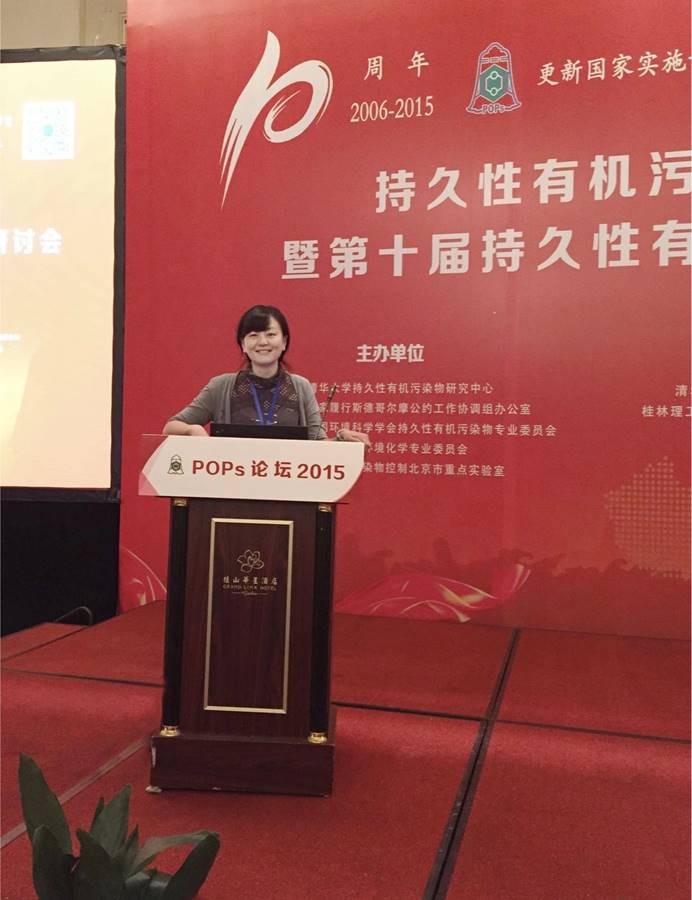 Yan Ma (马妍)合作论文数School of Chemical & Environmental Engineering, China University of Mining and Technology-Beijing18
 Shi Yi合作论文数15HuiYing Li (李慧颖)合作论文数14Yunfeng Xie合作论文数11XU Zhu (徐竹)合作论文数11Yunzhe Cao (曹云者)合作论文数中国环境科学研究院11
 QingBao Gu (谷庆宝)合作论文数中国环境科学研究院11Binbin DONG (董彬彬)合作论文数10JiDun Fang (房吉敦)合作论文数9
 Jiulan Dai (戴九兰)合作论文数Environment Research Institute, Shandong University7
 Renqing Wang (王仁卿)合作论文数Institute of Ecology and Biodiversity, School of Life Sciences, Shandong University7
 Duanping xu (许端平)合作论文数6Ping Du (杜平)合作论文数6
 Zhonghou Xu合作论文数6Bin Wu合作论文数5Bin Yang合作论文数5
 Juncheng Yang (杨俊诚)合作论文数Institute of Agricultural Resources and Regional Planning, Chinese Academy of Agricultural Sciences;College of Life Sciences, Yulin University5Hong Hou合作论文数5
 Shuguang Lyu (吕树光)合作论文数College of Resource and Environmental Engineering, East China University of Science and Technology5Hongguang Zheng合作论文数4Weiguang Zhao合作论文数4Zheng Li合作论文数4
 Kuangfei Lin (林匡飞)合作论文数School of Resources and Environmental Engineering, East China University of Science and Technology4
 Qunhui Wang (汪群慧)合作论文数School of Energy and Environmental Engineering, University of Science and Technology Beijing4
 Gang Xu (徐刚)合作论文数School of Environmental and Chemical Engineering, Shanghai University4
 Juejun Yao (姚珏君)合作论文数Beijing Municipal Research Institute of Eco-Environmental Protection4Bingzhi Li合作论文数3Shu-Kai Fan合作论文数3XiaoJuan Liu (柳晓娟)合作论文数3Deyi Hou (侯德义)合作论文数3
 Yongdi Liu (刘勇弟)合作论文数School of Resources and Environmental Engineering, East China University of Science and Technology3
 Hui Li (李辉)合作论文数Institute of Environmental Pollution and Health, School of Environmental and Chemical Engineering, Shanghai University;Research Management Department, Shanghai University3
 Wenxing Wang (王文兴)合作论文数Environment Research Institute, Shandong University3
 Xuwen He (何绪文)合作论文数School of Chemical & Environmental Engineering, China University of Mining and Technology-Beijing3
 Guanlin Guo (郭观林)合作论文数Chinese Research Academy of Environmental Sciences3Xin Wang (王鑫)合作论文数3
 Juan Zhang (张娟)合作论文数School of Metallurgical and Ecological Engineering, University of Science & Technology Beijing3LI Hui-ying合作论文数2Yu Wang合作论文数2Caiyun Zhao合作论文数2Tingting Shen合作论文数2Zi-yuan RUAN (阮子渊)合作论文数2Zhu-ming MEN (门著铭)合作论文数2Xiaoli Wang合作论文数2Jia-qi CHEN (陈家琪)合作论文数2Bing Yang合作论文数2Ru Xiao合作论文数2WANG Dan (王丹)合作论文数2




