Large language model (LLM) inference is often bounded by memory footprint and memory bandwidth in resource-constrained deployments, making quantization a fundamental technique for efficient serving. While post-training quantization (PTQ) maintains high fidelity at 4-bit, it deteriorates at 2–3 bits. Fundamentally, existing methods enforce a shape-invariant quantization grid (e.g., the fixed uniform intervals of UINT2) for each group, severely restricting the feasible set for error minimization. To address this, we propose Bit-Plane Decomposition Quantization (BPDQ), which constructs a variable quantization grid via bit-planes and scalar coefficients, and iteratively refines them using approximate second-order information while progressively compensating quantization errors to minimize output discrepancy. In the 2-bit regime, BPDQ enables serving Qwen2.5-72B on a single RTX 3090 with 83.85\% GSM8K accuracy (vs. 90.83\% at 16-bit). Moreover, we provide theoretical analysis showing that the variable grid expands the feasible set, and that the quantization process consistently aligns with the optimal objective in Hessian-induced geometry. Code is available in the supplementary materials and will be open-sourced.
Recently, multi-view learning has witnessed a considerable interest on the research of trusted decision-making. Previous methods are mainly inspired from an important paper published by Han et al. in 2021, which formulates a Trusted Multi-view Classification (TMC) framework that aggregates evidence from different views based on Dempster's combination rule. All these methods only consider inter-view aggregation, yet lacking exploitation of intra-view information. In this paper, we propose a generalized trusted multi-view classification framework with hierarchical opinion aggregation. This hierarchical framework includes a two-phase aggregation process: the intra-view and inter-view aggregation hierarchies. In the intra aggregation, we assume that each view is comprised of common information shared with other views, as well as its specific information. We then aggregate both the common and specific information. This aggregation phase is useful to eliminate the feature noise inherent to view itself, thereby improving the view quality. In the inter-view aggregation, we design an attention mechanism at the evidence level to facilitate opinion aggregation from different views. To the best of our knowledge, this is one of the pioneering efforts to formulate a hierarchical aggregation framework in the trusted multi-view learning domain. Extensive experiments show that our model outperforms some state-of-art trust-related baselines.
Class imbalance has been extensively studied in single-view scenarios; however, addressing this challenge in multi-view contexts remains an open problem, with even scarcer research focusing on trustworthy solutions. In this paper, we tackle a particularly challenging class imbalance problem in multi-view scenarios: long-tailed classification. We propose TMLC, a Trusted Multi-view Long-tailed Classification framework, which makes contributions on two critical aspects: opinion aggregation and pseudo-data generation. Specifically, inspired by Social Identity Theory, we design a group consensus opinion aggregation mechanism that guides decision-making toward the direction favored by the majority of the group. In terms of pseudo-data generation, we introduce a novel distance metric to adapt SMOTE for multi-view scenarios and develop an uncertainty-guided data generation module that produces high-quality pseudo-data, effectively mitigating the adverse effects of class imbalance. Extensive experiments on long-tailed multi-view datasets demonstrate that our model is capable of achieving superior performance.
Information theory has inspired numerous advancements in multi-view learning. Most multi-view methods incorporating information-theoretic principles rely an assumption called multi-view redundancy which states that common information between views is necessary and sufficient for down-stream tasks. This assumption emphasizes the importance of common information for prediction, but inherently ignores the potential of unique information in each view that could be predictive to the task. In this paper, we propose a comprehensive information-theoretic multi-view learning framework named CIML, which discards the assumption of multi-view redundancy. Specifically, CIML considers the potential predictive capabilities of both common and unique information based on information theory. First, the common representation learning maximizes Gács-Körner common information to extract shared features and then compresses this information to learn task-relevant representations based on the Information Bottleneck (IB). For unique representation learning, IB is employed to achieve the most compressed unique representation for each view while simultaneously minimizing the mutual information between unique and common representations, as well as among different unique representations. Importantly, we theoretically prove that the learned joint representation is predictively sufficient for the downstream task. Extensive experimental results have demonstrated the superiority of our model over several state-of-art methods. The code is released on CIML.
In the context of multi-view clustering, graph learning is recognized as a crucial technique, which generally involves constructing an adaptive neighbor graph based on probabilistic neighbors, and then learning a consensus graph for clustering. However, it is worth noting that these graph learning methods encounter two significant limitations. Firstly, they often rely on Euclidean distance to measure similarity when constructing the adaptive neighbor graph, which proves inadequate in capturing the intrinsic structure among data points in practice, particularly for high-dimensional data. Secondly, most of these methods focus solely on consensus graph, ignoring unique information from each view. Although a few graph-based studies have considered using specific information as well, the modelling approach employed does not exclude the noise impact from the common or specific components. To this end, we propose a novel tensor-based multi-view graph learning framework that simultaneously considers consistency and specificity, while effectively eliminating the influence of noise. Specifically, we calculate similarity using pseudo-Stiefel manifold distance to preserve the intrinsic properties of data. By making an assumption that the learned neighbor graph of each view comprises a consistent part, a specific part, and a noise part, we formulate a new tensor-based target graph learning paradigm for noise-free graph fusion. Owing to the benefits of tensor singular value decomposition (t-SVD) in uncovering high-order correlations, this model is capable of achieving a comprehensive understanding of the target graph. Furthermore, we derive an algorithm to address the optimization problem. Experiments on six datasets have demonstrated the superiority of our method. We have released the source code on https://github.com/lshi91/CSTGL-Code.
In this work we present a full-duplex (FD) underwater acoustic (UWA) communication system capable of simultaneously transmitting and receiving acoustic signals in the same frequency bandwidth with a two-element FD transducer. The key challenge of implementing an FD system is to cancel the strong self-interference (SI) from the near-end transmitter. By using advanced adaptive filtering algorithms providing high accuracy channel estimates, a high level of SI cancellation can be achieved when the far-end signal is absent. However, the SI channel estimation performance is limited in FD scenarios since the far-end signal acts as an interference. In this paper, we propose an FD UWA communication system which alternates between the SI cancellation and far-end data demodulation. Advanced adaptive filters with high tracking performance are used for SI cancellation. An adaptive Rake combiner with multipath interference cancellation is implemented to improve the demodulation performance in time-varying multipath channels. The performance of the FD UWA system is evaluated in lake experiments and numerical simulations. The proposed adaptive Rake combiner with multipath interference cancellation significantly outperforms the conventional Rake combiner and an adaptive decision feedback equalizer in the experiments. With the adaptive Rake combiner, the detection performance of the proposed FD UWA system is comparable with that of the half-duplex system.
Recently, multi-view Graph Neural Networks (GNNs) have garnered increasing interest. However, three critical research aspects still remain challenging: 1) capturing underlying correlation information between views, 2) ex tracting intrinsic graph structure features, and 3) aggregating graph information from different views. To address these challenges, we propose a novel multi-view graph neural network framework. Specifically, we capture the local correlation between the views in the kernel feature space. By stacking the mapped graph matrices into a tensor, tensor decomposition is then performed to extract the global correlation among different graphs, which enhances both the adjacency and feature matrices. To explore the inherent graph structure features, we design an unsupervised scheme for filtering out low-relevance neighbors. This is achieved by initially constructing a score matrix based on similarity measures to evaluate the neighbor importance, and then designing a node-filtering strategy to balance important neighbors and fruitful edges. Finally, we design an augmented cross-aggregation module to enable in-depth intra-aggregation and inter-aggregation. Experimental results on real-world datasets show that our method outperforms several advanced graph neural network methods. The code will soon be released in a preprint version.
Graph Neural Networks (GNNs) have exhibited remarkable efficacy in learning from multi-view graph data. In the framework of multi-view graph neural networks, a critical challenge lies in effectively combining diverse views, where each view has distinct graph structure features (GSFs). Existing approaches to this challenge primarily focus on two aspects: (1) prioritizing the most important GSFs, (2) utilizing GNNs for feature aggregation. However, prioritizing the most important GSFs can lead to limited feature diversity, and existing GNN-based aggregation strategies process each view without considering view reliability. To address these issues, we propose a novel Multi-View Graph Neural Network with Reliable Structural Enhancement and Aggregation (RSEA-MVGNN). Firstly, we estimate view-specific uncertainty employing subjective logic. Based on this uncertainty, we design a reliable structural enhancement scheme by feature de-correlation algorithm. This approach enables each enhancement to focus on different GSFs, thereby achieving diverse feature representation in the enhanced structure. Secondly, the model learns view-specific beliefs and uncertainty as opinions, which are utilized to evaluate view reliability. Based on these opinions, the model enables high-reliability views to dominate GNN aggregation, thereby facilitating representation learning. Experimental results conducted on five real-world datasets demonstrate that RSEA-MVGNN outperforms several state-of-the-art GNN-based methods. Code is available at http://github.com/junyu000/RSEA-MVGNN.
Based on the principle of superposition, the active noise control (ANC) technique can achieve satisfactory noise reduction. The filtered-x least mean square (FxLMS) algorithm has been extensively implemented in the ANC problem but it is easily plunged into instability in impulsive noise scenarios. To ameliorate this disadvantage, benefiting from the reduced computational load of the Euclidean direction search (EDS) algorithm and robustness of the maximum correntropy criterion (MCC), a novel filtered-x EDS-MCC (FxEDS-MCC) algorithm is proposed to attenuate the impulsive interference. The theoretical analysis of the FxEDS-MCC algorithm is based on the rotated method and the Taylor series expansion approximation. Simulations validate the accuracy of the theoretical performance and verify the improved performance of the FxEDS-MCC algorithm in comparison with the existing algorithms.
A considerable amount of multi-view subspace clustering (MVSC) algorithms have been investigated to explore widely available multi-view data. Among these methods, anchor-based MVSC algorithms stand out for their effectiveness and efficiency in handling large-scale data. However, the following two limitations lead to inferior performance: (1) a lack of consideration for the high-order correlations of bipartite graphs; (2) a disjointed process that independently executes anchor selection, bipartite graph learning, and spectral embedding. To handle these drawbacks, we propose an unified framework that allows for jointly learning consensus anchor matrix and tensorized bipartite graph, as well as integrating a fast spectral embedding technique. We name our method as Unified and Efficient Multi-View Clustering with Tensorized Bipartite Graph (UEMC-TBG). Specifically, UEMC-TBG captures the high-order correlations of multiple bipartite graphs with consensus anchors. This is achieved by minimizing the tensor-Singular Value Decomposition (t-SVD) based tensor nuclear norm. Furthermore, we innovatively incorporate a fast spectral embedding technique for bipartite graph. Extensive experiments on eight datasets show that UEMC-TBG provides better performance than advanced baselines. One can access the source code on https://github.com/lshi91/UEMC-TBG.
Quantization and fine-tuning are crucial for deploying large language models (LLMs) on resource-constrained edge devices. However, fine-tuning quantized models presents significant challenges, primarily stemming from: First, the mismatch in data types between the low-precision quantized weights (e.g., 4-bit) and the high-precision adaptation weights (e.g., 16-bit). This mismatch limits the computational efficiency advantage offered by quantized weights during inference. Second, potential accuracy degradation when merging these high-precision adaptation weights into the low-precision quantized weights, as the adaptation weights often necessitate approximation or truncation. Third, as far as we know, no existing methods support the lossless merging of adaptation while adjusting all quantized weights. To address these challenges, we introduce lossless ternary adaptation for quantization-aware fine-tuning (LoTA-QAF). This is a novel fine-tuning method specifically designed for quantized LLMs, enabling the lossless merging of ternary adaptation weights into quantized weights and the adjustment of all quantized weights. LoTA-QAF operates through a combination of: i) A custom-designed ternary adaptation (TA) that aligns ternary weights with the quantization grid and uses these ternary weights to adjust quantized weights. ii) A TA-based mechanism that enables the lossless merging of adaptation weights. iii) Ternary signed gradient descent (t-SignSGD) for updating the TA weights. We apply LoTA-QAF to Llama-3.1/3.3 and Qwen-2.5 model families and validate its effectiveness on several downstream tasks. On the MMLU benchmark, our method effectively recovers performance for quantized models, surpassing 16-bit LoRA by up to 5.14\%. For task-specific fine-tuning, 16-bit LoRA achieves superior results, but LoTA-QAF still outperforms other methods. Code is available in github.com/KingdalfGoodman/LoTA-QAF.
Crude oil price forecasting is important for market participants and policymakers. However, accurately tracking oil prices is quite a challenging task due to the complexity of temporal oil data and the nonlinear relationships involved in the forecasting task. In this study, a multiscale time-series decomposition learning framework is proposed to deal with this issue. First, a multiscale temporal processing module is designed to capture different frequency time-series patterns in historical data at various scales. Then, a multiscale decomposition technique is applied to decompose historical crude oil data into various temporal modes, involving global shared information across multiple scales, as well as local specific information that varies at each scale. Finally, a multiscale fusion mechanism is employed to combine these information, which are further used as inputs to construct nonlinear and complex predictive models for crude oil prices. A series of experiments conducted on Shanghai crude oil market demonstrate that the proposed approach outperforms several econometric and machine learning models.
Latent multi-view subspace clustering has been demonstrated to have desirable clustering performance. However, the original latent representation method vertically concatenates the data matrices from multiple views into a single matrix along the direction of dimensionality to recover the latent representation matrix, which may result in an incomplete information recovery. To fully recover the latent space representation, we in this paper propose an Enhanced Latent Multi-view Subspace Clustering (ELMSC) method. The ELMSC method involves constructing an augmented data matrix that enhances the representation of multi-view data. Specifically, we stack the data matrices from various views into the block-diagonal locations of the augmented matrix to exploit the complementary information. Meanwhile, the non-block-diagonal entries are composed based on the similarity between different views to capture the consistent information. In addition, we enforce a sparse regularization for the non-diagonal blocks of the augmented self-representation matrix to avoid redundant calculations of consistency information. Finally, a novel iterative algorithm based on the framework of Alternating Direction Method of Multipliers (ADMM) is developed to solve the optimization problem for ELMSC. Extensive experiments on real-world datasets demonstrate that our proposed ELMSC is able to achieve higher clustering performance than some state-of-art multi-view clustering methods.
Nonlinear subspace clustering based on a feed-forward neural network has been demonstrated to provide better clustering accuracy than some advanced subspace clustering algorithms. While this approach demonstrates impressive outcomes, it involves a balance between effectiveness and computational cost. In this study, we employ a functional link neural network to transform data samples into a nonlinear domain. Subsequently, we acquire a self-representation matrix through a learning mechanism that builds upon the mapped samples. As the functional link neural network is a single-layer neural network, our proposed method achieves high computational efficiency while ensuring desirable clustering performance. By incorporating the local similarity regularization to enhance the grouping effect, our proposed method further improves the quality of the clustering results. We name our method as Functional Link Neural Network Subspace Clustering (FLNNSC). Furthermore, we propose a convex combination subspace clustering scheme that combines a linear subspace clustering method with the functional link neural network subspace clustering approach. This combination method is named as Convex Combination Subspace Clustering (CCSC), which allows for a dynamic balance between linear and nonlinear representations. Extensive experiments conducted on four widely used datasets, including Extended Yale B, USPS, COIL20, and ORL, demonstrate that both FLNNSC and CCSC outperform several state-of-art subspace clustering methods in terms of clustering accuracy. Our affinity graph experiments reveal that FLNNSC exhibits clear block diagonal structures. We provide recommendations for hyperparameters in FLNNSC by performing a parameter sensitivity analysis, and empirically verify the convergence of FLNNSC. Additionally, we show that FLNNSC has a lower computational cost compared to two high-performing methods.
Temporal graph representation learning has drawn considerable attention in recent years. Most existing works mainly focus on modeling local structural dependencies of temporal graphs. However, underestimating the inherent global structural role information in many real-world temporal graphs inevitably leads to sub-optimal graph representations. To overcome this shortcoming, we propose a novel Role-based Temporal Graph Convolution Network (RTGCN) that fully leverages the global structural role information in temporal graphs. Specifically, RTGCN can effectively capture the static global structural roles by using hypergraph convolution neural networks. To capture the evolution of nodes' structural roles, we further design structural role-based gated recurrent units. Finally, we integrate structural role proximity in our objective function to preserve global structural similarity, further promoting temporal graph representation learning. Experimental results on multiple real-world datasets demonstrate that RTGCN consistently outperforms state-of-the-art temporal graph representation learning methods by significant margins in various temporal link prediction and node classification tasks. Specifically, RTGCN achieves AUC improvement of up to 5.1% for link prediction and F1 improvement of up to 6.2% for new link prediction. In addition, RTGCN achieves AUC improvement up to 4.6% for node classification and 2.7% for structural role classification.
As an important category of clustering methods, subspace clustering algorithms have arisen particular attention during the last decade. Most subspace clustering algorithms are designed by first constructing a similarity matrix and then using spectral clustering algorithms to perform clustering. How to learn a suitable representation matrix to construct the similarity matrix is essential to the clustering performance. In most existing algorithms, the representation matrix is solved by norm-minimization, which commonly enforces the error matrix with nuclear norm or sparsity norm. However, these methods may fail to achieve satisfactory performance for real data contaminated by complex noise. To this end, we propose a novel robust subspace clustering method based on the Logarithmic Hyperbolic Cosine Function (LHCF). We theoretically analyze the grouping effect, as well as the convergence behavior, which illustrates that highly correlated samples can be grouped into the same cluster. Experimental results conducted on the Extended Yale B dataset show that the newly proposed algorithm yields better clustering performance compared with some advanced methods.
Recently, online learning algorithms in machine learning have been imposed much attention. As a typical family, kernel adaptive filtering algorithms receive particular interest due to their sequential learning -based features. However, the kernel least mean square (KLMS) algorithm is not suitable for nonlinear tasks corrupted by non-Gaussian noise, especially impulsive noise. This is because the derivation of the KLMS algorithm is on the basis of the mean square error (MSE) criterion which only captures information of second-order statistics. In this paper, motivated by tanh function, we develop its generalized variant by introducing a scale factor for better representation capability; then we incorporate kernel adaptive filter with the generalized tanh function to propose a robust sequential learning algorithm. Based on estab-lishing the energy conservation relation, we derive a sufficient condition for ensuring the algorithm con-vergence. In addition, to perform the steady-state excess mean square error (EMSE) analysis, we use the pre-tuned dictionary strategy to model the unknown nonlinear system in form of a finite-order combina-tion; by Taylor expansion, we arrive at a closed-form solution for predicting the steady-state behavior. To further improve the algorithm performance, we design an optimization scheme for scale factor. Simula-tions for nonlinear time series prediction show that the designed schemes yield better performance than some state-of-art algorithms. The steady-state EMSE analysis is validated to provide accurate prediction results.(c) 2023 Elsevier B.V. All rights reserved.
Time-series prediction is a popular application that relies on the collection of historical data via sensors, which is then leveraged by predictive models to forecast future values or trends. As an important online predictive model, kernel adaptive filtering (KAF) has attracted much attention over the past decade. The traditional kernel least-mean square (KLMS) is derived based on minimizing the mean square error (MSE) criterion, which inevitably suffers from performance deterioration for nonlinear regression tasks corrupted by non-Gaussian noise. To this end, we, in this article, propose a novel robust KAF algorithm, namely a robust variable step-size kernel normalized LMS (RVSS-KNLMS) algorithm. The fundamental idea of our design is to prevent large outliers from perturbing the model training by limiting the energy of the weight update within a dynamic threshold. By establishing the energy conservation relation, we perform a rigorous analysis of the mean square convergence properties of the proposed algorithm. This analysis allows us to derive a sufficient condition for determining the appropriate step size. In addition, with the pretuned dictionary strategy that serves to simplify the nonlinear system model, we investigate the steady-state excess MSE (EMSE) of the proposed algorithm and arrive at a closed-form solution for prediction. Simulations on synthetic data and real-world data have confirmed the advantages of RVSS-KNLMS. Moreover, the theoretical steady-state analysis has been validated to provide good prediction results.
The maximum correntropy criterion (MCC) algorithm depends upon two fundamental parameters, i.e., step-size and kernel width. Previous studies of parameter optimization in the MCC mainly focus on a single parameter (mainly the kernel width), lacking optimization research concerning both parameters. To this end, this letter investigates a novel optimization scheme simultaneously involving step-size and kernel width. The optimization framework is based on making the power of weight error vector undergo the steepest attenuation. Under the premise of maintaining the same evolutionary trend for time-varying step-size and kernel width, we formulate a constrained parameter optimization problem, where the step-size is subject to a kernel width induced constraint. By taking this approach, the original bivariate optimization can be transformed into a univariate optimization problem, which facilitates optimization solving. We further develop an existing reset scheme to make it suitable for kernel width to ensure a good tracking capability. In addition, we investigate the convergence behavior of the optimized algorithm. Simulation results demonstrate that the developed optimization scheme is beneficial for performance improvement, and the resulting algorithm outperforms some state-of-art MCC-based algorithms.
Over the past decade, spline adaptive filtering (SAF) has attracted much attention in nonlinear signal processing. In this paper, we investigate the WL complex-valued SAF (WL-CSAF) algorithm in the complex domain based on the cascaded architecture combining a widely linear (WL) model and a nonlinear lookup table (LUT), which is capable of exploiting the full second-order information of signals. Moreover, the steady-state mean square error (MSE) is analyzed to provide insights into the theoretical behavior of the WL-CSAF algorithm. Simulations of nonlinear system identification scenarios demonstrate the superiority of WL-CSAF against known algorithms, and validate the accuracy of the theoretical predictions.
 Haiquan Zhao (赵海全)合作论文数School of Electrical Engineering, Southwest Jiaotong University19
 Badong Chen (陈霸东)合作论文数Institute of Artificial Intelligence and Robotics, Xi'an Jiaotong University;College of Artificial Intelligence, Xi'an Jiaotong University12
 Yuriy Zakharov合作论文数School of Physics, Engineering and Technology, University of York7
 Lu Shen合作论文数6
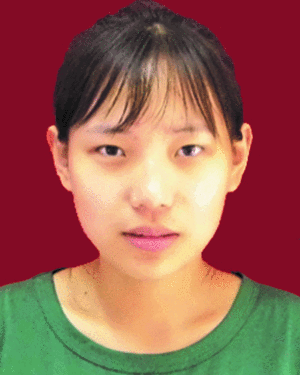 Cao, Lei合作论文数6
 Yu Zhao (赵宇)合作论文数School of Computing and Artificial Intelligence, Southwestern University of Finance and Economics;Financial Intelligence and Financial Engineering Key Laboratory of Sichuan Province, Southwestern University of Finance and Economics5
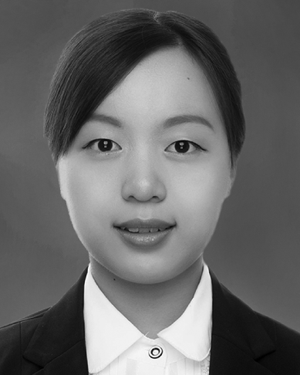 Jinghua Tan合作论文数Southwestern University of Finance and Economics3
 Benjamin Henson合作论文数3
 Junyu Chen合作论文数School of Computing and Artificial Intelligence, Southwest University of Finance and Economics2
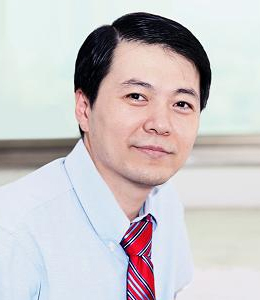 Gang Kou (寇纲)合作论文数School of Business Administration, Southwestern University of Finance and Economics2Xuming Hu合作论文数1Yuxiang Ren合作论文数1Wenjie Wang合作论文数1Zhen Peng合作论文数1Junzhuo Li合作论文数1Chuanqing Tang合作论文数School of Computing and Artificial Intelligence, Southwestern University of Finance and Economics;Artificial Intelligence and Digital Finance Key Laboratory of Sichuan Province1
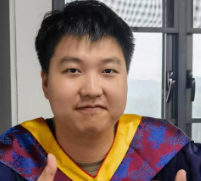 Taiqiang Wu (吴太强)合作论文数NGai Lab, The University of Hong Kong1Chen Ye合作论文数1
 Mengzhao Chen (陈锰钊)合作论文数Department of Computer Science, School of Computing and Data Science, The University of Hong Kong;Multimedia Lab, The University of Hong Kong1
 Yaoru Yang合作论文数1
 Pucha Song合作论文数Key Laboratory of Magnetic Suspension Technology and Maglev VehicleMinistry of Education and the School of Electrical EngineeringSouthwest Jiaotong UniversityChengdu610031China1
 Huaming Du合作论文数1Pengfei Li合作论文数1
 Kai-Li Yin合作论文数Sichuan Univ, Coll Comp Sci, Chengdu 610065, Peoples R China1
 Zhongpu Chen (陈中普)合作论文数School of Computing and Artificial Intelligence, Southwestern University of Finance and Economics1
 Xingyan Chen (陈星延)合作论文数School of Intelligent Engineering and Automation, Beijing University of Posts and Telecommunications1
 Fuzhen Zhuang (庄福振)合作论文数Research Center for Intelligent Perception and Cognition, Institute of Artificial Intelligence, Beihang University1
 Zongsheng Zheng (郑宗生)合作论文数College of Electrical Engineering, Sichuan University1
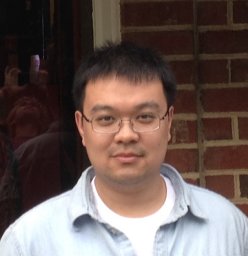 Wang Wenyuan合作论文数1
 Yi Yu (喻翌)合作论文数School of Information and Control Engineering, Southwest University of Science and Technology1
 Carl Yang (阳及)合作论文数Department of Computer Science, Emory University;Department of Biostatistics and Bioinformatics, Rollins School of Public Health, Emory University;Center for Data Science, Nell Hodgson Woodruff School of Nursing, Emory University1
 Cai Xu (徐偲)合作论文数School of Computer Science and Technology, Xidian University1
 Chaofan Tao (陶超凡)合作论文数The University of Hong Kong1
 Xiaomin Yang (杨晓敏)合作论文数College of Electronics and Information Engineering, Sichuan University1
 Hongxia Yang (杨红霞)合作论文数Department of Computing, Faculty of Computer and Mathematical Sciences, The Hong Kong Polytechnic University;InfiX.ai1
 Rodrigo C. de Lamare合作论文数Department of Electronics, The University of York;Centro de Estudos em Telecomunicações, Pontifícia Universidade Católica do Rio de Janeiro1
 Qing Li (李庆)合作论文数School of Computing and Artificial Intelligence, Southwestern University of Finance and Economics;Financial Intelligence and Financial Engineering Key Laboratory of Sichuan Province, Southwestern University of Finance and Economics1
 Hegui Zhang合作论文数School of Business Administration, Faculty of Business Administration, Southwestern University of Finance and Economics1
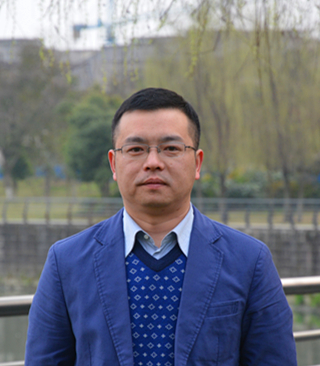 Tao Lei (雷涛)合作论文数Institute of Optics and Electronics, Chinese Academy of Sciences;University of Chinese Academy of Sciences1
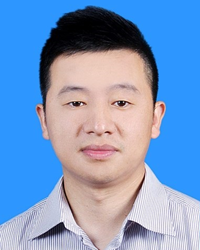 Jun Wang (汪俊)合作论文数Department of Aerospace Manufacturing Engineeringis, College of Mechanical and Electrical Engineering, Nanjing University of Aeronautics and Astronautics1
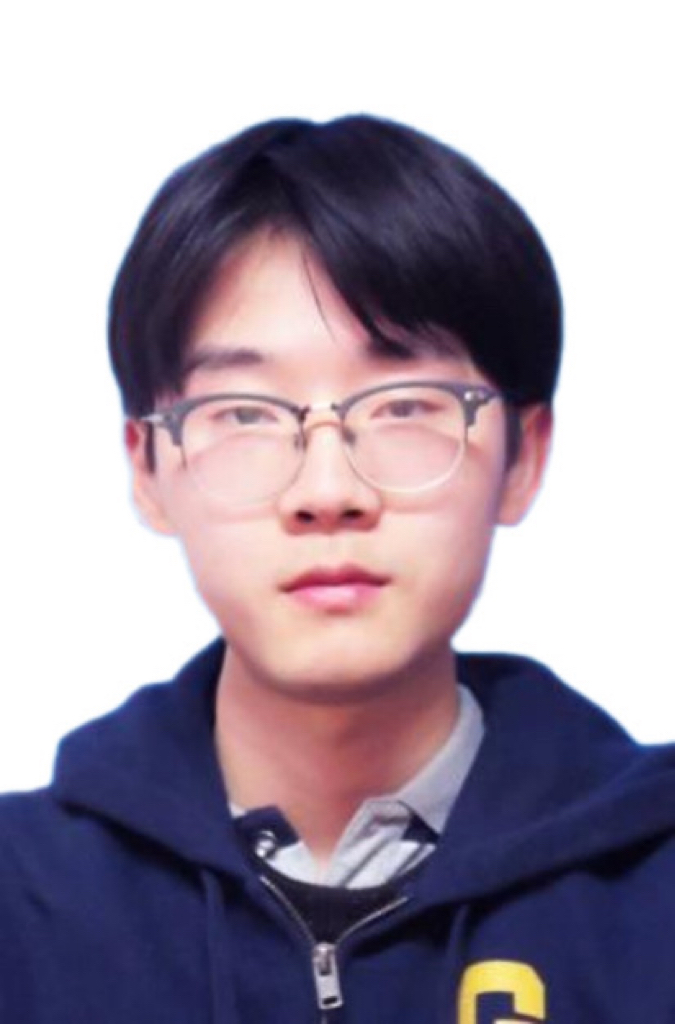 Jing Xiong (熊璟)合作论文数The University of Hong Kong1
 Xiangping Zeng合作论文数1
 Guangya Zhu (朱光亚)合作论文数College of Electrical Engineering, Sichuan University1
 Ngai Wong (黃毅)合作论文数Department of Electrical and Electronic Engineering, The University of Hong Kong1




