Reliable motion decision-making is critically associated with safety, efficiency, and comfort of autonomous vehicles. However, uncertainties in the cut-in behavior of vehicles in adjacent lanes make it difficult for autonomous vehicles to accurately assess and make decisions, thereby increasing the collision risks. To address this issue, a motion decision-making framework that accounts for dual uncertainties in surrounding vehicle cut-in intention and action is proposed, aiming to enhance driving safety and adaptability in dynamic traffic environments. Specifically, a hierarchical specific intention attention network is designed to extract vehicle motion correlations to predict cut-in probabilities and map driving intention uncertainty. Then, an uncertainty-driven Gaussian Markov decision-making model is proposed, where Gaussian process regression is used to further model vehicle cut-in action uncertainty based on uncertain intention. Additionally, a deep reinforcement learning algorithm for uncertainty exploration is proposed to learn the optimal driving strategy by embedding uncertainty information into the decision-making and exploration process through a multi-criteria information-gain reward mechanism. Simulation results demonstrate that our proposed method enables effective autonomous decision-making in uncertain cut-in scenarios, and has certain advantages in terms of overall safety, efficiency and comfort compared with existing algorithms.
Safe and comfortable overtaking on two-lane, two-way (TLTW) roads remains a significant challenge for intelligent vehicles, primarily due to visual occlusions that create uncertainty in estimating the position of potential pedestrians in blind spots. Since existing planning methods lack effective modeling of this uncertainty, they fail to impose reliable spatiotemporal constraints and struggle to generate both safe and comfortable trajectories. Therefore, this paper proposes a novel optimal overtaking trajectory planning method for intelligent vehicles on TLTW roads with visual occlusion, comprising three core modules: the uncertain overtaking risk potential field (UORPF), the global overtaking reference path (GORP), and the optimal overtaking trajectory planning (OOTP). In the UORPF module, an LSTM-based potential pedestrian presence probability inference model is established, and the observable boundaries of blind spots are modeled to obtain possible pedestrian positions. Based on this, a pedestrian risk potential field is constructed to effectively quantify the uncertainty in overtaking danger levels. The GORP module generates a low-risk global reference path, ensuring overtaking safety and narrowing the scope for local planning to address strong temporal constraints. Subsequently, by combining decoupled sampling (DS) with sequential quadratic programming (SQP), the OOTP module designs a multidimensional, constraint-adaptive overtaking trajectory planning method further to enhance safety and comfort within the limited overtaking space. Simulation results validate that the proposed method can enable overtaking both safety and comfort.
The mortality rate of heavy vehicle rollover accidents is extremely high, and accurate prediction of rollover accidents is a key technology to avoid it. However, the traditional rollover warning systems can only reflect the current vehicle rollover state or short-term changes, and the time reserved for the driver to deal with the accident is very short, which makes it difficult to effectively avoid rollover accidents. For this, this paper proposes a long time-domain rollover accident prediction fusing the future motion state information of heavy vehicles (LRAP-FMS). On the one hand, a lane-changing intention recognition model that considers vehicle-to-vehicle interaction information is proposed to extract drivers' lane-changing intentions. Based on this model, a motion state prediction algorithm of heavy vehicles fusing long and short time-domain is developed to accurately predict the ego vehicle's future motion state information. On the other hand, a long time-domain rollover accident time prediction model is developed based on the predicted future motion state information, to accurately predict the rollover moment during the future motion of the ego vehicle. The results indicate that the proposed LRAP-FMS can accurately predict the future rollover accident time of heavy vehicles in different scenarios, and can predict the rollover accident time of heavy vehicles 2.2s-3.1 s in advance.
Six-wheel-steering distributed-driving electric vehicles (6WS-DDEV) exhibit high maneuverability; however, the increased number of actuators complicates chassis coordination, leading to control conflicts and limiting overall control performance. To address this issue, this paper proposes a hierarchical coordinated control strategy that integrates the twin delayed deep deterministic policy gradient (TD3) algorithm with multi-agent cooperative game theory (TD3-MACGC). This strategy establishes a dual-layer leader-follower architecture. In the upper leader layer, a TD3 agent is introduced as the decision maker to learn vehicle state evolution, instability characteristics, and future driving risks during vehicle operation. A multi-objective reward function is constructed as the leader guidance by jointly considering trajectory tracking accuracy, yaw stability, and rollover prevention performance. Then, the actions of the upper-level TD3 agent are designed as dynamic game weights to guide the cooperative optimization process in the lower layer. In the lower follower layer, the front-, middle-, and rear-axle steering systems, the direct yaw moment control system, and the active suspension system are uniformly modeled as five cooperative agents. A dynamic interaction mechanism among these agents is established based on cooperative game theory, enabling coordinated optimization and effective suppression of control conflicts among multiple actuators through shared global performance objectives. Finally, hardware-in-the-loop (HIL) experiments verify that the proposed approach effectively balances multiple control objectives, resulting in accurate trajectory tracking, improved lateral stability, and reliable rollover prevention.
To enhance path-tracking accuracy for four-wheel independent steering and drive (4WIS-4WID) vehicles on high-curvature paths under model mismatch uncertainties and potential actuator faults, this paper proposes a hierarchical robust control strategy consisting of a pseudo-control law solution layer and an over-actuated robust control allocation layer. The pseudo-control layer develops an enhanced tube MPC framework with a novel state-error-driven adaptive terminal constraint set, deriving a robust control law resistant to state matrix uncertainties. Addressing deviations induced by unknown real-time perturbations in the control matrix during angle and torque allocation, the subsequent allocation layer introduces an innovative convex quadratic cone optimization (CQCO) methodology. This approach reformulates the uncertain control allocation problem into a deterministic linear cone quadratic optimization problem, effectively suppressing time-varying perturbations and accommodating partial actuator faults to minimize deviation from the desired pseudo-control law. Hardware-in-the-loop experiments demonstrate that proposed method achieves significantly superior tracking performance under uncertainty and fault conditions compared to conventional approaches.
For ordinary drivers, stabilizing drift during collision avoidance is challenging, potentially leading to serious accidents. To enhance driving safety and human-machine cooperative efficiency under such extreme conditions, this paper presents a human-centered drift-curbing (HCDC) control strategy considering the driver’s acceptance of the driving assistance system’s intervention. Specifically, the acceptance domain (AD), a framework for capturing and describing the driver’s intervention tolerance characteristics, is presented. To constrain the additional steering intervention within the driver’s AD, a soft-intervention (SI) strategy based on steering ratio control is formulated. On this basis, an HCDC controller is developed using nonlinear model predictive control (NMPC), with individualized constraints designed by referring to the driver’s AD. Driver- and controller-in-the-loop verification experiments are conducted in a low adhesion highway collision avoidance scenario prone to drift. The experimental results indicate that the proposed HCDC control strategy provides an acceptable “soft” intervention, enabling drivers to stabilize drift quickly while reducing steering effort.
For vehicle steer-by-wire (SbW) systems, intelligent connected vehicle technology has improved their performance while making them vulnerable to denial-of-service (DoS) attacks. Since the sampling and control signals share the same CAN bus, both sensor-to-controller and controller-to-actuator channels are prone to simultaneous signal interruptions under DoS attacks, significantly reducing the accuracy of steering angle tracking. This article innovatively proposes a secure dual-channel joint defense strategy that enhances tracking accuracy under DoS attacks. For secure observation, the estimation error system is established to consider uncertainties caused by external disturbances and measurement noise. By introducing constraints that characterize the convergence speed and bounds of estimation errors, it ensures high accuracy of state observation in uncertain SbW systems under DoS attacks. For robust control, the designed tube-based model predictive control introduces an auxiliary control input to constrain future states that may be affected by system disturbances caused by potential DoS attacks, to a robust positive invariant set, suppressing the jumping phenomenon in switching control caused by uncertainty, leading to prediction performance degradation and achieving smooth actuator outputs. Hardware-in-the-loop experiment results demonstrate that the proposed strategy ensures stability of the SbW system under DoS attacks and effectively improves the transient response performance and tracking accuracy for the reference steering angle.
A distributed steering-and-drive chassis offers substantial control flexibility but is subject to variations in static parameters as the payload changes between transport tasks. In heavy-duty commercial vehicles, large and uncertain payload variations increase system uncertainty, reduce control accuracy, and elevate rollover risk. To address these challenges, a multi-module hierarchical adaptive time-varying control strategy is proposed. The state sensing module incorporates a fading-factor-based mass estimator to quantify payload uncertainty and assess rollover risk. The driving target module decomposes motion states of attitude and displacement, establishes their time-consistent weighting relationship, and uses a rollover-risk-based adaptive weighting function to balance roll stability and yaw response. The trajectory tracking controller module constructs a multi-disturbance uncertainty model and a time-varying model predictive controller with adaptive feedback weights to ensure tracking accuracy and asymptotic stability. Simulation and experiments show that MHACS effectively improves tracking stability and demonstrates strong adaptability and robustness under large unknown load variations.
Bird's-eye view (BEV) representations are increasingly used in autonomous driving perception due to their comprehensive, unobstructed vehicle surroundings. Compared to transformer or depth based methods, ray transformation based methods are more suitable for vehicle deployment and more efficient. However, these methods typically depend on accurate extrinsic camera parameters, making them vulnerable to performance degradation when calibration errors or installation changes occur. In this work, we follow ray transformation based methods and propose an extrinsic parameters free approach, which reduces reliance on accurate offline camera extrinsic calibration by using a neural network to predict extrinsic parameters online and can effectively improve the robustness of the model. In addition, we propose a multi-level and multi-scale image encoder to better encode image features and adopt a more intensive temporal fusion strategy. Our framework further mainly contains four important designs: (1) a multi-level and multi-scale image encoder, which can leverage multi-scale information on the inter-layer and the intra-layer for better performance, (2) ray-transformation with extrinsic parameters free approach, which can transfers image features to BEV space and lighten the impact of extrinsic disturbance on m-odel's detection performance, (3) an intensive temporal fusion strategy using motion information from five historical frames. (4) a high-performance BEV encoder that efficiently reduces the spatial dimensions of a voxel-based feature map and fuse the multi-scale and the multi-frame BEV features. Experiments on nuScenes show that our best model (R101@900 x 1600) realized competitive 41.7% mAP and 53.8% NDS on the validation set, which outperforming several state-of-the-art visual BEV models in 3D object detection.
To address the issue of path tracking and stability of four wheel steering and four wheel independent drive (4WS-4WID) autonomous vehicles under extreme conditions, this paper proposes a coordinated control method for four wheel steering (4WS) and direct yaw moment control (DYC). First, a sliding mode observer (SMO) is employed to estimate lateral forces and correct the cornering stiffness, and based on model predictive control (MPC) theory, an adaptive MPC path tracking controller is designed. Then, considering the nonlinear characteristics of tires, the 4WS stability controller and DYC stability controller with nonlinear lateral force are designed by sliding mode control (SMC). On this basis, with the control objectives of sideslip angle and yaw rate, the 4WS weight and DYC weight are coordinated through an extension method to obtain the optimal rear wheel angle and additional yaw moment, ensuring stability control while reducing unnecessary energy waste. Finally, the Carsim-Simulink co-simulation tests and controller-in-the-loop experiment verify the coordinated control strategy can significantly enhance both path tracking accuracy and vehicle stability under extreme conditions.
Liquid tank trucks, primarily used for transporting hazardous chemicals, pose a high rollover risk due to the coupled dynamics of sloshing liquid and vehicle motion, and their rollover incidents can lead to severe safety hazards. The liquid sloshing introduces time-varying parameters that challenge the design of anti-rollover controllers. In response to this, this paper proposes an event-triggered, tube-based model predictive anti-rollover control strategy for liquid tank trucks that accounts for time-varying parameters. Firstly, to capture the time-varying characteristics resulting from liquid sloshing, this paper establishes a linear parameter-varying model. After analyzing the influence of liquid sloshing and time-varying parameters on rollover, a time-varying rollover index of the liquid tank truck is obtained using a parameter-state joint estimator for estimating difficult-to-obtain states and time-varying parameters. Then, this paper proposes a tube-based model predictive anti-rollover control strategy, which enhances the robustness of the control strategy to time-varying parameters in liquid tank trucks by incorporating system time-varying parameters within the tube. Furthermore, due to the limited bandwidth of the chassis CAN communication, an event-triggered mechanism is introduced to reduce communication resource consumption. Finally, this paper developed a hardware-in-the-loop anti-rollover test platform to validate the proposed strategy. The test results demonstrate that, under the proposed control strategy, the rollover angle of the liquid tank truck decreased by 35 %, and the lateral acceleration was reduced by 50 %. Additionally, the communication resource occupancy decreased by 39 %. The proposed anti-rollover control strategy effectively reduces the rollover risk and enhances the driving safety of liquid tank trucks.
To investigate the effects of multiple lateral jets on the aerodynamic characteristics of a hypersonic vehicle, a numerical simulation of the interference flow field caused by the multiple lateral jets of the vehicle was carried out. The effects of jet pressure ratio ( R = 20, 30, 50, 80), flight altitude ( H = 20 km, 30 km, 35 km, 40 km), freestream Mach number ( Ma ∞ = 5, 8) and angle of attack ( α = −10°, −5°, 0°, 5°, 10°) on the aerodynamic characteristics of a hypersonic vehicle with multiple lateral jets were analysed, and the corresponding flow mechanisms were also revealed. By comprehensively considering the wall pressure coefficient ( C p ) distribution and the extent of the high-pressure zones and low-pressure zones, the force amplification coefficient ( K F ) and moment amplification coefficient ( K M ) were employed to effectively evaluate the interference effects of the multiple lateral jets. The results show that K F first increases and then decreases with R , whereas K M decreases with R , and the most favourable aerodynamic effect from the interference flow field of the multiple lateral jets occurs at R = 50. As the flight altitude increases, the amplification coefficients for the multiple lateral jets decrease. With increasing freestream Mach number, both K F and K M increase. The variations in the angle of attack have obvious impacts on the aerodynamic characteristics under the multiple lateral jets. As the angle of attack grows, K F rises, whereas K M declines. Furthermore, under the conditions of the multiple lateral jets, only the first jet exhibits strong direct interaction with the freestream, while the subsequent jets are all located within the flow field disturbed by the first jet.
Aiming at the problem of low merging efficiency, poor platoon stability, and high collision risk when multiple connected and automated vehicles merge into the same target platoon, we propose a multi-vehicle self-organized cooperative control strategy for platoon formation, which includes vehicle self-organizing formation control and platoon cooperative merging control. The vehicle self-organizing formation control module organizes the merging vehicles within the V2V communication range into multiple local platoons. The dynamic self-adjusting critical interval and a fixed-topology second-order platoon consistency control protocol are proposed to divided the vehicles reasonably and make the states of local platoon vehicles consistent. The merging vehicles merge into the target platoon as a whole in the form of a local platoon, which transforms the complex multi-vehicle merge problem into a platoon cooperative control problem and improves the merging efficiency. The platoon cooperative merging control module adopts a distributed model predictive control (DMPC) theory to design two longitudinal cooperative merging controllers, which control the target platoon to split to create a merging gap and the local platoon to align with this gap longitudinally. The lateral merging controller controls the local platoon change the lane to merge into the target platoon safely and smoothly. Simulation experiments are conducted in typical scenarios, and it is verified that the proposed control strategy can enable multi-vehicles to merge into a platoon efficiently, safely, and stably.
To improve the overall performance of human-vehicle cooperation and enhance the drivers’ confidence in the advanced driver assistance system (ADAS), an adaptive haptic assistance control scheme for the steer-by-wire (SBW) vehicle is presented in this paper. A comprehensive human-vehicle system model is built, including vehicle dynamics, the SBW model, and the driver’s arm neuromuscular dynamics model, as a foundation for controller design. An expert driver model based on a multi-layer feed-forward neural network (MLFN) is developed to generate the reference steering angle for haptic assistance design. The individual driver’s arm characteristics are identified and incorporated into the adaptive haptic assistance controller design to generate personalized torque assistance, facilitating a typical driver to achieve the same trajectory-tracking performance as experts. The nonsingular fast terminal sliding mode (NFTSM) is applied to calculate the assistance torque to ensure the fast finite-time convergence and robustness of the system. Simulations and driver-in-the-loop experiments are conducted, with results showing that the proposed haptic assistance controller can help drivers complete the trajectory-tracking task by providing personalized torque assistance while reducing their steering workload.
To achieve highly autonomous driving while ensuring eco-driving, this paper proposes a Hierarchical Multi-Agent Deep Reinforcement Learning framework to optimize energy consumption and traffic efficiency for autonomous vehicles. In this framework, driving, braking, traffic efficiency, and energy management are modeled as independent agents within a game-theoretic framework. Distinct reward functions are designed to establish cooperative and competitive relationships among the agents based on training objectives. Initially, path planning and obstacle detection are implemented in the CARLA simulation environment, where deep learning algorithms enhance trajectory tracking and real-time decision-making. Incorporating complex urban environmental factors such as traffic signals and vehicle interactions, a multi-objective hierarchical optimization strategy is proposed to balance energy consumption, traffic efficiency, and driving safety. For energy management, an expert-knowledge-guided multi-agent learning mechanism is introduced to reduce the search space and accelerate convergence, achieving improved energy efficiency and decision-making stability. Simulation results demonstrate that, compared to the traditional Multi-Agent Twin Delayed Deep Deterministic Policy Gradient (MATD3) method, the proposed Expert-MATD3 method reduces energy consumption by 10%, shortens travel time by approximately 20.37%, and exhibits the slowest state of charge(SOC) decline, further demonstrating its superior energy management efficiency while maintaining a high level of driving safety. Moreover, the method exhibits strong generalization capability and real-time performance, providing a promising approach for sustainable and efficient autonomous driving.
The steer-by-wire (SbW) system, as the core component of vehicle steering, needs to track the front wheel angle accurately. To mitigate the angle tracking accuracy degradation caused by D-Q axes coupling, time-varying motor electrical parameters, and load disturbance, a fractional-order adaptive fuzzy decentralized tracking control (FAFDTC) strategy is proposed in this paper. First, considering time-varying motor parameters, D-Q axes coupling, and fractional-order characteristics of components, a fractional-order SbW interconnected system is constructed to enhance its ability to characterize nonlinearities, time-varying dynamics, and system coupling. Subsequently, considering time-varying parameters, D-Q axes coupling, and disturbances that include load changes, second-order paradigm squared-value adaptive FLSs with auxiliary functions are designed to estimate nonlinear functions and compensate for approximation errors and external disturbances. Finally, a fractional-order command-filtered adaptive backstepping controller integrating the adaptive parameters of FLSs and auxiliary functions is proposed to ensure front wheel angle tracking accuracy and robustness. Experiment results demonstrate that the proposed FAFDTC reduces the front wheel angle tracking error by 48.58 % and 59.78 % compared to the comparison controllers, verifying the effectiveness and superiority of the proposed controller.
The increased number of controller area network bus nodes in the four-wheel independent steer-by-wire (4WISBW) system introduces uncertain network communication delays in the steering mechanism’s control inputs, reducing tracking accuracy and synchronization performance. To address this issue, we propose a multi-agent adaptive formation control strategy, comprising a nonlinear time-delay estimator (NTDE) and a multi-agent formation controller (MAFC). The NTDE reduces high-frequency oscillations and steady-state errors in delay estimation using a nonlinear integral sliding surface and a chatter-free supertwisting delay equation, while deriving the implicit time-delay system of the steering mechanism through nonsingular transformations. The MAFC constructs a leader-follower formation topology for the 4WISBW implicit time-delay system and designs adaptive coupling coefficients to dynamically adjust the time-varying formation of steering mechanisms, compensating for tracking and synchronization errors caused by network delays. Hardware-in-the-loop testing validates the proposed strategy’s effectiveness.
The dual-motor steer-by-wire (DMSBW) system is a key component for intelligent vehicles to achieve highly reliable steering. However, the operation of this system is affected by multisource uncertainties such as parameter perturbations, load disturbances, and communication time delay. These factors can lead to inconsistencies between the steering angles of the two motors, thus posing severe challenges to the vehicle's steering accuracy. In this article, we propose a novel consistency control architecture and finite-time adaptive fuzzy consistency tracking control strategy for DMSBW systems. In the control architecture, the traditional architecture is simplified by integrating the consistency controller and the tracking controller into a unified framework to achieve consistency tracking control. In the control strategy, a multisource uncertainties dynamics model of the DMSBW is established. Then, an interval type-II fuzzy observer is designed to estimate the system nonlinearity and load disturbances. The Pade approximation and the variable transformation method are combined in the controller design to eliminate the effect of communication time delay on the tracking control, while the finite-time adaptive dynamic surface control is introduced to achieve fast convergence under parameter perturbations. Finally, the hardware-in-the-loop test results verify that the proposed control strategy can effectively maintain the consistency tracking performance of the DMSBW under the influence of multisource uncertainties.
 Wanzhong Zhao (赵万忠)合作论文数College of Energy and Power Engineering, Nanjing University of Aeronautics and Astronautics231
 Zhongkai Luan合作论文数39
 Guan Zhou (周冠)合作论文数College of Energy and Power Engineering, Nanjing University of Aeronautics and Astronautics33
 Yuanlong Wang (王源隆)合作论文数College of Energy and Power Engineering, Nanjing University of Aeronautics and Astronautics24
 Weihe Liang合作论文数16
 Xiaochuan Zhou合作论文数16
 Can Xu合作论文数Department of Vehicle Engineering, Nanjing University of Aeronautics and Astronautics, Nanjing, China13
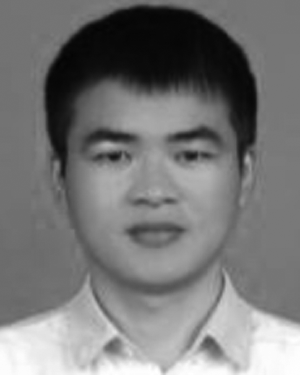 Songchun Zou合作论文数11
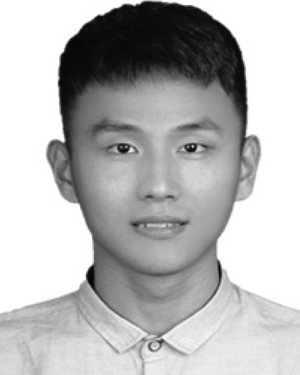 Ziyu Zhang合作论文数10
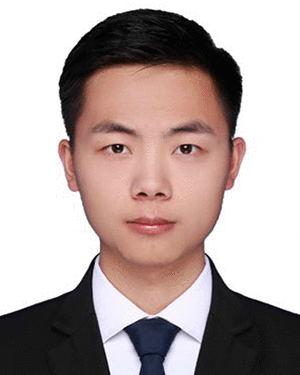 Jinqiang Liu合作论文数10
 Kunhao Xu合作论文数9
 Han Zhang合作论文数Department of Vehicle Engineering, Nanjing University of Aeronautics and Astronautics, Nanjing, China9
 Weiwei Wang合作论文数Dept Vehicle Engn, Nanjing Univ Aeronaut & Astronaut9
 Lin Li (李琳)合作论文数Nanhang Jincheng College8
 Leiyan Yu (于蕾艳)合作论文数College of Mechanical and Electronic Engineering, China University of Petroleum8Shijuan Dai合作论文数7
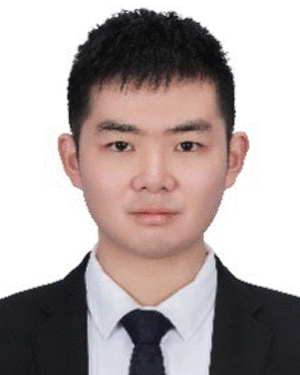 Qingyun Chen合作论文数Department of Vehicle Engineering, Nanjing University of Aeronautics and Astronautics, Nanjing, China7
 Yufang Li (李玉芳)合作论文数College of Energy and Power Engineering, Nanjing University of Aeronautics and Astronautics7
 Bo Zhang (张波)合作论文数School of Electronic and Information Engineering, Beihang University7Ting Zhao (赵婷)合作论文数7
 Taowen Cui合作论文数6Senhao Zhang合作论文数6Li Yijun (李怿骏)合作论文数6
 Gang Wu (伍刚)合作论文数6YukaiChu合作论文数南京航空航天大学5
 Rui Jun Zhang合作论文数5
 Jianhao Zhou (周健豪)合作论文数College of Energy and Power Engineering, Nanjing University of Aeronautics and Astronautics5shun liu合作论文数4Yi Yu合作论文数4
 Peikun Sun (孙培坤)合作论文数KTH Royal Institute of Technology4
 Guoping Chen (陈国平)合作论文数College of Aerospace Engineering, Nanjing University of Aeronautics and Astronautics4Mingchun Cao合作论文数3
 Shuangquan Zheng合作论文数3Zhang Zongqiang (张宗强)合作论文数3Chaoliang Li合作论文数3Jian Feng合作论文数3Haixiao Wu合作论文数3Chengcheng Chang (昌诚程)合作论文数3Ke Deng合作论文数3
 Feng Chen合作论文数3
 Yubo Lian合作论文数3
 Libin Duan合作论文数Sch Automot & Traff Engn, Jiangsu Univ3XiaoHong Xu (徐晓宏)合作论文数3马正东合作论文数车辆研究中心3
 Dengming Kuang合作论文数2Xiaohong Xu合作论文数2
 XiaoXi Qin合作论文数2Guangchao Lu合作论文数2Zhiqiang Guo合作论文数2




