Abstract Sample imbalance across operating conditions severely constrains data-driven bearing fault detection performance. This challenge is more acute due to the complete absence of fault samples under target operating conditions. To address this limitation, this paper proposes a framework integrating Variational Mode Decomposition (VMD), nonlinear dynamic modeling, and physics guidance. First, a two-degree-of-freedom nonlinear system is established to simulate physically realistic dynamic behaviors. Second, VMD decouples fault feature components from source-domain fault signals. These components are superimposed with target-domain normal signals and dynamic responses to form hybrid samples. Then, a diffusion-based Wasserstein Generative Adversarial Network (WGAN) architecture is adopted. Simultaneously, auxiliary classifiers for operating conditions and fault types are incorporated as physics-regularized losses to enforce physical consistency. The fault feature decoupling component based on VMD and the generation framework jointly mitigate the domain gap between dynamically generated response signals and measured signals. Experimental results indicate generated samples from the proposed method achieve superior scores across multiple evaluation metrics. And classification networks trained on generated samples achieve diagnostic accuracy exceeding 90% in multiple cross-condition tasks, which confirms the superiority of the developed model.
Abstract Accurate remaining useful life (RUL) prediction of rotating machinery is critical for industrial reliability and maintenance safety. In practical prognostic scenarios, data scarcity and operating-condition variations often challenge model generalization. Recent large language model (LLM)-based time-series methods offer a promising solution by exploiting transferable sequence representations. However, most existing LLM-based RUL prediction methods still rely mainly on implicit parametric knowledge, input reprogramming, or generic adapter structures, which may cause unreliable extrapolation and insufficient use of traceable historical degradation experience. To address these limitations, this paper proposes RAF-LLM, a retrieval-augmented LLM framework for rotating machinery RUL prediction. RAF-LLM constructs a degradation-specific external knowledge base from historical run-to-failure trajectories and introduces a learnable dual-branch retriever with prediction-oriented alignment. The retrieved historical degradation trajectories serve as non-parametric memory to support RUL regression, enabling predictions to be grounded in explicit degradation precedents rather than relying solely on pretrained LLM parameters. Meanwhile, continuous embedding projection and gated residual fusion are employed as supporting modules to align degradation-sensitive physical features with the LLM semantic space and integrate retrieved historical knowledge with current observations. A retrieval-alignment objective further guides the retriever to select candidates that are not only similar in feature space but also useful for RUL estimation. Repeated experiments on two public run-to-failure datasets show that RAF-LLM achieves competitive average prediction performance against representative baselines. The results provide empirical support for retrieval-assisted RUL prediction and case-based traceability under the evaluated settings.
Abstract As a critical component of rotating machinery, bearings directly affect the operational safety of the system. However, in real industrial scenarios, the imbalanced distribution of fault samples impairs the accuracy of diagnostic systems. Existing fault diagnosis methods still suffer from limited representation capability in fusing high-dimensional heterogeneous features with fault information, while language model-based diagnostic approaches face challenges such as insufficient interpretability. To address these issues, this paper proposes a frequency-aware multi-view feature fusion fault diagnosis framework, termed frequency-aware and multi-view fusion bearing fault diagnosis framework (FMFDF). First, raw vibration signals are converted into statistical semantic prompts and time–frequency spectrograms to construct multi-view inputs consisting of text and images. Then, a fault frequency feature extraction network (FF-FEN) is designed to embed FF information into the feature extraction process, where frequency-constrained convolutions enhance the feature representation of FF bands. Subsequently, a multi-head attention mechanism is employed to align and fuse the textual semantic features with the frequency-aware time–frequency features, followed by fault classification using a LoRA-fine-tuned BERT and classification network. The proposed method is validated on the case western reserve university and Jiangnan university bearing datasets. Experimental results demonstrate that FMFDF achieves favourable diagnostic stability under imbalanced sample conditions and offers a certain degree of interpretability.
Previous deep learning-based methods for gear fault diagnosis and assessment, due to their black-box nature, result in the extracted signal features and diagnostic results lacking practical physical significance and interpretability. This study combines deep learning methods with the dynamic characteristics of gears and proposes a gear fault evaluation method named convolutional-neural-network-based inverse physics-informed neural network (CNN-IPINN). First, a neural network loss function is designed based on the gear dynamics equation to construct an IPINN for solving inverse problems in gear dynamics. This design enables the neural network to extract the actual time-varying meshing stiffness (TVMS) from gear vibration signals, which serves as the core basis for gear fault diagnosis and assessment, thereby enhancing the interpretability of the network. Considering the issues of low accuracy, model complexity, and slow operation speed in traditional physics-informed neural networks (PINNs), as well as the spatial correlation of gear vibration signals, this study introduces CNN as the backbone network of PINN to construct CNN-IPINN for extracting the TVMS of gears. Finally, based on the actual gear experimental dataset, diagnoses and evaluations are performed on gear faults involving varying degrees of wear, pitting, and crack damage. This approach achieved highly accurate and interpretable gear fault diagnosis, thereby demonstrating broad prospects in engineering applications.
Planetary gearboxes are critical components in power transmission systems, and their reliability greatly benefits from an effective fault diagnosis. However, the accurate separation of fault signals faces significant challenges owing to signal aliasing and transmission path effects during data acquisition. To address this problem, this study proposes a separation method for sun gear vibration signals based on a multi-path enhanced convolutional sparse representation. According to the planetary gearbox transmission path mechanism, the method constructs a dual-dictionary for both in-box and out-of-box transmission paths of sun gear vibration. Furthermore, the Generalized Minimax Concave penalty and forward-backward splitting algorithm are introduced to solve the sparse coefficients. These improvements enhance the computational efficiency and signal reconstruction performance of the convolutional sparse representation. The effectiveness of the proposed method is verified under various sun gear fault conditions using both simulated and experimental data. Comparisons with L1-norm regularization and K-singular value decomposition dictionary learning methods demonstrate that the proposed method offers higher accuracy and faster processing, contributing to a more reliable diagnosis of sun gear crack faults.
To address the diversified power consumption demands arising from differences in devices and tasks under low-power, multi-mode operating conditions of flight control (FC) systems, this study proposes a historical data-driven work state prediction method. Considering the inconsistent data characteristics across various flight modes, the method employs Long Short-Term Memory (LSTM) networks to learn from partial power consumption and environmental data. To further enhance prediction accuracy and generalization, adaptive hyperparameter tuning techniques are introduced to dynamically adjust the network structure and training parameters. A flight control system power simulation platform, integrated with external sensors such as an anemometer, hygrometer, and barometer, is used to construct a multi-mode dataset. Experimental evaluations are conducted on this dataset, with performance measured using metrics such as Root Mean Square Error (RMSE) on the validation set. The results demonstrate the robustness, accuracy, and feasibility of the proposed method for predicting operating states and optimizing power consumption in flight control systems.
The operational state of the sun gear in the planetary gearbox significantly impacts the stability and reliability of the entire transmission system. This study introduces a novel method to enhance the precision of diagnosing faults in the sun gear of a planetary gearbox. By detecting the similarity and distribution patterns of specific length segments in vibration signals, we identify homologous response segments based on the variation of fault meshing points and sensor positions. We then utilize robust principal component analysis (Robust PCA) to reduce data dimensionality and extract low-dimensional information from these segments. Adaptive resonance sparse decomposition based on the particle swarm algorithm is employed to decouple and decompose the signals thereby enabling the separation of interference components from fault characteristic signals. This study introduces a novel method to enhance the precision of diagnosing faults in the sun gear of a planetary gearbox. By detecting the similarity and distribution patterns of specific length segments in vibration signals, we identify homologous response segments based on the variation of fault meshing points and sensor positions. We then utilize Robust PCA to reduce data dimensionality and extract low-dimensional information from these segments.
采用集中参数模型,考虑啮合振动的内部激励,分别对齿轮箱内啮合和外啮合两种方式下的振动信号特征进行了分析.引入改进高斯窗的时变路径函数和考虑齿轮箱材料的时不变路径函数,改进行星轮齿轮箱箱体表面振动信号模型,分析太阳轮齿根在正常和裂纹情况下,不同传递路径对箱体表面振动信号调制现象的定量影响规律.仿真和实验对比分析表明:太阳轮齿根裂纹主要影响啮合频率倍频的边频带成分;该模型能够准确分析齿轮箱正常工况和太阳轮齿根裂纹情况下振动信号的频率、幅值和边频信息,可用于太阳轮齿根裂纹故障诊断.
文章首先从整体规划与方案设计、混合式教学平台建设、教学案例设计与实施、教学组织与评价四个方面论述了模拟电子技术课程混合式教学实践,然后对模拟电子技术课程混合式教学实践效果进行了分析.
面向复杂机载环境下大量电子设备控制信号和数据信息的传输需求,研究基于机载电力线的载波通信方案和设计实现方法,进行原理开发验证和应用测试;论文研究基于FPGA的机载电力线载波通信系统中调制解调模块设计方法,设计的2FSK调制解调模块包含调制通路、解调通路和控制电路3个部分,给出了每个部分内部具体子模块的设计原理和实现方法,并针对子模块功能分别进行了仿真和实验验证,最终结合所开发的电力线载波通信系统进行通信性能测试,结果表明了文章设计的调制解调模块的正确性,在通信波特率115.2 kbps情况下,可实现通信误码率低于10-5.
以宇宙空间强辐射环境下商用SRAM型FPGA易受到单粒子效应影响而产生各种故障为研究背景,针对可重构区域间替代的自修复方式导致系统功能模块硬件资源利用率低的问题,提出一种可重构区域内替代的自修复方式.为了验证上述自修复方法能够提高系统的硬件资源利用率,配合此方法设计一种冷三备份DPR_O/TMR自修复结构,此结构能够进一步减少系统的资源消耗.同时给出一种软硬故障分类处理的FPGA系统自修复策略.通过理论分析和实验,证明了该自修复方式的可行性和高效性,为SRAM型FPGA芯片的设计开发人员提供了一种通用性的FPGA系统自修复设计方法.
为提高行星齿轮箱健康评估准确性,提出一种基于图谱特征与度量学习的行星齿轮箱健康评估方法.从行星齿轮箱振动信号中提取图谱特征作为故障特征参数;设计基于单调性、相关性的度量学习准则,建立优化的马氏距离度量函数;采用待测样本与无故障正常样本之间的马氏距离表征故障严重程度,建立基于支持向量回归的健康评估模型.通过行星齿轮箱健康评估实验结果分析,证明了图谱特征能够有效表征行星齿轮箱故障严重程度,所建立的健康评估模型单调性好,提高了健康评估准确性.
航空用输入级弧齿锥齿轮常处于高速重载工况,获取的振动信号具有强非线性、非平稳特点,造成故障特征难提取.对此,运用堆栈稀疏自动编码器故障自动特征提取方法结合分类器对输入级弧齿锥齿轮故障诊断进行了研究.搭建输入级弧齿锥齿轮故障诊断模拟试验台,分别进行正常齿轮和故障齿轮运行的测试试验.将多个SAE层层堆叠形成SSAE,对弧齿锥齿轮故障特征层层提取,用多分类器完成故障诊断.结果表明:该方法输入级弧齿锥齿轮故障识别结果的有效率可达100%,为弧齿锥齿轮的故障分析提供了一种有效途径.
随着现场可编程门阵列(FPGA)在空天电子系统中的广泛应用,受空间辐射恶劣环境影响,FPGA中重要的存储器电路BRAM,因采用SRAM技术极易发生位翻转故障,虽绝大部分情况表现为瞬时故障,但永久故障依然存在.针对BRAM自修复方法仅修复瞬时故障的现状,对能同时修复瞬时故障和永久故障的自修复方法进行研究,提出了一种冷备份多模冗余结构,用3个热备份模块和1个冷备份模块来构造BRAM,该结构可通过三模冗余刷新方法修复瞬时故障和冷备份替换方法修复永久故障.给出了整个BRAM自修复系统中各模块的电路结构和实现方法,实验验证了系统的自修复能力,并在可靠性、硬件资源和时间消耗3个方面,通过对比分析论证了自修复方法的有效性.
为满足仪器科学与技术专业的实验教学要求,结合相机模型和地面机器人的运动特性,该文设计了基于移动小车的相机标定实验.首先,利用针孔相机原理和无人车平面运动特性构建了单目相机的标定模型;然后,基于EAI移动机器人和机器人操作系统采集图片和里程计数据;最后,利用MATLAB的相机标定工具箱和数值计算功能求解标定参数.实验结果表明,该方法能够有效标定相机参数和安装误差.该实验融合了机器视觉、导航定位、机器人控制等多方面综合知识,具有良好的开放性和广泛的应用性,有利于培养学生的工程实践和创新能力.
The self-healing strategy is a key component in designing the bio-inspired embryonics circuit with the structure of cell arrays. However, the existing self-healing strategies of embryonics circuits mainly focus on permanent faults inside the modules of cells such as the function module and the configuration register, while little attention is paid to transient faults. From the point of view of obtaining high efficiency of hardware utilization, it would be a huge waste of hardware resources by permanent elimination when a cell only suffers a transient fault which can be repaired by a configuration mechanism. A new self-healing strategy, the Fault-Cell Reutilization Self-healing Strategy (FCRSS) which presents a method for reusing transient fault cells, is proposed in this paper. The circuit structures of all the modules in the cells are described in detail. In the new strategy, two processes of elimination and reconfiguration are combined. Within the process of fault-cell elimination, cells with transient faults in the embryonics circuit array could be reused simultaneously to replace the functions of the cells on their left side in the same row. Therefore, transient fault-cells in a transparent state can be reconfigured to realize the fault-cell reutilization. Finally, a circuit simulation, resource consumption, a reliability analysis and a detailed normalization analysis are presented. The FCRSS can improve the hardware utilization rate and system reliability at the expense of a small amount of hardware resources and reconfiguration time. Following the conclusion, the method of determining the optimal self-healing strategy is presented according to the environmental conditions.
Embryonic hardware is a kind of digital circuit structure which has the innative characteristics of distributed autonomous control and self-repairing.Configuration memory is the important module in cell circuit to determine function and interconnection of cells, it remains reliable is the precondition for the cell array to work normally.At present, the self-repairing and structural simplification of configuration memory are key research directions.Many structures and design strategies have been put forward for circuit simplification, but few methods for hardware self-repairing, while which should be more important.New techniques should combine the abilities of self-repairing and simplification need to be continuously explored.Currently known self-repairing strategies only ensure the configuration memory store the configuration data, but not ensure the reliability of the registers in which the configuration data are stored.In this paper, a dual-backup configuration memory structure based on shift registers is proposed.Each cell saves the configuration data of the left adjacent cell and the configuration data of the current cell as backups.The function of a fault-cell can be replaced by its right cell.Each cell only needs to save three pieces of configuration data to ensure that the configuration memory can be repaired in a variety of faults.The circuit structure and self-repairing strategy of configuration memory are given, and the self-repairing ability is simulated and verified.
The embryonics circuit with cell array structure has the prominent characteristics of distributed self-controlling and self-repairing. Distributed self-repairing strategy is a key element in designing the embryonics circuit. However, all existing strategies of embryonics circuit mainly aim at the permanent faults, and lack of the transient faults. It would be a huge waste of hardware if a cell was permanently eliminated due to a local transient fault, and the waste will result in seriously low hardware utilization in those environments dominated by transient faults. In this paper, a new distributed self-repairing strategy named fault-cell reutilization self-repairing strategy (FCRSS) is proposed, where the cells with transient fault could be reused. Two mechanisms of elimination and reconfiguration are mixed together. Those transient fault-cells can be reconfigured to achieve fault-cell reutilization. Then, methods to design of all the modules are described in details. Lastly, circuit simulation and reliability analysis results prove that the FCRSS can increase hardware utilization rate and system reliability.
Self-healing strategy is a key element in designing the embryonic array circuit. However,all existing strategies of embryonics circuit mainly aim at the permanent faults in cell, and lack of research about transient faults. It would be a huge waste of hardware resource if a cell was permanently eliminated due to a minor local transient fault, and the waste will result in seriously low hardware utilization in the sky environment dominated by transient faults that can repaired by reconfiguration mechanism. In this paper, a new self-healing strategy named fault cell reutilization self-healing strategy (FCRSS), which can reuse the transient fault cell, was proposed. In the new strategy, cell elimination and reconfiguration are bound togetherIn the period of cell elimination process, cells in transparent state due to transient failurecan be reconfigured to achieve reutilization. Methods to design of all the modules are described in detail. Circuit simulation and reliability analysis results prove that the FCRSS can increase hardware availability rate and system reliability at the expense of a small amount of hardware and few of reconfiguration time.
胚胎硬件的高可靠性主要由新颖的硬件体系和细胞电路结构来保障,缺乏应用设计过程的可靠性提高方法研究.分析了在应用设计过程中可调的胚胎硬件可靠性影响因素,针对细胞单元粒度不同会导致细胞面积变化从而影响细胞阵列可靠性的实际情况,对传统可靠性模型无法体现细胞面积变化的不足进行了改进,建立了新的可靠性模型.通过实例分析,总结出不同细胞单元粒度情况下的细胞阵列可靠性变化规律,进而给出细胞单元粒度优化选择方法,设计者基于该方法不需设计完整电路就能确定自身设计能力范围内获得最大可靠性的细胞单元粒度.
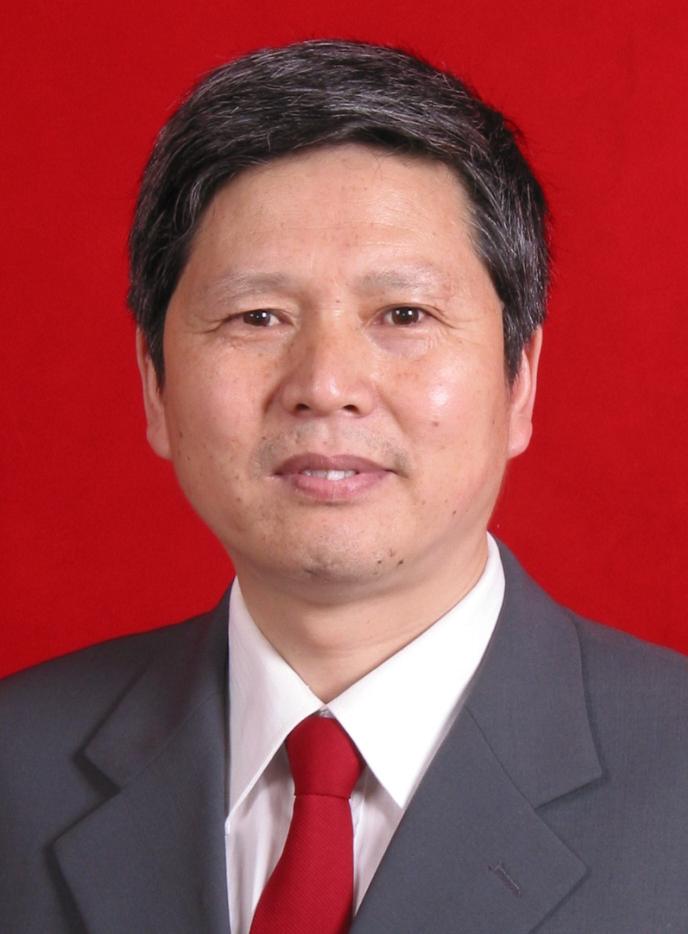 Youren Wang (王友仁)合作论文数Department of Measurement Engineering, College of Automation Engineering, Nanjing University of Aeronautics and Astronautics53
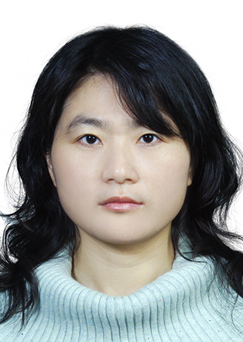 Rui Yao (姚睿)合作论文数College of Automation Engineering, Nanjing University of Aeronautics and Astronautics21
 Jiang Cui (崔江)合作论文数College of Automation Engineering, Nanjing University of Aeronautics and Astronautics9
 Yao Qiu合作论文数4Chuan Sun (孙川)合作论文数4Xiaoliang Yuan合作论文数4WANG Yong-ming合作论文数3Guofeng Hao (郝国锋)合作论文数3
 Jianbo Chu (储剑波)合作论文数College of Automation Engineering, Nanjing University of Aeronautics and Astronautics3Yan Chen合作论文数2HUANG Lili (黄莉莉)合作论文数2Sanao Huang (黄三傲)合作论文数2CHEN Guangyan (陈广艳)合作论文数2ZHANG Lujin (张鲁晋)合作论文数2Fanyi Gu (顾凡一)合作论文数2Guijun Gao合作论文数2Yu ZHANG (张宇)合作论文数2Yanmei Sun (孙艳梅)合作论文数2Ran Feng合作论文数2Dong Zheng (郑东)合作论文数2Sheng-lin YU (禹胜林)合作论文数1ZHAO Yalei (赵亚磊)合作论文数1YUAN Xiaoliang (袁霄亮)合作论文数1zimin an (安子民)合作论文数1Feng LIU (刘峰)合作论文数1Min WANG (王敏)合作论文数1Qingxin Guo (郭庆新)合作论文数1CHEN Yonghong (陈永红)合作论文数1Jia-Xing Li (李加兴)合作论文数1Yajie Lin (林雅洁)合作论文数1Jianjun Ping (平建军)合作论文数1Qinqin CHEN (陈芹芹)合作论文数1Ling YANG (杨玲)合作论文数1YUAN Peng (袁鹏)合作论文数1Yan LIU (刘燕)合作论文数1Kun HE (何坤)合作论文数1YuXia Shi (施玉霞)合作论文数1YuanYuan Jiang (姜媛媛)合作论文数1王丽合作论文数Jincheng College, Nanjing University of Aeronautics and Astronautics1
 Min Wang (王敏)合作论文数College of Materials Science and Technology, Nanjing University of Aeronautics and Astronautics1
 Rupeng Zhu (朱如鹏)合作论文数College of Mechanical & Electrical Engineering, Nanjing University of Aeronautics and Astronautics1
 Qingxi Zeng (曾庆喜)合作论文数College of Automation Engineering, Nanjing University of Aeronautics and Astronautics1
 Zhaihe Zhou (周翟和)合作论文数College of Automation Engineering, Nanjing University of Aeronautics and Astronautics1
 Zewang Chen (陈则王)合作论文数College of Automation Engineering, Nanjing University of Aeronautics and Astronautics1
 Guili Xu (徐贵力)合作论文数College of Automation Engineering, Nanjing University of Aeronautics and Astronautics1
 Hongkun Li (李宏坤)合作论文数School of Mechanical Engineering, Dalian University of Technology1Lantao Wang (王澜涛)合作论文数1
 Haibin Wang合作论文数1




