To address security concerns in unmanned aerial vehicle (UAV) swarm wireless communication, a joint optimization algorithm integrating beamforming and trajectory design is proposed to maximize the average secrecy rate in this paper. First, the constraint model of swarm trajectory is developed based on the swarm's central point and flight dynamics. Each UAV in the swarm is equipped with an omnidirectional antenna, forming a large-scale virtual antenna array (VAA). By analyzing the signals from the antenna array, the wireless communication channel model is developed that accounts for the uncertainty in the eavesdropper's position, leading to the derivation of the worst-case average secrecy rate. Building on this, the beamforming weights and the swarm's trajectory are treated as optimization variables, and the optimization problem is formulated to maximize the average secrecy rate. To solve the problem, it is decomposed into two subproblems: beamforming and trajectory design. The beamforming problem is transformed into a linear programming problem, while the trajectory design problem is reformulated as a convex optimization problem using successive convex approximation. The numerical results validate the feasibility and reliability of the proposed algorithm under uncertain eavesdropper's location. A comparative analysis further demonstrates the superiority of the algorithm in enhancing the secrecy rate.
Multi-target tracking with low-cost radars on USVs is challenging due to interference, vessel vibrations, and occlusions, making single-sensor methods inadequate. This study considers multiple USVs collaboratively tracking multiple targets using only latitude and longitude from low-cost radars. First, we associate radar detections to targets via the Hungarian algorithm. Second, because noise and clutter prevent clear cluster separation, we introduce Dilate K-means: over-cluster the data, then dilate clusters to identify the optimal count. Finally, we employ an adaptive Kalman filter that adjusts measurement and process noise covariances online. Experiments confirm that our approach delivers robust, accurate multi-target tracking in complex marine environments.
To maximize the matched-detection gain between the transmitted radar waveform and uncertainty target characteristics, an uncertainty-aware expected mutual information metric for radar information detection and a broadband radar frequency-domain waveform optimization model are established. The resulting model is solved via the projected gradient-descent algorithm, enabling iterative computation of the waveform's power spectrum. To further enhance the low probability of interception (LPI) performance of radar systems under uncertain target detection scenarios, an LPI information metric is formulated based on the full signal interception and recognition process. A corresponding frequency-domain waveform optimization model is developed, jointly optimizing the bandwidth and center frequency of wideband radar signals. Given the nonconvex and nonlinear nature of the proposed optimization problem, a sequential convex approximation method is employed to convert the problem into a second-order cone programming form at each iteration. Additionally, a heuristic frequency band programming strategy is incorporated to address the waveform design problem under echo uncertainty. Simulation results validate the effectiveness of the proposed uncertainty-aware detection and LPI optimization metrics, demonstrating the superior detection and LPI performance of the designed wideband radar waveforms in maneuvering target detection and tracking scenarios.
Multi-target tracking using unmanned surface vehicles (USVs) faces severe challenges from clutter, occlusion, sensor limitations, and platform vibrations. To address these obstacles, this paper presents a robust, cost-effective, and real-time framework for multi-pursuer multi-target tracking that relies exclusively on positional measurements. Within this framework, target candidates are first extracted via a Hungarian-based data association. Next, an adaptive Gaussian mixture model with expectation maximization (GMM-EM) and the iterative merging strategy is developed for multi-source observation clustering, automatically rejecting false detections and yielding both position estimates and uncertainty covariances. The state estimation problem is formulated as a constrained moving horizon optimization (MHO) problem. To avoid the heavy computation of nonlinear programming, we employ an alternating direction method of multipliers (ADMM) based solver where hard state constraints are enforced through auxiliary variables, decoupling the original problem into two subproblems: an unconstrained optimization step and a simple projection. The optimization step, which integrates system dynamics and measurements, is solved in linear time by an iterated extended Kalman smoother (IEKS) that treats constraints as pseudo-measurements. Experimental results validate our method’s ability to deliver accurate and real-time multi-target state estimates while robust to occlusion, intermittent detections, and non-stationary noise.
Regularly undersampled planar near-field scattering measurements can substantially reduce scan time and facility requirements for electromagnetic characterization of electrically large objects; however, regular undersampling often causes severe spatial aliasing and degrades subsequent sector-limited far-field radar cross section (RCS) evaluation. This paper presents a physics aware measurement-to-prediction workflow for 3-D polarimetric reconstruction and broadside-sector far-field RCS prediction from regularly undersampled planar near field HH/HV/VV data. The workflow contains three steps: (i) robust wideband time-domain back-projection (TDBP) for artifact-suppressed pre-imaging and support localization using frequency diversity, (ii) 3-D CLEAN-based support extraction to reduce the candidate set of scattering locations, and (iii) physics-aware orthogonal matching pursuit (PA OMP) to estimate symmetric scattering-tensor coefficients on the extracted support at a selected frequency, with a sector-guided far-field ranking term. Wideband data are used primarily for robust support localization, whereas coefficient inversion and the reported far-field prediction are carried out at a selected single frequency. Experiments on a calibrated corner-reflector array and an amphibious UAV validate the proposed workflow: with a scan density equal to about 22% of the conventional full-angle planar λ/2 benchmark at 8 GHz, the method localizes dominant scattering contributions and synthesizes broadside-sector far-field RCS whose overall trends are consistent with independent compact-antenna-test-range (CATR) measurements. The method is intended for broadside-sector prediction from planar scans rather than full-angular characterization.
Radar moving target detection is one of the important applications in modern military. However, existing moving target detection algorithms have shortcomings in processing complex targets and computational timeliness. To solve this problem, this paper proposes a two-level data collaborative association(TDCA) track fusion detection algorithm based on Krank(KR) method. This method adds spatiotemporal registration and track correlation technology on the basis of the KR method, solving the breakpoint problem in track detection using the KR method, and improves the timeliness of track fusion while ensuring the accuracy of track fusion. In the simulation process, this method is compared with the KR method, asynchronous track (AT) fusion algorithm, covariance intersection (CI) fusion algorithm and explicit recursive (ER) fusion algorithm. The results show that the TDCA fusion algorithm performs well in both timeliness and accuracy.
This paper proposes the problem of radar waveform design under clutter and Weibull distributed noise. To address the problem, firstly, under bandwidth and energy constraints, the Lagrange multiplier method is applied to derive the optimal energy spectrum of the radar emission waveform based on maximizing the signal-to-interference-to-noise ratio(SINR) and maximizing mutual information(MI). Then Weibull distribution noise is generated by the electromagnetic reverberation chamber, and the performance of the two waveform design criteria under Weibull noise is compared through numerical simulation, proving the effectiveness of the two criteria. Moreover, the performance of waveform under Rayleigh distributed noise is compared, and it is found that the waveform performs better under Weibull distributed noise.
In this paper, a low-temperature fast-curing repair agent with metal and ceramic powders composite modified with liquid sodium silicate was developed, which was optimized by composition to have high mechanical properties. After fabricating U-notches to remove cracks, the repair tolerance of Cf/SiC composites was investigated on the basis of relative residual flexural strength and notch depth, respectively. The fracture morphology of the repaired Cf/SiC parent material showed that the repair agent could fill the pores between the fiber bundles of the parent material better, and restored the flexural strength of the parent material from 91.07MPa to 142.04MPa, with a restoration rate as high as 55.96%. This study is expected to be applied to the low-cost and rapid repair of ceramic matrix composites to increase the possibility of their application in aero engines.
The waveform design method for Multiple-input-multiple-output (MIMO) radar based on phase encoding is studied in this paper. By designing the covariance matrix of the transmitted waveform, the desired beampattern of the transmitted waveform is generated with nulls in predetermined directions, thereby effectively suppressing clutter interference. Then a method based on coordinate descent (CD) optimization is proposed to generate the waveform that matches the previously designed covariance matrix, achieving better null depth. To meet the detection requirement meanwhile, an enhanced genetic algorithm (GA) is proposed, concurrently addresses two fundamental design objectives, minimizing spatial synthetic signal autocorrelation sidelobes and maintaining exact beampattern matching. Simulation results confirm that the proposed method achieves expected suppression of spatial synthetic signal autocorrelation sidelobes while generating well-defined nulls in specified directions when implemented with quadriphase discrete phase-coded waveforms.
The second-phase filler significantly influences the mechanical properties and oxidation resistance of carbon fiber-reinforced silicon carbide matrix (Cf/SiC) composites. Al2O3-modified and SiC-modified Cf/SiC composites were fabricated via slurry impregnation (SI) combined with precursor impregnation and pyrolysis (PIP). This study systematically compared the effects of Al2O3 and SiC particles as fillers on mechanical properties and oxidation resistance, respectively. Before oxidation, Cf/SiC-Al2O3 composites exhibited higher flexural strength (629.3 MPa) than Cf/SiC-SiC composites (564.8 MPa). After oxidation at 700 degrees C for 10 h, both composites showed minimal strength retention rate due to maximum carbon fiber degradation. At 1200 degrees C, pore closure combined with SiO2 formation from SiC oxidation suppressed fiber damage, achieving their maximum strength retention rates (70.3 % for Cf/SiC-Al2O3 vs. 101.1 % for Cf/SiC-SiC). Between 1000 and 1350 degrees C, the Cf/SiC-SiC composites consistently outperformed in strength retention due to SiO2 self-sealing, while Al2O3 acted as inert filler inducing CTE-mismatch compressive stresses (-35.32 MPa) that accelerated coating spallation at 1350 degrees C. Conversely, SiC-derived SiO2 reduced tensile stresses by 55.3 % (221.30 MPa to 99.03 MPa). The kinetic analysis confirmed parabolic oxidation kinetics for Cf/SiC-SiC composites, enabling valid determination of activation energy (Ea=31.0 kJ/mol). Conversely, Cf/SiC-Al2O3 composites exhibited non-parabolic, crack-dominated oxidation due to CTE-mismatch stresses, which invalidated the application of the Arrhenius equation for the determination of activation energy. This study elucidates the regulatory mechanism of second-phase filler reactivity on the high-temperature oxidation resistance of Cf/SiC composites, providing a theoretical foundation for designing composites for extreme thermal environments.
Unmanned Aerial Vehicles (UAVs) are widely used as communication relays for ground search units in complex and remote areas. However, the avoidance of risky areas, such as no-fly zones, and the evasion of radar interception remain critical challenges. A Multi-Agent Twin Delayed Deep Deterministic Policy Gradient (MATD3)-based dynamic UAV deployment algorithm for multi-UAV-assisted communication coverage with low interception risk (MATD3-RC2) is proposed. A centralized training and decentralized execution framework is adopted, eliminating the need for global environmental awareness. The communication coverage problem is formulated as a multi-objective optimization task, aiming to maximize coverage effectiveness, minimize radar interception risk, and ensure robust UAV connectivity. The simulation results demonstrate that MATD3-RC2 outperforms both the Multi-Agent Deep Reinforcement Learning-based energy-efficient control (MADRL-E) and the Distributed Virtual Force Motion Control (DVFMC) algorithms in terms of the target performance metrics.
This paper proposes a hybrid coherent integrationbased joint detection method for moving target detection in distributed multiple-input multiple-output (MIMO) wide band phased array systems under complex terrain backgrounds. The method achieves long-time coherent integration within channels through generalized Radon-Fourier transform (GRFT), effectively addressing the energy dispersion problem caused by range cell migration of high-speed targets. Meanwhile, it employs time-delay compensated non-coherent integration techniques to eliminate phase mismatch between multiple channels, significantly enhancing the detection capability for weak targets. Simulations demonstrate that the hybrid coherent energy integration and joint optimization techniques can effectively improve the ground moving target detection performance of distributed MIMO wide band radar systems.
This paper addresses the limitation that existing radio-frequency (RF) stealth performance metrics do not account for the emitter’s end-to-end mission. We propose a novel RFstealth effectiveness metric that quantifies the task-completion degree of cooperative multi-platform radar operations. To facilitate its design and application, the error entropy from large-dynamic-range signal-to-noise ratio parameter estimation is introduced as a lower bound on bearing-estimation error. Under a full-process radar-target tracking scenario, we derive the localization and continuous tracking error estimation for a distributed network of intercept receivers. Finally, we present the corresponding task-completion effectiveness evaluation method. Simulation results for a cooperative multi-platform radar detection mission demonstrate that the proposed metric reliably assesses RF-stealth performance under specified operational tactics.
Urban Air Mobility (UAM) is emerging as a transformative solution to urban transportation, yet the safe and efficient implementation requires advanced UAM traffic management approaches. Although existing studies prioritize the generation of conflict-free 4-D trajectories, critical mission-specific preferences remain insufficiently integrated, influencing stakeholders' acceptance and operational feasibility. This paper addresses this gap by proposing a collaborative UAM Traffic Flow Management (UTFM) framework that models explicit interaction constraints, combining mission preferences with strategy synergy. The framework centers on the UTFM model featuring a hierarchical conflict management architecture. In the strategic phase, the deterministic separation threshold is applied to resolve 4-D conflicts proactively, while the pre-tactical phase employs probabilistic constraints to manage flight uncertainties during disruption recovery. To solve the UTFM problem, a novel two-stage optimization algorithm is developed. The first stage encodes the conflict-based solution space via recurrent path searching and linear mapping techniques, while the second stage optimizes the 4-D flight plans by determining strategy-specific decision variables. Additionally, the Transit Search Optimization (TSO) algorithm is introduced and enhanced through constraint transcription and normal cloud model. Comprehensive experiments demonstrate that the framework can generate robust and efficient flight plans under complex constraints with diverse mission preferences. The framework could support highthroughput UAM operations with customized requirements, offering a prototype for the advanced UAM traffic management system.
The track detection technology of the ultra-wideband (UWB) radar for ground-moving targets is studied in this paper. A heuristic algorithm based on multi-constraint multi-hypothesis tracking (H-MCMHT) is proposed. Some constraints are added to the initial track generation of multi-hypothesis tracking according to the short-time motion characteristics of ground-moving targets. Then a heuristic track association method is proposed. The aim of the algorithm is to obtain as complete a real track as possible in a short time. Simulation results show that compared with MHT, H-MCMHT can effectively reduce the occurrence of false tracks and ensure the detection rate of real tracks. The physical verification results also confirm the simulation conclusions.
Flash sintering (FS) is a novel technique for rapidly densifying silicon carbide (SiC) ceramics. This work achieved a rapid sintering of SiC ceramics by the utilization of ultra-high temperature flash sintering within 60 s. Pyrolysis carbon (PyC) “bridges” were constructed between SiC particles through the carbonisation of phenolic resin, providing a large number of current channels. The incubation time of the flash sintering process was significantly reduced, and the sintering difference between the centre and the edge regions of the ceramics was minimized, with an average particle size of the centre region and edge region being 12.31 and 9.02 μm, respectively. The results showed that the porosity of the SiC ceramics after the flash sintering was reduced to 14.79% with PyC “bridges” introduced, and the Vickers hardness reached 19.62 GPa. PyC “bridges” gradually evolved from amorphous eddy current carbon to oriented graphite carbon, indicating that the ultra-high temperature environment in which the sample was located during the flash sintering was successfully constructed. Ultra-high temperature flash sintering of SiC is expected to be applied to the local repair of matrix damage in SiC ceramic matrix composites.
In the domain of wideband radar, detecting targets often involves the dispersion of target echo energy across multiple range resolution cells. A critical aspect of enhancing wideband radar target detection performance lies in effectively utilizing this discrete energy information. This paper introduces the Hough transform and weighted amplitude iteration detector (HT-WAID) for wideband radar, which effectively mitigates the effects of range spread on detection performance. Firstly, the analysis commences for wideband radar targets under both single-rank and multi-rank conditions. Subsequently, a weighted amplitude iteration range spread target detector (WAI-RSTD) is introduced. Furthermore, the WAI-RSTD algorithm is extended to a two-dimensional detection space using Hough transform theory. Simulation results demonstrate that the proposed algorithm outperforms Adaptive generalized likelihood ratio test (GLRT) and Wald-like detectors, showcasing superior target detection and clutter suppression capabilities in complex white Gaussian noise and Weibull clutter backgrounds.
The highly dynamic properties of maneuvering targets make it intractable for radars to predict the target motion states accurately and quickly, and low-grade predicted states depreciate the efficiency of resource allocation. To overcome this problem, we introduce the modified current statistical (MCS) model, which incorporates the input-acceleration transition matrix into the augmented state transition matrix, to predict the motion state of a maneuvering target. Based on this, a robust resource allocation strategy is developed for maneuvering target tracking (MTT) in a netted opportunistic array radar (OAR) system under uncertain conditions. The mechanism of the strategy is to minimize the total transmitting power conditioned on the desired tracking performance. The predicted conditional Cramér–Rao lower bound (PC-CRLB) is deemed as the optimization criterion, which is derived based on the recently received measurement so as to provide a tighter lower bound than the posterior CRLB (PCRLB). For the uncertainty of the target reflectivity, we encapsulate the determined resource allocation model with chance-constraint programming (CCP) to balance resource consumption and tracking performance. A hybrid intelligent optimization algorithm (HIOA), which integrates a stochastic simulation and a genetic algorithm (GA), is employed to solve the CCP problem. Finally, simulations demonstrate the efficiency and robustness of the presented algorithm.
This paper studies a joint detection threshold and dwell time optimization strategy for target tracking in radar networks. The main objective of the proposed strategy is to minimize the total dwell time consumption while achieving the certain target detection and tracking performance with limited transmit resource. Under the integrated structure of detection and tracking, the average probability of detection in the validation region is calculated and adopted as the metric for target detection. Moreover, the predicted Bayesian Cramér-Rao lower bound incorporated with information reduction factor is derived as the target tracking criterion. Subsequently, the resulting optimization problem which is non-linear and non-convex, is solved by sequential quadratic programming technique, and the improved probabilistic data association algorithm is adopted for target detection and tracking. The simulation results demonstrate the superiority of the proposed strategy when compared to alternative benchmarks.
 Jianjiang Zhou (周建江)合作论文数College of Electronic and Information Engineering, Nanjing University of Aeronautics and Astronautics149
 Chenguang Shi (时晨光)合作论文数College of Electronic and Information Engineering, Nanjing University of Aeronautics and Astronautics85
 Jun Chen (陈军)合作论文数School of Electronics & Information Engineering, Nanjing University of Information Science & Technology37
 Sana Salous合作论文数Department of Engineering, Durham University31
 Zhaofeng Chen (陈照峰)合作论文数College of Materials Science and Technology, Nanjing University of Aeronautics and Astronautics26
 Mathini Sellathurai合作论文数Institute of Sensors, Signals & Systems, School of Engineering & Physical Sciences, Heriot-Watt University17
 Cao Wu合作论文数16
 Shu-Xun Wang (王树勋)合作论文数College of Communication Engineering, Jilin University13
 Lintao Ding合作论文数9
 Yijie Wang合作论文数9
 Zhenkai Zhang (张贞凯)合作论文数8
 Hailin Li (李海林)合作论文数7
 Lixia Yang (杨丽霞)合作论文数Super Thermal Composites Lab, College of Materials Science and Technology, Nanjing University of Aeronautics and Astronautics7
 Lei Pan (潘蕾)合作论文数College of Materials Science and Technology, Nanjing University of Aeronautics and Astronautics7
 Duanyin Zhang合作论文数6Shun Li合作论文数6
 Weiqiang Liu (刘伟强)合作论文数College of Integrated Circuits, Nanjing University of Aeronautics and Astronautics6MingXing Zhou合作论文数5Xiaofei Pang合作论文数5
 Weijie Xia (夏伟杰)合作论文数College of Electronic and Information Engineering, Nanjing University of Aeronautics and Astronautics5
 Hongbing Yang (杨红兵)合作论文数College of Artificial Intelligence, Nanjing Agricultural University5
 Yong Yang (杨勇)合作论文数School of Optoelectronic Science and Engineering, Soochow University5Zhiyuan Rao合作论文数4Chunliang DAI (戴春亮)合作论文数4Ya Hu合作论文数4
 Qinghua Han合作论文数4
 Bin Li (李斌)合作论文数School of Information and Communication Engineering, Beijing University of Posts and Telecommunications4李海林合作论文数College of Electronic and Information Engineering, Nanjing University of Aeronautics and Astronautics4XinLi Ye合作论文数4
 Xiaofei Zhang (张小飞)合作论文数College of Electronic and Information Engineering, Nanjing University of Aeronautics and Astronautics4
 Yulong Zou (邹玉龙)合作论文数School of Communications and Information Engineering, Nanjing University of Posts and Telecommunications4
 Kunlei Zhang合作论文数School of Electrical & Electronic Engineering, Nanyang Technological University4Xiaobo Zhang合作论文数3Zhao Shi合作论文数3Lang Zhong合作论文数3
 Jie Wang合作论文数Sch Elect & Informat, Nanjing Univ Informat Sci & Technol3Weiqiang Yu (于伟强)合作论文数3Wenliang Ma合作论文数3
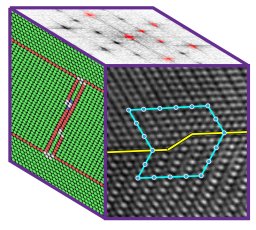 Zongde Kou合作论文数Herbert Gleiter Institute of Nanoscience, Nanjing University of Science and Technology3Enhui Wang合作论文数3
 Weifeng Cao合作论文数School of Telecommunications and Information Engineering, Nanjing University of Posts and Telecommunications, Nanjing, China3Heng-zhuang YAN (闫恒庄)合作论文数3
 Junxiong Zhang (张俊雄)合作论文数School of Textile and Clothing, Nantong University3Le Lu合作论文数3Wei Qiu合作论文数3Jiehao Zhu合作论文数3
 Xinyu Sun (孙心宇)合作论文数School of Integrated Circuits, Nanjing University of Information Science & Technology3
 Sheng Cui (崔升)合作论文数College of Materials Science and Engineering, Nanjing Tech University;Jiangsu Collaborative Innovation Center Por Advanced Inorganic Function Composites3
 Huijing Dou (窦慧晶)合作论文数Information Department, Beijing University of Technology3




