This paper proposes a novel three-dimensional prescribed-time cooperative guidance law (3-D PTCGL) using a dynamic event-triggered (DET) mechanism for multi-missile salvo attacks on a maneuvering target with impact angle constraints. A virtual leader strategy is utilized to generate reference states, and a prescribed-time extended state observer (PTESO) is designed to accurately estimate target accelerations. In the line-of-sight (LOS) direction, a cooperative guidance law is designed using consensus control theory, second-order sliding mode control (SMC) theory, and prescribed-time convergence theory, which can synchronize the range-to-go and relative velocity of multiple missiles within the prescribed time, thereby achieving a salvo attack. Meanwhile, to minimize communication frequency, the DET mechanism is incorporated into the LOS direction of the guidance law. In the LOS normal directions, guidance laws are designed based on second-order SMC and prescribed-time convergence theory to guarantee that the LOS angles and their rates rapidly converge to desired values within the prescribed time, enabling accurate attacks on maneuvering targets with specified LOS angles. Rigorous stability analysis is presented, and numerical simulations are performed.
This paper investigates the swarm-to-swarm Cooperative Orbital Pursuit-Evasion Game(COPEG) problem for impulsive-thrust spacecraft via a reinforcement learning approach. First, a mathematical model of the swarm-to-swarm spacecraft COPEG problem is established. Second, a novel Counterfactual-Baseline Multi-Agent Proximal Policy Optimization(CFB-MAPPO) algorithm is developed, where a counterfactual baseline is adopted in the MAPPO algorithm for the purpose of ensuring global optimality to accurately evaluate the contribution of each individual spacecraft's actions to the overall task. The CFB-MAPPO algorithm addresses the credit assignment issue inherent in the multi-agent reinforcement learning framework, allowing the pursuit-evasion strategy to converge to the globally optimal solution. For the swarm-to-swarm COPEG problem, a series of reward functions are designed when considering multiple objectives under multiple constraints. Finally, a numerical simulation on various swarm-to-swarm COPEG scenarios with randomly initialized environments is provided to verify the effectiveness and superiority of the proposed approach.
This paper addresses the challenge of high-precision localization for large-scale unmanned aerial vehicle (UAV) swarms in GNSS-denied environments, and proposes a novel tightly-coupled localization algorithm based on an improved particle filter. The proposed framework integrates inertial measurement units (IMU) and time difference of arrival (TDOA) techniques, leveraging the complementary advantages of IMU’s short-term accuracy and TDOA’s long-term stability. To enhance robustness against measurement outliers, a moving average filter is applied to preprocess TDOA measurements, and a Huber loss-based likelihood function is incorporated in the particle filter. Furthermore, a genetic algorithm is utilized to optimize the particle resampling process, thereby reducing particle degeneracy. A dynamic weight allocation mechanism is also introduced to adaptively balance the contributions of IMU and TDOA based on a real-time reliability assessment. Numerical simulations validate the effectiveness and superiority of the proposed method in large-scale UAV swarm localization scenarios.
This article investigates neural network (NN)-based prescribed performance control with collision avoidance for spacecraft formation systems in the presence of space perturbations and thruster faults. First, an artificial potential function is constructed to maintain spacecraft within communication range and avoid collisions. A prescribed performance function is then employed to constrain position errors within a preset boundary. Furthermore, a learning non-singular terminal sliding mode control (LNTSMC) law is developed to ensure that both the steady-state and transient performance of position tracking errors meet the prescribed performance constraints. A novel learning NN model is incorporated to estimate and compensate for the synthesized perturbations, utilizing an iterative learning algorithm to update the weights of the NN, thereby reducing computational complexity. The proposed LNTSMC scheme effectively addresses issues of inter-spacecraft collision avoidance, prescribed dynamic and steady-state control performance, and robust fault tolerance without imposing additional constraints on thruster faults. A rigorous stability analysis is provided, and the effectiveness and applicability of the proposed method are validated through simulation comparisons.
In the complex space confrontation environment, how to effectively assign space vehicles to enemy targets for combat operations has become an important research hotspot. The traditional method of target assignment takes the maximization of the operational benefit of weapons as the single goal, which simplifies the problem too much and cannot solve the problem of target assignment comprehensively. In addition, the existing intelligent algorithms often have the problem of low convergence accuracy, which is difficult to meet the real-time requirements. Aiming at the above problems, a combat target allocation method for multiple space vehicles based on Non-dominated Sorting Kepler Optimization Algorithm (NSKOA) was proposed. By integrating non-dominated sorting and crowding calculation into the traditional Kepler-based Optimization algorithm (KOA), the proposed method achieved better multi-objective optimization performance. The simulation results show that NSKOA is superior to other multi-objective optimization algorithms in the combat target allocation model. Under the same conditions, NSKOA provides superior target allocation scheme, which effectively verifies its effectiveness.
To tackle the task assignment problem of spacecraft one-to-many cooperative strikes, a Non-Dominated Sorting Kepler Optimization Algorithm (NSKOA)-based optimization method is proposed. Firstly, a task allocation model is established, taking into account target threat levels, spacecraft performance constraints, cooperative strike benefits, and fuel consumption during the strike process. Secondly, the global search capability of the KOA is utilized, combined with non-dominated sorting and crowding distance calculation to achieve multi-objective optimization. Finally, the effectiveness of the proposed algorithm is verified through simulation experiments. The results show that the NSKOA algorithm can effectively solve the spacecraft one-to-many cooperative strike assignment problem, obtaining a Pareto optimal solution set and providing decision-makers with diverse task assignment schemes.
This paper investigates the task scheduling problem for the Earth observation Interferometric Synthetic Aperture Radar (InSAR) satellite system. The mission time window generation method is introduced, and the constraint satisfaction model for task scheduling in the InSAR satellite system is constructed. To address the mission allocation issue between the chief satellite and deputy satellites, a mission conflict detection and resolution mechanism is developed. Moreover, based on the single-objective student psychology-based optimization (SPBO) algorithm, a modified non-dominated sorting SPBO (NSSPBO) algorithm is proposed to tackle the multi-objective task scheduling problem for the InSAR satellite system. Numerical simulations are presented to demonstrate the effectiveness and superiority of the proposed NSSPBO algorithm.
This article presents a finite-time prescribed performance (FTPP) control approach based on a learning Chebyshev neural network (LCNN) for spacecraft attitude tracking with modeling uncertainties, actuator faults, and external disturbances. An FTPP function is designed to specify the desired accuracy boundary and finite-time convergence. Further, an FTPP-based learning sliding mode controller (LSMC) is constructed, where the lumped disturbance is approximated and compensated via a novel LCNN model. Unlike conventional adaptive CNN models, the LCNN model employs an iterative learning mechanism for adjusting the weights of the CNN model, reducing computing costs. The FTPP-based LSMC approach is presented with a detailed stability analysis. The proposed method offers a broad range of applications with the FTPP criteria satisfied. A series of simulations are performed to verify the validity and applicability of the proposed approach.
This paper studies the issue of learning radial basis function neural network (RBFNN)-based robust reconfigurable fault-tolerant configuration control for spacecraft formation flying (SFF) systems subject to thruster faults and space perturbations. To robustly reconstruct thruster faults, a novel learning RBFNN estimator is innovatively explored, in which the P-type iterative learning algorithm is utilized to online update the weight matrix of the RBFNN model and the H infinity control technique is adopted to attenuate the effect of space perturbations. Further, a learning RBFNN output-feedback fault-tolerant control (FTC) method is developed for spacecraft formation configuration maintenance with high accuracy, and the learning RBFNN algorithm is used to update and compensate the synthesized perturbation. Finally, a numerical example is simulated to verify the presented learning RBFNN-based spacecraft formation FTC approach is feasible and superior.
This study investigated the problem of robust and reconfigurable attitude-tracking control with fault-tolerant capability for spacecraft under nonlinear inertia uncertainties, disturbance torques, and actuator faults. To improve the accuracy of reconstructing actuator faults, we proposed a nonlinear learning neural network estimator that combines the radial basis function neural network (RBFNN) model with an iterative learning algorithm, enabling the arbitrary precision of actuator fault reconstruction. A P-type iterative learning algorithm successively updates the RBFNN's weight with a low computational load. Moreover, to ensure fast and robust spacecraft attitude fault-tolerant tracking, the learning RBFNN was integrated into a sliding mode control (SMC) scheme, leading to a learning neural-network SMC (LNNSMC), designed using the separation principle. The learning RBFNN was utilized to approximate and compensate for unknown nonlinear attitude dynamics online. Finally, the superiority of the presented method was demonstrated through a numerical example.
Summary This article investigates the issue of orbit coordination control for a class of multi‐spacecraft formation systems in presence of limited communication and external disturbance. To solve the limitation of communication sources, a dynamic event trigger (DET) mechanism is developed to reduce the communication frequency between the follower spacecrafts. Subsequently, we explore a robust DET mechanism‐based distributed self‐learning sliding mode control design, in which a variable learning intensity‐based iterative learning algorithm is designed to approximate and compensate space perturbation. This approach can guarantee an event triggering sequence without Zeno phenomenon and accurate coordination control for formation configuration simultaneously. Compared with the traditional event‐triggered control and other state‐of‐the‐art approaches, the distributed DET control scheme achieves higher control accuracy of formation configuration meanwhile requires less communication resource. Finally, a series of numerical simulations demonstrate the feasibility and superiority of the event triggered control method.
This article presents an active fault-tolerant formation control method based on learning neural network approaches for elliptical orbit spacecraft with thruster faults. To approximate thruster fault/synthesized perturbation online, we propose a learning radial basis function neural network (RBFNN) model in which the iterative learning algorithm with one algebraic iteration is first adopted to update the weight matrix of the RBFNN. Compared with conventional adaptive RBFNN models, the proposed learning RBFNN model requires fewer computations and allows for discontinuous output measurement. A learning neural network sliding mode observer is explored to accurately and robustly reconstruct the thruster fault and estimate the relative state of the formation. Subsequently, a learning neural network sliding mode control (SMC) law is designed to achieve accurate fault-tolerant configuration tracking for maintenance, in which the learning RBFNN model is used to online approximate and compensate for synthesized perturbations. Compared with the nonlinear terminal SMC method, the proposed control approach exhibits higher tracking accuracy for configuration maintenance without requiring massive computation. Numerical simulations and detailed comparisons are provided to illustrate the feasibility and superiority of the presented spacecraft fault-tolerant formation control approach.
PurposeThis paper aims to investigate the attitude synchronization issue of multi-spacecraft formation flying systems under the limited communication resources.Design/methodology/approachThe authors propose a distributed learning Chebyshev neural network controller (LCNNC) combining a dynamic event-triggered (DET) mechanism and a learning CNN model to achieve accurate multi-spacecraft attitude synchronization under communication constraints.FindingsThe proposed method can significantly reduce the internal communication frequency and improve the attitude synchronization accuracy.Practical implicationsThis method requires the low communication resources, has a high control accuracy and is thus suitable for engineering applications.Originality/valueA novel DET mechanism-based LCNNC is proposed to achieve the accurate multi-spacecraft attitude synchronization under communication constraints.
The issue of active attitude fault-tolerant stabilization control for spacecrafts subject to actuator faults, inertia uncertainty, and external disturbances is investigated in this paper. To robustly and accurately reconstruct actuator faults, a novel mixed learning observer (MLO) is explored by combining the iterative learning algorithm and the repetitive learning algorithm. Moreover, to guarantee robust spacecraft attitude fault-tolerant stabilization, by synthesizing the mixed learning algorithm with the sliding mode controller, a novel mixed learning sliding-mode controller (MLSMC) is designed based on the separation principle, in which the mixed learning algorithm is used to update composite disturbances online, including fault errors, inertia uncertainty, and external disturbances. Finally, a numerical example is provided to demonstrate the effectiveness and superiority of our proposed spacecraft attitude fault-tolerant stabilization control approach.
In order to complete the various tasks in advanced space missions, such as communication, navigation, and remote sensing, single complicated spacecraft and many distributed spacecraft systems have been launched into orbit [...]
The issue of robust actuator fault reconstruction for a class of Takagi‐Sugeno (T‐S) fuzzy systems with actuator fault and unknown input via a novel Synthesized Learning and Sliding‐Mode Observer (SLSMO) is investigated in this paper. Through a coordinate transformation technique, the considered T‐S fuzzy system is decomposed into two separate subsystems: Subsystem 1 affected only by actuator fault and Subsystem 2 affected by unknown input and actuator fault. In the SLSMO methodology, for Subsystem 1, a new reduced‐order Fuzzy Learning Observer (FLO) is explored to accurately reconstruct actuator fault, while a reduced‐order Fuzzy Sliding Mode Observer (FSMO) is employed for Subsystem 2 such that it has strong robustness against actuator fault and unknown input. Stability and convergence of the fuzzy SLSMO are explicitly proved using Lyapunov's indirect method. The design issue of the reduced‐order FLO and of the reduced‐order FSMO can be uniformly formulated in terms of some Linear Matrix Inequalities (LMIs) that can be directly solved using LMI optimization technique. In addition, a new full‐order FLO is suggested for actuator fault reconstruction in a class of T‐S fuzzy system without unknown input. At the end, a numerical example is applied to verify the effectiveness and superiority of the proposed approaches.
In this study, the issue of the performance guaranteed fault-tolerant control for formation reconfiguration with collision avoidance in the multi-spacecraft system subjects to space perturbations and thruster faults is investigated. A new nonlinear iterative learning disturbance observer is constructed to accurately reconstruct the synthesized disturbance no matter it is time-varying or not. Then, an exponential artificial potential function with a simple structure and low computation requirement is designed to avoid collision between spacecrafts. A nonsingular terminal sliding mode fault-tolerant control method is explored to accomplish fault-tolerant formation reconfiguration with collision avoidance ability and prescribed robust performance. Finally, numerical simulations and comparisons are performed to validate the effectiveness and superiority of the proposed approaches.
This paper investigates the issues of iterative learning algorithm-based robust thruster fault reconstruction and reconfigurable fault-tolerant control for spacecraft formation flying systems subject to space perturbations. Motivated by sliding mode methodology, a novel iterative learning observer (ILO) was developed to robustly reconstruct the thruster faults. Based on the fault signals obtained from the ILO, a learning output–feedback fault-tolerant control (LOF2TC) approach was explored such that the closed-loop spacecraft formation configuration was accurately maintained in the presence of space perturbations and thruster faults. Numerical simulations were employed to demonstrate the effectiveness and superiority of the proposed ILO-based fault-reconstructing approach and LOF2TC-based configuration maintenance approach for spacecraft formation flying systems.
This paper addresses the control problems of distributed attitude coordination for multiple flexible spacecraft based on the feedback of inertial vector measurements. It is assumed that the angular velocity information is not available, and the modal variable cannot be measured. The orientation error model with vector measurements is introduced. And then the distributed attitude synchronization control scheme is presented without actuator faults or disturbances. It is guaranteed that the desired equilibrium is locally asymptotically stable and the undesired equilibrium is unstable. Meanwhile, the domain of attraction is given by inequality constraints. In the case that there exist actuator faults and external disturbances, a robust fault-tolerant control strategy is developed to realize attitude synchronization. The hyperbolic tangent function in place of sign function is adopted to eliminate external disturbances. Meanwhile, the adaptive laws are proposed to estimate actuator faults. The salient feature of these control approaches is that no modal variable observers are utilized and the control schemes are robust to the inertia uncertainty of spacecraft. Finally, numerical simulations are implemented to manifest the validity of the presented control schemes.
This paper addresses the robust attitude synchronization issue in a multi-spacecraft formation system subjected to limited communication, space disturbances, modeling uncertainties, and actuator faults. To accommodate limited inter-spacecraft communication, a dynamic event-triggered mechanism is designed to reduce the communication trigger frequency by dynamically adjusting the trigger threshold. Moreover, an event-based distributed self learning neural-network control (SLN2C) law is developed to guarantee robust attitude synchronization during multi-spacecraft formation. In the SLN2C scheme, a learning radial basis function neural network (RBFNN) model is proposed to online approximate and compensate for lumped disturbances, in which an iterative learning algorithm with a variable learning intensity is adopted to update the weight matrix of the RBFNN model. Compared with the traditional fixed learning intensity, a variable one can reduce initial oscillation and weaken the saturation response. Numerical simulations and comparisons are performed to illustrate the effectiveness and superiority of the proposed event-based spacecraft attitude synchronization control method.
 Yingchun Zhang (张迎春)合作论文数School of Astronautics, Harbin Institute of Technology26Huayi Li合作论文数21
 Chengxi Zhang合作论文数Harbin Inst Technol, Sch Elect & Informat Engn, Shenzhen 518055, Peoples R China15
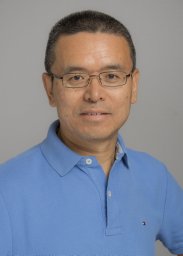 Wen Chen合作论文数Wayne State Univ, Div Engn Technol, Detroit, MI 48202 USA11
 Xueqin Chen (陈雪芹)合作论文数Research Center of the Satellite Technology, School of Astronautics, Harbin Institute of Technology11
 Dan Yu (于丹)合作论文数College of Astronautics, Nanjing University of Aeronautics and Astronautics8
 Yunhua Wu (吴云华)合作论文数College of Astronautics, Nanjing University of Aeronautics and Astronautics7
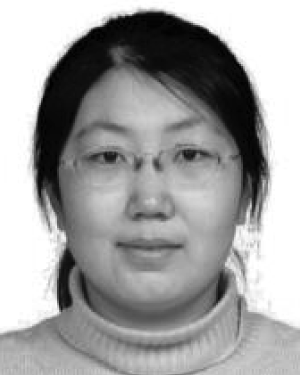 Lina Wu合作论文数6Guan Yu合作论文数5
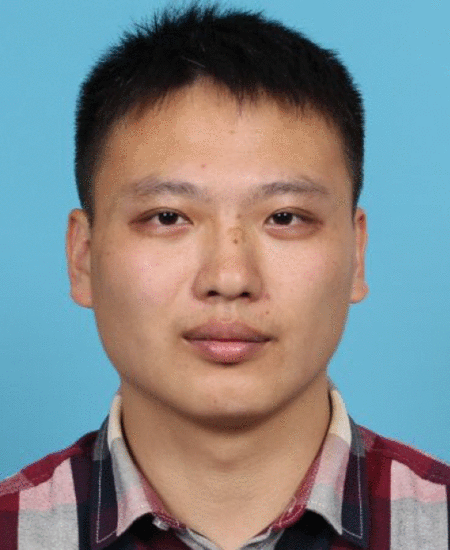 Ran Sun合作论文数4
 He Liao (廖鹤)合作论文数College of Astronautics, Nanjing University of Aeronautics and Astronautics4
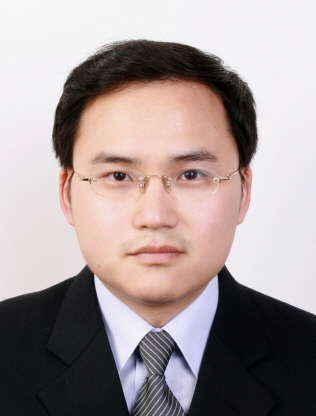 Choon Ki Ahn (安春基)合作论文数Advanced Control Systems Laboratory, School of Electrical Engineering, Korea University4
 Jin Wu合作论文数3
 Junnan Gao合作论文数3
 Jihe Wang (王继河)合作论文数School of Aeronautics and Astronautics, Sun Yat-Sen University3
 Zhong Zheng合作论文数3
 Aidang Shan (单爱党)合作论文数School of Materials Science and Engineering, Shanghai Jiao Tong University3
 Yi Shen (沈毅)合作论文数Department of Control Science and Engineering, School of Astronautics, Harbin Institute of Technology3Rui Ma合作论文数2Yule Gui合作论文数2Jiang Yu合作论文数2
 Zhiming Chen (陈志明)合作论文数College of Astronautics, Nanjing University of Aeronautics and Astronautics2
 Bing Hua (华冰)合作论文数College of Astronautics, Nanjing University of Aeronautics and Astronautics2Chengliang Li合作论文数2
 Dexin Zhang (张德新)合作论文数School of Automation and Intelligent Sensing, Shanghai Jiao Tong University2
 Yunhai Geng (耿云海)合作论文数School of Astronautics, Harbin Institute of Technology2Yi Jin合作论文数1Wancheng Jiang合作论文数1Mingjun Pu合作论文数1
 Lining Tan合作论文数1
 Chen Ma合作论文数1Qian Cao合作论文数1LI Yu-qing合作论文数1
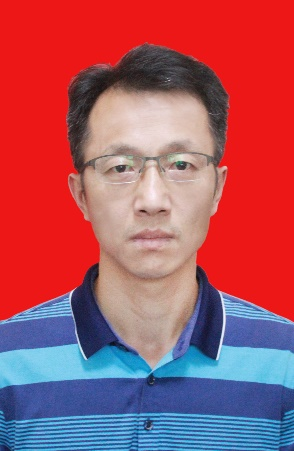 Peng Li (李鹏)合作论文数Xiangtan University1Shi-lei Zhao合作论文数1
 Minzhe Li (李旻哲)合作论文数School of Aeronautics and Astronautics, Shanghai Jiao Tong University1LI Bao-hua合作论文数1
 Guang Jin合作论文数1
 Zhengfang Wang (王正芳)合作论文数1
 Feng Zhou (周峰)合作论文数同济大学交通运输工程学院1
 Yuehua Cheng (程月华)合作论文数College of Automation Engineering, Nanjing University of Aeronautics and Astronautics1
 Ti Chen (陈提)合作论文数College of Aerospace Engineering, Nanjing University of Aeronautics and Astronautics;State Key Laboratory of Mechanics and Control of Mechanical Structures, Nanjing University of Aeronautics and Astronautics1
 Jinxiu Zhang (张锦绣)合作论文数School of Aeronautics and Astronautics, Sun Yat-sen University1Jiaolong Wang (王蛟龙)合作论文数School of Internet of Things Engineering, Jiangnan University1
 Rui Sun (孙锐)合作论文数Institute of Carbon Science and Technology, School of Energy Science and Engineering, Harbin Institute of Technology;Institute of Energy and Environmental Technology, Harbin Institute of Technology1
 Peng Wang (王鹏)合作论文数School of Instrument Science and Engineering, Southeast University1
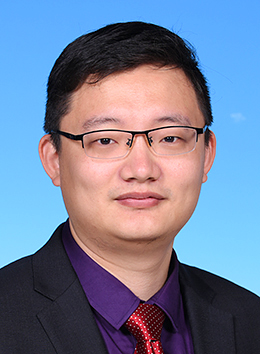 Ming Liu (刘明)合作论文数Shenzhen Unity-Drive Innovation Technology Co., Ltd.1
 Min Li合作论文数1
 Xiaowei Shao (邵肖偉)合作论文数Department of Engineering, Reitaku University;University of Tokyo1




