In this paper, we present a unified framework for robust 3D embedded watermarking and non-embedded watermarking based on feature integration. It begins by segmenting a 3D model into multiple separate sub-models via empirical mode decomposition (EMD). And then, it constructs a robust feature image for each sub-model by integrating its explicit and implicit radial features. Such scheme enables our framework to seamlessly transition from 3D non-embedded watermarking to 3D embedded watermarking. Our 3D embedded watermarking modifies the model according to its statistical characteristics. Therefore, it is an adaptive embedding method and can improve the invisibility of 3D embedded watermarking. Subsequently, it generates the copyright-watermark keys by using an XOR operation on each feature image and the given watermark image. Additionally, our watermarking framework can extract multiple watermark images according to the feature images of the detected 3D model and the stored copyright-watermark keys. They can be combined into the final watermark via a voting strategy to enhance the robustness of 3D watermarking. The experimental results and analysis demonstrate the superior performance of our newly-proposed 3D watermarking framework in terms of versatility, robustness and invisibility.
Existing 3D Gaussian Splatting (3DGS) watermarking methods often overlook model security and lack robustness against geometric attacks. To address these limitations, we propose a novel end-to-end security framework for 3DGS that integrates key-controlled model access with a frequency-domain watermarking scheme, named Se3DGSMark. First, we enhance overall model security by adversarially optimizing and encrypting the spherical harmonic (SH) coefficients of the 3DGS model, rendering it unusable without a valid key. Second, to ensure robust data embedding, we apply a frequency-domain algorithm to embed watermarking information directly into the rendered image. Furthermore, we embed the watermark exclusively in blue channel, achieving superior imperceptibility with a PSNR exceeding 45 dB. Extensive experiments demonstrate that our method, not only provides a secure mechanism but also surpasses existing methods in both imperceptibility and resistance to geometric attacks.
In the paper, we introduce a novel image denoising and segmentation technique using the piecewise smooth relaxed total generalized variation. The relaxed total generalized variational model (RTGV) is a combination of gradient operator and weighted divergence operator, which can improve the computational performance. For the denoising method, the RTGV regularization term and a smooth term are introduced to further improve the restored results. For the image segmentation method, we introduce the RTGV regularized piecewise smooth Mumford–Shah segmentation model instead of total variation regularized, which can deal with image with noise and inhomogeneous intensity effectively. In addition, the augmented Lagrangian algorithm is used to iteratively solve the proposed RTGV method, which produced several closed form solutions. Our algorithm is discussed from several aspects, including theoretical analysis, influence of parameters, and comparisons with several state-of-the-art methods. Numerical experimental results show that our algorithms can yield competitive results both visually and numerical errors with reasonable computational cost. Our image denoising algorithm has the advantage in preserving image features and can effectively prevent the staircase artifacts when compared to several other existing methods. Meanwhile, our segmentation algorithm can obtain results with boundaries more consistent with the human visual system and is shown to be able to achieve multi-region segmentation.
Height restriction bars (HRBs) are diverse in appearance and widely distributed on roads, which can effectively protect bridges and other structures from damage. On the other hand, these HRBs also bring safety issues and economic losses. Therefore, it is of great practical significance to detect and warn HRBs in advance. The highway scene environment is extremely complex, the shapes of HRBs are usually non-standard, and the vehicle driving tracks are diverse, which bring great difficulties and challenges to the detection of HRBs. Existing methods for HRBs measurement and warning have several limitations, such as the high equipment costs and insufficient accuracy for real-time requirements. To overcome these limitations, this paper proposes a novel and automatic measuring algorithm for HRBs based on binocular camera. In this algorithm, HRBs are detected by YOLO11 and the disparity data is filtered using a multi-step and multi-scale method. Based on the detected HRB, a robust algorithm is proposed to measure the distance and height, which can effectively prevent the accidents caused by HRB. In the proposed algorithm the Kalman filtering and RANSAC are used to improve the measurement accuracy. A new HRB dataset named HRB23 is constructed. The effectiveness and performance of the proposed algorithms are demonstrated on a set of real-life and virtual HRB scenarios.
The Mumford-Shah (MS) model is an important technique for mesh segmentation. Many existing researches focus on piecewise constant MS mesh segmentation model with total variation regularization, which pursue the shortest length of boundaries. Different from previous efforts, in this article, we propose a novel piecewise smooth MS mesh segmentation model by utilizing the relaxed total generalized variation regularization (rTGV). The new model assumes that the feature function of a mesh can be approximated by the sum of piecewise constant function and asmooth function, and the rTGV regularization is able to characterize the high order discontinuity of the geometric structure. The newly introduced method is effective in segmenting meshes with irregular structures and getting the better boundaries rather than the shortest boundaries. We solve the new model by alternating minimization and alternating direction method of multipliers (ADMM). Our algorithm is discussed from several aspects, and comparisons with several state-of-art methods. Experimental results show that our method can yield competitive results when compared to other approaches. In addition, our results compare favorably to those of the several state-of-art techniques when evaluated on the Princeton Segmentation Benchmark. Furthermore, the quantitative errors and computational costs confirm the robustness and efficiency of the proposed method.
In the paper, we extend a new nonlinear variational model based on the general Euler's elastica and curvature for triangulated surfaces. The new model intrinsically combines the gradient operator and the curvature operator in a multiplicative manner. By introducing the total variation norm restricted to triangles, we discretize the Euler's elastica and curvature model on triangulated surface into the triangle-based and edge-based formulations, respectively. A two-stage mesh denoising method is proposed using the general Euler's elastica and curvature model: first filtering the facet normals based on the Euler's elastica and curvature model and then updating the vertex positions. Through an efficient relaxation, the nonlinear and non-differentiable optimization problem is solved iteratively based on the operator splitting and alternating direction method of multipliers (ADMM). The proposed denoising method is evaluated in terms of parameters sensitivity, quantitative comparisons with several state-of-the-art techniques, and computational costs. Numerical experiments confirm that our approach produces competitive results when compared to several existing denoising algorithms at reasonable costs. It achieves promising results by preserving sharper features, restoring more details and structures, and alleviating the staircase effect (false edges). Moreover, the quantitative errors further verify that the proposed algorithm is robust numerically.
With the rapid growth of information technology, the development and implementation of copyright protection for medical images has become crucial. In this paper, we develop a distinguishable zero-watermarking algorithm via multi-scale feature analysis for medical images. We first detect the global features of the image with speeded-up robust features (SURF) and select the feature regions from the image through texture analysis. Then, we adopt local binary pattern (LBP) to detect the local texture features of these feature areas, and perform singular value decomposition (SVD) to extract the scale features and the detail features; these features are fused to form the feature matrix, and the average hash (aHash) algorithm is applied to the feature matrix to generate the binary feature map. Finally, we perform exclusive-or (XOR) operation between the feature images and the watermark image to generate zero-watermarks, which will be stored in the copyright protection center for further copyright authentication. Experimental results show that the average NC value of the proposed algorithm reaches 0.99 under most attacks, and the average BER of similar image extraction watermark keep below 0.27, which outperforms the current state-of-the-art (SOTA) watermarking algorithms.
Aiming at the problem of existing watermarking algorithms cannot effectively resist complex attacks, a novel zero-watermarking algorithm based on texture complexity analysis is proposed. First, we calculate the standard deviation map of the host image by the spatially selective texture method and achieve the optimal target regions (OTRs) by clustering the binary standard deviation map. To improve the robustness of the proposed algorithm, we use singular value decomposition (SVD) to extract multiple feature sequences from the OTRs. Then, these robust feature sequences are binarized to generate multiple feature images. For the watermark image, we apply the chaotic mapping to encrypt it and ensure the security of the watermark image. Finally, we perform an exclusive-or (XOR) operation on each of the extracted multiple feature images with the encrypted watermark image to construct multiple zero watermarks, which will be saved at the Copyright Certification Center to protect the copyright of the image. A large number of experimental results show that the newly-proposed algorithm not only has good distinguishability, but also has high robustness to complex attacks. Compared with existing watermarking algorithms, our proposed algorithm has advantages in invisibility, robustness and security.
Extensive research has been conducted on image steganography and watermarking algorithms, owing to their crucial rules in secret data transmission, copyright protection, and traceability. Despite promising results and numerous surveys proposed in the literature, there is still a lack of comprehensive analysis dedicated to deep learning-based image steganography and watermarking algorithms. In this paper, we focus on investigating three important aspects: neural networks, structure models, and training strategies. Our review covers the vast literature in this field. Furthermore, we provide a comprehensive statistical analysis from diverse perspectives, including models, loss functions, platforms, datasets, and attacks. Moreover, we conduct in a thorough comparative analysis and evaluation of existing representative algorithms, assessing their effectiveness within the context of deep learning. Finally, the challenges and potential research directions in the domain of deep-learning image steganography and watermarking algorithms are discussed to facilitate future research.
Current video steganography frameworks have difficulties in balancing robustness and imperceptibility at high resolution. To achieve better video coherence, robustness, and invisibility, we propose an efficient high-resolution video steganography method, named StegaVideo, that utilizes temporal guidance and edge guidance techniques. StegaVideo particularly focuses on concentrating the embedding message in the edge region to enhance invisibility, achieving a Peak Signal to Noise Ratio (PSNR) value of over 38 dB. We simulate various attacks to enhance robustness, with an average bit accuracy of above 99.5%. We use a faster embedding and extracting network, resulting in a 10x improvement in inference speed. Our method outperforms current leading video steganography systems in terms of efficiency, robustness, resolution, and inference speed, as demonstrated by the experiment. Our code will be publicly available at https://github.com/LittleFocus2201/StegaVideo.
Multiple types of omics data contain a wealth of biomedical information which reflect different aspects of clinical samples. Multi-omics integrated analysis is more likely to lead to more accurate clinical decisions. Existing cancer diagnostic methods based on multi-omics data integration mainly focus on the classification accuracy of the model, while neglecting the interpretability of the internal mechanism and the reliability of the results, which are crucial in specific domains such as precision medicine and the life sciences. To overcome this limitation, we propose a trustworthy multi-omics dynamic learning framework (TMODINET) for cancer diagnostic. The framework employs multi-omics adaptive dynamic learning to process each sample to provide patient-centered personality diagnosis by using self-attentional learning of features and modalities. To characterize the correlation between samples well, we introduce a graph dynamic learning method which can adaptively adjust the graph structure according to the specific classification results for specific graph convolutional networks (GCN) learning. Moreover, we utilize an uncertainty mechanism by employing Dirichlet distribution and Dempster-Shafer theory to obtain uncertainty and integrate multi-omics data at the decision level, ensuring trustworthy for cancer diagnosis. Extensive experiments on four real-world multimodal medical datasets are conducted. Compared to state-of-the-art methods, the superior performance and trustworthiness of our proposed algorithm are clearly validated. Our model has great potential for clinical diagnosis.
In vehicular cloud computing (VCC), cloud servers provide enormous storage and powerful computing capacity to Vehicular Ad-hoc Networks (VANETs). Resource-constrained vehicles outsource data to vehicular cloud platforms for timely traffic safety services, e.g., navigation, accident alarms, etc. Auditing the authenticity of data has become a critical issue in outsourcing data to untrusted servers. Existing data audit methods encode all data with error correction codes (ECC) techniques that retrieve corrupted data by downloading all data. The communication overhead of such methods is $O(n)$ ( $n$ is the number of data blocks) which is unbearable for vehicles with limited resources. In addition, these schemes employ an inaccurate privacy-preserving model. This will lead to data leakage in the third-party audit process. Although they use randomness to confuse parts of the proof that is used to prove the data state, a small amount of information is still distinguishable. For such, in this paper, we propose a practical data audit scheme with retrievability and indistinguishable privacy-preserving to efficiently audit the state of outsourced data. We improve the Invertible Bloom Filter (IBF) to compress redundancy locally, which can retrieve corrupted data without prior context. Furthermore, we define an indistinguishable privacy-preserving model to capture the complete semantics of repeated audit attacks and achieve indistinguishability in the audit. We prove that our scheme is secure against adaptive chosen message attacks and is indistinguishable privacy-preserving against repeated audit attacks. The experiment results demonstrate that for 1.9 GB data when $\sqrt[]{n}$ blocks are corrupted, auditors complete a check in 3.31 seconds with 99% confidence, and vehicles retrieve corrupted data in 3.16 seconds with 16.67 MB communication overhead.
Steganography is critical in traceability, authentication, and secret delivery for multimedia. In this paper, we propose a novel image steganography framework, named StegaEdge, via learning edge-guidance network to simultaneously address three challenges, capacity, multi-task, and invisibility. First, we use an upsampling strategy to expand the embedding space and thus increase the capacity of the embedded message. Second, our algorithm improves the embedding way of messages so that it can handle different messages embedded in the same image and achieve split-task recovery completely. Different information can be embedded in one cover image without affecting each other. Third, we innovatively propose an edge-guidance strategy to solve the problem of poor invisibility in smooth regions. The human eye is significantly less perceptive of intensity changes in edges than in smooth areas. Unlike traditional steganography methods, our edge-guidance steganography can appropriately embed part of the information into non-edge regions when the amount of embedded information is too large. Experimental results on three datasets show that the newly proposed StegaEdge algorithm achieves satisfactory results in terms of capacity, multi-task, imperceptibility, and security compared to the state-of-the-art algorithms.
水印的不可见性和算法的鲁棒性是图像版权保护领域关注的重要问题,然而大多数算法不能很好地平衡二者的关系.为此,提出了一种基于二维经验模态分解(BEMD)、离散余弦变换(DCT)和奇异值分解(SVD)的不可见性高、鲁棒性强的混合图像水印算法.首先,对水印图像采用Arnold置乱,增强算法的安全性,并对置乱后的水印图像进行二维DCT.然后,对宿主图像进行BEMD,得到有限个尺度不同的内蕴模态函数(IMF)及余量,选择与宿主图像相关性较低的IMF执行二维DCT,根据水印的大小对其进行不重叠分块,分别对每个分块图像以及经DCT的水印图像执行SVD.最后,根据自适应最优嵌入准则确定水印嵌入强度,并将水印嵌入每个分块,以增强算法的容错性.大量实验以及与现有算法的对比表明,所提算法不仅具有抵抗大尺度攻击的鲁棒性,而且具有较高的不可见性.
In order to prevent illegal dissemination and misappropriation of 3D models, this paper presents a novel 3D model zero-watermarking method using geometrical and statistical features. It firstly obtains some feature vertices according to an adaptive sampling scheme based on the Gaussian curvature of an input 3D model. Such vertices can describe the basic shape of the model. And then, it uses FPFH (fast point feature histograms) to generate a multidimensional histogram descriptor representing the statistical characteristics of the neighborhood of the feature vertices. After that, a binary watermark information can be generated to achieve the aim of copyright protection for the input 3D model. Experimental results show that the proposed method has good robustness against various attacks including similarity transformation, element reordering, noise, simplification, smoothing, cropping attacks, etc. Furthermore, it is very competitive with the state-of-the-art watermarking methods for 3D models.
In the field of multimedia security, image hashing is an effective technology for solving image content identification. Image hashing algorithm aims to map the high dimensional input features onto perceptual hashing values in terms of their perceptual content, in which visually identical images are mapped to similar digital representations. In this paper, we focus on multi-view dimensionality reduction based hashing generation, and propose a novel method, called Multi-view Dimensionality Reduction based Robust Image Hashing (MDRIH). Our MDRIH scheme maps the multi-view features into a compact binary space by considering the complementarity and similarity between image features across these different views. For preprocessing, bilinear interpolation is applied on the host image to adjust to a standard size, and ensure the different images with same hash size. Specifically, in order to improve the robustness of the algorithm against content-preserving operations, multi-view features, including structural features, edge features, and color features are extracted. After that, multi-view dimension reduction is adopted to obtain meaningful low-dimensional information from multi-feature fusion. Finally, the data in low-dimensional subspace is encoded into a compact binary sequence. The experimental results indicate that the proposed hashing method not only preserves the correlation between multiple views and the similarity among different data points within each view, but also achieves a better balance between robustness and discriminability compared to existing hashing methods.
Natural gas stands out as a cleaner source of energy due to its relatively lower carbon emissions, making it an appealing choice for numerous countries. Therefore, it is essential to gain a deeper understanding of natural gas reservoirs to ensure sustainable extraction and unlock their full potential. The behavior of fluid flow and production in complex gas reservoirs, especially those characterized by abnormal high-pressure and tight porous media, is not yet fully comprehended, necessitating further investigation. Traditional Darcy's law is no longer applicable in tight porous media with high pressure. To overcome this challenge, a new composite seepage model was developed. The model incorporates stress-sensitive permeability and threshold pressure gradient. We employed perturbation theory for permeability modulus and the Green function method for the inhomogeneous special solution, effectively addressing its nonlinearity. Through integration transformation methods, a dimensionless rate solution under constant bottom-hole pressure was derived in the Laplace domain. Eventually, a new model involving multiple factors has been proposed for production prediction in such gas reservoirs. Studying unsteady gas flow dynamics in tight formations provides valuable insights into flow patterns. To investigate transient flow characteristics in tight gas reservoirs, log-log figures were generated through Stehfest numerical inversion. Flow periods were classified based on standardized time stages for rate curves. A parametric study revealed that stress sensitivity damages permeability, causing a larger pressure drop in intermediate and late flow regimes. This effect is reflected in upward tendencies in rate derivative curves. A higher threshold pressure gradient indicates poorer reservoir properties, making fluid flow more difficult, as evidenced by steeper downwarping in production rate curves. The combined impact of stress-sensitivity and threshold pressure gradient accentuates the variation trend in these curves. Multi-stage hydraulic fracturing can effectively address the negative impacts of these two factors, which impede seepage. Enhancing fracture conductivity can decrease even eliminate the threshold pressure gradient, while increasing proppant strength can slow down elastic and plastic deformation of reservoir rock, thereby reducing the loss of permeability. The transient seepage model developed in this paper serves not only for production prediction but also to explain the related formation and well parameters. It functions as a traditional well test interpretation tool, particularly remarkable as it relies solely on daily production data, enhancing workflow efficiency and reducing testing time. The interpreted parameters are valuable for designing hydraulic fracturing operations, evaluating the potential of tight gas reservoirs, and ultimately increasing gas production rates.
Despite its rapid advancement in the past two decades, bidimensional empirical mode decomposition (BEMD) still has several limitations in multi-scale feature description of input images. To ameliorate this issue, in this paper we present several optimization-based approaches to BEMD. First, we articulate an improved unconstrained optimization approach to BEMD (IUOA-BEMD). The essential idea is to formulate an optimization model to decompose an input image based on the Delaunay triangulation of its local maxima (minima). Second, we design a scale-guided optimization approach to BEMD (SGO-BEMD) so as to arrive at an improved modal image. SGO-BEMD uses the initial modal image (obtained from the aforementioned proposed IUOA-BEMD) as a necessary guide and can capture much clearer features at various spatial scales of the input image. In addition, an additional edge-preserving property can be obtained with the edge-aware decomposition if an edge-aware scale-guided optimization to BEMD (EASGO-BEMD) is used. The visualization and quantitative results for many artificial amplitude-modulated–frequency-modulated (AM-FM) images and real images have shown that the newly-proposed methods are very competitive with state-of-the-art BEMD methods. Moreover, we further evaluate the performance of BEMD methods according to their applications in image detail enhancement and image contrast & brightness enhancement. It may be noted that image contrast & brightness enhancement represents the first attempt to integrate BEMD with Retinex theory. Collectively, both types of enhancement validate the utility of the novel optimization-based approaches to BEMD proposed herein.
The rising use of 3D digital products has increased the demand for copyright protection. In this paper, we propose a novel and robust 3D watermarking method with high imperceptibility based on EMD (empirical mode decomposition) on surfaces. It first defines a normalized modulus signal on a 3D host model so as to involve EMD into 3D watermarking effectively. And then, it extracts different scale features of the defined signal by using EMD to locate the proper embedding positions. After this, the watermark signal is embedded repeatedly and cyclically into the 3D host model to enhance the robustness. The embedding strength is optimized according to a predefined fidelity parameter to control the imperceptibility of the watermark. Many experiment results show that the proposed method can obtain good results against various attacks while maintaining high invisibility, such as pseudo-random noise, Laplacian smoothing, simplification, subdivision, cropping, and similarity transformation. Furthermore, it is very competitive with the current state-of-the-art 3D watermarking techniques in terms of robustness and invisibility.
 Jianping Hu (胡建平)合作论文数Faculty of Electrical Engineering and Computer Science, Ningbo University22
 Kun Hu合作论文数13
 Hong Qin (秦洪)合作论文数Department of Computer Science, State University of New York at Stony Brook;Center for Visual Computing, State University of New York at Stony Brook13
 Ling Du (杜玲)合作论文数School of Computer Science and Technology, Tiangong University9
 Xiuping Liu (刘秀平)合作论文数School of Mathematical Sciences, Dalian University of Technology8
 Huayan Zhang (张花艳)合作论文数School of Computer Science and Technology, Tiangong University7
 Qi Xie (谢琦)合作论文数School of Mathematics and Statistics, Xi'an Jiaotong University7
 Junjie Cao (曹俊杰)合作论文数School of Mathematical Sciences, Dalian University of Technology6
 Zequan Zhou合作论文数Beihang Univ, Sch Elect & Informat Engn, Beijing, Peoples R China5
 Yi Bai合作论文数School of Public Health and Beijing Key Laboratory of Environmental Toxicology, Capital Medical University, Beijing 100069, China5
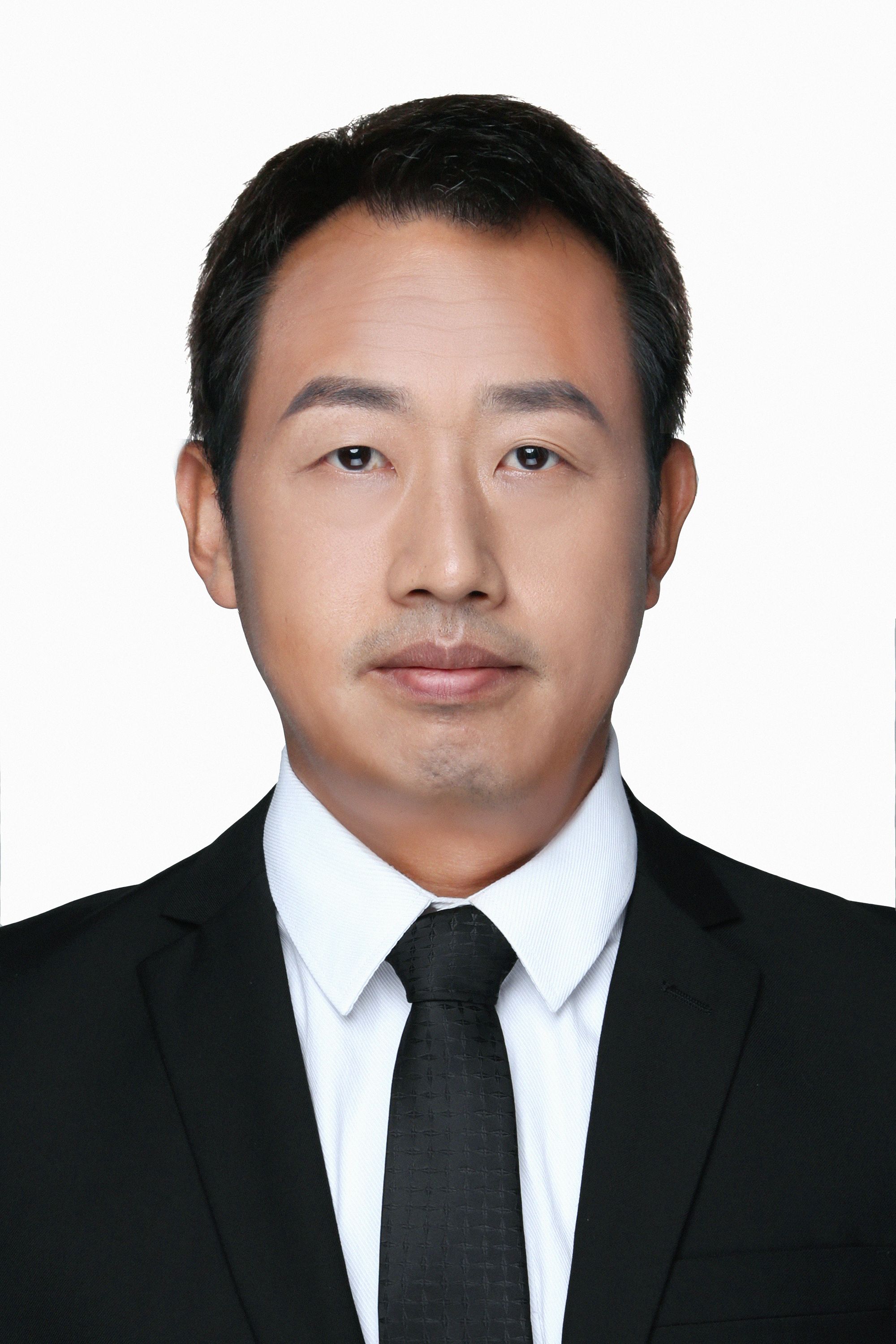 Baojun Li (李宝军)合作论文数School of Mechanical Engineering, Dalian University of Technology;School of Automotive Engineering, Facutly of Vehicle Engineering and Mechanics, Dalian University of Technology;School of Future Technology, Dalian University of Technology5
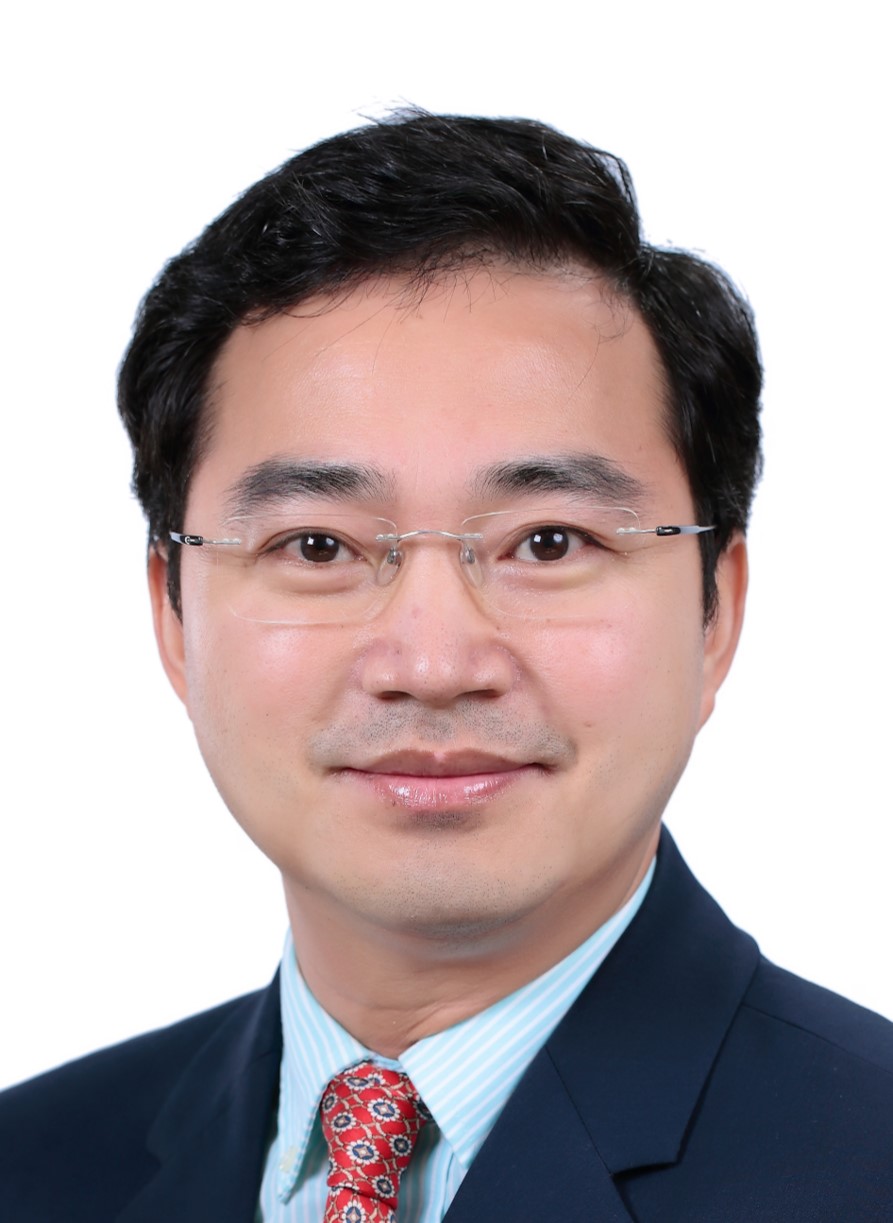 Xiling Luo (罗喜伶)合作论文数School of Electronics and Information Engineering, Beihang University5Xiquan Shi合作论文数4
 Xingjun Wang (王兴军)合作论文数Tsinghua Shenzhen International Graduate School, Tsinghua University4Dongbo Zhang (张东波)合作论文数广东省智能制造研究所4Lixin Guo合作论文数3Yifu Xu (许义富)合作论文数3
 Daochang Zhang合作论文数3
 HongFei Wang (王红飞)合作论文数Technology and Engineering Center for Space Utilization, Chinese Academy of Sciences;University of Chinese Academy of Sciences3
 Aimin Hao (郝爱民)合作论文数School of Computer Science & Engineering, Beihang University3
 Yupeng Wang合作论文数2
 Gang Liu合作论文数2
 Feixiang Luo合作论文数2Tan Xiaodong合作论文数2Wen Mingzhu合作论文数2
 Feng Liu (刘锋)合作论文数School of Electronic and Information Engineering, Beihang University2
 Feng Zeng合作论文数2
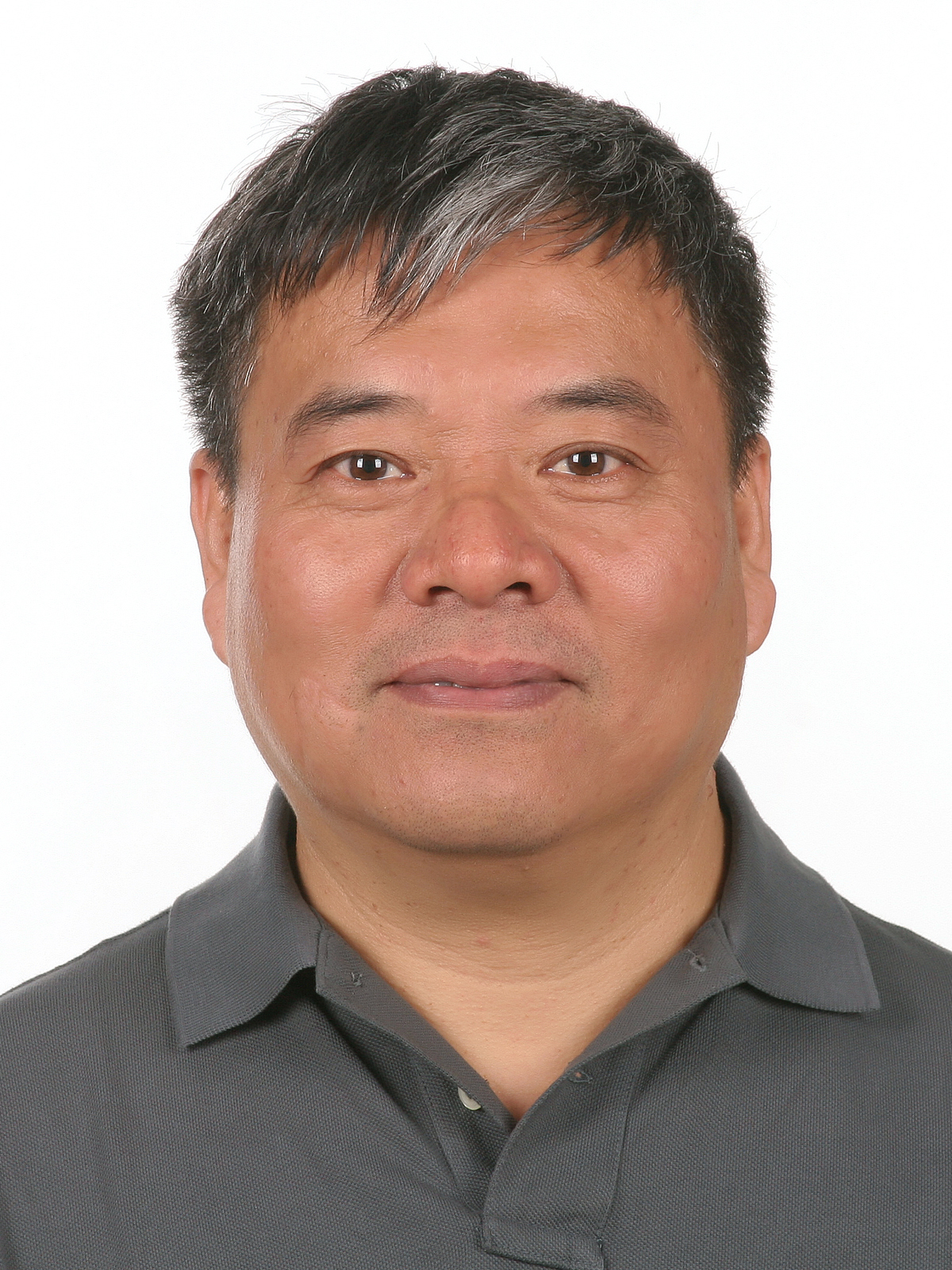 Baocai Yin (尹宝才)合作论文数School of Information Science and Technology,Beijing University of Technology2
 Anthony T. S. Ho合作论文数2Mingpei Wang合作论文数1Juyao Wei合作论文数1Yuanqiang Yu合作论文数1Zhaoyangfan Huang合作论文数1Dongfang Zhu合作论文数1Hehua Wang合作论文数1Xuehui Liu合作论文数1
 Nan Yin合作论文数Mohamed Bin Zayed University of Artificial Intelligence1Liu Qiong合作论文数1
 Yanyan Zhang合作论文数1Ying DU (杜影)合作论文数1ZHAO Hui-chao (赵慧超)合作论文数1YANG Jinhui (杨锦辉)合作论文数1Yuan Zhang合作论文数1Li-Na Cao合作论文数1Puming Cui (崔普明)合作论文数1Yijing Wang合作论文数1Shaoguang Zhang (张绍光)合作论文数1XU Yipeng (徐依朋)合作论文数1Heng Xiao合作论文数1




