Intestinal organoids are indispensable tools for exploring intestinal disorders. Deep learning methodologies are often employed in morphological analysis to evaluate the condition of these organoids. Nonetheless, prevailing analytical techniques face obstacles such as many organisational overlaps and tiny targets lead to a high incidence of errors and limited applicability. This paper presents Deliod, a streamlined intestinal organoid detection model founded on YOLOv8 and designed to automate the identification of organoid morphology. Deliod performed excellently compared to leading detection models when applied to an intestinal organoid dataset, attaining an mAP50 of 87.5%. Ablation experiments verified the module’s efficacy in improving detection performance. Furthermore, Deliod features a modest parameter count of 5.41 M and a computational load of 16.6 GFLOPs, facilitating the broader application of the detection model in the realm of intestinal organoid image recognition. This streamlined model not only enables efficient and accurate recognition of organoid morphology but also minimizes hardware deployment requirements, broadening its range of potential applications.
Bacterial immobilization is a common method in anaerobic fermentation, since of the maintenance of high bacterial activity, insurance of high density microbial during continuous fermentation, and quick adaptability to the environment. While, the bio-hydrogen production capacity of immobilized photosynthetic bacteria (I-PSB) is seriously affected by the low light transfer efficiency. Hence, in this study, photo-catalytic nano-particles (PNPs) was added into the photo-fermentative bio-hydrogen production (PFHP) system, and its enhancement effects of bio-hydrogen production performance were investigated. Results showed that the maximum cumulative hydrogen yield (CHY) of I-PSB with 100 mg/L nano-SnO2 (154.33 & PLUSMN; 7.33 mL) addition was 18.54% and 33.06% higher than those of I-PSB without nano-SnO2 addition and control group (free cells), and the lag time was the shortest indicating a shorter cell arrest time, more cells and faster response. Maximum energy recovery efficiency and light conversion efficiency were also found to be increased by 18.5% and 12.4%, respectively.
Visual navigation is an essential task for indoor robots and usually uses the map as assistance to providing global information for the agent. Because the traditional maps match the environments, the map-based and map-building-based navigation methods are limited in the new environments for obtaining maps. Although the deep reinforcement learning navigation method, utilizing the non-map-based navigation technique, achieves satisfactory performance, it lacks the interpretability and the global view of the environment. Therefore, we propose a novel abstract map for the deep reinforcement learning navigation method with better global relative position information and more reasonable interpretability. The abstract map is modeled as a Markov network which is used for explicitly representing the regularity of objects arrangement, influenced by people activities in different environments. Besides, a knowledge graph is utilized to initialize the structure of the Markov network, as providing the prior structure for the model and reducing the difficulty of model learning. Then, a graph neural network is adopted for probability inference in the Markov network. Furthermore, the update of the abstract map, including the knowledge graph structure and the parameters of the graph neural network, are combined into an end-to-end learning process trained by a reinforcement learning method. Finally, experiments in the AI2THOR framework and the physical environment indicate that our algorithm greatly improves the success rate of navigation in case of new environments, thus confirming the good generalization.
This paper investigates the autonomous driving lane change problem with reinforcement learning methods. A two-stage control method is proposed which includes a decision-making module computing the high-level lane change action and a lateral control module outputting the low-level steering angle. Due to the decoupling system framework, the proposed controller can flexibly cancel the previous improper lane change command. To improve the data efficiency in the lateral control module, the Gaussian process is employed to modeling the local time-interval system models. These models are used to generate imaginary samples and facilitate the reinforcement learning training process. The lateral control experiments show that the imaginary samples can improve the data efficiency and speed up the training process. Finally, the two-lane scene and three-lane scene experiments validate the effectiveness of the proposed two-stage lane change method.
This paper presents an autonomous driving experience platform for the purpose of improving the social acceptance of autonomous driving technologies. The platform includes two modules: a dangerous object detection (DOD) module and a lane keeping assist (LKA) module. The DOD module first employs an object detection convolutional neural network to locate the vehicle on the image, then the dangerous level is determined based on the corresponding location and geometrical relationship. The LKA module, which is based on reinforcement learning inputs the physical sensor measurements and outputs the steering command to control the vehicle in the lane center. The experiments validate the effectiveness of the proposed methods. The platform is exhibited in 2018 Beijing science and technology week1.
After artificial intelligent (AI) scientists have conquered Go game, StarCraft has been the next biggest challenge. A highly intelligent AI system that is able to beat human professional players is expected. In this paper, we review the recent development of computational intelligence (CI) in the field of StarCraft AI. Successful applications of CI techniques are analyzed and compared from different levels of AI functionality. It should be noted that current StarCraft AI is highly dependent on human experience and is far away from a completely intelligent one. New frameworks and techniques are still expected to improve the intelligence.
This paper proposes a novel vision-based object detection method in autonomous driving, which introduces the temporal information into the deep learning-based detection method for moving object detection. Vision-based object detection is a critical technology for autonomous driving. The objects in the real world such as driving cars, don't have great changes in their positions and velocities. So the position change of objects between two consecutive frames is not large. This is usually ignored by traditional works, which usually use object detection methods on still-images to detect moving objects. Considering the relationship among consecutive frames (temporal information), we present a robust and real-time tracking method following image detection to refine the object detection results. Based on the three key attributes (distances, sizes and positions), the tracking method aims to build the association between the detected objects on the current frame and those in previous frames. The proposed object detection with temporal information dramatically improves the performance of existing object detection algorithms based on stillimage. With the proposed method, we won the champion in the preceding vehicle detection task in 2017 intelligent vehicle future challenge(2017 IVFC) 1 .
This paper investigates the traffic sign recognition task with deep learning methods. The proposed algorithm which is called DeepSign includes three modules: a detection module (PosNet) for locating the traffic sign in a static image, a classification module (PatchNet) for classifying the detected image patch, and a temporal filter for correcting the recognition results. The PosNet is a binary object detection convolution neural network which regards all traffic signs as one class and the background as the other class. Different from the traditional works which recognize the traffic sign on the static image, the proposed temporal filter exploits the contextual information to recover the missed detection region and correct the false classification. The experiments validate the effectiveness of the proposed algorithm. It achieved the third place on the traffic sign recognition task in 2017 China intelligent vehicle future challenge (2017 CIVFC).
Policy gradient algorithm is often used to deal with the continuous control problems. But as a model-free algorithm, it suffers from the low data efficiency and long learning phase. In this paper, a policy gradient with Gaussian process modelling (PGGPM) algorithm is proposed to accelerate learning process. The system model is approximated by Gaussian process in an incremental way, which is used to explore state action space virtually by generating imaginary samples. Both the real and imaginary samples are used to train the actor and critic networks. Finally, we apply our algorithm to two experiments to verify that Gaussian process can accurately fit system model and the supplementary imaginary samples can speed up the learning phase.
Deep reinforcement learning which incorporates both the advantages of the perception of deep learning and the decision making of reinforcement learning is able to output control signal directly based on input images. This mech-anism makes the artificial intelligence much close to human thinking modes. Deep reinforcement learning has achieved remarkable success in terms of theory and application since it is proposed. ‘Chuyihao–AlphaGo’, a computer Go deve-loped by Google DeepMind, based on deep reinforcement learning, beat the world’s top Go player Lee Sedol 4:1 in March 2016. This becomes a new milestone in artificial intelligence history. This paper surveys the development course of deep reinforcement learning, reviews the history of computer Go concurrently, analyzes the algorithms features, and discusses the research directions and application areas, in order to provide a valuable reference to the development of control theory and applications in a new direction.
Gaussian processes provide a Bayesian regression framework, commonly used in stationary regression by online learning, where the data is fed one by one. In this paper, a perturbed Gaussian process with chunk sparsification is proposed to track non-stationary systems. A chunk sparsification mechanism is designed to select the optimal bases from a chunk of data. The non-stationary system is modeled by a perturbed Gaussian process (PGP), which enables it to track the changing of the system through forgetting the history information at one point or a chunk of points. Finally, PGP is tested on two experiments. The results show that PGP requires less bases than the approximate linear dependence (ALD) sparsification, especially when the data is collected from a trajectory.
This paper combines an efficient reinforcement learning algorithm named Multisamples in Each Cell (MEC) with a building thermal comfort control problem. It implements the efficient exploration rule and makes high use of observed samples. A grid is utilized to partition the continuous state into cells that are used to store samples. A near-upper Q function is obtained based on the samples in each cell. The value iteration technique is designed to derive the near optimal control policy. The algorithm can efficiently balance exploration and exploitation. The entire implementation process needs no model of systems. The thermal comfort criterion, predicted mean vote, is introduced to evaluate zone thermal comfort status. A two story, multi-zone small office building equipped with a variable air volume direct expansion cooling system is built in EnergyPlus to establish an EnergyPlus-MATLAB co-simulation platform. A MEC thermal comfort control simulation is implemented to validate the high performance property compared with Q-learning.
 Dongbin Zhao (赵冬斌)合作论文数Institute of Automation, Chinese Academy of Sciences;School of Artificial Intelligence, University of Chinese Academy of Sciences10
 Yuanheng Zhu (朱圆恒)合作论文数State Key Laboratory for Management and Control of Complex Systems, Institute of Automation, Chinese Academy of Sciences;University of Chinese Academy of Sciences4
 Qichao Zhang (张启超)合作论文数University of Chinese Academy of Sciences;Institute of Automation, Chinese Academy of Sciences4
 Yaran Chen (陈亚冉)合作论文数Institute of Automation, Chinese Academy of Sciences;School of Artificial Intelligence, University of Chinese Academy of Sciences4
 Xia, Z.合作论文数2
 Kun Shao (邵堃)合作论文数School of Software, Hefei University of Technology;School of Computer Science and Information Engineering, Hefei University of Technology2
 Haoran Li合作论文数State Key Laboratory of Multimodal Artificial Intelligence Systems, Institute of Automation, Chinese Academy of Sciences1
 Tong Zhou (周彤)合作论文数Beijing National Research Center for Information Science and Technology, Tsinghua University;Department of Automation, Tsinghua University1jian zhi yue合作论文数1Zhisai Duan合作论文数1Xiaoni Fan合作论文数1Guang Yang合作论文数1
 Gangyin Luo合作论文数1Haorui Zhang合作论文数1
 Zhentao Tang (唐振韬)合作论文数Huawei Noah's Ark Lab1Shengnan Zhu (朱胜楠)合作论文数1
 Hangyu Mao (毛航宇)合作论文数Kuaishou Technology1
 Yameng Li (李亚猛)合作论文数1FengLiang Huang (黄凤良)合作论文数1ChengHong Wang (王成红)合作论文数1
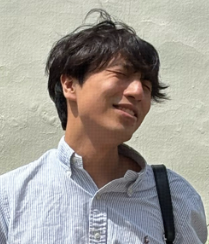 Changmin Yu (于昌民)合作论文数Computational and Biological Learning Lab, Department of Engineering, University of Cambridge1
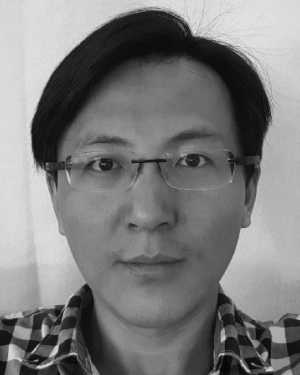 Yi Lu合作论文数1
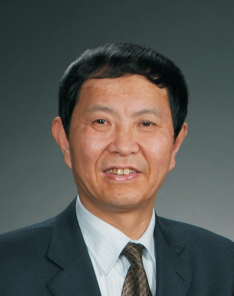 Quanguo Zhang (张全国)合作论文数College of mechanical & Electrical Engineering, Henan Agricultural University1
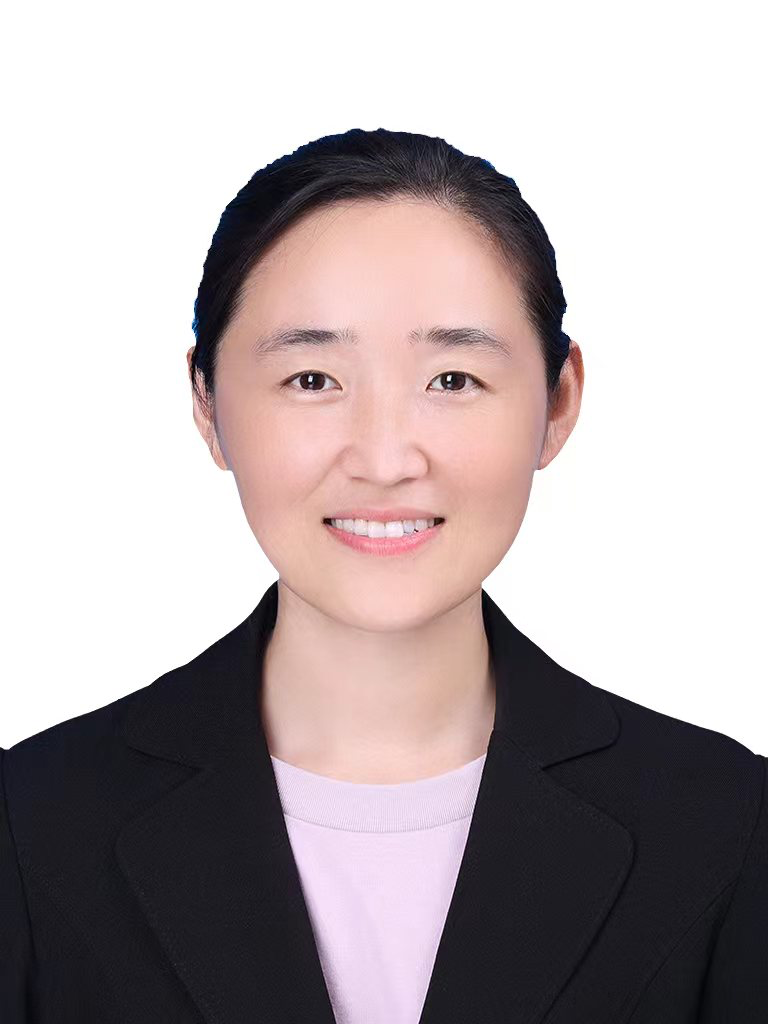 Zhiping Zhang (张志萍)合作论文数College of Mechanical & Electrical Engineering, Henan Agricultural University1
 Derong Liu (刘德荣)合作论文数School of Artificial Intelligence, Anhui University1
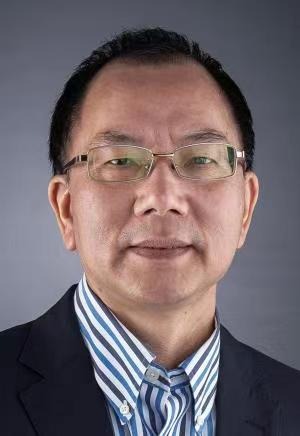 Tingwen Huang (黄廷文)合作论文数Faculty of Computer Science and Control Engineering, Shenzhen University of Advanced Technology1
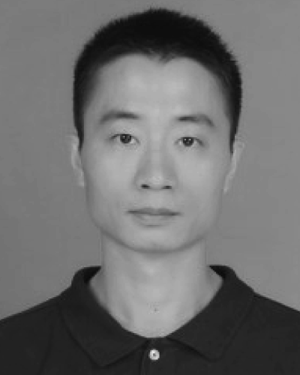 Peng Li (李鹏)合作论文数1
 Ping Guo (郭平)合作论文数School of Systems Science, Beijing Normal University1
 Chaomin Luo合作论文数Department of Electrical and Computer Engineering,University of Detroit Mercy1
 Neil Burgess合作论文数Institute of Cognitive Neuroscience, University College London;Department of Clinical and Experimental Epilepsy, Queen Square Institute of Neurology, University College London1
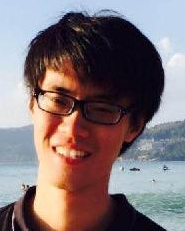 Jianye Hao (郝建业)合作论文数Deep Reinforcement Learning Laboratory, School of Computer Software, College of Intelligence and Computing, Tianjin University1Hanwen Zhang (张瀚文)合作论文数1




