In this investigation, effects of substituting Mo for W and temperature on lattice constants of gamma and gamma ' phases and gamma/gamma ' misfits of second generation Ni based single crystal superalloys was investigated. The lattice constants of gamma and gamma ' phases in heat-treated W-rich and Mo-rich single crystal superalloys were measured by in-situ high temperature X-ray diffraction (HT-XRD) at temperature ranged from room temperature to 1150 degrees C. Meanwhile, both thermodynamic calculation and Vegard's law (considering thermal expansion coefficient) were used to calculate lattice constants of gamma and gamma ' phases and gamma/gamma ' misfits of two experimental alloys. Both experiment and calculation results indicated that substituting Mo for W obviously increased lattice constant of gamma phase, while its influence on lattice constant of gamma ' phase was limited, and thus substituting Mo for W significantly decreased gamma/gamma ' misfit. Meanwhile, the experimental results of HT-XRD indicated that absolute value of gamma/gamma ' misfits of two experimental alloys at 1100 degrees C were higher than those of at 1150 degrees C, which was in good agreement with evolution rule of gamma/gamma ' interfacial dislocation network spacings in two experimental alloys (after creep rupture at 1100 degrees C and 1150 degrees C).
Effect of Ta content on microstructure and mechanical properties of CoCrNiTax medium entropy alloys (x = 0.1-0.5) was discussed. With increasing Ta content, CoCrNiTax alloys changed from hypoeutectic (x = 0.1, 0.3) to eutectic (x = 0.35) and to hypereutectic (x = 0.4, 0.5) alloys, and CoCrNiTax alloys were all composed by gamma phase and C14-type Laves phase. Meanwhile, microhardness of CoCrNiTax alloys increased with increasing Ta content. With increasing Ta content, compressive strengths of CoCrNiTax alloys firstly increased and then decreased, and CoCrNiTa0.35 alloy had the highest compression strength (2852 MPa). Nanohardness of primary gamma phase was much lower than that of primary Laves phase, and nanohardness of eutectic phases firstly increased and then decreased with increasing Ta content. In addition, nanohardness of gamma phase in CoCrNiTax alloy was higher than that of gamma phase in CoCrFeNiTax alloy, which provided a notable contribution to compression strengths of CoCrNiTax alloys. Wear mechanism gradually changed from adhesive wear to abrasive wear with increasing Ta content, and CoCrNiTa0.5 alloy exhibited the highest wear resistance.
With the advancement of aviation technology, thin-walled structures in superalloys are increasingly adopted in turbine blades for modern aeroengines. However, the mechanical reliability of ultra-thin sections remains a critical challenge. In this study, the high-temperature tensile behavior of thin-walled specimens of a thirdgeneration nickel-based single-crystal superalloy was systematically investigated at 1100 degrees C. By integrating thin-wall design and in-situ micro-computed tomography imaging, real-time 3D visualization of dendritic structures and micropore evolution during tensile deformation was achieved. The results reveal that micropores progressively aggregate and expand throughout the initial, elastic, plastic and fracture stages. A 13.7 % reduction in tensile strength was observed as the wall thickness decreases from 1.2 mm to 0.3 mm. These findings provide critical insights for optimizing the design and performance of thin-walled turbine blades in advanced aeroengines operating under extreme service conditions.
The influence of Ru addition on gamma/gamma ' partitioning behavior of alloying elements, solid solution strengthening degree of gamma and gamma ' phases, gamma/gamma ' lattice misfit and 1200 degrees C/80 MPa creep properties of Ni-based single-crystal superalloys was detailed investigated. Ru addition increased 1200 degrees C/80 MPa rupture life of Ni-based single-crystal superalloy from 125.93 f 5.61 h to 179.87 f 4.43 h. The experimental single-crystal superalloys exhibited a high gamma ' phase volume fraction at 1200 degrees C, which contributed to the superior 1200 degrees C/80 MPa creep properties of both Ru-free and Ru-containing single-crystal superalloys. In this study, Ru addition increased Mo, Cr, and Re contents in gamma phase, and thus increased both solid solution strengthening degree and lattice constant of gamma phase. These effects collectively decreased gamma/gamma ' lattice misfit and gamma/gamma ' interfacial dislocation network spacing, which increased gamma/gamma ' interfacial strengthening effect, and ultimately increased 1200 degrees C/80 MPa creep life. Furthermore, it was revealed that the 1200 degrees C/80 MPa creep/stress rupture lives of single-crystal superalloys with low thermal stability of gamma ' phase, creep/stress rupture lives are dominated by volume fraction of gamma ' phase. In contrast, for single-crystal superalloys with high thermal stability of gamma ' phase (such as the two single crystal superalloys in this study), the 1200 degrees C/80 MPa creep/stress rupture lives were primarily governed by gamma/gamma ' lattice misfit. Therefore, in order to design single-crystal superalloys with excellent 1200 degrees C/80 MPa creep performance, it is essential to simultaneously improve thermal stability of gamma ' phase and decrease gamma/gamma ' lattice misfit of single crystal superalloys.
Stacking faults are critical planar defects in high temperature alloys, exhibiting pronounced strengthening effects via self interactions through the L-C lock mechanism and interactions with other dislocation structures. However, under ultra-high temperature and low stress conditions, the activation of stacking faults becomes difficult, thereby limiting their contribution to high temperature creep resistance. In this study, it is demonstrated that through optimized alloy composition, particularly by substantially increasing the Mo content to promote the formation of stacking faults and introducing Ru to enhance their thermal stability, the strengthening effect associated with stacking fault interactions can be effectively realized at 1200 degrees C. At this temperature, a high volume fraction of the gamma ' phase, the formation of dense dislocation networks induced by a designed negative lattice misfit, and the synergistic strengthening effect of K-W lock structure within the gamma ' phase collectively suppress dislocation shearing from the gamma matrix into the gamma ' phase as well as their glide within the gamma ' phase. This integrated mechanism effectively reduces the creep rate at 1200 degrees C.
Based on three-dimensional atom probe technique and Ardell method, the influences of temperature (850degree celsius similar to 1150degree celsius) on microstructure, compositions and solid solution strengths of gamma and gamma ' phases, gamma/gamma' partitioning behaviors of alloying elements and gamma/gamma' interfacial energy of a Mo-rich Ni based single crystal superalloy were investigated. After quenching from 1100degree celsius, microstructure was basically similar as heat-treated state. However, after quenching from 1150degree celsius, gamma ' phase obviously re-dissolved, and gamma channel obviously widened. Meanwhile, with increasing temperature, Co, Cr, Mo and Re contents in gamma phase decreased, while Al and Ta contents in gamma phase increased. With increasing temperature, Co, Cr and Re contents in gamma ' phase slightly decreased, Mo content in gamma ' phase significantly decreased, while Al and Ta contents in gamma ' phase increased. Meanwhile, with increasing temperature, solid solution strength of gamma phase decreased, while solid solution strength of gamma ' phase increased. In addition, with increasing temperature, partitioning ratios of Co, Cr and Re elements decreased, partitioning ratios of Mo and Al elements increased, while partitioning ratio of Ta firstly decreased and then increased. Moreover, both gamma/gamma ' interfacial width and gamma/gamma ' interfacial energy decreased with increasing temperature.
With outstanding comprehensive performance at high temperature, nickel-based single crystal superalloy is the preferred material for aero-engine turbine blades, vanes and other components to withstand challenging service environment subjected to high temperature and intense stress. At present, various complex cooling structures are often used in the design of high-efficiency cooling blades to enhance blade temperature tolerance. Among them the micro-cooling structure represented by lamilloy and double wall cooling are the main trend. However, the existence of ultra-thin wall structures in these complex turbine blades has become critical aspect and challenge in blade manufacturing. This paper provided an overview of the development trends in thin-walled structure of Ni-based single-crystal super alloys, analyzed the defects arising from thin-walled constrained space and the law of dendrite growth, elaborated the influence of thin-walled structure on mechanical properties and provided a prospect on advanced turbine blade preparation and development trend of its microstructure regulation.
With increasing turbine inlet temperatures in aero-engines, the demand for temperature-resistant turbine blades has led to the widespread use of nickel-based single crystal superalloys. These alloys, known for their exceptional performance in high-temperature and high-stress environments, incorporate advanced cooling structures like lamilloy and double wall cooling to enhance temperature tolerance. As the development of aviation technology, thin-walled structures are widely used in turbine blades of aero-engines. However, the adoption of ultra-thin wall structures, particularly in lamilloy turbine blades with thicknesses of 0.5 mm or less, presents a significant manufacturing challenge and will cause the degradation of mechanical properties. This study delves into the growth and evolution of dendrites in the nickel-based single-crystal superalloy DD403, exploring thin-walled specimens with varying thicknesses during directional solidification. Findings reveal that decreasing wall thickness correlates with a reduction in average primary dendrite arm spacing, smaller γ′ precipitates sizes within the dendrite core and interdendritic regions, and reduced microsegregation levels of Al, Ti, Co and W. These insights contribute to optimizing thin-walled turbine blade performance in aero-engines applications.
《中国残疾人》记者(以下简称"记者"):请您介绍一下学前融合教育中课程建设的内容和必要性? 王雁:目前,融合义务教育阶段课程建设做得比较多.对于学前融合教育,从比较宽泛的融合教育概念而言,残疾孩子要进到普通幼儿园,跟健全孩子在一起活动、生活,他们与健全孩子在一起的时间越长,融合得越好.因此,在某种程度上,只需要把教育部颁布的《3-6岁儿童学习与发展指南》中要求的健康、语言、社会、科学、艺术等5个领域的课程活动做一些调整就可以了.
每天吃完晚饭,北京按摩医院的盲人按摩师高沛友都会打开电脑,进入自己的学习时间."大概七八岁的时候,我第一次看到了盲文书《盲童文学》,里面讲了很多我不知道的东西,让我一下爱上了读书.虽然当时的盲文书籍很少,并且每次都要从几千里外的北京盲文图书馆借阅,但读书改变了我的生活,让我了解到盲人也能上大学,帮我确定了志向."
采用热力学计算获得的三元相图,预测了高Mo强化镍基单晶高温合金中拓扑密排相(TCP相)的类型.结果表明,高Mo强化单晶高温合金中TCP相的析出行为可以采用Ni-Mo-Re、Co-Mo-Re、Ni-Cr-Mo、Co-Cr-Mo、Ni-Cr-Re和Co-Cr-Re三元体系来描述.同时,上述三元体系中可形成NiMo相、P相、σ相、μ相和R相5种TCP相.Ni-Mo-Al-Ta体系中只形成NiMo相,Re和Cr的添加均促进了P相和σ相的形成,而Co的添加促进了μ相的形成.
无障碍环境建设是伴随着中国改革开放和经济社会快速发展的进程以及我国残疾人事业、老年人事业等社会事业不断发展而引入我国的全新概念.我国有8500万残疾人,涉及2.6亿家庭人口,还有2.64亿60岁以上老年人.伴随着国家经济社会的迅速发展,各级政府以及住房和城乡建设、铁道、交通运输、工业和信息化、旅游、残联等部门对无障碍环境建设予以推进,加大了对无障碍环境建设的资源投入,社会各界也对无障碍环境建设给予了有力支持,无障碍环境建设得到快速发展,取得了显著成效,无障碍环境建设内容也从单纯的物质环境建设过渡到全方位的社会环境建设.党的二十大报告提出,中国式现代化是全体人民共同富裕的现代化.
本文设计了三种不同Hf含量的CoCrFeNiHfx(x=0.3、0.43和0.5)共晶高熵合金,并探究了Hf含量对CoCrFeNiHfx共晶高熵合金显微组织、显微硬度与摩擦学性能的影响规律.结果表明:随着Hf含量的提高,铸态组织由亚共晶(初生γ相+γ/Laves共晶相,x=0.3)向共晶(γ/Laves共晶,x=0.43)和过共晶(初生Laves相+γ/Laves共晶相,x=0.5)演变,且合金的显微硬度随之增大.纳米压痕实验结果表明,随着Hf含量的提高,合金中初生相和共晶相的硬度均随之增大.同时,Hf含量对摩擦因数的影响较小,但磨痕深度随Hf含量的增大呈先减小后增大的趋势,且合金的磨损机制由黏着磨损向磨粒磨损转变.共晶合金CoCrFeNiHf0.43表现出最佳的耐磨性,其原因是共晶合金的片层状全共晶组织在磨损过程中发生了协同变形,使得该合金在磨损过程中不易产生脆性剥落.
2023年是全面贯彻落实党的二十大精神的开局之年,也是实施"十四五"规划承上启下的关键一年.5月21日是第33次全国助残日,本次全国助残日的主题是"完善残疾人社会保障制度和关爱服务体系,促进残疾人事业全面发展".对于全国8500万残疾人,全国助残日是个重要日子,但这个日子不仅仅属于残疾人和残疾人工作者,全社会都为残疾人献出了自己的爱心,共同为创建一个美好的未来不懈奋斗着.
记者:请您介绍一下学前融合教育师资能力提升的重要性,学前融合教育对师资能力有哪些具体要求? 邓猛:目前在幼儿园里面老师都知道很多孩子可能会有各种各样的问题,但他们如果对残疾孩子缺乏科学的正确的认识,便不能很好地观察到孩子的问题,不能很好地定性,不能够很好地去评估.通常会出现两种情况:一个是孩子有点行为不一样的地方,有点自己独特性表现,便会被过分地夸大,说孩子是孤独症或者多动症.我们去看了就发现孩子根本没有问题,只不过比别的孩子稍微慢一点.另一个就是容易忽略孩子身上发现的问题.这两种情况对孩子的未来影响都很大,夸大孩子的状况,会给孩子贴上标签,对孩子是很大的伤害;而有问题发现不了,会耽误孩子及时评估、及时干预.
小鑫是广西柳州市一个患有重度孤独症的孩子.一次,小鑫的爸爸去外地出差,家里只剩他和妈妈.可能是因为压力实在太大了,小鑫妈妈突然感觉头晕恶心、天旋地转.躺在床上的她一想到孩子还没有吃饭,他自己又不会煮,心里就说不出的着急.刚巧另一位孤独症孩子的妈妈打电话过来,得知这一消息立刻赶过来给小鑫做饭,并照顾了孩子一天,小鑫妈妈这才能够安心休息.
在一次IBM多元文化开放日活动中,员工小董面对来公司参观的30多名残疾人大学生吐露的心声.当年,小董刚刚走出校门的时候,曾经为找工作而懊恼,因为大多数企业在面试的时候更多关注的不是他的能力,而是他的拐杖.如今,他在公司已经工作了6年多,除了做好自己的本职工作外,还会主动参与其他项目.他真心期待着与IBM的10年之约.
40岁的残疾人赵丽生是广西崇左市龙州县城南社区易地扶贫安置点搬迁户,一个人带着一儿一女生活.2021年,女儿考取了西北大学,这原本是一件大好事,可赵丽生却拿不出女儿的学费.正在一筹莫展的时候,社区残协得知了她家的情况,经与社区居委会研究,从社区的圆梦助学基金中拿出3000元,同时,向县残联、龙州慈善会求援,龙州慈善会在核实情况后给予了赵家5000元助学金,解了赵丽生的燃眉之急.
 Shengkai Gong (宫声凯)合作论文数School of Materials Science and Engineering, Beihang University21
 Shusuo Li (李树索)合作论文数Research Institute of Aero-Engine, Beihang University20
 Lin Liu (刘林)合作论文数School of Materials Science and Engineering, Northwestern Polytechnical University20
 Shi Feng (冯实)合作论文数19Le Yang (杨乐)合作论文数18
 Heng Zhang (张恒)合作论文数School of Materials Science and Engineering, Beihang University;Xihua University13
 Taiwen Huang (黄太文)合作论文数School of Materials Science and Engineering, Northwestern Polytechnical University11
 Yanling Pei (裴延玲)合作论文数School of Materials Science and Engineering, Beihang University11Xi Chen (陈曦)合作论文数11
 Jun Zhang (张军)合作论文数State Key Laboratory of Solidification Processing, Northwestern Polytechnical University;School of Materials Science and Engineering, Northwestern Polytechnical University10
 Jian Zhou (周健)合作论文数School of Materials Science and Engineering, Beihang University10LingLing Yu (禹玲玲)合作论文数9
 Yi Ru (茹毅)合作论文数School of Materials Science and Engineering, Beihang University8
 Min Guo (郭敏)合作论文数School of Materials Science and Engineering, Northwestern Polytechnical University8Junxing Xu (徐俊星)合作论文数5ben kan ji zhe zu (本刊记者组)合作论文数4YangMing Ou (欧阳鸣)合作论文数4
 Zhiping Sun (孙志平)合作论文数Department of Material Forming and Control Engineering, School of Materials Science and Engineering, Chang'an University4Xiaofang Lin (林筱芳)合作论文数4
 Yongnan Chen (陈永楠)合作论文数4
 Xinbao Zhao (赵新宝)合作论文数School of Materials Science and Engineering, Zhejiang University4yunfei liang合作论文数3Yanghui SUN (孙阳辉)合作论文数3Han CHENG (程寒)合作论文数3
 Zhijun Wang (王志军)合作论文数State Key Laboratory of Solidification Processing, School of Materials Science and Engineering, Northwestern Polytechnical University3Zhi Zhang (张稚)合作论文数3
 Feng He (何峰)合作论文数School of Materials Science and Engineering, Northwestern Polytechnical University3Hanyuan Xu合作论文数2xi chen (陈曦)合作论文数2
 Yajie Guo (郭亚杰)合作论文数2
 Zhanwei Yuan (袁战伟)合作论文数School of Materials Science and Engineering, Chang'an University2
 Xuding Song (宋绪丁)合作论文数School of Construction Machinery, Chang'an University2
 Wenchao Yang (杨文超)合作论文数School of Materials Science and Engineering, Northwestern Polytechnical University2
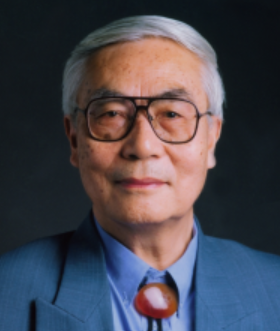 Hengzhi Fu (傅恒志)合作论文数School of Materials Science and Engineering, Northwestern Polytechnical University2Xinxin Luo (罗新欣)合作论文数2
 Haijun Su (苏海军)合作论文数School of Materials Science and Engineering, Northwestern Polytechnical University2
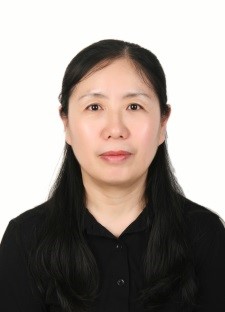 Yue Ma (马岳)合作论文数School of Materials Science and Engineering, Beihang University2
 Yafang Han (韩雅芳)合作论文数Chinese Materials Research Society2Xuemin Zhang (张学敏)合作论文数1Jiapeng Huang合作论文数1zhong guo can ji ren bian ji bu (中国残疾人编辑部)合作论文数1Wenqing Wu合作论文数1Jie Kang合作论文数1
 Chao Zhang合作论文数1yuan li (李援)合作论文数1Chuanwei Fan (范传伟)合作论文数1Zhi-quan LI (李志全)合作论文数1Yuanyuan Song合作论文数1




