目的:探讨巨细胞病毒(CMV)再活化对于完全缓解期行异基因造血干细胞移植术(allo-HSCT)的急性髓系白血病(AML)患者复发和生存的影响.方法:对106例于完全缓解期行allo-HSCT的成人AML患者的资料进行回顾性分析,包括移植术后CMV再活化的发生情况和影响因素,以及CMV再活化对于复发和生存的影响.结果:67.0%(71/106)的患者在移植后12个月内出现了CMV再活化,中位时间为移植后46(1~117)d.HLA不全相合和预处理应用兔抗人胸腺细胞免疫球蛋白(ATG)是移植后CMV再活化的影响因素.106例患者移植后的中位随访时间为36(1~171)个月,19例患者移植后出现复发,中位复发时间为4.5(2~38)个月,3年累积复发率为17.8%.单因素分析显示,Ⅱ~Ⅳ度急性移植物抗宿主病和慢性移植物抗宿主病的发生可降低患者的复发率,而CMV再活化对于移植后的复发率无明显影响.106例患者的3年总生存率(OS)为77.2%,无病生存率(DFS)为76.0%.单因素分析显示,年龄>40岁和移植后CMV再活化影响患者的OS,但不影响DFS.Cox多因素回归分析显示,移植后CMV再活化是影响患者3年OS的独立危险因素.结论:HLA不全相合和预处理过程中应用ATG是导致移植后CMV再活化的危险因素,而CMV再活化对于完全缓解期AML移植后的复发并没有影响,但仍是影响此类患者生存的独立危险因素.
目的 研究伴混合谱系白血病(MLL)基因异常白血病的发病率及临床特征.方法 回顾性分析单中心近五年来所有住院急性白血病患者的临床资料,采用多重逆转录聚合酶链式反应(RT-PCR)的方法筛选出MLL基因异常的患者,收集临床和预后资料进行分析.结果 2013年1月至2018年1月间我院收治的初发急性白血病223例(ALL 72例,AML 151例),其中MLL相关白血病患者资料完整的16例(ALL 3例,AML 13例).MLL相关白血病占ALL的4.2%,AML的8.6%.16例患者经过2个疗程诱导化疗后达到完全缓解的只有7例(CR率43.8%).11例患者进行了造血干细胞移植(HSCT),其中7例为单倍型移植,3例为同胞全相合移植,另外1例为脐血移植.16例患者随访4.51个月,中位随访时间17个月,期间9例患者死亡.16例患者的生存分析结果显示,这组患者的3年总生存率(OS)仅约40%,无进展生存率(PFS)约为30%.结论 伴MLL基因异常的白血病对传统化疗反应不良,易复发,已成为疾病预后不良的标志,异基因移植有可能改善其预后.
Objective To analyze the efficacy and safety of conditioning regimen with busulfan and increased-dose of fludarabine for allogenetic hematopoietic stem cell transplantation (allo-HSCT) in intermediate and high-risk myeloid leukemia.Methods A total of 111 cases of intermediate and high-risk myeloid leukemia receiving allo-HSCT from Jan.2007 to Dec.2015 were retrospectively analyzed.Conditioning regimen consisted of busulfan (4 mg/kg.day orally or 3.2 rng/kg.day intravenously for 3 days) with total dose of 200 mg/m2 fludarabine (by intravenous infusion,divided into 5-8 days).For patients with unrelated and mismatched related donors,total dose of 7.5-10 mg/ kg rabbit antithymocyte globulin (by intravenous infusion,divided into 4 days) was added to the conditioning regimen.GVHD prophylaxis consisted of cyclosporine A,short-term MTX and mycophenolatemofetial (MMF).Results Neutrophil with ANC >0.5 × 10⁹/L was achieved in 100% of recipients with median time of 13 days (range:9-31 days) and platelet >20 × 109/L in 98.2% of recipients after a median of 16 days (range:8-75 days).The cumulative incidence of grade Ⅱ to Ⅳ aGVHD was 39.6% and that of grade Ⅲ to Ⅳ aGVHD was 10.3%,and overall cGVHD was 21.0% with extensive cGVHD being apparent in 6.9%.The other complication included hemorrhagic cystitis (17.1%) and no hepatic veno-occlusive disease (VOD) was diagnosed.For all patients,3-year overall survival (OS) and 3-year disease-free survival (DFS) was 78.8% and 77.6% respectively.For patients with complete remission,the 3-year OS was 88.6%,which was compared to that of 61.2% with advanced diseases (P =0.001).The overall cumulative rate of relapse was 18.3% with 7.3% for stable disease and 36.2% for advanced diseases (P< 0.001).Conclusion Busulfan combined with increased-dose of fludarabine as conditioning regimen for allo-HSCT in AML patients can achieve stably hematopoietic reconstruction,has low toxicities and survival advantage.Such regimen can be used for transplantation in intermediate and high-risk myeloid leukemia and particularly recommended for patients with stable disease.
This study was to investigate the differential regulation of CCR5 expression on T cells in healthy donors after mobilization with recombinant human granulocyte colony-stimulating factor (rhG-CSF) and analyze its correlation with acute graft-versus-host disease (aGVHD) so as to understand the possible mechanisms underlying rhG-CSF-induced immune tolerance. Sixty-eight related healthy donor and their corresponding recipient for allogeneic hematopoietic stem cell transplantation (allo-HSCT) were enrolled in this study. The expression of CCR5 on CD4(+) and CD8(+) T cells in the peripheral blood (PB) before and after mobilization were detected by using flow cytometry (FCM) respectively. According to the changes of CCR5 expression on CD4(+) and CD8(+) T cells, the Sixty-two evaluable donors were divided into the downregulated and unchanged/upregulated (non-downregulated) groups, and the incidence of grades II to IV aGVHD in two groups were compared. The results showed that the mean value of CCR5 expression on CD4(+) and CD8(+) T cells in PB was not different significantly after mobilization (P > 0.05). Apparent inconsistency was showed among different individuals. Thirty-four (50%) donors displayed downregulation of CCR5 expression, while 34 (50%) donors manifested unchanged or upregulated CCR5 expression on CD4(+) T cells. CCR5 expression on CD8(+) T cells was downregulated in 42 (61.8%), unchanged or upregulated in 26 (38.3%) donors. The cumulative incidence of grades II to IV aGVHD in the downregulated and non-downregulated groups for CD4(+) T cells were 16.1% and 41.9% (P = 0.032), and recipients with CCR5 downregulation on CD8(+) T cells showed an increased tendency of developing aGVHD (37.8% vs 16.0%, P = 0.065). In conclusion, rhG-CSF mobilization could lead to differential regulation of CCR5 expression on T cells, which might influence the migration of T cells in vivo, decrease T cell trafficking towards GVHD target organs, and thus reduce the incidence of aGVHD after transplantation.
The study was purposed to investigate the effects of humanized recombined CD25 monoclonal antibody (rhCD25MAb) on activation and proliferation of T lymphocytes in vitro. Peripheral blood mononuclear cells (PBMNC) were incubated with phytohemagglutinin (PHA). Before or after T cell activation, the cells were cultured with or without rhCD25MAb or cyclosporine A (CsA) in vitro. After 72 hours incubation, the proliferation of lymphocytes was analyzed by MTT assay. The expression of CD3 and CD25 antigens on T lymphocytes were detected by flow cytometry. The levels of sIL-2R in the supernatants were determined with ELISA. The results showed that both rhCD25MAb and CsA could inhibit the proliferation of T lymphocytes significantly in concentration-dependent manner and CsA was more efficient than rhCD25MAb. Both rhCD25MAb and CsA could also decrease the levels of sIL-2R in the supernatant and inhibit the expression of CD25 antigen on T lymphocytes. The level of sIL-2R and the expression of CD25 on T lymphocytes decreases more profoundly in rhCD25MAb group. It is concluded that rhCD25MAb shows strong immunosuppressive activity both before and after T cell activation, suggesting that this agent may be useful in not only prophylaxis but also the treatment of acute graft-versus-host disease.
 Hanyun Ren (任汉云)合作论文数Department of Hematology, Peking University First Hospital5
 ZhiXiang Qiu (邱志祥)合作论文数4
 Yujun Dong (董玉君)合作论文数Peking University First Hospital4Yuhua Sun (孙玉华)合作论文数4LiHong Wang (王莉红)合作论文数3
 Weilin Xu (许蔚林)合作论文数Peking University First Hospital3Zeyin Liang (粱赜隐)合作论文数3
 Jinping Ou (欧晋平)合作论文数北京大学第一医院3
 Mangju Wang (王茫桔)合作论文数Peking University First Hospital3Li JI (戢莉)合作论文数2
 Xinan Cen (岑溪南)合作论文数 Department of Hematology,Peking University First Hospital,Beijing ,China2Shengchao Miao合作论文数1Huihui Liu合作论文数1Bo TANG (唐博)合作论文数1Zhenhua WANG (王振华)合作论文数1XiangJuan Ma (马向娟)合作论文数1Qian Wang (王倩)合作论文数1Yongjin Shi (石永进)合作论文数1
 Yuan Li (李渊)合作论文数Gastroenterology Department, Peking University Third Hospital1Yue Yin (尹玥)合作论文数1Meng Wang (王萌)合作论文数1
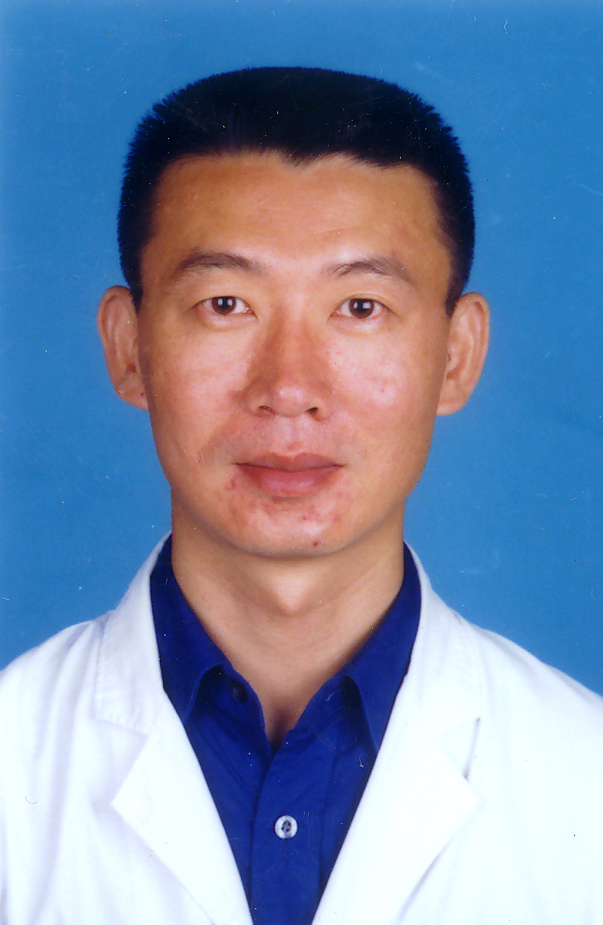 Wensheng Wang (王文生)合作论文数 Department of Hematology,Peking University First Hospital,Beijing ,China1Qingyun Wang (王卿云)合作论文数Peking university1




