Anchor is one of the key factors of submarine pipelines third-party damage accidents.The anchor/pipeline interaction can be divided into two phases;the initial impact and the subsequent dragging of the pipeline across the seabed.In the initial impact analysis,this paper discusses the influence of the pipe wall thickness,pipeline length,anchor sizes on the dent depth.In the subsequent dragging study,analysis focus on the material parameters of the pipeline.All the results are based on ABAQUS finite elements analysis.Research shows that the effect of the initial impact is limited,pipelines on the sandy seabed can stand a higher dragging force.It is feasible and efficient to used ABAQUS FE model to study pipeline/anchor interaction problems.Results of this research provides a reference for subsea pipeline safety design and integrity management.
The submarine pipeline spans are vulnerable to fatigue damage and local buckling damage over its design life period due to Vortex Induced Vibration(VIV) in waves and current.The span length is the key factor in affecting the damage of pipelines.In this paper,the response model of VIV and the miner fatigue accumulative damage criteria are used to calculate the allowable span length of free-spanning pipelines.Four kinds of calculation criteria are discussed including dynamic critical criteria,screening fatigue criteria,fatigue damage criteria and the ultimate stale limit criteria.In the case calculation,the allowable length of free-spanning pipelines in different modes is calculated by means of computing program compiled by MATLAB.The contexts of this paper have strong practicability for the pipeline design and safety assessment work.
In view of the collapse characteristics of deepsea pipes,this paper analyzes the collapse of deepsea pipes adopting a combined method with numerical simulation and the full-scale experiment.Then an explicit expression of the structural resistance is developed,based on which it could express a new safe margin equation.Structure reliability index of deepsea pipes is calculated with the JC method and sensitivity analysis is conducted on the randomly distributed parameters such as initial ovality,axial tension,yield limit and radius-thickness ratio.The influence of parameter distribution on reliability of deepsea pipes is studied,which provides valuable reference and security advices for structural design.
Based on experiments and analyses in which buckles propagated and engaged the arrestors quasi-statically,the performances of propagating buckle and integral buckle arrestors in pipelines were reevaluated under the more realistic dynamic buckle propagation conditions encountered in the sea.The models for simulating the quasi-static and dynamic propagation and arrest of buckles in pipelines were presented,which were developed within the framework of the nonlinear finite element ABAQUS.Based on finite deformation kinematics,the contact developed in the collapsed tube behind the propagating buckle was properly treated.The dynamic model was shown to reproduce accurately the conditions of steady-state buckle propagation as well as the dynamic engagement of a buckle with an arrestor.For all cases considered,the dynamic enhancement of arrestor performance was observed as in the experiments.For buckle velocities of interest,the buckle profile was found to have sharpened considerably compared to the quasi-static one,which cause significant reverse ovality in the tube in front of the buckle and in the downstream tube.Based on the result of this study,it is concluded that quasi-static design procedures for integral buckle arrestors proposed previously are conservative.
It's found in the tests of pipelines' buckling that the original sealing technique of the deep-water pressure container is time-consuming,ineffective,insecure and always unsuccessful.For these phenomena,a brand-new method and process of sealing technique is adopted to greatly improve the situation: numbering and cleaning the studs in the preliminary process to prevent jamming during the installation of nuts,taking a new accuracy-control method to avoid leakage and rework,dividing for sealing technology and choosing different sealing solutions according to different working pressures.The experiments show that the new method significantly upgrades the reliability,availability,security and efficiency of the sealing technique.
This paper provides an introduction of the background and structure of a Serial-Parallel Structured Robot for teaching activities; Based on its structural characteristics of the mechanical hands, the collection composed of ″IPC and 3-axis Stepping Motor Control Card″ is designed ;Suggestion on how one should choose the hardware and electrode of the system is also presented in detail.
介绍了渗透反应格栅、井内通风、地下水曝气、生物曝气及多相抽提等五种地下水原位修复技术的概念,阐述了它们修复受污染地下水的过程和修复机理,并对其研究进展情况进行了论述.展望了地下水有机污染的原位修复技术在我国的应用前景.
以自行设计安装的二维砂箱,并首次采用乙炔作为示踪气体模拟了地下水曝气(air sparging,AS).研究表明,在20~40目白色石英砂多孔介质体系中,AS总曝气压力基本不随气体流量变化,但气体影响半径和平均饱和度随流量增加而增加.在流量为0.15m3/h时, ROI为18cm,气体的平均饱和度为0.017;当流量增为0.30m3/h时,ROI增大到37cm.平均饱和度增加为0.031.另外,曝气流量越大,水位上升越高,达到稳定所需时间越长.由乙炔示踪的AS气体分布研究中发现,在0.05m3/h曝气流量下,AS气体的分布稀疏而且分散;当曝气流量为0.15m3/h时,AS气体的分布均匀,形状近似为对称抛物形,抛物线中部区域气体的密度较高,浓度梯度较小,而抛物线边缘区域中气体的密度较低,浓度梯度较大;在0.30m3/h曝气流量条件下,气体的分布非常不均匀,较易形成优先流.
空气喷射(air sparging)被认为是修复由可挥发性有机物污染的饱和土壤和地下水的一种有效新技术.介绍了空气喷射技术的现场应用与研究现状,讨论了空气喷射技术的原理和各种影响因素,说明了其对于饱和土壤中有氧生物降解的促进作用,分析了空气喷射技术的应用前景.
介绍了土壤气相抽提、生物通风和空气喷射等3种土壤原位修复技术的概念,简述了它们修复受污染土壤的适用范围和修复机理,并对影响3种修复方法的各种因素进行了详细论述.展望了土壤气相抽提、生物通风和空气喷射技术在我国的应用前景.
 Jianxing Yu (余建星)合作论文数School of Civil Engineering, Tianjin University;Qingdao Institute Ocean Engineering of Tianjin University5
 Guoqiang Huang (黄国强)合作论文数School of Chemical Engineering and Technology, Tianjin University4
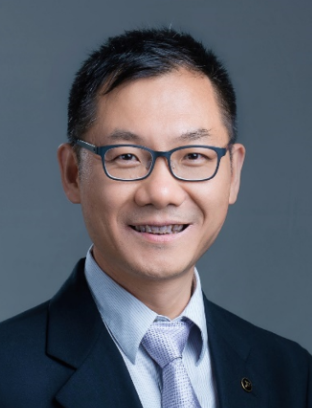 Xingang Li (李新刚)合作论文数School of Chemical Engineering and Technology, Tianjin University4
 Yuan Yang (杨源)合作论文数3Xiaolong Lin (林晓龙)合作论文数3
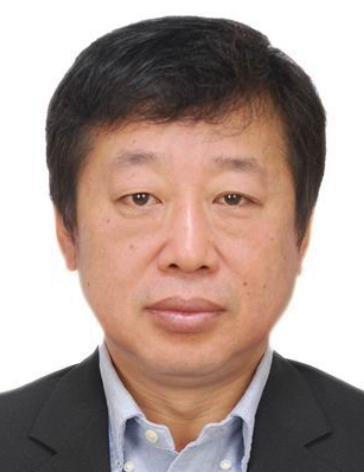 Bin Jiang (姜斌)合作论文数School of Chemical Engineering and Technology, Tianjin University3Tian LAN (蓝天)合作论文数2Shimin Xu合作论文数2ruyan ye (叶如燕)合作论文数1
 Zhiyuan Fan合作论文数1Zhen-shi LIN (林镇诗)合作论文数1Yi-yu Zhao合作论文数1Zhan-qiang WANG (王战强)合作论文数1Jing LIANG (梁静)合作论文数1
 Zhen-zhou Sun (孙震洲)合作论文数1XiaoFan Gao (高晓凡)合作论文数1Wei Fang (方伟)合作论文数1BinBin Ye (叶彬彬)合作论文数1Kai Liu (刘凯)合作论文数1Zhibo Li (李智博)合作论文数1Baojian Wang (王保建)合作论文数1
 Xinzhong Li (李新仲)合作论文数CNOOC Energy Development Co., Ltd1Jun Ma (马骏)合作论文数1
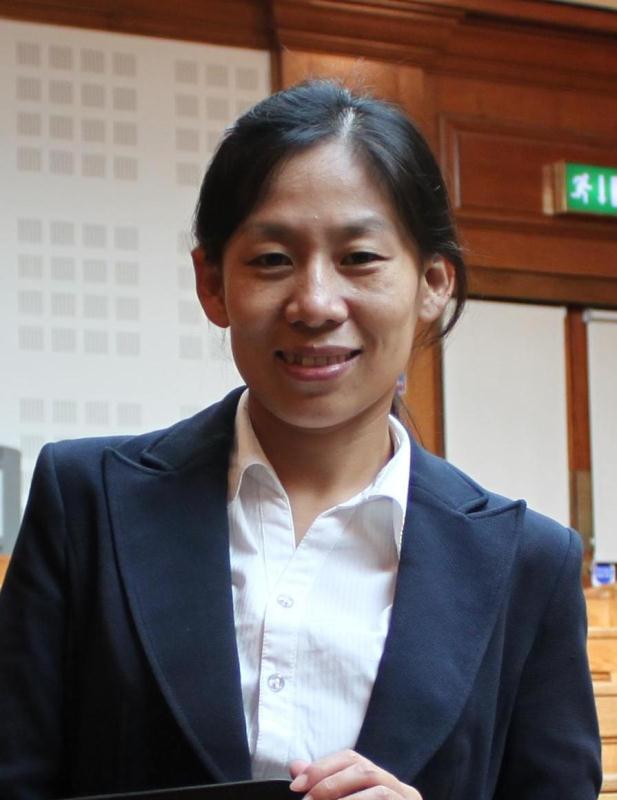 Hong Sui (隋红)合作论文数School of Chemical Engineering and Technology, Tianjin University1Xiaonan Hao (郝晓楠)合作论文数1




