高填方区园林地面铺装基础回填是影响硬质铺装质量的关键,以FH公园园区铺装区回填施工为例,对高填方区基础回填料要求和施工技术进行了研究,提出了分层分区的实施方案,采取的改性回填土及分层分区基础回填方案符合现场管控和铺装质量要求,较好地克服了高回填区易沉降的问题.
为适应有关单位的工期要求,设计选定多孔波纹管桥作为某跨河桥梁型式,根据后期运行和地质勘测成果,对桥的布置进行了详细研究,对波纹管过流能力和结构进行了计算,通过该桥的设计和应用,拓展了波纹管桥的应用范围,提出了该类桥型的设计要点,可为各类钢波纹管涵的设计提供有益的参考.
本文针对BIM技术和价值工程在造价控制中应用情况,提出将二者结合应用于造价控制中,并提出了结合思路,以提高工程项目价值,节约资源成本,为工程建设项目全寿命周期造价控制提供参考.
水文章结合某水环境综合治理项目特点,对施工总进度及土石方工程进行了分析和研究,确定了关键线路,制定了土石方调配原则及动态土石方平衡调配规划,通过对各部土石方流向及进度的协调分析,提高开挖料的直接利用率,减少二次中转率.
喀斯特岩溶地区隧道建设地质条件复杂,岩溶塌方冒顶是施工中经常遇到的难题.通过喀斯特岩溶地区凤凰隧道塌方冒顶实例,对该隧道塌方冒顶的经过与原因进行了分析,提出了处置岩溶地区塌方冒顶的实施方案,方案行之有效,可供类似地区隧道、隧洞工程施工提供参考.
文中通过分析三例发生在某岩溶地区河道治理工程实施过程中对地下水文的影响情况,得出:岩溶地区地下水文情况复杂,河道一般位于地下水的最低基准排泄面,最低排泄面的变化对地下水文产生极大的影响,尤其是最低排泄面的降低,会导致两岸地下水交底,造成取水困难、地基沉降等危害.提出岩溶地区河道治理需要高度重视地质及地下水动力等因素.
As a key link of rock-fill dam construction ,it is easy for earth rock allocation to produce the ecological environment prob‐lem .In the light of problems in environment field soil erosion ,pollution ,excess covering such material blending process ,cost model of material field to prevent soil and water is brought into the green deployment costs combined with the green construction including the soil and water control cost and allocation cost .From the viewpoints of improving the rate of direct on the dam ,reducing transit and waste slag ,turning material resources to good account ,multi-goal of green earth rock allocation models with the lowest cost of green deployment is concluded .The engineering application shows that ,this model can improve the directly dam volume of the exca‐vated material and reduce spoil and mining ,and the covered area of material field ,and reduce earthwork mixing the destruction of the ecological environment and influence ,realize the green of earth rock allocation ,which can serve as a reference for green earth rock al‐location scheme decision .
To overcome the shortcomings of the traditional methods, this paper proposes a novel face recognition method based on the image latent semantic features and ensemble extreme learning machine. The image latent semantic analysis is to acquire the high-level features from the face image, which has good robustness to illumination and expression changes. The image latent features are extracted as fellows: firstly, we obtain the low-level features of face image by the feature extraction methods of Gabor filter, local ternary pattern (LTP), and invariant moments. Then, we build the feature-image matrix based on the low-level features, and decompose the matrix with two dimension matrix decomposition to get the image latent semantic features. Finally, the ensemble extreme learning machine is used to classify the latent semantic features, which combines lots of extreme learning machine to obtain a stable classifier. The experimental results show that our proposed algorithm is more effective when compared with other algorithms.
In this paper, we propose a novel and effective image model—Image Latent Semantic Analysis (ILSA) for extracting latent semantic features of face image, and recognizing face with Support Vector Machine (SVM). The novel feature extraction by the ILSA model can be better overcome the impact of some negative factors, such as the image quality fuzzy, illumination changes effect. The main contribution of the paper is that the ILSA features can obtain a wealth of information than the conventional image semantic features and has a stronger expression and classification abilities than the low-level features. The experimental results on the ORL and large-scale FERET databases show that the proposed algorithm significantly outperforms other well-known algorithms.
采用遗传算法对水利工程的施工进度进行了优化分析,介绍了其算法的原理并建立了相应的数学模型,对施工工期的计算方法和步骤进行了研究.通过某实例的应用和分析,证明了此方法的有效性和准确性,为水利工程制定合理的施工进度计划提供了一种新的途径和方法.
Human face gender recognition requires fast image processing with high accuracy.Existing face gender recognition methods used traditional local features and machine learning methods have shortcomings of low accuracy or slow speed.In this paper, a new framework for face gender recognition to reach fast face gender recognition is proposed, which is based on Local Ternary Pattern (LTP) and Extreme Learning Machine (ELM).LTP is a generalization of Local Binary Pattern (LBP) that is in the presence of monotonic illumination variations on a face image, and has high discriminative power for texture classification.It is also more discriminate and less sensitive to noise in uniform regions.On the other hand, ELM is a new learning algorithm for generalizing single hidden layer feed forward networks without tuning parameters.The main advantages of ELM are the less stringent optimization constraints, faster operations, easy implementation, and usually improved generalization performance.The experimental results on public databases show that, in comparisons with existing algorithms, the proposed method has higher precision and better generalization performance at extremely fast learning speed.
土石方调配是堆石坝施工中的关键环节,调配方案的优劣将直接影响整个工程的成本、进度、质量和生态环境.针对土石方调配中存在的生态环境问题,结合绿色施工技术设计准则,利用德尔菲法获得调配过程中资源利用、环境负荷、施工综合管理三大准则层的—系列绿色施工指标,运用层次分析法和模糊综合评价法构建土石方调配绿色施工评价体系,进而确定了土石方调配方案的绿色施工等级,并通过实例验证了该方法的有效性,从而为土石方调配方案决策提供依据.
Multimodal biometrics recognition system suffers from the shortcomings of large data processing and much time cost during the recognition. To overcome the shortcomings of the traditional methods, in this paper, a novel multimodal biometrics recognition method is proposed by using image latent semantic analysis and extreme learning machine method. The image latent semantic analysis for multimodal biometrics feature extraction will extract abandon information from the images and the extreme learning machine method has the merits of high accuracy and fast speed. With this new method, the latent semantic features from the multimodal biometrics images are digged out to improve the recognition accuracy. Finally, the extreme learning machine is used as the classifier. The experiments show that the proposed algorithm has get better performances both in recognition accuracy and speed.
Recently, some machine learning algorithms such as Back Propagation (BP) neural network, Support Vector Machine (SVM) and other algorithms are proposed and proven to be useful for human face gender recognition. However, they have lots of shortcomings, such as, requiring setting a large number of training parameters, difficultly choosing the appropriate parameters, and much time consuming for training. In this paper, we proposes a new learning method to use Extreme Learning Machine (ELM) for face gender recognition and compare it with other two main state-of-the-art learning methods for face gender recognition by using BP, SVM respectively. Experimental results on public databases show that ELM plays the best performances for human face gender recognition with higher recognition rate and faster speed. Compared with SVM, the learning speed of ELM is obvious reduced. And compared with BP neural network, it has faster speed, higher precision, and better generalization ability.
In this paper, we propose a novel and effective image descriptor— Image Latent Semantic Analysis (ILSA) for extracting latent semantic features of face image. The features are obtained from a feature-image matrix, which obtains a wealth of information than the conventional image semantic and has a stronger expression and classification than the low-level features. The unique feature extraction by the ILSA can be better overcome the impact of some negative factors, such as the image quality fuzzy, illumination changes effect. The experiment results on the ORL and large-scale FERET databases show that proposed algorithms significantly outperforms other well-known algorithms in terms of recognition of recognition rate.
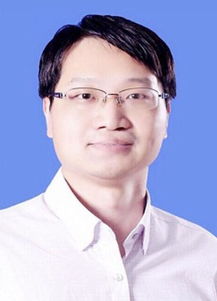 Jucheng Yang (杨巨成)合作论文数College of Artificial Intelligence, Tianjin University of Science and Technology6
 Wei Fan (凡伟)合作论文数5
 Dong Sun Park合作论文数2Jinlong Yu (于金龙)合作论文数2
 Zhijun Fang (方志军)合作论文数上海工程技术大学2
 Yarui Chen (陈亚瑞)合作论文数College of Artificial Intelligence, Tianjin University of Science and Technology2Zhang-hong ZHAI (翟张宏)合作论文数1wenyi zhang (张文毅)合作论文数1Linzhen Yang (杨林振)合作论文数1Zhan-hong GAO (郜占红)合作论文数1WANG Chao (王超)合作论文数1Guo Guo (郭果)合作论文数1ChunJu Zhao (赵春菊)合作论文数1XiaoBo Ge (葛小博)合作论文数1CongCong Xiong (熊聪聪)合作论文数1Cao Wu合作论文数1
 Jinfeng Yang (杨金锋)合作论文数中国民航大学电子信息与自动化学院1
 Yihong Zhou (周宜红)合作论文数College of Hydraulic & Environmental Engineering, China Three Gorges University;School of Civil Engineering Architecture and Environment, Hubei University of Technology1Chao Wu合作论文数1
 Lei Shu (舒磊)合作论文数College of Artificial Intelligence, Nanjing Agricultural University;NAU-Lincoln Joint Research Center of Intelligent Engineering;Beyond Intelligent Phytoprotection Research Institute, Nanjing Agricultural University;School of Engineering, College of Health and Science, University of Lincoln1
 Shan Juan Xie合作论文数1
 Naixue Xiong合作论文数Department of Computer, Mathematical and Physical Sciences, Sul Ross State University1




