With the large-scale development of renewable energy such as wind, solar and ocean energy, the demand for energy storage is more urgent. Pumped hydro energy storage (PHES) is one of the fundamental solutions to the problem of intermittent supply of renewable energy. The large-capacity/low-head pumped hydro energy storage (LL-PHES) system with the use of tubular pump turbine is a beneficial extension of traditional PHES systems owing to large flow rate and cheaper civil structures. However, the continuous competition between the “static water pressure difference caused by gravity” and the “pressure increase caused by accelerated impeller rotation” leads to prominent instability in the start-up process of the LL-PHES system under pump conditions. An explicit coupling algorithm is proposed for analyzing the transient characteristics in the start-up process of the LL-PHES system under pump conditions. This algorithm is based on the idea of dimensional transformation, and performs 3D flow calculations and 2D rigid body dynamics equation solution in the pump domain and the flap gate domain, respectively. This algorithm avoids the problems of high computational cost and poor convergence that exist in existing fully three-dimensional coupling algorithms and ensures the efficiency of transient hydraulic characteristic calculation. A comprehensive analysis of the transient characteristics of the LL-PHES system during pump start-up process is conducted using the proposed new algorithm. The entire process of the increase in rotational speed, valve opening, flow rate, and the continuous evolution of blade surface pressure during the start-up process is quantitatively described. The amplitude and spectral characteristics of the alternating pressure on multiple blades are clarified. The evolution law of blade load during the stage of severe pressure fluctuations during the start-up process is explained. The load distribution characteristics of “high in the leading and trailing edge areas and low in the middle” in the blade stream direction is presented. The research results have a direct guiding role in improving the hydraulic design and enhancing the operational stability of LL-PHES systems.
This study comprehensively investigates the flow features and energy loss mechanisms under stall conditions based on computational fluid dynamics (CFD) and hydraulic loss visualization techniques. The three-dimensional unsteady Reynolds-averaged Navier- Stokes (URANS) equations were solved using the shear stress transport (SST) k-omega turbulence model. Furthermore, the entire flow domain of the vertical volute pump was considered to capture the boundary flow behavior accurately. The results illustrate that the critical stall condition occurs at 0.7Q(d), where the H-Q curve exhibits a positive slope, and the deep stall condition occurs at 0.65Q(d). The growth rate of energy loss from critical stall to deep stall is 182.2%. In the stall condition, a secondary vortex appears at the impeller inlet. A high energy loss occurs at the suction side and trailing edge in the impeller caused by the reduction in the effective inflow area. The energy loss in the blade suction side guide vane is primarily due to the friction loss under the critical stall condition. By contrast, under the deep stall condition, the energy loss in the outlet of the guide vane is mainly the impact loss from the volute of the rear gunner. The impact effect can result in high energy losses near the volute tongue. The entropy production analysis demonstrates that the hydraulic losses in the diffuser are literately greater than that in the impeller and inlet pipe. Hence, optimization of such components can be taken into consideration in future works for performance improvement.
The large axial flow pump system(LAPS)used in coastal pump stations often needs to be equipped with overflow holes to improve the quality of the transition process.However,due to the unclear mechanism of adding overflow holes in the transition process of LAPS,there are many difficulties in design and application.Totally six kinds of overflow holes with different diameters were designed.Based on the secondary development of Flomaster software,the effects of overflow holes with different diameters on the synchronous start-up,asynchronous start-up,synchronous shut-up and asynchronous shut-up transition process of LAPS were studied by transient simulation method.The results showed that during the asynchronous start-up process,when the diameter of the overflow hole reached 2m,the maximum impact head was 1.67 Hr,and the maximum impact power was 1.34Pr.Further increasing the diameter of the overflow hole had no significant gain in reducing the maximum impact head and power of the LAPS.In the process of asynchronous shut-up,the overflow hole can effectively delay the attenuation of LAPS flow and reduce the instantaneous head and power.However,when the diameter of the overflow hole reached 2 m,the maximum impact head was 1.18Hr and the maximum impact power was 1.lPr.Further increasing the diameter of the overflow hole had no obvious effect on reducing the maximum impact head and power during the asynchronous shut-up of LAPS.The larger the diameter of the overflow hole was,the better the effect on improving the quality of the transition process was,but when the diameter of the overflow hole was increased to a certain extent,the effect of continuing to increase the diameter of the overflow hole was not significantly improved.
为确保蜀山泵站的水泵选型合理、泵装置水力性能优异,采用模型试验方法测试了立式混流泵装置在不同叶片安放角时的能量性能、汽蚀性能、飞逸特性,并进行了进水流道的压差测流试验.结果表明:蜀山泵站泵装置模型最高效率为85.30%,对应流量为326.12 L/s、净扬程为11.38 m、叶片安放角为-2°;设计工况叶片安放角为+1°,在此角度下,设计净扬程12.7 m对应的泵装置效率为84.60%、单机流量为43.37 m3/s、临界汽蚀余量为8.9 m,最低净扬程6.7m对应的泵装置效率为72.47%,最高净扬程14.5 m对应的泵装置效率为81.63%;在最高净扬程14.5 m、叶片安放角-6.时,泵装置原型的最大飞逸转速为电机额定转速的1.91倍.
为探究某泵站轴流泵装置反向发电的水力特性,对该轴流泵装置反向发电工况进行全流道数值模拟分析.结果表明:轴流泵装置在额定转速进行反向发电时,其最优工况相比于水泵模式,水头和流量分别提高43%和38%;随着转速增大,效率-流量曲线呈现向大流量方向偏移趋势,高效区范围逐渐增大;导叶进口、转轮进出口压力脉动呈周期性,转轮进出口压力脉动受转轮旋转影响更为显著;压力脉动系数幅值沿径向由轮毂至轮缘逐渐增大,转轮出口的压力脉动幅值最大,约为转轮进口的2倍;在频域方面,压力脉动主频为叶频,次频为2倍叶频,在转轮进出口主频所对应的压力脉动系数幅值沿径向由轮毂至轮缘逐渐增大;在小流量工况,随着轴流泵反向发电运行时的流量越小,出水流道流线越混乱且涡带越明显.研究结果可为泵站轴流泵装置反向发电提供一定的理论支撑和工程运行参考.
A bidirectional axial flow pump can realize bidirectional pumping, which has a wide application prospect in coastal low-head pumping stations and water jet propulsion systems. In this paper, a typical bidirectional axial flow pump is taken as the research object, and the hydraulic model of the bidirectional axial flow pump is manufactured. The hydrodynamic characteristics of the bidirectional axial flow pump are tested on the high-precision hydraulic mechanical test bench, including the positive and negative directions. In the experiment, multiple pressure pulsation monitoring points were arranged in the impeller chamber, and the pressure fluctuations in the pump under a total of 42 flow conditions were measured by a micro pressure pulsation sensor, involving 21 working conditions of forward operation and 21 working conditions of reverse operation. According to the experimental results, the hydrodynamic characteristics, especially the pressure pulsation characteristics in the pump, of the two-way axial flow pump under positive and negative operation are comprehensively compared and analyzed, and the energy characteristics and the propagation law of pressure pulsation of the two-way axial flow pump under positive and negative operation are revealed. The research results provide an important reference for the safe and stable operation of coastal bidirectional axial flow pump stations.
In order to enhance the hydraulic performance of the volute pump, the Kriging model and genetic algorithm (GA) were used to optimize the 3D diffuser of the volute pump, and the hydraulic performance of the optimized model was compared and analyzed with the original model. The volute pump diffuser model was parameterized by BladeGen software. A total of 14 parameters such as the distance between the leading and trailing edges and the central axis, and the inlet and outlet vane angle were selected as design variables, and the efficiency under the design condition was taken as the optimization objective. A total of 70 sets of sample data were randomly selected in the design space to train and test the Kriging model. The optimal solution was obtained by GA. The shape and inner flow of the optimized diffuser were compared with those of the original diffuser. The research results showed that the Kriging model can effectively establish the high-precision mathematical function between the design variables and the optimization objective, and the R-2 value is 0.95356, which meets the engineering needs. The optimized geometry model demonstrated a significant change, the vane leading edge became thinner, and the wrap angle increased. After optimization, the hydraulic performance of the volute pump under design and part-load conditions were greatly improved, the efficiency under design conditions increased by 2.65%, and the head increased by 0.83 m. Furthermore, the inner flow condition improved, the large area of low-speed and vortex disappeared, the pressure distribution in the diffuser was more reasonable, and the pressure gradient variation decreased.
为改善水利蜗壳离心泵叶轮和导叶的多参数匹配特性,解决性能和几何参数间无精准数学模型的设计难题,提出基于改进粒子群算法的水利蜗壳离心泵水力部件匹配优化方法.首先,采用BladeGen软件对叶轮和导叶进行参数化建模,以三阶贝塞尔曲线分别拟合叶轮和导叶叶片安放角曲线,选取8个控制点(叶轮、导叶各4个)的y坐标值为决策变量,采用CFX软件对不同方案进行定常数值计算得到设计工况效率,并将其作为优化目标;其次,基于叶片泵性能自动优化平台,设定改进粒子群算法种群数和迭代数均为20,自动调动水利蜗壳泵数值计算程序,智能在全局范围内寻优.研究结果表明:在粒子群算法迭代到第13次时,泵效率达到最优,在设计工况下效率提高了3.09%,获得最优参数组合,优化后叶轮和导叶的包角均增大;优化模型内部熵产损失降低,叶轮叶片工作面、叶轮与导叶交界处能量损失明显减小,内部流动更符合叶片型线趋势,流动分离状况得到改善,验证了蜗壳泵智能优化设计方法的合理性.
为研究带有簸箕型流道的大型具有反向发电功能泵站的水力性能,采用CFX 16.0软件对刘老涧抽水站原型泵装置水泵工况与水轮机工况进行了全流场数值模拟.结果表明,平均扬程附近时水泵工况数值模拟结果与模型试验换算至原型值的相对误差小于1.5%,水轮机工况数值模拟结果与模型试验换算至原型值的相对误差小于1.2%;簸箕型流道的鼻端在水泵工况小流量时出现了旋涡,随着流量的增加鼻端旋涡逐渐消失;簸箕型流道内在水轮机工况时出现了尾水管涡带;涡带在中隔墩的作用下破碎成较小的涡带,并在簸箕型流道内除喇叭管外的其他区域形成旋涡.研究成果可为带有簸箕型流道的具有反向发电功能泵站的设计提供参考.
为了研究带有簸箕型流道的立式轴流泵装置反向发电时的水力性能,以刘老涧抽水站泵装置为研究对象,采用CFX数值模拟与泵装置模型试验相结合的研究方法,对带有簸箕型流道的立式轴流泵装置进行了反向发电工况全流场数值模拟计算,获得了机组的发电效率、流量等外特性参数以及流道内涡带的演化规律.研究结果表明:①刘老涧抽水站反向发电装置效率与发电转速有关,全速发电时,最高效率为42.7%;75%转速发电时,最高效率为47.2%;60%转速发电时,最高效率为51.3%.② 全速发电时,水泵叶轮叶片的表面载荷分布曲线存在突变.③不同的发电转速在簸箕型流道内均会产生尾水管涡带并引起低频水压脉动,而且水压脉动的幅值与涡带强度随着发电转速的增加而增加.研究成果可为今后开展该类泵站的泵装置设计及运行提供一定参考.
The runaway condition is a damage condition for pumps and turbines which can induce the wake vortex, reverse flow, and severe pressure pulsation. This study aimed to research the characteristics of pressure pulsation of axial flow pumps under different runaway conditions, and the runaway model test was performed with different blade angles and heads. Moreover, four pressure sensors were uniformly arranged at the impeller inlet section to eliminate the random error. The time domain and frequency domain analysis were the main methods to obtain the change regulations. Results showed that the pressure pulsation under the runaway condition are mainly influenced by the rotation frequency, blade passing frequency, and wake vortex frequency. The dimensionless pressure pulsation coefficient of rotation frequency and wake vortex frequency increased obviously with the runaway head increasing, but changed little with different blade angles. In addition, the dimensionless pressure coefficient of wake vortex frequency of the sensors around the impeller inlet section differed a lot, which means that the wake vortex core is not in center of the rotation axis. The average dimensionless pressure pulsation coefficient of wake vortex frequency is higher than that of rotation frequency with the same runaway head, owing to the severer wake vortex.
A remarkable flow deviation phenomenon exists in the S-shaped discharge passage of a slanted axial-flow pumping system. In order to reveal the characteristics and development process of the deviating flow, numerical simulation was performed for a 15 deg slanted axial-flow pumping system, and the deviating flow was measured on an experimental rig. The details of the deviating flow in the S-shaped discharge passage were obtained. A kind of "unwinding" flow structure similar to that of DNA in biology is found in the S-shaped passage. The special structure is characterized by a "single strand" in which original helical streamlines are almost straightened. The bulk speed of the fluids on the "single strand" on the left side of the passage significantly increases while the swirling strength and the kinetic pressure ratio decrease. Large-scale Dean vortices at the passage bottom interact with high transverse energy gradient fluids at the passage top as water flows into the convex part of the S-shaped passage, which leads to the emergence of the "unwinding" structure. Reverse secondary flows further enlarge the scale of the Dean vortices as water flows into the concave part of the S-shaped passage, which results in the growth of the "unwinding" structure. With the development of the asymmetrical flow structure, an irreversible severe flow deviation problem naturally comes into being.
To analyze the influence of blade inlet trimming on performance of mixed flow pumps,a mixed flow pump with a special speed of 425 is chosen as the research model.Firstly two impeller model is established,including inlet trimming at blade face and blade back,then ICEM unstructured tetrahedral mesh is used,and no trimming,the characteristics and internal flow of the two model pumps at the design point are calculated by numerical simulation based on ANSYS CFX 15.0.The results obtained by CFD can provide a reference for the influence of blade inlet trimming on performance of mixed flow pump.The results show that blade inlet trimming model can reduce the head by 2.3%,and reduce the efficiency by 0.8%.Blade inlet trimming will reduce cavitation,improve internal flows,but easy to vortex at the blade tip clearance.
除了南水北调工程外,我国实施了许多调水工程.调水工程用泵的扬程随季节的变化很大,由于可调叶片导叶式混流泵(以下简称斜流泵)的性能随叶片角度改变的变化量较大,获得了较多应用.本文介绍其应用情况、性能参数和水力模型的技术水平等.
In order to ensure the water pump long-term continuous safe,reliable,stable operation,in reference to the original water pump,vertical turbine bearing and sealing device based on the experience of design,the optimization design have been made..The actual operation shows that pump of jiangdu fourth pump station after reconstruction has advantages of reasonable structure for bearing and sealing device,reliable operation and convenient in installation,operation management,and maintenance.For similar large-scale vertcal pumps with this type of bearing and mechanical sealing device provides design reference.
In order to solve the problem that it has great difficulty in the assembly,disassembly and maintenance of down-setting servomotor in vertical hydraulic full regulating axial-flow pump and guide vane mixed flow pump,we apply intermediate servomotor to replace the down-setting servomotor,which has been proved that it can overcome the above problem under the circumstance of modern processing methods for backing.It is done by comparing intermediate servomotor with down-setting servomotor and analyzing the structural features,working process and assembly and disassembly of intermediate servomotor which is successfully applied.This thesis will further put forward the details of optimization of intermediate servomotor to make the structure of the intermediate servomotor further improved.
 Wenjie Wang合作论文数3Jing Dai合作论文数3QiFan Dai (戴启璠)合作论文数3
 Ji Pei合作论文数3Zhenhua Han合作论文数2Ziye ZHONG (仲子夜)合作论文数2XU Feng (许锋)合作论文数2Xiaowen Zhang合作论文数2Xueqin Liu (刘雪芹)合作论文数2Ge Bo (卜舸)合作论文数2
 Fangping Tang (汤方平)合作论文数College of Hydraulic Science and Engineering, Yangzhou University2Quanrong Zhu (朱泉荣)合作论文数2han han (阚阚)合作论文数1Lin Wang合作论文数1Chongyang Hu合作论文数1
 Dan Zi (资丹)合作论文数College of Water Resources and Intelligence Engineering, China Agricultural University1Chenying Zhang合作论文数1Geyuan Tai合作论文数1
 Chaoyue Wang (王超越)合作论文数College of Water Resources & Civil Engineering, China Agricultural University1Lihua Xie合作论文数1Chenglian He合作论文数1JIANG Tao (蒋涛)合作论文数1HUANG Jiacheng (黄佳程)合作论文数1
 Xingcheng Gan (甘星城)合作论文数Dept Ind Engn, Univ Padua1Yuan Tang合作论文数1Jiantao Zhao合作论文数1Jinghong WAN (万景红)合作论文数1Guang-xin ZHOU (周广新)合作论文数1tao lu (鲁涛)合作论文数1Zhe XU (许哲)合作论文数1Xianfang Wu (吴贤芳)合作论文数1Jia Chen (陈佳)合作论文数1Lijian Shi合作论文数1Lv Yun (吕云)合作论文数1YuXin Wang (王玉心)合作论文数1XueTao Lu (陆雪涛)合作论文数1XuDong Xu (许旭东)合作论文数1YanJun Li (李彦军)合作论文数1
 Yuan Zheng (郑源)合作论文数College of Water Conservancy & Hydorpower Engineering, Hohai University;College of Energy and Electrical Engineering, Hohai University1
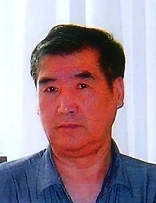 Xingfan Guan (关醒凡)合作论文数Jiangsu University1Xuemei Xu (许雪梅)合作论文数1
 Shouqi Yuan (袁寿其)合作论文数Research Center of Fluid Machinery Engineering and Technology, Jiangsu University1
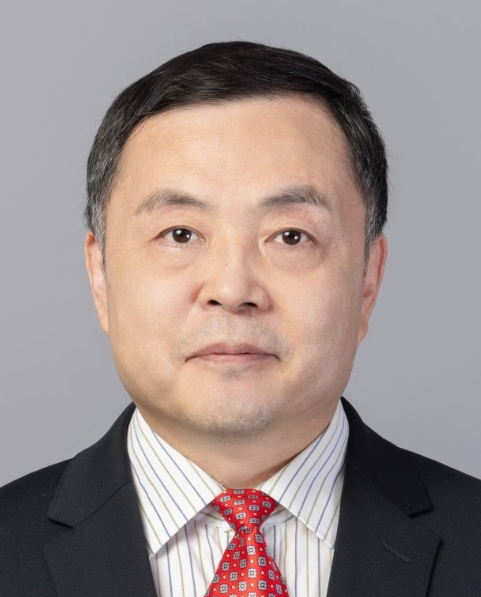 Fujun Wang (王福军)合作论文数College of Water Resources and Civil Engineering, China Agricultural University1Miao Yu (余淼)合作论文数1
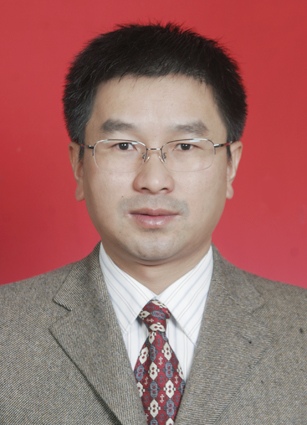 Houlin Liu (刘厚林)合作论文数Research Center of Fluid Machinery Engineering and Technology, Jiangsu University1




