Neural network quantization is a popular approach for model compression. Modern hardware supports quantization in mixed-precision mode, which allows for greater compression rates but adds the challenging task of searching for the optimal bit width. The majority of existing searchers find a single mixed-precision architecture. To select an architecture that is suitable in terms of performance and resource consumption, one has to restart searching multiple times. We focus on a specific class of methods that find tensor bit width using gradient-based optimization. First, we theoretically derive several methods that were empirically proposed earlier. Second, we present a novel One-Shot method that finds a diverse set of Pareto-front architectures in $O(1)$ time. For large models, the proposed method is 5 times more efficient than existing methods. We verify the method on two classification and super-resolution models and show above 0.93 correlation score between the predicted and actual model performance. The Paretofront architecture selection is straightforward and takes only 20 to 40 supernet evaluations, which is the new state-of-the-art result to the best of our knowledge.
In this paper, approaches to the numerical recovering of the initial condition in the inverse problem for a nonlinear singularly perturbed reaction–diffusion–advection equation are considered. The feature of the formulation of the inverse problem is the use of additional information about the value of the solution of the equation at the known position of a reaction front, measured experimentally with a delay relative to the initial moment of time. In this case, for the numerical solution of the inverse problem, the gradient method of minimizing the cost functional is applied. In the case when only the position of the reaction front is known, the method of deep machine learning is applied. Numerical experiments demonstrated the possibility of solving such kinds of considered inverse problems.
The paper investigates production of the multiband filter by broadband monitoring. A special 4-line filter was designed and the simulation demonstrated the layer thickness errors self-compensation effect that was quite significant.
The basic algorithms for determining the thicknesses of layers of deposited multilayer optical coatings are discussed and compared. Using a series of model numerical experiments, the advantage of one of these algorithms-the modified T-algorithmis demonstrated; this algorithm reduces the influence of the effect of error accumulation in the determined thicknesses of layers.
This article presents a computational approach for comparing various broadband monitoring strategies, taking into account the positive and negative effects associated with the correlation of thickness errors caused by the monitoring procedure. The approach is based on statistical estimates of the strength of the error self-compensation effect and the expected level of thickness errors. Its application is demonstrated by using a 50-layer, nonpolarizing edge filter. The presented approach is general and can be applied to verify the prospects of broadband monitoring for the production of various types of optical coatings.
Предложены оценки, которые могут использоваться для предсказания степени ожидаемого эффекта корреляции ошибок в определении толщин слоев при изготовлении оптических покрытий с использованием широкополосного оптического контроля процесса напыления. Численное определение этих оценок требует проведения статистического анализа, для чего реализован эффективный вычислительный алгоритм моделирования ошибок толщин слоев, который обеспечивает, с одной стороны, случайный характер ошибок, но в то же время адекватно отражает корреляцию ошибок восстановления толщин, вносимую применяемым способом контроля напыления слоев. Показано, что ожидаемая степень проявления корреляции ошибок оценивается случайной величиной, распределение которой близко к логнормальному распределению, а в качестве параметров, характеризующих исследуемый эффект, могут быть взяты два основных параметра этого распределения. We propose a robust estimate that can be used for the prediction of the expected strength of thickness errors correlation in the case of optical coating production with the direct broad band monitoring of a deposition process. A practical application of this estimate requires statistical analysis. We introduce a computationally efficient simulator of thickness errors that have a random character and are able to adequately represent the correlation of thickness errors by a monitoring procedure. It is shown that the expected strength of thickness errors correlation is estimated by the random value whose distribution is close to the log-normal distribution and that the two main parameters of the log-normal probability density function can be used as the parameters characterizing the investigated effect.
A method for improving the accuracy of the broad-band monitoring of the process of depositing optical coatings is proposed. The method is based on determining the actual set of thicknesses of deposited layers in the deposition process. The effectiveness of the proposed approach is demonstrated in a series of model numerical experiments using a simulator of deposition process.
Algorithms for the online determination of thicknesses of already-deposited layers are important for the reliable control of optical coating production. Possible ways of constructing such algorithms in the case of coating production with direct broadband monitoring are discussed. A modified triangular algorithm is proposed. In contrast to the well-known triangular algorithm, the new algorithm does not determine all thicknesses of previously deposited layers but only those for which an increase in the accuracy of their determination is to be expected. The most promising algorithms are compared in terms of their accuracy and operational speed. It is shown that the modified triangular algorithm is much faster than the triangular algorithm, and both algorithms have close accuracy. The operational speed of the modified triangular algorithm can be a decisive factor for its use in modern broadband monitoring systems.
Production of the modern advanced multi-layer optical coatings requires on-line monitoring of the growing layer thickness. We present regularizing algorithms for the continuous on-line determination of the deposited layer thickness that can be used in the coating production with broadband optical monitoring. These algorithms are based on minimization of the Tikhonov functional as well as on the allocation of the correctness set. Numerical experiments confirm the effectiveness of the proposed algorithms.
A new algorithm for determining the optical parameters of deposited multilayer optical coatings based on comparing the positions of the extrema of the optical characteristics of multilayer optical coatings is proposed. Two versions of this algorithm are compared. Using a series of numerical simulation experiments, the advantage of one of these versions is demonstrated. It is shown that this version decreases the influence of systematic errors in the spectral data.
 Alexander V. Tikhonravov合作论文数Research Computing Center, Lomonosov Moscow State University11
 Igor V Kochikov合作论文数8
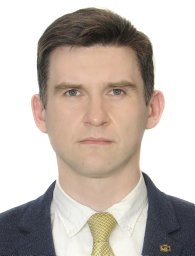 D. V. Lukyanenko合作论文数Moskovskij Gosudarstvennyj Universitet, Moscow State University6
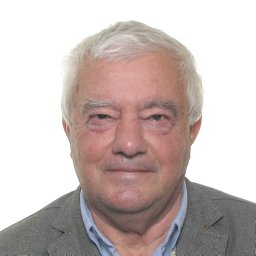 Anatoly Yagola合作论文数Moscow State University Moscow6Д.В. Лукьяненко合作论文数4а г ягола合作论文数4Ivan Matvienko合作论文数Yandex LLC3Alexandra Yakovleva合作论文数1A.A. Borzunov合作论文数1Valentin Buchnev合作论文数1Ji Xiaochuan合作论文数1Ivan Koryakovskiy合作论文数1Igor V. Prigorniy合作论文数1
 Gleb Odinokikh合作论文数Huawei Russian Research Institute1
 Zhanshan Wang (王占山)合作论文数Institute of Precision Optical Engineering, Tongji University;School of Physics Science and Engineering, Tongji University1
 Xinbin Cheng (程鑫彬)合作论文数School of Physics Science and Engineering, Tongji University;Institute of Precision Optical Engineering, Tongji University1
 Jinlong Zhang (张锦龙)合作论文数Institute of Precision Optical Engineering, School of Physics Science and Engineering, Tongji University1Svetlana Sharapova合作论文数1Maxim A. Shishlenin合作论文数1




