Many gold and antimony deposits in the Yunnan-Guizhou-Guangxi region in SW China are characterized with co-occurrence and symbiotic differentiation of Ao and Sb.However,the metallogenic relationship between Au and Sb and the difference between ore-forming processes of Au and Sb need to be further investigated.Fluorite,a common gangue mineral widely occurred in hydrothermal deposits,has been extensively studied to reveal the formation process of ore deposit.The Qinglong antimony deposit and the Nibao gold deposit in the Youjiang basin,with their matching mineralization ages and wallrock alteration characteristics,are selected as ideal objects for investigating the symbiotic differentiation of gold and antimony mineralization.Therefore,in this paper,we have carried out the in situ LA-ICP-MS trace element study of fluorites from the Qinglong antimony deposit and the Nibao gold deposit,in order to reveal the difference between their respective gold and antimony mineralization processes.Mineralogical and cathodoluminescence(CL)studies of fluorites reveal that three different stages of Sb-mineralization related fluorites in the Qinglong antimony deposit have been identified.Specifically,the first-stage fluorites have right-declined REE patterns with LREE-enriched and HREE-depleted characteristics.The second-stage fluorites are characterized by the MREE enrichment.The third-stage precipitated fluorites generally inherited the characteristics of REE distribution patterns of the second-stage fluorites though the third-stage fluorites have relatively low ∑REE contents.In general,the ∑REE values of fluorites are gredually decreased from the first-stage fluorites,second-stage fluorite to the third-stage fluorites.All fluorites have negative Ce anomalies.There are fluorites of two precipitation stages associated with the gold mineralization in the Nibao gold deposit.The first-stage fluorites have right-declined REE patterns,whilst the second-stage fluorites are characterized with MREE-enriched REE patterns.Their REE patterns are generally similar to those of fluorites in the Qinglong antimony deposit.Diagrams of Y/Ho,La/Ho,Tb/Ca,and Tb/La ratios for fluorites at different stages reveal that there are different genetic characteristics between fluorites of the early-ore-stage and those of the late-ore-stage.Especially,the early-ore-stage fluorite is of the dominant hydrothermal fluid filling genesis,while the late-ore-stage fluorite was formed in close association with the water-rock reaction which resulted in the input of a significant portion of host rock components into the late-stage ore-forming fluid,and the gradual increase of pH values and the decrease of total REE contents of the ore-forming fluids from the early-to late-stage.The comprehensive analysis suggested that the antimony mineralization in the Youjiang Basin is associated with the acidic ore-forming fluid which caused the dissolution of carbonate wallrock through the intensive water-rock reaction and thereby resulted in the formation of a significant of fluorite.Moreover,the increase of pH values and the decreaseof temperatures of the evolved ore-forming fluids could be contributed to the extensive precipitation of stibnite in the antimony deposit.Alternatively,the ore-forming fluids of gold deposits are characterized with weakly acidic to neutral nature.They caused the limited decarbonation of carbonate wallrocks and then resulted in the formation of a little fluorite and a large amount of dolomite,which is conducive to the formation of a large amount of Au-bearing pyrite.Based on the statistic analysis of REE data of stibnite and associated ore-related gangue minerals in antimony deposits in the Youjiang Basin,it is believed that the MREE enrichment characteristics for REE patterns of gangue minerals could be resulted from the LREE super-enrichment of a large amount of hydrothermal stibnite of antimony deposits.
The Yangla copper deposit located in the Sanjiang Tethys metallogenic domain is a typical skarn deposit. A series of alterations, with obvious alteration zonation characteristics, are developed from the intrusion to the wallrocks in this deposit. However, previous studies on altered minerals of the Yangla copper deposit mainly focused on the anhydrous skarn stage minerals such as garnet. The lack of systematic mineralogical and compositional studies on the widely developed retrograde alteration stage minerals such as chlorite had restricted the comprehensive understanding of the mineralization process of the Yangla copper deposit. Therefore, in this paper, taking the chlorite in the skarn type mineralization of the Yangla copper deposit as the research object, we have carried out the chemical composition analysis of chlorite by using electron probe microanalysis(EPMA) and LA-ICP-MS in-situ technology and given results below. Two types of chlorite in the Yangla copper deposit have been classified. The early chlorite(Chl-Ⅰ) was intergrown with the andradite, chalcopyrite and other sulfides, and the late chlorite(Chl-Ⅱ) was often intergrown with a large amount of calcite. Both types of chlorite belong to Mg-rich chlorite with trioctahedral structure, indicating that they were formed in a relatively reduced environment. The Tschermark substitution mechanism of Fe 2+ and Mg 2+ is the main substitution mechanism for major elements of two types of chlorites; 2) The calculation results of the chlorite geothermometer range from 140 ℃ to 281 ℃, with an average of 224 ℃. The temperatures of chlorites are gradually decreased from the Chl-Ⅰ to Chl-Ⅱ chlorites, indicating that they were formed in the range of medium and low temperature hydrothermal alteration; 3) From the early mineralization stage(Chl-Ⅰ) to the late mineralization stage(Chl-Ⅱ), the concentrations of trace elements(Sc, Ti, Ga, V) in chlorites are decreased, which may be related to the gradual decrease of the hydrothermal fluid temperature,indicating that the Ti, Sc, Ga, V-rich chlorite is closely related to mineralization and it can be used as an effective indicator for the relevant mineralization. Therefore, the study of compositions of trace elements in chlorite is of certain significance for the mineral exploration.
The turbidite-hosted Au-Sb-Hg deposits in the Sandu-Danzhai area are distributed along the southwestern marginal fault of the Jiangnan Orogen, yet any genetic link among the Au, Sb and Hg mineralization and their respective ore-forming process remain unclear. Here, we investigate the Paiting Au(-Hg) and Miaolong Au-Sb deposits and present a new metallogenic model based on detailed petrographic observations, and in-situ trace element (EPMA and LA-ICP-MS) and sulfur isotope (fs-LA-MC-ICPMS) analyses on sulfide minerals. Our results show that the ore formation in the Sandu-Danzhai metallogenic belt (SDMB) can be divided into Au (pyrite + arsenopyrite + dolomite), Au-Sb (pyrite + arsenopyrite + stibnite + quartz), Sb (stibnite + native antimony + barite + dolomite + quartz) and Hg (cinnabar + calcite) stages, based on mineral paragenetic and vein crosscutting relationships. Trace element compositions suggest that progressive As enrichment in pyrite is accompanied by increasing Au, Sb and Cu contents, implying that these elements may have been leached from the same source via fluid-rock reactions. Sulfur isotope compositions of the sulfates and sulfides in the Au-Sb-Hg ores reveal that the sulfur was originated from thermal-chemical sulfate reduction (TSR) of marine sulfates in the Cambrian ore-bearing strata. Thus, we propose that deep metamorphic fluids (as evidenced from the high fluid CO2 and CH4 contents) may have promoted ore-material (e.g., Au, Sb, As, Hg) mobilization in the metamorphic basement and/or Cambrian strata. As for the metal transport and precipitation mechanism, fluid-rock interaction may have decreased the ore-fluid As content and caused auriferous pyrite precipitation. Meanwhile, changes in temperature and oxygen-sulfur fugacity may have significantly decreased Sb solubility, leading to extensive stibnite precipitation. Cinnabar associated with calcite was likely deposited via carbonate dissolution in the Cambrian strata in late hydrothermal (waning) stage. Overall, we propose that the Au-Sb-Hg deposits in the SDMB are best classified as orogenic type, and the metallogeny was controlled by boundary faults of the Jiangnan Orogen.
Bauxite, in central Guizhou, is predominantly karst bauxite, but there is insufficient research on the effect of karst paleogeomorphology on bauxite development. Xiaoyuan bauxite is also a karst bauxite, and high- and low-iron bauxite deposits exist in the study area. This study conducts geological modeling of karst bauxite using controlled-source audio-frequency magnetotelluric (CSAMT) data and drill core data. The effects of karst paleogeomorphology on bauxite deposition and mineralization are evaluated by assessing karst paleogeomorphology, conducting a mineralogical analysis of drill cores at different locations, and determining the geochemical distribution characteristics of the elements in the horizontal and vertical directions. Combined with previous research results, we propose two metallogenic processes of high-iron and low-iron bauxite. The findings are significant for understanding the mechanism of bauxite formation.
Yunnan-Guizhou-Guangxi region,one of the most important gold mineralization areas in China,hosts many high temperature magmatic hydrothermal gold(copper) deposits,such as Pulang gold-bearing porphyry copper deposit,Beiya and Yaoan gold deposits,and low temperature hydrothermal gold deposits,namely carlin-type gold deposit,such as Badu,Nibao and Shuiyindong gold deposits.A lot of chemical studies of minerals,such as magnetite,pyrite and apatite have been carried out,and the abundant mineralogical geochemical data of trace elements in situ have been accumulated. However,the source materials and formation process of the deposits are still be disputed.Therefore,further statistical and comparative analyses of these data may provide a basis for revealing metallogenic information and guiding prospecting exploration. Due to the unique chemical characteristics,apatite can better preserve the important information of magma-hydrothermal evolution process,and is often used to define the fine metallogenic process of ore deposits. In this paper,the trace elements of hydrothermal apatite in high-temperature magma-hydrothermal deposits(Yao’an gold deposit and Pulang gold-bearing copper deposit) and low-temperature carlin-type gold deposits(Badu and Nibao gold deposits) have been collected and analyzed. It is found that the apatite in the high-temperature alkali-rich porphyry gold(copper) deposit is characterized by automorphic shape,high F and Cl contents,enriched LREE,and depleted HREE.In contrast,the apatite in the low-temperature carlin-type gold deposits is characterized by hypautomorphic and xenomorphic shapes,low F and Cl contents,enriched MREE. In addition,the δEu-δCe binary diagram and chondrite-normalized REE patterns revealed that the carlin-type gold deposits have higher oxygen fugacity than magmatic hydrothermal copper and gold deposits. Combined with the geochemical analysis of rare earth elements of stibnite in the Youjiang Basin,it is concluded that the enrichment characteristics of MREE in apatite(including fluorite and calcite) indicate that the low-temperature mineralizing fluid may be related to the special basin basement rock. In conclusion,apatite has unique geochemical characteristics in high temperature-medium and low temperature gold deposits,which can effectively reveal the type of ore deposit and the evolution process of ore-forming fluid.
The Machangqing Cu-Mo deposit, located in the Sanjiang Tethyan metallogenic belt, is a polymetallic deposit related to the intrusion of alkaline porphyry in the Himalayan period. Previous studies have shown that the Machangqing Cu-Mo polymetallic deposit was formed in a porphyry-skarn metallogenic system. However, due to the lack of systematic mineralogical research, a mineralization process and metallogenic effects of skarn are still unclear, limiting a comprehensive understanding of the mineralization process of this deposit. Herein, this paper considers garnet in skarn mineralization in Machangqing deposit as the research object, and uses H-O isotope, electron probe(EPMA) and LA-ICP-MS in-situ microregion technology to carry out isotope and composition analysis to define the source of ore-forming fluids and invert the evolution process of ore-forming fluids. The garnets can be divided into early euhedral garnets(Grt I) and late anhedral type(Grt II). The Grt I, coexisting with the pyroxene, pyrite and chalcopyrite, belongs to the grossular-andradite garnet solid solution(And 49.37~99.58 Gro 0~49.79 ). The Grt II has elevated Fe compared to Grt I, and mainly consists of andradite(And 67.5~99.85 Gro 0~31.84 ). Both the types of garnets are enriched in Th, U, LREEs and Nd, depleted in Ba, Sr, Hf and Nb. Based on the chemical compositions of garnet, the Grt I may have formed under mildly acidic, oxidized and low W/R conditions, whereas the Grt II may have formed under acidic, oxidation, and high W/R conditions. In addition, the δD V-SMOW values and δ 18 O fluid values of these garnets range from-122.6‰ to-98.6‰ and 5.95‰ to 8.25‰, respectively, implying that the hydrothermal ore-forming fluid originated from magma-derived fluid. A comprehensive consideration of data indicated that the oxygen fugacity and temperature of the ore-forming fluid presented a decreasing trend during the skarn mineralization process, and the pH of the fluid gradually changes from acid to weak acid neutral. This process may have been the main mechanism to trigger the precipitation of skarn type mineralized copper molybdenum sulfide in the Machangqing deposit.
黔东南金成矿区位于江南造山带金成矿省的西南端,成矿条件优越.坑头金矿床是黔东南金成矿区的一个中型矿床,在其深部找矿中,发现除石英脉型矿体外,还存在蚀变岩型矿体.然而,这种蚀变岩型矿体的构造形态、蚀变类型、与石英脉型矿体之间关系和金的赋存状态尚不清楚.本研究与当前的勘查工作紧密结合,围绕石英脉型矿体和新发现的蚀变岩型矿体为研究切入点,借助微区分析技术(扫描电镜和电子探针)进行系统的"流体-蚀变-成矿"研究.蚀变矿物金红石矿物化学显示为热液成因,具有典型造山型金矿床的金红石标型特征.围岩的沉积-成岩过程(包括低级变质作用过程),主要形成了草莓状黄铁矿和含铁碳酸盐岩,为后期含金硫化物(黄铁矿和毒砂)的形成提供物质基础(如Fe).金的成矿富集过程主要经历了绢云母+毒砂+黄铁矿+石英(Ser+Apy+Py+Qtz)阶段、黄铁矿+毒砂+石英(Py+Apy+Qtz)阶段和自然金+石英(Au0+Qtz)阶段.在Ser+Apy+Py+Qtz阶段,主要表现为含矿流体与围岩的初级交代,形成大量浸染状黄铁矿+毒砂的硫化带;Py+Apy+Qtz阶段主要为流体沿着剪切带再交代,形成蚀变岩型矿体;Au0+Qtz阶段主要表现为含金石英大脉的形成.金的赋存状态研究显示,蚀变岩矿体中Au以他形显微-次显微自然金赋存在蚀变岩硫化物裂隙中,或以化学结合态方式赋存在黄铁矿和毒砂中(后者占主导).在晚期Au0+Qtz阶段,自然金呈自形、粗粒(~0.5 mm)赋存在石英脉中.综合研究认为,多期构造(流体)交代导致的溶解-再沉淀可能是坑头金富集成矿主要原因之一.
黔西北地区中二叠统茅口组灰岩上、峨眉山玄武岩下的黏土化斑杂状玄武岩中,广泛发育一层硫铁矿.为探讨硫铁矿的物质来源、成矿模式并评价伴生的三稀资源潜力,以贵州大方猫场硫铁矿为研究对象,对其开展了矿物学和元素地球化学研究.结果显示,硫铁矿层与峨眉山玄武岩在稳定元素二元相关性图解、稀土元素球粒陨石标准化配分型式等方面都具有明显的一致性,表明硫铁矿层的形成与峨眉山玄武岩密切相关.综合元素地球化学、化学蚀变指数(CIA)及化学风化指数(CIW)的结果认为,玄武岩的风化很可能为硫铁矿的形成提供了铁质来源.玄武岩风化释放的Fe被迁移到硫化-还原的海水环境中,以硫铁矿的形式沉淀从而形成硫铁矿床.此外,硫铁矿层中广泛富集Nb、Zr、REE等元素,也具有较大的开发利用潜力.
 YANG Zaifeng (杨再风)合作论文数5
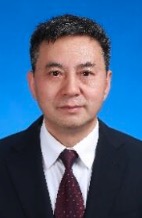 Ruidong Yang (杨瑞东)合作论文数College of Resources and Environmental Engineering, Guizhou University5
 Lijuan Du (杜丽娟)合作论文数College of Resources and Environmental Engineering, Guizhou University5LI Xin-zheng (李鑫正)合作论文数1. College of Resources and Environmental Engineering, Guizhou University
2. Key Laboratory of Karst Geological Resources and Environment, Ministry of Education3linlin liu (刘林林)合作论文数3
Lijuan Du (杜丽娟)合作论文数College of Resources and Environmental Engineering, Guizhou University5LI Xin-zheng (李鑫正)合作论文数1. College of Resources and Environmental Engineering, Guizhou University
2. Key Laboratory of Karst Geological Resources and Environment, Ministry of Education3linlin liu (刘林林)合作论文数3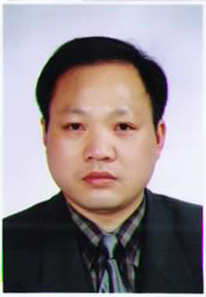 Zhilong Huang (黄智龙)合作论文数Institute of Geochemistry, Chinese Academy of Sciences3Chaokun Luo合作论文数2CHEN Jun (陈军)合作论文数2
 Bo Li (李波)合作论文数State Key Laboratory of Earth Surface Processes and Resource Ecology, College of Resources Science and Technology, Faculty of Geographical Science, Beijing Normal University2Hongcheng Mo (莫洪成)合作论文数1Zhenzhong Xiang合作论文数1Yang Gui-yuan (杨贵园)合作论文数1SUN Bai-chuan (孙百川)合作论文数1. College of Resources and Environmental Engineering, Guizhou University
2. Key Laboratory of Karst Geological Resources and Environment, Ministry of Education1CHEN Jian (陈健)合作论文数1Xinran Ni合作论文数1Longbo WANG (汪龙波)合作论文数1. College of Resources and Environmental Engineering, Guizhou University
2. Key Laboratory of Karst Geological Resources and Environment, Ministry of Education1WU Tao (吴涛)合作论文数1Long Wu (吴龙)合作论文数1Hai Xu (徐海)合作论文数College of Computer Science and Technology, Guizhou University1
Bo Li (李波)合作论文数State Key Laboratory of Earth Surface Processes and Resource Ecology, College of Resources Science and Technology, Faculty of Geographical Science, Beijing Normal University2Hongcheng Mo (莫洪成)合作论文数1Zhenzhong Xiang合作论文数1Yang Gui-yuan (杨贵园)合作论文数1SUN Bai-chuan (孙百川)合作论文数1. College of Resources and Environmental Engineering, Guizhou University
2. Key Laboratory of Karst Geological Resources and Environment, Ministry of Education1CHEN Jian (陈健)合作论文数1Xinran Ni合作论文数1Longbo WANG (汪龙波)合作论文数1. College of Resources and Environmental Engineering, Guizhou University
2. Key Laboratory of Karst Geological Resources and Environment, Ministry of Education1WU Tao (吴涛)合作论文数1Long Wu (吴龙)合作论文数1Hai Xu (徐海)合作论文数College of Computer Science and Technology, Guizhou University1 Lulin Zheng (郑禄林)合作论文数Mining College, Guizhou University1
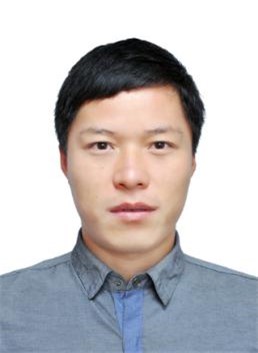 Junbo Gao (高军波)合作论文数College of Resources and Environmental Engineering, Guizhou University1
 Jun Chen (陈军)合作论文数The Third Affiliated Hospital, Sun Yat-Sen University1




