目的 探究重症监护病房(ICU)多重耐药菌感染患者周围致病菌环境污染情况及二氧化氯在ICU医疗环境中清洁消毒效果.方法 采用实验流行病学的方法,以厦门大学附属第一医院ICU一区为实验组,ICU二区为对照组,同时以ICU一区进行前后对照分析二氧化氯消毒较常规含氯消毒剂效果,并通过ICU二区前后对照排除时间因素及研究的霍桑效应.实验组采用现制现用的二氧化氯消毒液进行环境清洁消毒,对照组采用常规含氯消毒剂进行环境清洁消毒,对ICU一区和ICU二区进行环境卫生学采样,对比分析二氧化氯消毒剂在ICU隔离病房环境多重耐药菌清洁消毒效果.结果 ICU耐碳青霉烯类多重耐药菌感染患者隔离病房环境物表共检出耐碳青霉烯类多重耐药菌17株,多重耐药菌检出率为6.05%(17/281),其中以呼吸机表面检出率最高为16.67%(3/18),其次为隔离病房洗手池、地面均为13.79%(4/29);环境中耐碳青霉烯类多重耐药菌检出以鲍氏不动杆菌为主(8/17,47.06%),其次为耐碳青霉烯肺炎克雷伯菌(CRKP),(4/17,23.53%);ICU一区使用二氧化氯消毒剂后环境多重耐药菌检出率较常规含氯消毒剂降低(x2=3.944,P=0.047).ICU二区前后两阶段环境多重耐药菌检出率差异无统计学意义.结论 多重耐药菌感染患者隔离病房内环境物表存在一定的多重耐药菌污染,其中以呼吸机表面最严重,其次为洗手池和地面,二氧化氯对病房环境多重耐药菌清洁消毒效果优于常规含氯消毒剂.
Objective: To explore the relationship between dietary inflammatory index (DII) and heart failure (HF) in participants with cardiovascular and cerebrovascular diseases. Methods: NHANES (1998–2018) data were collected and used to assess the association of HF with DII. Twenty-four-hour dietary consumptions were used to calculate the scores of DII. Demographic characteristics and physical and laboratory examinations were collected for the comparison between HF and non-HF groups. Logistic regression analysis and random forest analysis were performed to calculate the odds rate and determine the potential beneficial dietary components in HF. Results: A total of 19,067 cardiac-cerebral vascular disease participants were categorized as HF (n = 1,382; 7.25%) and non-HF (n = 17,685; 92.75%) groups. Heart failure participants had higher levels of DII score compared with those in the non-HF group (0.239 ± 1.702 vs. −0.145 ± 1.704, p < 0.001). Compared with individuals with T1 (DII: −3.884 to −0.570) of DII, those in T3 (DII: 1.019 to 4.598) had a higher level of total cholesterol (4.49 ± 1.16 vs. 4.75 ± 1.28 mmol/L, p < 0.01), globulin (29.92 ± 5.37 vs. 31.29 ± 5.84 g/L, p < 0.001), and pulse rate (69.90 ± 12.22 vs. 72.22 ± 12.77, p < 0.001) and lower levels of albumin (40.76 ± 3.52 vs. 39.86 ± 3.83 g/L, p < 0.001), hemoglobin (13.76 ± 1.65 vs. 13.46 ± 1.77 g/dl, p < 0.05), and hematocrit (40.83 ± 4.69 vs. 40.17 ± 5.01%, p < 0.05). The odds rates of HF for DII from the logistic regression were 1.140, 1.158, and 1.110 in models 1, 2, and 3, respectively. In addition, from the results of random forest analysis, dietary magnesium, fiber, and beta carotene may be essential in HF. Conclusion: Dietary inflammatory index was positively associated with HF in US adults, and dietary intervention might be a promising method in the therapy of HF.
目的:探究阿替普酶联合依诺肝素钠治疗ST段抬高型心肌梗死(STEMI)的效果及其对心肌氧化应激反应的影响.方法:将本院2019年5月-2021年1月收治的116例STEMI患者随机分为A组(58例)、B组(58例),两组均在给予常规STEMI治疗(抗血小板、吸氧、抗心衰、抗凝等)的基础上使用阿替普酶静脉溶栓,A组加用普通肝素注射治疗,B组加用依诺肝素钠注射治疗.分析比较治疗后两组血管再通率差异,治疗前及治疗2 d后,比较两组患者心功能[左室舒张末期内径(LVEDd)、左室射血分数(LVEF)]、凝血功能[活化部分凝血活酶时间(APTT)、纤维蛋白原(Fib)]、氧化应激反应指标[总抗氧化能力(T-AOC)、丙二醛(MDA)]水平变化,观察治疗后两组药物不良反应发生情况差异.结果:治疗后,B组各时段血管再通率均明显高于A组;治疗2 d后,两组LVEDd、Fib、MDA水平均较治疗前有明显降低(P<0.05),LVEF、APTT、T-AOC水平均较治疗前有明显升高(P<0.05),且B组LVEDd、Fib、MDA水平明显低于同一时间A组(P<0.05),LVEF、APTT、T-AOC水平明显高于同时间A组(P<0.05).两组不良反应比较差异无统计学意义(P>0.05).结论:阿替普酶联合依诺肝素钠治疗STEMI能有效提高患者血管再通率,保护心功能,减少氧化应激反应的发生,同时能改善患者预后效果,促进其康复,且药物安全性与A组用药方案相同.
目的 探讨分侧肾上腺静脉取血术(AVS)对高血压合并肾上腺病变的临床价值.方法 纳入2018年9月至2019年9月在厦门大学附属第一医院心血管内科门诊筛查高血压合并肾上腺病变的患者93例,常规继发性高血压筛查的基础上进一步行AVS,观察高血压合并肾上腺病变患者的原发性醛固酮增多症(PA)比例,以及肾上腺解剖学病变与功能学改变之间的关系,制定相应的治疗方案并随访后续用药、病理结果和血压、血钾等结果.结果 高血压合并肾上腺病变的患者中,PA占11.8%,AVS存在优势分泌侧为53例(左侧优势分泌占86.8%,右侧优势分泌占13.2%).肾上腺病变在左侧、右侧和双侧的比例分别为65.6%、5.4%和29.0%;其中增生或增粗、结节性病变和腺瘤分别为76.6%、6.7%和16.7%.左侧肾上腺病变中同侧优势分泌的患者占55.7%,右侧肾上腺病变中同侧优势分泌的患者占60.0%;双侧肾上腺病变患者中,左侧优势分泌型占44.4%,右侧优势分泌型占14.9%,而无优势分泌型占40.7%.肾上腺CT病变部位和AVS功能定位的符合率为51.6%.在醛固酮与肾素比值(ARR)和生理盐水输注试验阴性的高血压患者82例中,AVS存在优势分泌侧达54.9%,其中6例患者(1例患者存在低血钾)接受手术治疗,术后收缩压[(129.6±11.8)比(150.9±8.9) mm Hg]、舒张压[(83.9±8.6)比(95.4±11.8)mm Hg]及降压药强度积分[(0.17±0.06)比(3.00±0.67)]与术前比较明显改善(均P<0.05),且血钾恢复正常.结论 AVS可谨慎用于高血压合并肾上腺病变患者的分型诊断及功能学鉴别,尤其对于ARR和生理盐水输注试验均阴性的疑似PA患者,可作为辅助诊断方法酌情考量并指导治疗.
The recent outbreak of COVID-19 has infected a large number of patients, increasing the importance of adequate disinfection of the hospital environment. We conducted this study to explore environmental virus contamination and the effect of terminal disinfection in the isolation ward of patients with COVID-19. A swab kit was used to sample various surfaces in the isolation and observation wards using the smear method. The samples were immediately sent to the PCR department of the laboratory for nucleic acid detection of COVID-19. We analyzed 31 high-frequency contact sites in three isolation wards of actively sick patients, of which seven were positive (22.58%, 7/31). Positive sites included the transfer window, bed rail, buffer room door handle, toilet door handle, and toilet faucet. All 55 samples taken from the wards of cured patients and the wards after terminal disinfection were negative. Virus contamination in areas frequently touched by patients in the isolation ward was high, so the awareness of correct disinfection must be increased. Use of 1,000-2,000 mg/L chlorine-containing disinfectant in the isolation ward was effective.
目的 探索经肘正中静脉分侧肾上腺静脉采血术(AVS)操作流程改良方案的效果.方法 选择2019年2-7月的54例AVS作为对照组,2019年8-12月的66例AVS作为改良组.对照组采用传统的AVS操作流程(双导管策略):先用MPA1导管采集右肾上腺静脉血(如失败,换用Tig导管),再换用Tig导管采集左肾上腺静脉血,最后用Tig导管采集下腔静脉血.改良组采用改良的AVS操作流程(优先单导管策略):先用Tig导管采集下腔静脉血,再直接后撤Tig导管至左肾上腺静脉采血,最后反转Tig导管至右肾上腺静脉采血(如失败,换用MPA1导管).比较两组患者的导管到位率情况、手术操作时间、放射量、造影剂用量以及导管费用.结果 与对照组比较,改良组的左右侧导管到位率[98.5%(65/66)比100%(54/54)、86.4%(57/66)比87.0%(47/54)]的差异无统计学意义(均P>0.05).与对照组比较,改良组的手术操作时间[(11.4±3.5)比(17.8±4.6)min]明显缩短,放射量[(10.3±3.2)比(15.4±4.9) mGy]明显降低,造影剂用量[(10.9±3.7)比(17.6±4.8)mL]更少,且导管费用[(260.6±84.6)比(331.0±0)元]更节省(均P<0.05).结论 改良后的AVS操作流程操作时间更短,放射量更低,造影剂用量更少,费用也更节省,值得推广.
 Qiang XIE (谢强)合作论文数3
 Weihua Li (李卫华)合作论文数The First Affiliated Hospital of Xiamen University3Ziguan Zhang合作论文数2Zifan CHEN (陈紫凡)合作论文数2Shi-yang ZHANG (张世阳)合作论文数2Chuan-peng WANG (王传鹏)合作论文数2YuZhen Ye (叶玉真)合作论文数2LiXin Qiu (邱丽心)合作论文数2
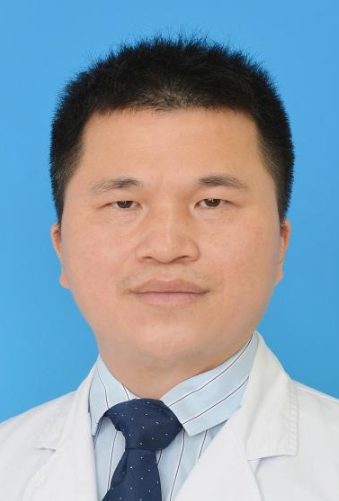 Dehua He (何德化)合作论文数The First Affiliated Hospital of Xiamen University2
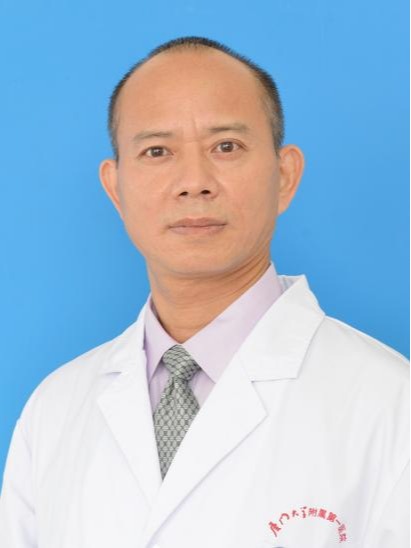 Kaimin Lin (林开敏)合作论文数The First Affiliated Hospital of Xiamen University2
 Zhengrong Huang (黄峥嵘)合作论文数The First Affiliated Hospital of Xiamen University2LIANG Yufeng (梁玉峰)合作论文数1CHEN Xiaoping (陈晓萍)合作论文数1Zhiyong Li合作论文数1Haiyue Liu合作论文数1Caili YANG (杨彩丽)合作论文数1MinQiang Lin (林民强)合作论文数1HuiPing Huang (黄辉萍)合作论文数1LiJuan Ye (叶丽娟)合作论文数1Zuheng Liu合作论文数1
 Changqing Sun (孙常青)合作论文数The First Affiliated Hospital of Xiamen University1
 Xiaobo Ma (马晓波)合作论文数Beijing Tongren Hospital, Capital Medical University1
 Zhanxiang Wang (王占祥)合作论文数The First Affiliated Hospital of Xiamen University1
 Wangwei He (贺王伟)合作论文数The First Affiliated Hospital of Xiamen University1
 Wuyang Zheng (郑武扬)合作论文数The First Affiliated Hospital of Xiamen University1




