For deep underground coal mining ecosystems, research on microbial communities and geochemical characteristics of sediments in different functional zones is lacking, resulting in the knowledge of zone-level mine water pollution prevention and control being narrow. In this study, we surveyed the geochemical distinctions and microbial communities of five typical functional zones in a representative North China coalfield, Xinjulong coal mine. The data indicated that the geochemical compounds and microbial communities of sediments showed distinguishing features in each zone. The microbial community richness and diversity were ranked as follows: surface water > rock roadways > sumps > coal roadways ≥ goafs. Canonical Correlation Analysis (CCA), Spearman correlation and co-occurrence network analysis demonstrated that microbial communities were sensitive and closely related to hydrochemical processes. The microbial community distribution in the underground mine was closely related not only to nutrient elements (i.e., C, S, P and N), but also to redox-sensitive substances (i.e., Fe and As). When it comes to mine water pollution prevention and control, the central zones are goafs. With the increase in goaf closure time, total nitrogen (TN), total organic carbon (TOC) and total sulfur (TS) decreased, but As, Fe and total phosphorus (TP) gradually increased, and the characteristic pollutant SO42− concentration in water samples decreased. Additionally, the sulfate-reducing bacteria (SRB) had relatively higher proportions in goafs, suggesting goafs were able to purify themselves. In practical engineering, in situ nitrogen injection technology used to expel oxygen and create an anaerobic environment can be implemented to enhance SRB reducing sulfate in goafs. Meanwhile, because coal mine pollution discharge generally only discharges mine water and leaves sediment underground, the pollutants can be transferred to the sediment by strengthening the relevant reactions including the heavy metal solidification and stabilization function of bacteria.
The formation and evolution process of mine water quality is very complex,con-trolled by multiple fields such as hydrodynamic field,hydrochemical field,and microbial field.Establishing a mathematical model for the coupling effect between hydrochemical and microbial fields is an important aspect of constructing a multi field coupling model.After constructing a mathematical model of the hydrodynamic field,this study selected typical mines in North China with high salinity(SO4-Na type)as the main characteristic of mine water quality as the model research area to conduct indoor microcosmic simulation experiments.The water quality evolution process under the coupling effect of hydrochemicalwas exploredand microbial fields methods such as hydrogeochemical testing and high-throughput microbial sequencing were used.The comparative test results of three groups:fully enclosed,pre semi enclosed,and high coal show that the characteristic pollutant in the fully enclosed experimental group system is SO4,with an overall increase and then decrease in concentration.As of 365 days,the concen-tration decreased by 14.3%compared to the highest point.The concentration of SO42-in the early stage of semi closure was lower than that in the closed experimental system,while in the later stage of closure it was higher than that in the fully closed experimental group,indicating that oxygen has a significant impact on the source and destination of SO42-.The obvious H2S odor in the early stage of the experiment indicates that sulfate reduction has occurred in the system.The abundance of related bacterial genera(mainly including sulfur oxidizing bacteria and sulfate reducing bacteria)involved in the sulfur cycle is closely related to the concentration changes of SO42-.Based on the comprehensive analysis of the experimental results,there are four main effects in the system that affect the concentration of SO42-,including adsorption/de-sorption,dissolution/precipitation,pyrite oxidation by sulfur oxidizing bacteria,and sulfate reduction by sulfate reducing bacteria.On this basis,the four mathematical models affecting the concentration of SO4-were established respectively,and coupled with the microbial field,a hydrochemical-microbial field mathematical model for the formation and evolution of coal mine water quality was constructed.This model reflects the inherent mechanism of water qual-ity evolution under the interaction of hydrochemistry and microorganisms,laying the founda-tion for the subsequent construction of a multi field coupled numerical model for groundwater pollution in coal mining areas.
In order to prevent the occurrence of water inrush accidents, it is particularly important to predict the mine water inrush, especially the accurate prediction of the mine water inflow in the coal mining process. Mine water inflow is caused by mining disturbance, groundwater flows into mining panels along the mining-induced fissures, and a depression cone of water table is formed in certain range around the mining sites. Mining panel is usually regarded as an irregular “virtual large diameter well” so as to calculate mine water inflow in China. However, in the mining process, the area, shape, and cross section of goafs are constantly changing, so is the water inflow. Therefore, the central position and influence radius of the “virtual large diameter well” in the spatial and temporal distribution are in a dynamic process of continuous movement and expansion, rather than being confined to a static position. This paper firstly analyzes the formation mechanism of coal mine roof water inflow and the errors and defects in the calculation of mine water inflow by virtual large diameter well (VLDWM). Then, based on the theory of steady flow and combined with the dynamic change process of goaf area and depression cone of water table during mining activities, this paper proposes an improved method and puts forward a concept of dynamic virtual large diameter well (DVLDWM) and establishes a theoretical model of the central position and influence radius of the “mining large diameter well” moving forward. The first (periodic) caving step is taken as the calculation unit and generalized as the “dynamic large diameter well,” which is used to calculate the dynamic water inflow in the process of mine advancing. Taking the No.7208 mining panel in Zhangshuanglou Coalmine in Xuzhou City, Jiangsu Province, as the study area, the mine water inflow was calculated dynamically by using the DVLDWM. The results show that the mine water inflow calculated is similar to the actual mine water inflow of the No.7208 mining panel observed, thus proving the reliability and credibility of the DVLDWM.
煤矿开采必然产生大量矿井水,并可能引发水环境污染问题,研究并揭示矿井水的水质形成与演化机理,是煤矿区水污染防控的理论基础.矿井水的水质形成及演化过程非常复杂,受水动力场、水化学场、微生物场和温度场多场作用控制.通过矿井水水质形成的多场作用研究和文献调研,界定了煤矿区矿井水污染场地的研究范围,提出了我国矿井水水质形成的"三带"模型,以传统矿井水害形成的水文地质结构模型为基础,提出并阐明了华北型、西北—东北型、南方型3种典型矿井水水质形成的水文地质结构模式及主控因素;划分并阐明了矿井水水质形成的水动力场的演化阶段及作用过程,包括采前自然平衡、开采强烈扰动和闭坑后再平衡3个阶段;厘清了矿井水水质形成的水化学场控制因素,包括地下水原生化学背景、物源特征及主要化学作用、矿井水水质的总体特征及演化趋势等;提出并阐明了矿井水水质形成的微生物作用机制,论述了矿井水中微生物群落的分布特征、矿井水水质演化以及矿井水污染负荷减量的微生物作用过程;阐明了矿井水水质演化的温度场作用过程,分别探讨了矿区的原生温度场、采动温度场特征及其对矿井水水质演化的影响.在上述基础上,总体阐明了煤矿区矿井水水质形成与演化的多场作用机制,提出了多场耦合作用等问题的研究展望.
Coal mining can cause groundwater pollution, and microorganism may reflect/affect its hydrochemical characteristics, yet little is known about the microorganism’s distribution characteristics and its influence on the formation and evolution of mine water quality in underground coal mines. Here, we investigated the hydrochemical characteristics and microbial communities of six typical zones in a typical North China coalfield. The results showed that hydrochemical compositions and microbial communities of the water samples displayed apparent zone-specific patterns. The microbial community diversity of the six zones followed the order of surface waters > coal roadways > water sumps ≈ rock roadways ≈ goafs > groundwater aquifers. The microbial communities corresponded to the redox sensitive indices’ levels. Coal roadways and goafs were the critical zones of groundwater pollution prevention and control. During tunneling in the panel, pyrite was oxidized by sulfur-oxidizing bacteria leading to SO42− increase. With the closure of the panel and formation of the goaf, SO42− increased rapidly for a short period. However, with the time since goaf closure, sulfate-reducing bacteria (e.g., c_Thermodesulfovibrionia, Desulfobacterium_catecholicum, etc.) proportion increased significantly, leading to SO42− concentration’s decrease by 42% over 12 years, indicating the long-term closed goafs had a certain self-purification ability. These findings would benefit mine water pollution prevention and control by district.
针对山东巨野新巨龙煤矿区地下水高TDS的现状,基于历史水质资料和取样测试结果,运用Piper三线图、相关性分析、氢氧同位素、Gibbs图解、离子比值与饱和指数等方法,探究其高TDS地下水水化学特征及成因.结果表明:随着建井和煤矿开采,研究区水化学环境发生改变,水化学类型不再是单一的SO4-Na型,深层灰岩水的类型中出现SO4·HCO3-Na和SO4-Ca·Mg型;研究区高TDS地下水的形成主要是因为含水层水动力条件差,高温水岩作用强,溶滤、蒸发浓缩作用明显,同时存在一定程度的反向阳离子交换作用;地下水体中白云岩和方解石表现为沉淀状态,石膏和盐岩处于溶解状态,是地下水主要成分Na+和SO42-的主要来源.研究成果不但为研究矿井水的构成、揭示煤矿区地下水污染及多场耦合的地下水演化过程和成因机制提供依据,还可为煤炭开采水害防治和矿井水处理利用奠定基础.
煤炭开采必然产生大量的矿井涌水,我国目前的矿井水整体上表现出水质相对较差、水处理成本较高等问题.首先明确了我国典型矿区矿井水水质的主体特征:常规离子是造成矿井水水质差的主要化学组分;矿井水中有毒有害物质占比小,且基本优于地下水Ⅲ类水质量标准.其次,详细探讨了我国矿井水水质形成、演化的几个科学问题,包括不同水文地质结构下物理-化学作用所起的主导作用,时间效应对水质演化的影响,微生物群落结构特征及其与环境因素的相关关系,水动力场-化学场-微生物场-温度场的多场耦合问题等.接着重点介绍矿井水污染防控的技术方法,以减少矿井突(涌)水量和水资源保护为前提,以实现煤-水双资源协调开采、煤炭绿色开采为目标,以矿井水"阻断、减量、保护"为主要防控思路,围绕煤矿区矿井水阻断技术、污染负荷减量技术、污染区修复治理等科学问题展开分析;通过各种现有技术、方法、工艺,最大可能地降低吨煤矿井水处理成本,如采用井下预处理、地面深度处理、超深回灌封贮、生态资源化利用等.最后,提出研发煤矿区地下水及污染物的阻断材料和吸附材料、注浆装备、监测设备、投料设备、原位取样检测设备等,形成我国煤矿区矿井水污染防控技术体系.该技术体系的构建可对煤矿绿色开采、煤矿区深层地下水污染防控、闭坑矿井水污染防控、矿区地下水资源及生态环境保护利用等提供理论及技术支撑.
 Zhimin Xu (徐智敏)合作论文数School of Resources and Geosciences, China University of Mining and Technology7
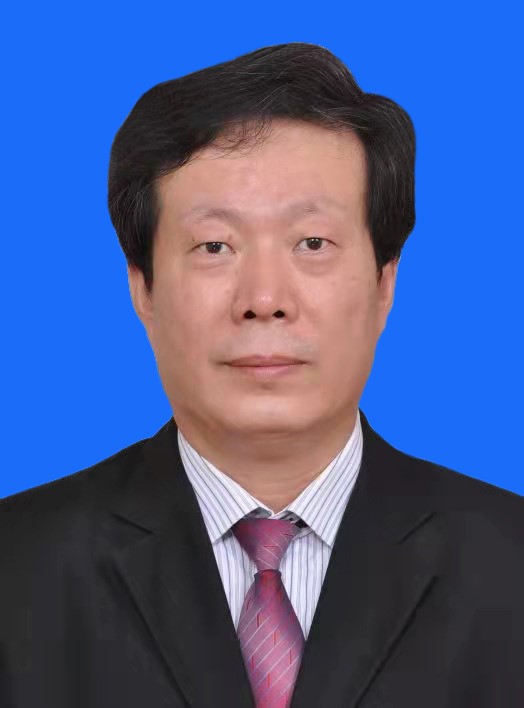 Yajun Sun (孙亚军)合作论文数School of Resources and Geosciences, China University of Mining and Technology6
 ZHU Lulu (朱璐璐)合作论文数5Ge Chen (陈歌)合作论文数4ZHANG Shangguo (张尚国)合作论文数2
 Xianming Zhao合作论文数2
 Xin Li (李鑫)合作论文数School of Mines, China University of Mining and Technology2Jianfeng Li合作论文数1Huiqing Yuan合作论文数1weijun wang (汪韦峻)合作论文数1Weikui L(U) (吕伟魁)合作论文数1Ye He合作论文数1CHEN Tianci (陈天赐)合作论文数1QI LIU (刘琪)合作论文数1cheng wang (王晟)合作论文数1ZHANG Chenghang (张成行)合作论文数1LiJie Zhou (周丽洁)合作论文数1
 Li Zhang (张利)合作论文数School of Earth Sciences, China University of Geosciences1
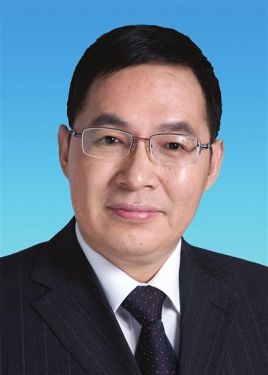 Yuzhuo Zhang (张玉卓)合作论文数State-owned Assets Supenvision and Administration Commission of the State Council1
 Xianfeng Tan (谭先锋)合作论文数School of Earth Sciences, Yangtze University/School of Petroleum and Natural Gas Engineering, Chongqing University of Science and Technology 1




