Electroacupuncture (EA), a modern adaptation of traditional acupuncture, has shown promising analgesic effects across various pain models. However, the underlying central mechanisms remain insufficiently characterized. The dorsal horn of the spinal cord serves as a critical hub for the transmission and modulation of nociceptive signals. Increasing evidence suggests that spinal disinhibition, primarily resulting from impaired excitability of inhibitory interneurons and diminished synthesis or release γ-aminobutyric acid (GABA) and glycine, accounts for the development and maintenance of pain. In this study, we investigated whether EA alleviates inflammatory pain by modulating the activity of GABAergic inhibitory interneurons in the superficial dorsal horn of the spinal cord. A murine model of inflammatory pain was established by subcutaneous injection of complete Freund's adjuvant (CFA) into the hind paw. EA was applied at the Huantiao (GB30) and Yanglingquan (GB34) acupoints on alternate days following CFA injection. Mechanical hypersensitivity was assessed by paw withdrawal threshold. Neuronal activity was evaluated using immunofluorescence staining for c-fos, Lmx1b, Pax2, and GABA. Furthermore, whole-cell patch-clamp recordings were conducted on spinal slices from GAD67-GFP transgenic mice to assess the electrophysiological properties of GABAergic interneurons. EA significantly attenuated mechanical hypersensitivity in CFA-treated mice without affecting locomotor function. Immunofluorescence staining revealed that EA enhanced c-fos expression in the dorsal horn during early stages of treatment, reduced the proportion of c-fos-positive excitatory (Lmx1b-positive) neurons, and markedly increased the activation of inhibitory (Pax2-positive and GABA-positive) interneurons. In addition, electrophysiological recordings demonstrated that EA significantly depolarized the resting membrane potential and increased the firing frequency of GAD67-GFP-positive inhibitory interneurons in the CFA + EA group compared to the CFA group. Collectively, our results suggest EA at Huantiao and Yanglingquan acupoints could relieve inflammatory pain, potentially through enhancing of the excitability and activity of GABAergic inhibitory interneurons in the spinal dorsal horn. This study provides novel mechanistic insight into spinal modulation of nociceptive processing by EA and supports its therapeutic promise for inflammatory pain management.
AIMS:Comorbid anxiodepressive-like symptoms (CADS) in chronic pain are closely related to the overactivation of the lateral habenula (LHb). Hyperpolarization-activated cyclic nucleotide-gated (HCN) channels have been implicated to play a key role in regulating neuronal excitability. However, the role of HCN channels in the LHb during CADS has not yet been characterized. This study aimed to investigate the effect of HCN channels in the LHb on CADS during chronic pain. METHODS:After chronic neuropathic pain induction by spared nerve injury (SNI), mice underwent a sucrose preference test, forced swimming test, tail suspension test, open-field test, and elevated plus maze test to evaluate their anxiodepressive-like behaviors. Electrophysiological recordings, immunohistochemistry, Western blotting, pharmacological experiments, and virus knockdown strategies were used to investigate the underlying mechanisms. RESULTS:Evident anxiodepressive-like behaviors were observed 6w after the SNI surgery, accompanied by increased neuronal excitability, enhanced HCN channel function, and increased expression of HCN2 isoforms in the LHb. Either pharmacological inhibition or virus knockdown of HCN2 channels significantly reduced LHb neuronal excitability and ameliorated both pain and depressive-like behaviors. CONCLUSION:Our results indicated that the LHb neurons were hyperactive under CADS in chronic pain, and this hyperactivation possibly resulted from the enhanced function of HCN channels and up-regulation of HCN2 isoforms.
BACKGROUND:Previous observational studies focused on the association of coffee consumption and neurological disease. However, it is not known whether these associations are causal. METHODS:We used Mendelian randomization (MR) study to assess the causal relationship of coffee intake with the risk of neurological diseases, including Alzheimer's disease, Parkinson's disease, amyotrophic lateral sclerosis, multiple sclerosis, epilepsy, stroke, and migraine. Single-nucleotide polymorphisms (SNPs) which had genetic statistical significance with coffee intake were used as instrumental variable (IV). Genetic instruments were stretched from the MRC-IEU (MRC Integrative Epidemiology Unit) analysis on the UK Biobank. We performed MR analyses using the inverse variance weighted (IVW) method as the main approach. Sensitivity analyses were further performed using MR-Egger and MR-PRESSO to assess the robustness. RESULTS:In the MR analysis, 40 SNPs were selected as IV, the F statistics for all SNPs ranged from 16 to 359. In IVW approach, our results provide genetic evidence supporting a potential causal association between coffee intake and a lower risk of migraine (OR = 0.528, 95% CI = 0.342-0.817, P = 0.004) and migraine with aura (OR = 0.374, 95% CI = 0.208-0.672, P = 0.001). However, we found no significant association between coffee intake and other neurological diseases along with their subtypes in this MR study. CONCLUSION:Using genetic data, our MR study found significant evidence supporting a causal association between coffee intake and migraine. This suggests that coffee consumption is likely a trigger or a prevention strategy for migraine.
ObjectiveTo investigate and integrate multiple independent risk factors to establish a nomogram for predicting the unfavourable outcomes of percutaneous endoscopic transforaminal discectomy (PETD) for lumbar disc herniation (LDH). MethodsFrom January 2018 to December 2019, a total of 425 patients with LDH undergoing PETD were included in this retrospective study. All patients were divided into the development and validation cohort at a ratio of 4:1. Univariate and multivariate logistic regression analyses were used to investigate the independent risk factors associated with the clinical outcomes of PETD for LDH in the development cohort, and a prediction model (nomogram) was established to predict the unfavourable outcomes of PETD for LDH. In the validation cohort, the nomogram was validated by the concordance index (C-index), calibration curve, and decision curve analysis (DCA). Results29 of 340 patients showed unfavourable outcomes in the development cohort, and 7 of 85 patients showed unfavourable outcomes in the validation cohort. Body mass index (BMI), course of disease (COD), protrusion calcification (PC), and preoperative lumbar epidural steroid injection (LI) were independent risk factors associated with the unfavourable outcomes of PETD for LDH and were identified as predictors for the nomogram. The nomogram was validated by the validation cohort and showed high consistency (C-index = 0.674), good calibration and high clinical value. ConclusionsThe nomogram based on patients' preoperative clinical characteristics, including BMI, COD, LI and PC, can be used to accurately predict the unfavourable outcomes of PETD for LDH.
目的 比较放射式体外冲击波与超声引导下神经阻滞治疗足底筋膜炎的临床疗效.方法 40 例门诊足底筋膜炎患者按治疗方式分为放射式体外冲击波治疗组(S组)和超声引导下神经阻滞治疗组(U组)各 20 例.两组分别在治疗前及治疗第 1、2、4、8 周,采用视觉模拟评分法(VAS)判断疼痛程度.采用足功能指数量表(FFI)评估治疗前及治疗第 1、2、4、8 周足部疼痛及功能变化,观察两组治疗过程中出现的不良反应.结果 与治疗前比较,两组治疗后第 1、2、4、8 周VAS评分均有显著下降(P均<0.05),且U组治疗第 1、2、4 周VAS评分较S组下降明显(P<0.05);U组治疗第1、2、4、8 周后FFI总分、活动受限评分较S组显著下降(P均<0.05),治疗第 2、4 周后FFI疼痛评分较S组下降明显(P<0.05),治疗第 4、8 周后FFI残疾评分较S组下降显著(P<0.05);两组未出现出血、感染、过敏等严重不良反应.结论 两种治疗方式均可有效治疗足底筋膜炎,且在治疗 8周内超声引导下神经阻滞疗效优于放射式体外冲击波治疗.
The thalamocortical (TC) circuit is closely associated with pain processing. The hyperpolarization-activated cyclic nucleotide-gated (HCN) 2 channel is predominantly expressed in the ventral posterolateral thalamus (VPL) that has been shown to mediate neuropathic pain. However, the role of VPL HCN2 in modulating TC circuit activity is largely unknown. Here, by using optogenetics, neuronal tracing, electrophysiological recordings, and virus knockdown strategies, we showed that the activation of VPL TC neurons potentiates excitatory synaptic transmission to the hindlimb region of the primary somatosensory cortex (S1HL) as well as mechanical hypersensitivity following spared nerve injury (SNI)-induced neuropathic pain in mice. Either pharmacological blockade or virus knockdown of HCN2 (shRNA-Hcn2) in the VPL was sufficient to alleviate SNI-induced hyperalgesia. Moreover, shRNA-Hcn2 decreased the excitability of TC neurons and synaptic transmission of the VPL-S1HL circuit. Together, our studies provide a novel mechanism by which HCN2 enhances the excitability of the TC circuit to facilitate neuropathic pain.
原发性三叉神经痛 (idiopathic trigeminal neural-gia, ITN) 为三叉神经的一个或多个分支神经支配区的阵发性颜面部疼痛,其发病机制尚不明确,但病因假说多样,其颅脑无明显器质性病变,除三叉神经支配区疼痛外无明显的神经系统疾病症状及体征 [1].原发性三叉神经痛的终生患病率约为3~5/10万人,通常在50~70岁之间发病率最高[1,2].目前原发性三叉神经痛的治疗以药物保守治疗、微血管减压术、立体定向放射治疗及经皮穿刺射频术 (percutaneous radiofrequency thermocoagulation, PRT) 为主[2~4].微血管减压术为传统开放手术,创伤较大,且原发性三叉神经痛病人多为高龄病人,身体状况不能耐受全身麻醉手术.同时微血管减压手术后发生死亡达 0.1%,在老年病人中死亡率为0.9%,脑卒中发生率为2.5% [5];立体定向放射治疗为无创手术方式,但高辐射量、起效慢及高复发率使其临床应用受限 [6].PRT具有创伤小、费用低及可重复操作等特点,目前逐渐成为原发性三叉神经痛的常规手术方式之一 [3].临床上多支病变的原发性三叉神经痛以(Ⅱ+Ⅲ支)常见,Kosugi等 [7]研究中(Ⅱ+Ⅲ支)原发性三叉神经痛的病人占所有研究病人的45.27%.既往对累及(Ⅱ+Ⅲ支)的原发性三叉神经痛病人多采用经卵圆孔入路半月节射频治疗,但半月节射频存在脑脊液漏、感染及出血等风险.为了减少并发症,同时随着PRT技术的不断进步以及对原发性三叉神经痛的深入理解 [8],射频靶点逐渐向外周转移,使得对累及(Ⅱ+Ⅲ支)的原发性三叉神经痛病人行经卵圆孔联合圆孔入路的高选择性周围神经射频成为可能 [9].但目前尚未见经卵圆孔半月节射频与卵圆孔联合圆孔选择性周围神经射频治疗(Ⅱ+Ⅲ支)原发性三叉神经痛的相关临床研究.
Objective. This study explored the 10-year efficacy, safety, and prognostic factors of low-dose collagenase chemonucleolysis (CCNL) combined with radiofrequency (RF) in the treatment of lumbar disc herniation (LDH). Methods. The data of 167 LDH patients were collected. Modified MacNab criteria, Numerical Rating Scale (NRS), and Japanese Orthopedic Association (JOA) scores were, respectively, used to evaluate patients’ excellent and good rates, pain degree, and nerve function. The preoperative and 10-year postoperative patients’ pain, numbness, and muscle weakness were compared. Patients’ complications in perioperative period, recurrent/reappeared LDH, and reoperations were recorded. Finally, the independent risk factors affecting the long-time efficacy were assessed. Results. A total of 126 patients were included. The patients’ excellent and good rates were 86.51%–92.86% with no significant difference P>0.05. Postoperative NRS and JOA scores significantly improved P<0.01, most obvious within 6 months postoperatively. At 10 years postoperatively, 65.08%, 83.95%, and 93.02% of patients’ pain, numbness, and muscle weakness were completely relieved P<0.05. Perioperative complications occurred in three patients with the rate of 2.38%. Recurrent/reappeared LDH patients were 11 with the ratio of 8.73%; nine of them underwent reoperations with the rate of 7.14%. And patients’ probability of fair and poor efficacy at 10 years postoperatively with the course of disease >12 months and the responsibility disc ≥2 were, respectively, 6.005 and 4.227 times that of patients with the course of disease ≤12 months and the responsibility disc = 1 P<0.05. Conclusion. The combined treatment is effective and safe in the long term. A course of disease >12 months and responsibility disc ≥2 independently reduce efficacy, and a course of disease >12 months has a more significant impact.
Substantia gelatinosa (SG) neurons, which are located in the spinal dorsal horn (lamina II), have been identified as the “central gate” for the transmission and modulation of nociceptive information. Rebound depolarization (RD), a biophysical property mediated by membrane hyperpolarization that is frequently recorded in the central nervous system, contributes to shaping neuronal intrinsic excitability and, in turn, contributes to neuronal output and network function. However, the electrophysiological and morphological properties of SG neurons exhibiting RD remain unclarified. In this study, whole-cell patch-clamp recordings were performed on SG neurons from parasagittal spinal cord slices. RD was detected in 44.44% (84 out of 189) of the SG neurons recorded. We found that RD-expressing neurons had more depolarized resting membrane potentials, more hyperpolarized action potential (AP) thresholds, higher AP amplitudes, shorter AP durations, and higher spike frequencies in response to depolarizing current injection than neurons without RD. Based on their firing patterns and morphological characteristics, we propose that most of the SG neurons with RD mainly displayed tonic firing (69.05%) and corresponded to islet cell morphology (58.82%). Meanwhile, subthreshold currents, including the hyperpolarization-activated cation current (I h ) and T-type calcium current (I T ), were identified in SG neurons with RD. Blockage of I h delayed the onset of the first spike in RD, while abolishment of I T significantly blunted the amplitude of RD. Regarding synaptic inputs, SG neurons with RD showed lower frequencies in both spontaneous and miniature excitatory synaptic currents. Furthermore, RD-expressing neurons received either Aδ- or C-afferent-mediated monosynaptic and polysynaptic inputs. However, RD-lacking neurons received afferents from monosynaptic and polysynaptic Aδ fibers and predominantly polysynaptic C-fibers. These findings demonstrate that SG neurons with RD have a specific cell-type distribution, and may differentially process somatosensory information compared to those without RD.
目的 观察经卵圆孔联合圆孔选择性射频热凝治疗Ⅱ+Ⅲ支原发性三叉神经痛(ITN)的临床疗效.方法 回顾性分析60例行卵圆孔联合圆孔选择性射频热凝治疗的ITNⅡ+Ⅲ支患者,采用巴罗神经学研究所疼痛评价表(Barrow Neurological Institute,BNI)评估疗效,观察术后第1天有效率及并发症,随访2年,采用Kaplan-Meier生存曲线表示术后2年疗效.结果 术后第1天总有效率为96.7%,术后2年总复发率为41.8%;Ⅱ、Ⅲ支分组进行疗效曲线比较Ⅱ支疗效优于Ⅲ支,差异有统计学意义(P<0.05);不良反应有颜面肿胀16例(28.07%),Ⅱ支麻木48例(84.21%)、Ⅲ支麻木34例(59.64%).结论 卵圆孔联合圆孔选择性射频热凝术是一种高安全性、高选择性、高精确性的治疗Ⅱ+Ⅲ支ITN的手术方式.
1病历摘要 患者男,35岁.左腰肋部单发蓝紫色结节伴疼痛6个月.患者6个月前左腰部出现间歇性针刺样疼痛,触摸诱发,持续数分钟后可自行缓解,视觉模拟评分(VAS)3分,对睡眠及工作无影响,未诊治.近1周出现自发性疼痛且程度加重,持续数分钟至数小时,可向周围放射,遇冷诱发疼痛,VAS评分7分,影响正常工作和睡眠,遂于2017年7月至南昌大学第一附属医院疼痛科就诊,后转至本院皮肤科予手术切除,并于我科进行随诊.
OBJECTIVE:To observe the surgical procedure and outcome of percutaneous endoscopic lumbar discectomy for L5/S1 lumbar disc herniation (LDH) by the interlaminar and transforaminal approach. METHODS:A total of 153 patients with L5/S1 LDH who were treated using percutaneous endoscopic transforaminal discectomy (PETD, n = 84) or percutaneous endoscopic interlaminar discectomy (PEID, n = 69) from January 2016 to January 2018 were enrolled in this retrospective study. The time of puncture, operation under the endoscope, total operation and number of fluoroscopy of the two groups were compared. All groups were followed up for two years by using the Oswestry disability index (ODI) and the Visual Analogue Scale (VAS). Additionally, the incidence of complications, reoperation and postoperative low back pain were compared between the two groups. RESULTS:There were no significant difference in general information between the two groups. Compared to the PEID group, the PETD group had a decreased operation time under the endoscope and an increased puncture time, total operation time, and the number of fluoroscopy (p < 0.05). The preoperative VAS and ODI scores of the PETD and PEID group were decreased at the last follow-up (p < 0.05). There were no difference in the preoperative or last follow-up VAS and ODI scores, as well as complications, reoperation between the two groups (p > 0.05). The incidence of postoperative low back pain in the PETD group was lower than that in the PEID group (p > 0.05). CONCLUSIONS:The two-year clinical outcome of PETD is equal to that of PEID for L5/S1 LDH. Compared to those with PETD, the puncture time, total operation time and radiation exposure are lower with PEID, but the incidence of postoperative low back pain is higher.
患者 女,50岁,6个月前出现皮肤色素沉着.患者双下肢进行性水肿、麻木,体质量渐下降,查体可触及腋下及腹股沟区多个无痛肿大淋巴结,肌力进行性下降至Ⅱ级.既往有高血压及肺结核病史,临床拟诊Addison病入院.实验室检查示血小板升高,约504×109/L.游离三碘甲状原胺(FT3)、游离甲状腺素(FT4)降低,促甲状腺激素(TSH)升高;血促肾上腺皮
病例 女,33岁,于6月前无明显诱因出现咳嗽咳痰,痰中带血丝,量不多,无发热、胸闷、气喘等症状. 查体:浅表淋巴结未及肿大,双肺呼吸音粗,未闻及干湿性啰音,心律齐,无杂音.
 Daying Zhang (张达颖)合作论文数The First Affiliated Hospital of Nanchang University12
 Zhu Mengye合作论文数8
 Xuexue Zhang (张学学)合作论文数The First Affiliated Hospital of Nanchang University6Yi Yan合作论文数5
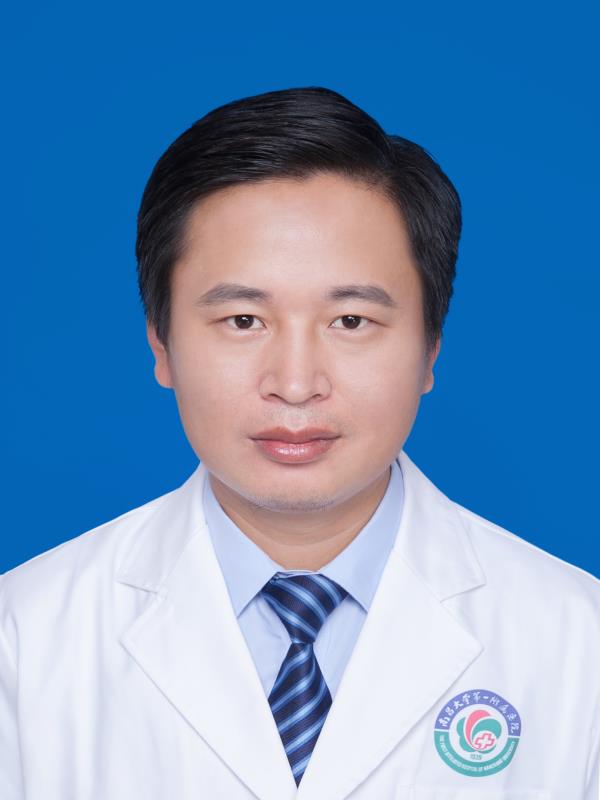 Yong Zhang (章勇)合作论文数The First Affiliated Hospital of Nanchang University4Jinjin Zhang合作论文数3Mizhen QIU (邱觅真)合作论文数3Yuan Cao合作论文数3
 Fan Li (李璠)合作论文数School of Physics and Materials Science, Nanchang University3Lingyun Luo合作论文数2Wei Shen合作论文数2Mu Xu合作论文数2Yang-chun LIU (刘阳春)合作论文数2YuLin He (何玉麟)合作论文数2
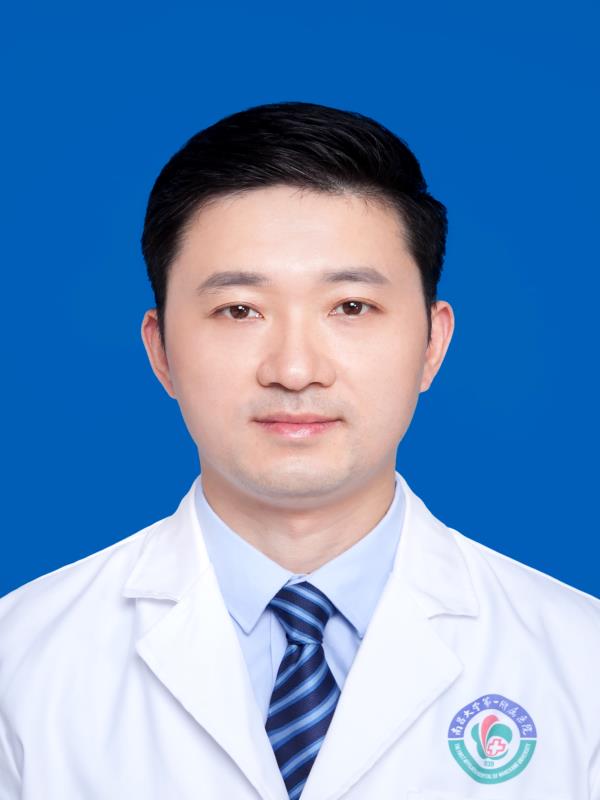 Zhijian Wang (王志剑)合作论文数The First Affiliated Hospital, Nanchang University2Xiaofeng Jiang合作论文数1NIE Jinping (聂锦平)合作论文数1Yao-ping YU (郁耀平)合作论文数1Xiaofeng JIANG (蒋小凤)合作论文数1SHEN Wei (申维)合作论文数1Meng Wang合作论文数1Gang XU (许刚)合作论文数1Yuhan Liu合作论文数1Jian Jiang合作论文数1Weiguo Gu合作论文数1Jian WANG (王剑)合作论文数1YunHua Liao (廖云华)合作论文数1Qing Xia (夏青)合作论文数1LiLi Gu合作论文数1
 Gang Xu (许纲)合作论文数Department of Rehabilitation Medicine, Tenth People's Hospital of Tongji University;School of Medicine, Tongji University1
 Tao Liu合作论文数1Fei Zeng合作论文数1




