To improve the mechanical and tribological properties of polycarbonate, diamondlike carbon (DLC) coating was deposited on its surface by pulsed vacuum arc deposition with different pulse repetition rates at low substrate temperature (not more than 80 °C). The surface hardness increased by 20–33 times, the plasticity index increased by 1.6–2.5 times, the resistance to plastic deformation increased by 50–200 times, and the wear rate decreased by 170–600 times compared to untreated polycarbonate depending on the pulse frequency in the process of coating deposition. It has been shown that decreasing the pulse frequency during DLC deposition from 3 to 1 Hz increases the content of sp3-hybridized carbon atoms and level of internal stresses in the coating and increases its hardness. However, this is accompanied by an increase in the number of microcracks in the coating. Deposition with an optimal pulse frequency formed a polycarbonate/DLC system with high hardness and wear resistance as well as a low number of microcracks.
The work is devoted to the deposition of Ti- and Cr-doped a-C:H:SiOx coatings on WC-8Co substrates using plasma-assisted chemical vapor deposition and magnetron sputtering methods. The structure, surface morphology, mechanical and tribological properties of coatings are investigated depending on the Ti or Cr content. It is shown that only a small concentration of Ti or Cr in coatings improves their mechanical and tribological properties compared to undoped coatings. The addition of 0.8 at.% Ti to the a-C:H:SiOx coating reduces its wear rate by 3 times, and the addition of 3 at.% Cr to the a-C:H:SiOx coating reduces its friction coefficient by 30% and the wear rate by 10 times. According to VDI 3198 standard, the Ti- and Cr-doped a-C:H:SiOx coatings with a low concentration of metals have the adhesive strength quality HF1. At higher metal concentrations, the properties of the coatings deteriorate due to graphitization of the carbon structure.
WS2-ZnO nanostructured materials are of great interest in the area of green energy due to their potential application for hydrogen generation. In the present work, we report an efficient method to produce WS2-ZnO nanoheterostructures through electrospark erosion of zinc granules in aqueous solutions of hydrogen peroxide, with the simultaneous addition of nanostructured WS2. WS2-ZnO nanostructures prepared with this synthesis method were carefully characterized by XRD, TEM, BET, FTIR, UV-vis, and Raman spectroscopy analyses to establish their chemical compositions and morphology. According to the XRD analysis, the resulting electrospark erosion products represent heterostructures containing individual phases of hexagonal tungsten disulfide and zinc oxide. The crystallite sizes varied from 4.3 to 66.7 nm for both phases. This correlated with the TEM measurements. Cyclic voltammetry (CV) and electrochemical impedance spectroscopy (EIS) showed that the WS2-ZnO nanostructure decorated electrodes displayed improved conductivity, photocurrent density (by 2.564 mA/cm2), and hydrogen gas evolution under light conditions in contrast to the dark experiments. The investigation confirmed the potential of the WS2-ZnO nanostructures for efficient hydrogen generation for green energy applications.
Comparative studies of the diffusion and accumulation of hydrogen in the Zr–1 wt.
The paper studies the plasma-assisted chemical vapor deposition of a-C:H:SiOx coatings in plasma of non-self-sustained arc discharge with a hot cathode combined with inductively excited radio-frequency (RF) discharge. The a-C:H:SiOx coatings are produced by polyphenyl methylsiloxane (PPMS) dissociation in plasma with and without RF discharge. The optical emission spectroscopy is used to study the PPMS dissociation process. Raman spectroscopy provides the structural investigations of the obtained coatings, while the energy dispersive X-ray spectroscopy is used to analyze the chemical composition. It is shown that the mechanical and tribological properties of a-C:H:SiOx coatings depend on the RF discharge power and the bias voltage amplitude of the substrate. It is demonstrated that substrate bias voltage can be reduced during the coating deposition in combined discharge without significant degradation of its mechanical and tribological properties due to the better dissociation and ionization of PPMS vapor molecules in inductively excited RF discharge.
The results of studying the interaction of hydrogen with commercially pure titanium VT1-00, zirconium alloy Zr–1% Nb and the Ti/Zr–1% Nb system are presented. The Ti/Zr–1% Nb system is obtained by the plasma-immersion ion implantation of titanium from a vacuum-arc discharge into Zr–1% Nb zirconium alloy. The results of X-ray phase analysis of the Ti/Zr–1% Nb system and the depth distribution profiles of chemical elements measured by high-frequency glow-discharge spectroscopy before and after titanium implantation into zirconium alloy, as well as after saturation of the samples of the obtained system with hydrogen, are presented. It is shown that at a titanium-ion current density of 5 mA/cm 2 and bias potentials of 500, 1000, and 1500 V applied to the sample, a thin (~300 nm) nanostructured layer containing mainly titanium is formed in the implanted surface region of the sample. When the Ti/Zr–1% Nb system is saturated with hydrogen (by the Sieverts method), titanium and zirconium hydrides are formed in this region. The possibility of detecting (by the method of thermally stimulated gas evolution) thin nano-structured layers of titanium hydrides, to which X-ray phase analysis method is not sensitive, is proved. Data are obtained on the process of hydride formation upon saturation of the Ti/Zr–1% Nb system with hydrogen at different concentrations in the range 70–300 ppm.
An experimental study is performed of the thermally stimulated evolution of hydrogen in the linear mode of heating (1°C/s). Hydrogen is released from plane-parallel plates of Ti, Zr, Ni, and Pd metals of different thicknesses (0.05–1 mm), preliminarily saturated with hydrogen via electrolysis. Analytical and numerical models of non-stationary processes of the diffusion release of hydrogen from samples are considered with allowance for diffusion and desorption. Programs for numerically modeling processes of thermal gas release are proposed, developed, and perfected.
New the experimental results of thermally stimulated hydrogen release (TCHR) from plane-parallel plates of Ti, Zr, Ni, Pd, Pt metals with various thicknesses (0.05-1 mm), presaturated with hydrogen, under linear heating (1 degrees C s-1) presented. The electrolytic and Sieverts method for saturate were used. Theoretical models for diffusion and desorption hydrogen release from flat metal samples into vacuum with linear heating were developed. In this case, the processes of diffusion and thermal desorption were taken into account to select the optimal conditions and experimental methods. The TSHR spectra simulated using the MATLAB software package to test the consistency of theory with experiment. By modeling in MATLAB using both the developed models and experimental TSHR spectra, the activation energies of desorption, diffusion and decomposition of hydrides, as well as the preexponential factors in the diffusion and kinetic equations, were determined. (c) 2021 Hydrogen Energy Publications LLC. Published by Elsevier Ltd. All rights reserved.
The release of hydrogen isotopes (H, D) from Pd is studied under linear heating (a) by an accelerated electron beam, (b) by alternating current Joule heat (50 Hz) passed through the samples, and in external coaxial furnaces in (c) metallic (stainless steel) and (d) quartz vacuum cells. The cathode saturation of Pd samples with hydrogen and deuterium is used. The studies are performed in a high-vacuum installation. The recording of gases leaving the materials is carried out by mass spectrometry. The maximum shift in the position of the temperature maxima of the thermal-gas release of hydrogen and deuterium from palladium to the low-temperature region is observed when the samples are heated by electric current and heated in the quartz vacuum cell. The mechanisms of the release of hydrogen isotopes from metals due to the accumulation of electron-beam energy and electromagnetic field by the hydrogen subsystem of the crystals are considered.
The scheme, design, and hardware of a new laboratory apparatus for studying the interaction of beams of free atoms and molecules with the surfaces of phosphors are described. Methods for measuring the efficiency of electronic radiative processes on surfaces for studying the mechanisms of energy transfer and surface changes based on the spectral–kinetic characteristics of heterogeneous chemiluminescence are presented. Luminescent methods for studying the heterogeneous recombination of hydrogen atoms on the surfaces of solids allow one to explicitly select the impact (Rideal–Eley) and diffusion (Langmuir–Hinshelwood) recombination mechanisms and estimate the fraction of contributions of these mechanisms to the total recombination rate of atoms depending on the flow density of free atoms and the sample temperature. Examples of studying the spectra of the heterogeneous chemiluminescence (HCL) and photoluminescence (PL) at different temperatures of an AlN : Eu3+ phosphor under the excitation with hydrogen atoms and a mercury lamp are given. During processing of the kinetic curves of the HCL buildup and decay for ZnS : Tm3+ phosphor upon switching the Н + Н2 atomic–molecular beam on and off, an example of obtaining the parameters of atomic–molecular processes on the surface (adsorption, impact and diffusion recombination of atoms, and desorption of hydrogen molecules) is presented.
Thin films of TiN are deposited onto Zr–1% Nb alloys using vacuum-arc plasma in two steps. First, the plasma-immersion ion implantation (PIII) of titanium is implemented; then, without interrupting the experiment, the vacuum-arc deposition (VAD) of TiN is carried out. The VAD and PIII modes for obtaining the most effective coating (from the viewpoint of protecting the substrate from corrosion and hydrogen embrittlement) have been previously determined. Within studies of the mechanical properties of the obtained coatings, a study of changes in the adhesion of coatings under Arctic conditions (at a temperature of –20°C, seawater ice) and hydrogenation of the samples is carried out. It is established that coatings that are frozen in seawater ice for 24 hours without preliminary saturation with hydrogen have the best adhesive strength. The mechanism of the established effect is briefly discussed.
The results of studying the interaction H atoms with ZnS–Tm3+ surface using the phenomena of heterogeneous chemiluminescence (HCL) are presented. HCL is luminescence excited in the strongly exothermic interaction acts of hydrogen atoms on the surface. The kinetic and nonstationary characteristics of luminescence are studied in depending on the excitation conditions, which serve as light indicators of physicochemical processes, occurring on the surface. The interaction parameters of hydrogen atoms with the surface of zinc sulphide: cross-sections, frequency factors, activation energies based on kinetic and non-stationary characteristics of HCL are determined.
Актуальность. Надежность и целостность нефтедобывающего оборудования, сроки его эксплуатации обеспечиваются комплексом мер по борьбе с коррозией, в частности использованием технологий газопламенного напыления защитных покрытий на проектируемые или восстанавливаемые детали. В данных технологиях эффективным методом контроля за состоянием состава плазмы и качества напыляемой поверхности может служить явление гетерогенной хемилюминесценции. Гетерогенные хемилюминесцентные реакции обладают селективностью и высокой чувствительностью к типу поверхности и сорту возбуждающего газа. Использование оптических методов для изучения, контроля и управления в неравновесных системах газ–твердое тело открывает новые аналитические и аппаратурные возможности в физике поверхности, химии, плазмохимии, технологии полупроводников и люминофоров, в решении экологических проблем. Изучение процессов адсорбции–десорбции, диссоциации, диффузии, рекомбинации газовых частиц, дефектообразования и роста кристаллической решетки с использованием явления гетерогенной хемилюминесценции является актуальной задачей физики конденсированного состояния. Поскольку явление гетерогенной хемилюминесценции реализует возможности осуществления селективных экспресс-методов анализа при простом аппаратурном оснащении с пределом обнаружения свободных атомов, радикалов, примесей в газовой фазе и в составе поверхностных слоев конденсированных сред до 10–6 % (мол). Цель: исследование процессов в неравновесных системах газ – твердое тело и определение параметров этого взаимодействия на основе регистрации характеристик гетерогенной хемилюминесценции; разработка нестационарных методов определения параметров взаимодействия газ–твердое тело с использованием явления гетерогенной хемилюминесценции, контроль параметров газовой среды и состояния поверхности конденсированных сред. Объекты: атомно-молекулярные пучки водорода, кристаллофосфор ZnS–Mn2+, приповерхностные области взаимодействия газ – твердое тело. Методы: методы, основанные на явлении гетерогенной хемилюминесценции в атомарном водороде для определения скоростей адсорбции и рекомбинации атомов Н, десорбции молекул H2, энергии активации десорбции молекул водорода с поверхности ZnS–Mn2+. Методом «темновой» паузы определена скорость рекомбинации адсорбированных атомов водорода по механизму Лэнгмюра–Хиншелвуда. Результаты. Выполнено сравнительное исследование люминесценции ZnS–Mn2+ при возбуждении светом (фотолюминесценции) и атомарным водородом (гетерогенной хемилюминесценции). Изучены спектрально-кинетические характеристики люминесценции. Установлены механизмы и параметры взаимодействия атомов водорода с поверхностью сульфида цинка (сечения, частотные факторы, энергии активации) с использованием спектрально-кинетических характеристик гетерогенной хемилюминесценции. Показано, что люминофор ZnS–Mn2+ может служить экспресс датчиком восстановительной компоненты плазмы (водород). Явление гетерогенной хемилюминесценции составляет основу оперативных методов контроля начальных стадий модификации поверхности твердых тел в процессах пучково-плазменной обработки материалов.
The paper presents the synthesis of amorphous hydrocarbon (a-C:H) films alloyed by silicon, oxygen and nitrogen. The films obtained in polyphenyl methylsiloxane vapor and argon/nitrogen environment are deposited onto crystalline silicon surface using plasma chemical deposition. It is shown that the physical and mechanical properties of the films depend on the nitrogen concentration. The film composition is studied by Xray fluorescence spectrometry and Fourier-transform infrared spectroscopy. Raman spectroscopy is used to explore the film structure. A nanoindenter is used for testing the indentation hardness and other mechanical parameters of the films. It is shown that the chemical composition and properties of a-C:H:SiO x :N film can be maintained by changing the partial nitrogen pressure during the film deposition. The increase in the nitrogen content in a-C:H:SiO x :N film leads to the growth in the root mean square roughness and the contact angle. It also leads to the reduction in the carbon content and the film hardness caused by the lower content of sp 3 carbon phase.
The results of studying the hydrogen isotopes (H, D) yield of Ni, Pd, Pt, Ti, Zr metals with linear heating: a) by the accelerated electrons beam with energy up to 35 KeV, b) by joule heat of AC (50 Hz) through samples, c) by external coaxial furnace samples in metal (stainless steel) and d) quartz vacuum cells are presented. The highest temperature of the position of the maximum intensity hydrogen isotopes release at the linear heating corresponds to the samples heating in a metal vacuum cell, an external coaxial furnace. The lowest temperature position of the maximum intensity hydrogen isotopes release corresponds to the heating by accelerated electrons beam. The difference in these positions of the maximum is Delta T approximate to 350 degrees C. Difference in maxima position of the hydrogen and deuterium release into the low-temperature region is significant (Delta T approximate to 50-100 degrees C) for the Ni, Pd, Pt samples, and insignificant (Delta T <10 degrees C) for the Ti and Zr samples was found, when metals are heated by electric current or in a quartz vacuum cell compared to their heating in a metal vacuum cell. Possible mechanisms of non-equilibrium stimulation of the hydrogen isotopes release from metals, due to the accumulation of external energy by the hydrogen subsystem of crystals considered theoretically. The notions used wherein are in agreement with the obtained experimental results. (C) 2019 Hydrogen Energy Publications LLC. Published by Elsevier Ltd. All rights reserved.
Data on the hydrogen isotopes (H, D) yield of Pd with linear heating: a) by the accelerated electrons beam with energy up to 35 KeV, b) by joule heat of AC (50 Hz) through samples, c) by external coaxial metal furnace (stainless steel), d) in quartz vacuum cell are presented and e) UV stimulation during thermal heating (the research article [2]). The highest temperature position of the maximum hydrogen isotopes intensity release corresponds to the samples heating in a metal vacuum cell by external coaxial furnace. The lowest temperature position of the maximum intensity hydrogen isotopes release corresponds to the heating by accelerated electrons beam. The difference in these positions of the maximum is Delta T approximate to 300 degrees C. Shift of maxima position in the hydrogen and deuterium release into the low-temperature region is significant (Delta T approximate to 50-100 degrees C) for the Pd sample when metal are heated by electric current or in a quartz vacuum cell compared to their heating in a metal vacuum cell and under UV stimulation during thermal heating. (C) 2019 The Author(s). Published by Elsevier Inc.
 Nukolay Nikolaevich Nikitenkov合作论文数Tomsk Polytechnical University35
 Yu. I. Tyurin合作论文数17
 i v dushkin合作论文数9ю и тюрин合作论文数8
 Alexey Nikitenkov合作论文数Natl Res, Tomsk Polytech Univ8
 E. N. Stepanova合作论文数Russian Academy of Sciences Institute of Strength Physics and Materials Science8
 Konstantin Oskomov合作论文数8
 A. S. Grenadyorov合作论文数7
 I. P. Chernov合作论文数Tomsk Polytechnic University7е с киселева合作论文数6
 A. A. Solovyev合作论文数6V. D. Khoruzhii合作论文数6T. I. Sigfusson合作论文数5
 Egor Borisovich Kashkarov合作论文数5N. D. Tolmacheva合作论文数4Яомин Ван合作论文数4Hongru Zhang合作论文数4I. P. Mishin合作论文数4
 Vladimir F Pichugin合作论文数Tomsk Polytechnical University4
 I. A. Shulepov合作论文数4E. N. Kudryavtseva合作论文数3o v vilkhivskaya合作论文数3Чжан Ле合作论文数3Wang Yaoming合作论文数3
 Viacheslav A. Semenov合作论文数3Zhang Le合作论文数3
 Alina N Sutygina合作论文数Dept Gen Phys, Natl Res Tomsk Polytech Univ3
 Viktor N Kudiiarov合作论文数3A. M. Khashkhash合作论文数2yurii i tyurin合作论文数2N. S. Morozova合作论文数2галина петровна грабовецкая合作论文数2
 Nina Ivanova合作论文数2
 V. O. Oskirko合作论文数2
 O. S. Korneva合作论文数2Maxim Syrtanov合作论文数Department of General Physics, National Research Tomsk Polytechnic University2
 Matthias Epple合作论文数Faculty of Chemistry, University of Duisburg-Essen2
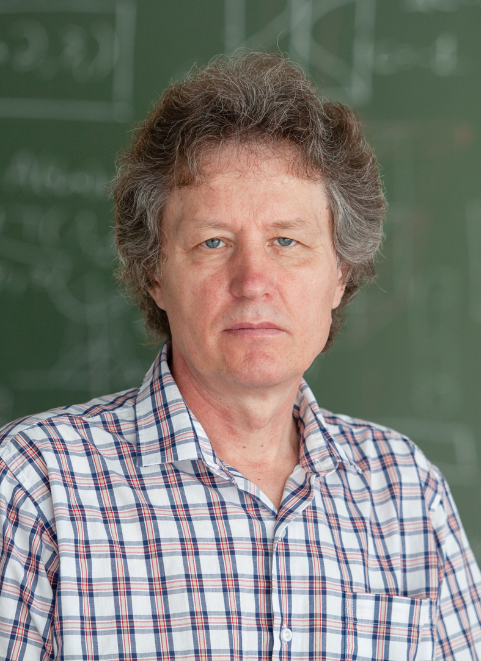 Vyacheslav Silkin合作论文数Donostia International Physics Center;Department of Physics and Materials Sciences, Faculty of Chemistry, UPV/EHU2
 S. V. Rabotkin合作论文数2
 A. M. Hashhash合作论文数Reactor and Neutron Physics Department, Nuclear Research Center2Galina P Grabovetskaya合作论文数2
 Vladislav Vladimirovich Styrov合作论文数2p louda合作论文数1M. N. Babihina合作论文数1Elena Lisichko合作论文数1M. E. Konischev合作论文数1L. Volesky合作论文数1Yu. A. Sivov合作论文数1T. V. Smekalina合作论文数1




