We introduce Nemotron 3 Ultra, a 550 billion total and 55 billion active parameter Mixture-of-Experts Hybrid Mamba-Attention language model. We pre-trained Nemotron 3 Ultra on 20 trillion text tokens, then extended the context length to 1M tokens, and post-trained using Supervised Fine Tuning (SFT), Reinforcement Learning (RL), and Multi-teacher On-Policy Distillation (MOPD). Nemotron 3 Ultra is our most capable model yet, employing multiple key technologies - LatentMoE, Multi Token Prediction (MTP), NVFP4 pre-training, multi-environment RLVR, MOPD, and reasoning budget control. Nemotron 3 Ultra achieves up to ~6x higher inference throughput as compared to state-of-the-art publicly available LLMs while attaining on-par accuracy. The state-of-the-art accuracy, high inference throughput, and 1M token context length make Nemotron 3 Ultra ideal for long-running autonomous agentic tasks. We open-source the base, post-trained, and quantized checkpoints, along with the training data and recipe on HuggingFace.
We describe the pre-training, post-training, and quantization of Nemotron 3 Super, a 120 billion (active 12 billion) parameter hybrid Mamba-Attention Mixture-of-Experts model. Nemotron 3 Super is the first model in the Nemotron 3 family to 1) be pre-trained in NVFP4, 2) leverage LatentMoE, a new Mixture-of-Experts architecture that optimizes for both accuracy per FLOP and accuracy per parameter, and 3) include MTP layers for inference acceleration through native speculative decoding. We pre-trained Nemotron 3 Super on 25 trillion tokens followed by post-training using supervised fine tuning (SFT) and reinforcement learning (RL). The final model supports up to 1M context length and achieves comparable accuracy on common benchmarks, while also achieving up to 2.2x and 7.5x higher inference throughput compared to GPT-OSS-120B and Qwen3.5-122B, respectively. Nemotron 3 Super datasets, along with the base, post-trained, and quantized checkpoints, are open-sourced on HuggingFace.
Code agents have gained widespread adoption due to their strong code generation capabilities and integration with code interpreters, enabling dynamic execution, debugging, and interactive programming capabilities. While these advancements have streamlined complex workflows, they have also introduced critical safety and security risks. Current static safety benchmarks and red-teaming tools are inadequate for identifying emerging real-world risky scenarios, as they fail to cover certain boundary conditions, such as the combined effects of different jailbreak tools. In this work, we propose RedCodeAgent, the first automated red-teaming agent designed to systematically uncover vulnerabilities in diverse code agents. With an adaptive memory module, RedCodeAgent can leverage existing jailbreak knowledge, dynamically select the most effective red-teaming tools and tool combinations in a tailored toolbox for a given input query, thus identifying vulnerabilities that might otherwise be overlooked. For reliable evaluation, we develop simulated sandbox environments to additionally evaluate the execution results of code agents, mitigating potential biases of LLM-based judges that only rely on static code. Through extensive evaluations across multiple state-of-the-art code agents, diverse risky scenarios, and various programming languages, RedCodeAgent consistently outperforms existing red-teaming methods, achieving higher attack success rates and lower rejection rates with high efficiency. We further validate RedCodeAgent on real-world code assistants, e.g., Cursor and Codeium, exposing previously unidentified security risks. By automating and optimizing red-teaming processes, RedCodeAgent enables scalable, adaptive, and effective safety assessments of code agents.
Pre-training datasets are typically collected from web content and lack inherent domain divisions. For instance, widely used datasets like Common Crawl do not include explicit domain labels, while manually curating labeled datasets such as The Pile is labor-intensive. Consequently, identifying an optimal pre-training data mixture remains a challenging problem, despite its significant benefits for pre-training performance. To address these challenges, we propose CLustering-based Iterative Data Mixture Bootstrapping (Nemotron-CLIMB), an automated framework that discovers, evaluates, and refines data mixtures in a pre-training setting. Specifically, Nemotron-CLIMB embeds and clusters large-scale datasets in a semantic space and then iteratively searches for optimal mixtures using a smaller proxy model and a predictor. When continuously trained on 400B tokens with this mixture, our 1B model exceeds the state-of-the-art Llama-3.2-1B by 2.0
The rapid advancement of large language models (LLMs) necessitates effective mechanisms to ensure their responsible deployment by accurately distinguishing unsafe content from benign content. While substantial safety datasets are available in English, multilingual safety modeling remains underexplored due to limited open-source safety datasets in other languages. Even within English datasets, safe yet sensitive corner-case content is scarce, leading to shortcut learning by models and non-trivial false-positive rates. To mitigate these issues, we introduce a novel minimax reinforcement learning (RL) framework wherein a data generator and a classifier model co-evolve, facilitating the production of high-quality synthetic multilingual safety data. We theoretically formalize this interaction as a minimax game and rigorously demonstrate convergence to a Nash equilibrium. Empirical evaluations confirm that our synthetic data generation method significantly enhances the classifier model performance, enabling a substantially smaller model to surpass the state-of-the-art by nearly 10
Single-cell large language models (scLLMs) capture essential biological insights from vast single-cell atlases but struggle in out-of-context applications, where zero-shot predictions can be unreliable. To address this, we introduce a single-cell parameter-efficient fine-tuning (scPEFT) framework that integrates learnable, low-dimensional adapters into scLLMs. By freezing the backbone model and updating only the adapter parameters, scPEFT efficiently adapts to specific tasks using limited custom data. This approach mitigates catastrophic forgetting, reduces parameter tuning by over 96%, and decreases GPU memory usage by more than half, significantly enhancing scLLMs's accessibility for resource-constrained researchers. Validated across diverse datasets, scPEFT outperformed zero-shot models and traditional fine-tuning in disease-specific, cross-species, and under-characterized cell population tasks. Its attention-mechanism analysis identified COVID-related genes associated with specific cell states and uncovered unique blood cell subpopulations, demonstrating scPEFT's capacity for condition-specific interpretations. These findings position scPEFT as an efficient solution for improving scLLMs' utilities in general single-cell analyses.
A central challenge in reinforcement learning (RL) is its dependence on extensive real-world interaction data to learn task-specific policies. While recent work demonstrates that large language models (LLMs) can mitigate this limitation by generating synthetic experience (noted as imaginary rollouts) for mastering novel tasks, progress in this emerging field is hindered due to the lack of a standard benchmark. To bridge this gap, we introduce ImagineBench, the first comprehensive benchmark for evaluating offline RL algorithms that leverage both real rollouts and LLM-imaginary rollouts. The key features of ImagineBench include: (1) datasets comprising environment-collected and LLM-imaginary rollouts; (2) diverse domains of environments covering locomotion, robotic manipulation, and navigation tasks; and (3) natural language task instructions with varying complexity levels to facilitate language-conditioned policy learning. Through systematic evaluation of state-of-the-art offline RL algorithms, we observe that simply applying existing offline RL algorithms leads to suboptimal performance on unseen tasks, achieving 35.44 training on real rollouts for hard tasks. This result highlights the need for algorithm advancements to better leverage LLM-imaginary rollouts. Additionally, we identify key opportunities for future research: including better utilization of imaginary rollouts, fast online adaptation and continual learning, and extension to multi-modal tasks. Our code is publicly available at https://github.com/LAMDA-RL/ImagineBench.
Training with larger mini-batches improves the convergence rate and can yield superior performance. However, training with large mini-batches becomes prohibitive for Large Language Models (LLMs), due to the large GPU memory requirement. To address this problem, an effective approach is finding small mini-batch coresets that closely match the gradient of larger mini-batches. However, this approach becomes infeasible and ineffective for LLMs, due to the highly imbalanced mixture of sources in language data, use of the Adam optimizer, and the very large gradient dimensionality of LLMs. In this work, we address the above challenges by proposing Coresets for Training LLMs (CoLM). First, we show that mini-batch coresets found by gradient matching do not contain representative examples of the small sources w.h.p., and thus including all examples of the small sources in the mini-batch coresets is crucial for optimal performance. Second, we normalize the gradients by their historical exponential to find mini-batch coresets for training with Adam. Finally, we leverage zeroth-order methods to find smooth gradient of the last V-projection matrix and sparsify it to keep the dimensions with the largest normalized gradient magnitude. We apply CoLM to fine-tuning Phi-2, Phi-3, Zephyr, and Llama-3 models with LoRA on MathInstruct and SuperGLUE benchmark. Remarkably, CoLM reduces the memory requirement of fine-tuning by 2x and even outperforms training with 4x larger mini-batches. Moreover, CoLM seamlessly integrates with existing memory-efficient training methods like LoRA, further reducing the memory requirements of training LLMs.
Despite the effectiveness of data selection for pretraining and instruction fine-tuning large language models (LLMs), improving data efficiency in supervised fine-tuning (SFT) for specialized domains poses significant challenges due to the complexity of fine-tuning data. To bridge this gap, we introduce an effective and scalable data selection method for SFT, SmallToLarge (S2L), which trains a small model, clusters loss trajectories of the examples, and samples from these clusters to guide data selection for larger models. We prove that during fine-tuning, samples within the same loss trajectory cluster exhibit similar gradients. Then, we show that S2L subsets have a bounded gradient error w.r.t. the full data, hence guarantee convergence to the neighborhood of the optimal solution. We demonstrate through extensive experiments that S2L significantly improves data efficiency in SFT for mathematical problem-solving, reducing the training data requirement to just $11$% of the original MathInstruct dataset to match full dataset performance while outperforming state-of-the-art data selection algorithms by an average of $4.7$% across $6$ in- and out-domain evaluation datasets. Remarkably, selecting only 50K data for SFT, S2L achieves a $32.7$% accuracy on the challenging MATH benchmark, improving Phi-2 by $16.6$%. In clinical text summarization on the MIMIC-III dataset, S2L again outperforms training on the full dataset using only $50$% of the data. Notably, S2L can perform scalable data selection using a reference model $100\times$ smaller than the target model, proportionally reducing the computational cost.
Dataset distillation aims to minimize the time and memory needed for training deep networks on large datasets, by creating a small set of synthetic images that has a similar generalization performance to that of the full dataset. However, current dataset distillation techniques fall short, showing a notable performance gap when compared to training on the original data. In this work, we are the first to argue that using just one synthetic subset for distillation will not yield optimal generalization performance. This is because the training dynamics of deep networks drastically change during the training. Hence, multiple synthetic subsets are required to capture the training dynamics at different phases of training. To address this issue, we propose Progressive Dataset Distillation (PDD). PDD synthesizes multiple small sets of synthetic images, each conditioned on the previous sets, and trains the model on the cumulative union of these subsets without requiring additional training time. Our extensive experiments show that PDD can effectively improve the performance of existing dataset distillation methods by up to 4.3%. In addition, our method for the first time enable generating considerably larger synthetic datasets.
Pretrained machine learning models need to be adapted to distribution shifts when deployed in new target environments. When obtaining labeled data from the target distribution is expensive, few-shot adaptation with only a few examples from the target distribution becomes essential. In this work, we propose MixPro, a lightweight and highly data-efficient approach for few-shot adaptation. MixPro first generates a relatively large dataset by mixing (linearly combining) pre-trained embeddings of large source data with those of the few target examples. This process preserves important features of both source and target distributions, while mitigating the specific noise in the small target data. Then, it trains a linear classifier on the mixed embeddings to effectively adapts the model to the target distribution without overfitting the small target data. Theoretically, we demonstrate the advantages of MixPro over previous methods. Our experiments, conducted across various model architectures on 8 datasets featuring different types of distribution shifts, reveal that MixPro can outperform baselines by up to 7\%, with only 2-4 target examples.
Vision-Language Models (VLMs) are pretrained on large, diverse, and noisy web-crawled datasets. This underscores the critical need for dataset pruning, as the quality of these datasets is strongly correlated with the performance of VLMs on downstream tasks. Using CLIPScore from a pretrained model to only train models using highly-aligned samples is one of the most successful methods for pruning. We argue that this approach suffers from multiple limitations including: false positives and negatives due to CLIP's pretraining on noisy labels. We propose a pruning signal, Sieve, that employs synthetic captions generated by image-captioning models pretrained on small, diverse, and well-aligned image-text pairs to evaluate the alignment of noisy image-text pairs. To bridge the gap between the limited diversity of generated captions and the high diversity of alternative text (alt-text), we estimate the semantic textual similarity in the embedding space of a language model pretrained on unlabeled text corpus. Using DataComp, a multimodal dataset filtering benchmark, when evaluating on 38 downstream tasks, our pruning approach, surpasses CLIPScore by 2.6% and 1.7% on medium and large scale respectively. In addition, on retrieval tasks, Sieve leads to a significant improvement of 2.7% and 4.5% on medium and large scale respectively.
Data curation is commonly considered a "secret-sauce" for LLM training, with higher quality data usually leading to better LLM performance. Given the scale of internet-scraped corpora, data pruning has become a larger and larger focus. Specifically, many have shown that de-duplicating data, or sub-selecting higher quality data, can lead to efficiency or performance improvements. Generally, three types of methods are used to filter internet-scale corpora: embedding-based, heuristic-based, and classifier-based. In this work, we contrast the former two in the domain of finetuning LLMs for code generation. We find that embedding-based methods are often confounded by length, and that a simple heuristic–pruning long files–outperforms other methods in compute-limited regimes. Our method can yield up to a 2x efficiency benefit in training (while matching performance) or a 3.5 improvement on HumanEval (while matching compute). However, we find that perplexity on held-out long files can increase, begging the question of whether optimizing data mixtures for common coding benchmarks (HumanEval, MBPP) actually best serves downstream use cases. Overall, we hope our work builds useful intuitions about code data (specifically, the low quality of extremely long code files) provides a compelling heuristic-based method for data pruning, and brings to light questions in how we evaluate code generation models.
Neural networks trained with (stochastic) gradient descent have an inductive bias towards learning simpler solutions. This makes them highly prone to learning spurious correlations in the training data, that may not hold at test time. In this work, we provide the first theoretical analysis of the effect of simplicity bias on learning spurious correlations. Notably, we show that examples with spurious features are provably separable based on the model's output early in training. We further illustrate that if spurious features have a small enough noise-to-signal ratio, the network's output on the majority of examples is almost exclusively determined by the spurious features, leading to poor worst-group test accuracy. Finally, we propose SPARE, which identifies spurious correlations early in training and utilizes importance sampling to alleviate their effect. Empirically, we demonstrate that SPARE outperforms state-of-the-art methods by up to 21.1% in worst-group accuracy, while being up to 12x faster. We also show that SPARE is a highly effective but lightweight method to discover spurious correlations.
Deep neural networks often exploit non-predictive features that are spuriously correlated with class labels, leading to poor performance on groups of examples without such features. Despite the growing body of recent works on remedying spurious correlations, the lack of a standardized benchmark hinders reproducible evaluation and comparison of the proposed solutions. To address this, we present SpuCo, a python package with modular implementations of state-of-the-art solutions enabling easy and reproducible evaluation of current methods. Using SpuCo, we demonstrate the limitations of existing datasets and evaluation schemes in validating the learning of predictive features over spurious ones. To overcome these limitations, we propose two new vision datasets: (1) SpuCoMNIST, a synthetic dataset that enables simulating the effect of real world data properties e.g. difficulty of learning spurious feature, as well as noise in the labels and features; (2) SpuCoAnimals, a large-scale dataset curated from ImageNet that captures spurious correlations in the wild much more closely than existing datasets. These contributions highlight the shortcomings of current methods and provide a direction for future research in tackling spurious correlations. SpuCo, containing the benchmark and datasets, can be found at https://github.com/BigML-CS-UCLA/SpuCo, with detailed documentation available at https://spuco.readthedocs.io/en/latest/.
This paper focuses on the problem of transplanting category-and-task-specific neural networks to a generic, modular network without strong supervision. Unlike traditional deep neural networks (DNNs) with black-box representations, we design a functionally modular network architecture, which divides the entire DNN into several functionally meaningful modules. Like building LEGO blocks, we can teach the proposed DNN a new object category by directly transplanting the module corresponding to the object category from another DNN, with a few or even without sample annotations. Our method incrementally adds new categories to the DNN, which do not affect representations of existing categories. Such a strategy of incremental network transplanting can avoid the typical catastrophic-forgetting problem in continual learning. We further develop a back distillation method to overcome challenges of model optimization in network transplanting. In experiments, our method with much fewer training samples outperformed baselines.
Deep neural networks often exploit non-predictive features that are spuriously correlated with class labels, leading to poor performance on groups of examples without such features. Despite the growing body of recent works on remedying spurious correlations, the lack of a standardized benchmark hinders reproducible evaluation and comparison of the proposed solutions. To address this, we present SpuCo, a python package with modular implementations of state-of-the-art solutions enabling easy and reproducible evaluation of current methods. Using SpuCo, we demonstrate the limitations of existing datasets and evaluation schemes in validating the learning of predictive features over spurious ones. To overcome these limitations, we propose two new vision datasets: (1) SpuCoMNIST, a synthetic dataset that enables simulating the effect of real world data properties e.g. difficulty of learning spurious feature, as well as noise in the labels and features; (2) SpuCoAnimals, a large-scale dataset curated from ImageNet that captures spurious correlations in the wild much more closely than existing datasets. These contributions highlight the shortcomings of current methods and provide a direction for future research in tackling spurious correlations. SpuCo, containing the benchmark and datasets, can be found at https://github.com/BigML-CS-UCLA/SpuCo, with detailed documentation available at https://spuco.readthedocs.io/en/latest/.
Multimodal contrastive pretraining has been used to train multimodal representation models, such as CLIP, on large amounts of paired image-text data. However, previous studies have revealed that such models are vulnerable to backdoor attacks. Specifically, when trained on backdoored examples, CLIP learns spurious correlations between the embedded backdoor trigger and the target label, aligning their representations in the joint embedding space. Injecting even a small number of poisoned examples, such as 75 examples in 3 million pretraining data, can significantly manipulate the model's behavior, making it difficult to detect or unlearn such correlations. To address this issue, we propose CleanCLIP, a finetuning framework that weakens the learned spurious associations introduced by backdoor attacks by independently re-aligning the representations for individual modalities. We demonstrate that unsupervised finetuning using a combination of multimodal contrastive and unimodal self-supervised objectives for individual modalities can significantly reduce the impact of the backdoor attack. Additionally, we show that supervised finetuning on task-specific labeled image data removes the backdoor trigger from the CLIP vision encoder. We show empirically that CleanCLIP maintains model performance on benign examples while erasing a range of backdoor attacks on multimodal contrastive learning. Code and pre-trained checkpoints are available at https://github. com/nishadsinghi/CleanCLIP.
 Baharan Mirzasoleiman合作论文数Computer Science Department, Samueli School of Engineering, University of California, Los Angeles16
 Quanshi Zhang (张拳石)合作论文数School of Computer Science, Shanghai Jiao Tong University;John Hopcroft Center for Computer Science, Department of Computer Science & Engineering, School of Electronic Information and Electrical Engineering, Shanghai Jiao Tong University8
 Haotian Ma合作论文数University of Wisconsin - Madison5
 Ying Nian Wu合作论文数Department of Statistics, University of California, Los Angeles5
 Wenhan Yang (杨文翰)合作论文数Department of Computer Science, Samueli School of Engineering, University of California, Los Angeles;Samsung Research America4
 Yihao Xue (薛翌豪)合作论文数Department of Computer Science, University of California, Los Angeles4
 Mostafa Elhoushi合作论文数Cerebras Systems3Dan Su合作论文数3
 Mostofa Patwary合作论文数NVIDIA3
 Ari Morcos合作论文数DatologyAI3
 Pavlo Molchanov合作论文数NVIDIA Research3
 Markus Kliegl合作论文数Swarthmore College, Swarthmore College3
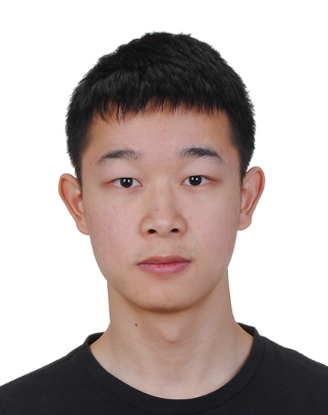 Yonggan Fu (傅泳淦)合作论文数NVIDIA Research3
 Song-Chun Zhu (朱松纯)合作论文数Institute for Artificial Intelligence, Peking University;Beijing Institute for General Artificial Intelligence;Department of Automation, Tsinghua University3
 Besmira Nushi合作论文数NVIDIA3
 Jan Kautz合作论文数Department of Computer Science, University College London3Rohit Watve合作论文数2Victor Cui合作论文数2Guyue Huang合作论文数2Oren Tropp合作论文数2Najeeb Nabwani合作论文数2Omri Puny合作论文数2Mohammad Dabbah合作论文数2Itay Levy合作论文数2Ewa Dobrowolska合作论文数2Christian Munley合作论文数2Charlie Truong合作论文数2Sirshak Das合作论文数2Anna Shors合作论文数2Tomasz Grzegorzek合作论文数2Talor Abramovich合作论文数2Venkat Srinivasan合作论文数2Udi Karpas合作论文数2Tomer Asida合作论文数2Tim Moon合作论文数2Ritika Borkar合作论文数2Peter Jin合作论文数2Nidhi Bhatia合作论文数2Michael Boone合作论文数2Meredith Price合作论文数2Keith Wyss合作论文数2Katherine Cheung合作论文数2Junkeun Yi合作论文数2Hexin Wang合作论文数2Herman Sahota合作论文数2Elliott Ning合作论文数2Daniel Afrimi合作论文数2Chintan Patel合作论文数2Charles Wang合作论文数2




