COVID-19 pandemic is wreaking havoc and bringing the whole world into a standstill in an unprecedented fashion.Joint efforts from multiple sectors to address the various aspects of environ-ment and public health through usage of green technologies have become essential.The application of cleaner and effective tech-nologies can be expanded to management and control,pollution mitigation and valorization of waste.In this Special Issue of Geo-science Frontiers,we present contributions addressing the interac-tions of COVID-19 in relation to environment and human health.
Iron (Fe) in aerosol particles is a major external source of micronutrients for marine ecosystems, and poses a potential threat to human health. To understand these impacts of aerosol Fe, it is essential to quantify the sources of dissolved and total Fe. In this study, we applied a receptor modelling for the first time to apportion the sources of dissolved and total Fe in fine particles collected under five different weather conditions in Hangzhou megacity of Eastern China, which is upwind of East Asian outflow. Results showed that Fe solubility (dissolved to total Fe) was the largest in fog days (6.7 ± 3.0%), followed by haze (4.8 ± 1.9%), dust (2.1 ± 0.7%), clear (1.9 ± 1.0%), and rain (0.9 ± 0.5%) days. Positive Matrix Factorisation (PMF) analysis suggested that industrial and traffic emissions were the two dominant sources contributing to the dissolved and total Fe during haze and fog days through the primary emission and atmospheric processing, but natural dust minerals were the dominant source for Fe in dust days. Here the PMF identified additional 15% of dissolved Fe associated with secondary sources during haze and fog days, although it was less than 5% during dust and clear days. Transmission electron microscopy analysis of individual particles showed that approximately 76% and 87% of Fe-containing particles were internally mixed with acidic secondary aerosols in haze and fog days, respectively. Our results indicated that wet surface of aerosol particles promotes heterogeneous reactions between acidic species and anthropogenic Fe aerosol, contributing to higher Fe solubility during fog and haze days.
The authors report that PBAP were found to contain key, unique compositional markers (e.g., elemental P), which is consistent with previous studies performing similar analysis. A key result of this study was demonstrating that 20% of bacterial particles were internally mixed with non-PBAP, which may have a significant impact on the longrange transport of bacteria and aerosol budgets as well as mixed-phase aerosol-cloud
对北京地铁异物侵限事件进行调研和总结,根据异物侵限事件发生的位置、侵限源特征及其危害程度对异物侵限源进行分类.在此基础上,提出一种基于雷达-视频多手段融合的智能异物侵限检测方法,采用高清摄像机视频检测、雷达测距和双目立体测距技术等开发一套异物侵限探测设备.通过模拟不同异物侵限工况在北京地铁某试车线开展现场试验,验证该设备具有识别精度高,并可实现实时预警、报警等功能,可为北京地铁安全运营提供技术保障.
Weijun Li, Lei Liu, Qi Yuan, Liang Xu, Yanhong Zhu, Bingbing Wang, Hua Yu, Xiaokun Ding, Jian Zhang, Dao Huang, Dantong Liu, Wei Hu, Daizhou Zhang, Pingqing Fu, Maosheng Yao, Min Hu, Xiaoye Zhang, Zongbo Shi Department of Atmospheric Sciences, School of Earth Sciences, Zhejiang University, Hangzhou 310027, China State Key Laboratory of Marine Environmental Science, College of Ocean and Earth Sciences, Xiamen University, Xiamen 361102, China. College of Life and Environmental Sciences, Hangzhou Normal University, 310036, Hangzhou, China Department of Chemistry, Zhejiang University, Hangzhou 310027, China Institute of Surface-Earth System Science, Tianjin University, 300072, Tianjin, China Faculty of Environmental and Symbiotic Sciences, Prefectural University of Kumamoto, Kumamoto 862-8502, Japan State Key Joint Laboratory of Environmental Simulation and Pollution Control, College of Environmental Sciences and Engineering, Peking University, Beijing 100871, China Key Laboratory of Atmospheric Chemistry, Chinese Academy of Meteorological Sciences, Beijing,
Environment Research Institute, Shandong University, Jinan, Shandong 250100, China State Key Laboratory of Coal Resources and Safe Mining, China University of Mining and Technology, Beijing 100083, China School of Earth and Space Exploration & Department of Chemistry and Biochemistry, Arizona State University, Tempe, AZ 85287-1404, USA Faculty of Environmental and Symbiotic Sciences, Prefectural University of Kumamoto, Kumamoto 862-8502, Japan Centre for Atmospheric Watch and Services, Chinese Academy of Meteorological Sciences, China Meteorological Administration, Beijing, China Weather Modification Office of Shanxi Province, Taiyuan 030032, China
 Yanhong Zhu合作论文数2
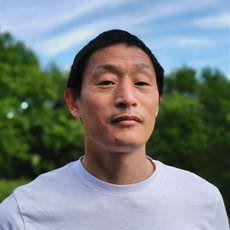 Zongbo Shi合作论文数School of Geography, Earth and Environmental Sciences, College of Life and Environmental Sciences, University of Birmingham2
 Longyi Shao (邵龙义)合作论文数School of Geosciences & Surveying Engineering, China University of Mining & Technology-Beijing2
 Daizhou Zhang (張代洲)合作论文数Faculty of Environmental and Symbiotic Sciences, Prefectural University of Kumamoto2Luis Silva合作论文数1
 Teresa Moreno合作论文数1Jue LIN (林珏)合作论文数1Xiaokun Ding合作论文数1Zhenghui Xiao合作论文数1Yang Shushen合作论文数1Hua Yu合作论文数1Songfeng LI (李松峰)合作论文数1PeiRen Li (李培仁)合作论文数山西省人工降雨防雹办公室1
 Lei Liu (刘蕾)合作论文数School of Ecology and Applied Meteorology, Nanjing University of Information Science & Technology1
 Pingqing Fu (傅平青)合作论文数Institute of Surface-Earth System Science, School of Earth System Science, Tianjin University;Tianjin University Library1
 Bingbing Wang (汪冰冰)合作论文数College of Ocean and Earth Sciences, Xiamen University1
 Qi Yuan合作论文数1
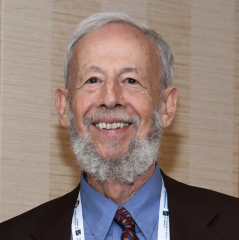 Peter Buseck合作论文数School of Molecular Sciences, Arizona State University;School of Earth and Space Exploration, Arizona State University1
 Dantong Liu (刘丹彤)合作论文数School of Earth Sciences, Zhejiang University1
 Wei Hu (胡伟)合作论文数School of Earth System Science, Tianjin University1
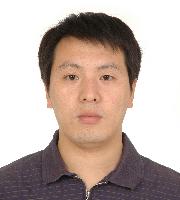 Yingjie Wang (王英杰)合作论文数School of Civil Engineering, Beijing Jiaotong University1
 Jinjuan Li (李金娟)合作论文数College of Resources and Environmental Engineering, Guizhou University1
 Dao Huang (黄道)合作论文数College of Civil Engineering and Architecture, Zhejiang University1
 Wenxing Wang (王文兴)合作论文数Environment Research Institute, Shandong University1TianKun Xu (徐田坤)合作论文数Beijing Subway1
 Min Hu (胡敏)合作论文数College of Environmental Sciences and Engineering, Peking University1
 Li Yan (阎莉)合作论文数Research Center for Eco-Environmental Sciences, Chinese Academy of Sciences1
 Maosheng Yao (要茂盛)合作论文数College of Environmental Sciences and Engineering, Peking University1Liang Xu合作论文数1




