Object detection based on Knowledge Distillation can enhance the capabilities and performance of 5G and 6G networks in various domains, such as autonomous vehicles, smart surveillance, and augmented reality. The integration of object detection with Knowledge Distillation techniques is expected to play a pivotal role in realizing the full potential of these networks. This study presents Shared Knowledge Distillation (Shared-KD) as a solution to overcome optimization challenges caused by disparities in cross-layer features between teacher–student networks. The significant gaps in intermediate-level features between teachers and students present a considerable obstacle to the efficacy of distillation. To tackle this issue, we draw inspiration from collaborative learning in real-world education, where teachers work together to prepare lessons and students engage in peer learning. Building upon this concept, our innovative contributions in model construction are highlighted as follows: (1) A teacher knowledge augmentation module: this module is proposed to combine lower-level teacher features, facilitating the knowledge transfer from the teacher to the student. (2) A student mutual learning module is introduced to enable students to learn from each other, mimicking the peer learning concept in collaborative learning. (3) The Teacher Share Module combines lower-level teacher features: the specific functionality of the teacher knowledge augmentation module is described, which involves combining lower-level teacher features. (4) The multi-step transfer process can be easily optimized due to the minimal gap between the features: the proposed approach breaks down the knowledge transfer process into multiple steps, which can be easily optimized due to the minimal gap between the features involved in each step. Shared-KD uses simple feature losses without additional weights in transformation, resulting in an efficient distillation process that can be easily combined with other methods for further improvement. The effectiveness of our approach is validated through experiments on popular tasks such as object detection and instance segmentation.
Deep learning techniques have gained significant interest due to their success in large model scenarios. However, large models often require massive computational resources, which can challenge end devices with limited storage capabilities. Transferring knowledge from big to small models and achieving similar results with limited resources requires further research. Knowledge distillation techniques, which involve using teacher-student models to migrate large model capabilities to small models, have been widely used in model compression and knowledge transfer. In this paper, a novel knowledge distillation approach is proposed, which utilizes the sparse attention mechanism (SAKD). SAKD computes attention using student features as queries and teacher features as key values and performs sparse attention values by random deactivation. Then, this sparse attention value is used to reweight the feature distance of each teacher-student feature pair to avoid negative transfer. Comprehensive experiments demonstrate the effectiveness and generality of our approach. Moreover, our SAKD method outperforms previous state-of-the-art methods on image classification tasks.
The construction of digital road holographic application system has become an important part in the construction and long-term operation of smart cities.It first analyzes the current development status of digital roads,analyzes the key capabilities of digital road holographic applications from three perspectives,and proposes an overall solution for digital road holographic business applications.Finally,from the long-term development of digital road holographic business applications,development strategies and suggestions are given.
The vigorous development of the digital economy brings new opportunities for enterprise digital transformation. This article proposes a knowledge-sharing-based digital consulting capacity platform, focusing on important digital transformation concerns in the consulting profession. By sorting out the practical problems and challenges, the optimization path of constructing the digital consulting capability-sharing platform for the intelligent city field is explored. Seven business centers are built to gather digital resources such as policies, industry trends, and market information. Knowledge precipitation is more convenient and comprehensive, and business management is more scientific. This paper analyzes the framework of the digital consulting capability platform in detail. Furthermore, this paper carries out the actual deployment and verifies the effectiveness of the digital consulting capability platform scheme based on knowledge sharing.
The emergence of 5G networks has led to a significant increase in the number of base stations, resulting in smaller network coverage areas for individual base stations. The presence of various heterogeneous access nodes further exacerbates the situation, as the time for handover signal interactions becomes shorter. Traditional mobile management mechanisms, however, lack comprehensive considerations and are prone to issues such as low switch efficiency. Therefore, this paper proposes a mobile management mechanism based on identity-location separation. By utilizing identity and routing identifiers, this approach addresses the strong coupling issues of Internet Protocol (IP), effectively mitigating problems associated with mobile anchor points and reducing signaling overhead. To maintain mobility in access networks, this study introduces Multi-Access Edge Computing (MEC) technology. By acquiring additional contextual information, the proposed mechanism executes corresponding handover decision algorithms, including residence time predictions within small cell clusters and business-driven network access selection. Simulation results validate the superiority of the proposed mechanism over traditional cellular handover mechanisms.
This manuscript aims to study the positioning requirements, build an understanding of the positioning framework for the C-V2X system, and provide specific technologies according to the requirements and environments. Cellular vehicle-to-everything (C-V2X) is critical in allowing safe, dependable, and efficient transportation services as the foundation for vehicles to communicate with each other and everything around them. Positioning is a key component of C-V2X, which involves determining the vehicle's absolute and relative positions in relation to other objects such as buildings, pedestrians, traffic signs, and other cars. This manuscript will deeply explore the feasibility of Highly Accurate positioning for the C-V2X system. In this manuscript, Key Performance Indicators (KPIs) for C-V2X positioning will be described at the beginning. Then positioning challenges and conventional positioning methods for C-V2X like GNSS/Cellular/Sensors will be reviewed. Afterward, UE-based/UE-assisted C-V2X positioning architectures, and a series of key positioning technologies such as sidelink positioning, data fusion and synchronization will be proposed. Lastly, some testing and typical application cases will be provided.
Passive heat dissipation cooling technologies based on natural convection in open channels can effectively control the maximum temperature and improve the temperature homogeneity of 5G base stations, data centers and other equipment. In this paper, the flow and heat transfer of natural convection in an open-ended square channel with two suspending heat sources are studied through numerical simulation. The distributions of the temperature field and flow field in the channel with different horizontal distances and vertical altitude differenced of the heat sources are acquired via the finite element method (FEM)-based COMSOL Multiphysics. The changes in local temperature and the local Nusselt number are obtained. The relationships between the temperature field, flow field, and Nusselt number with respect to the geometric parameters of the heat sources are discussed. With different geometric parameters of the two suspending heat sources, the average surface temperature at the bottom is always lower than the top, while the average Nusselt number reaches maximum and minimum values at the bottom and top surfaces, respectively. As the horizontal distance increases, the maximum vertical airflow velocity decreases. The average surface temperature and local Nusselt number go through a V-shape and reverse V-shape tendency, respectively. The maximum temperature at the surface of the heat source is 397 K at a horizontal distance of 0.36 m. The local Nusselt number on the side of the heat source reaches its maximum at a horizontal distance of 0.28 m with an average value of 33.5. As the vertical altitude difference increases, the temperature difference between the heat sources increases from 0 K to 54 K, and the maximum vertical airflow velocity goes through a reverse V-shape tendency. The Nusselt number of the right heat source decreases to a certain value of about 20, while that of the left heat source goes through a fluctuating tendency. The results show that the best arrangement of the heat sources is a vertical altitude difference of 0 m and a horizontal distance of 0.28 m.
As a key entry point for constructing a smart city, 5G smart park is characterized by relatively single traffic elements and clear business requirements, which is conducive to the realization of 5G+C-V2X commercialization. 5G network can bring network access conditions of Enhanced Mobile Broadband, Ultra-Reliable and Low Latency Communications and Massive Machine Type Communication for traffic groups in the park. This paper firstly analyzes the characteristics of the 5G network and the actual demand of traffic groups in the smart park. On this basis, we propose an intelligent vehicle network system based on 5G+C-V2X, which can provide a variety of intelligent traffic innovation technologies and business demonstrations. This system can be used to provide vehicle-road-cloud-network intelligent transportation services in multiple scenarios during the Winter Olympics. This can be an opportunity to create industrial benchmark cases of 5G innovation business, which effectively lead the industrial innovation of intelligent vehicle networking and promote better and faster development of the global Internet of Vehicles industry.
Cellular vehicle-to-everything (C-V2X) is essential in enabling safe, reliable, and efficient transportation services. It serves as serve as the foundation for vehicles to communicate with each other and everything around them. One fundamental element in C-V2X is positioning, namely extracting the vehicle’s absolute and relative positions concerning other objects such as buildings, pedestrians, traffic signs, and other vehicles. However, its feasibility in enabling vehicular positioning has not been fully explored yet. In this paper, key performance indicators (KPIs) for C-V2X positioning have been described firstly. Then positioning challenges and conventional positioning methods for C-V2X are reviewed. Afterward, two user equipment (UE)-based and UE-assisted C-V2X positioning architectures are proposed, and key technologies are also described. Lastly, testing and typical application cases are provided.
 Xingrong Xu合作论文数5Meng SONG (宋蒙)合作论文数3
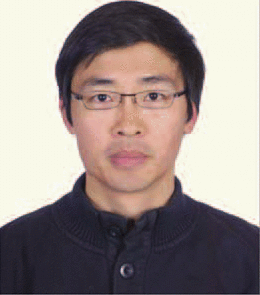
 Pengzhou Zhang (张鹏洲)合作论文数School of Computer Science and Cubersecurity, Communication University of China3Ti Wang合作论文数2Chuanxin Zeng合作论文数2
 Junjie Xia合作论文数2Jiachi Zhang合作论文数Shandong Jiaotong University2
 Yuanyuan Fan合作论文数Beijing Jiaotong Univ, Sch Elect & Informat Engn, Beijing 100044, Peoples R China2
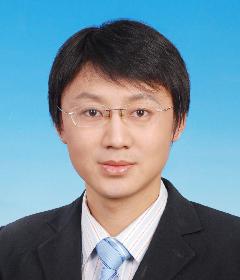 Liu Liu (刘留)合作论文数School of Electronic and Information Engineering, Beijing Jiaotong University2
 Lexi Xu (徐乐西)合作论文数China Unicom1
 Haolin Zhang (张浩林)合作论文数1Gu-Yuan Li合作论文数1Meng Song合作论文数1
 Gaofeng Hong合作论文数1
 Qi Liu (刘淇)合作论文数School of Data Science, University of Science and Technology of China;State Key Laboratory of Cognitive Intelligence, School of Computer Science and Technology, University of Science and Technology of China;Anhui Province Key Laboratory of Big Data Analysis and Application, School of Computer Science and Technology, University of Science and Technology of China1
 Jia-Jia Yu (于佳佳)合作论文数School of Energy and Power Engineering, Chongqing University1
 Wei Su (苏伟)合作论文数School of Electronic and Information Engineering, Beijing Jiaotong University1




