The microstructure of metallic materials plays a crucial role in determining their performance. In order to accurately predict the dynamic recrystallization (DRX) behavior and microstructural evolution during the hot deformation process of GCr15 bearing steel, a microstructural evolution model for the DRX process of GCr15 steel was established by combining the level set (LS) method with the Yoshie–Laasraoui–Jonas dislocation dynamics model. Firstly, hot compression tests were conducted on GCr15 steel using the Gleeble-1500D thermal simulator, and the hardening coefficient k1 and dynamic recovery coefficient k2 of the Yoshie–Laasraoui–Jonas model were derived from the experimental flow stress data. The effects of temperature, strain, and strain rate on DRX behavior and grain size during the hot working process of GCr15 steel were investigated. Through secondary development of the software, the established microstructural evolution model was integrated into the DIGIMU® software. Metallographic images were imported in situ to reconstruct its initial microstructure, enabling GCr15 steel DRX microstructure finite element simulation of the hot compression process. The predicted mean grain size and flow stress demonstrated a strong correlation and excellent agreement with the experimental results. The results demonstrate that the established DRX model effectively predicts the evolution of the DRX fraction and average grain size during the hot forging process and reliably forecasts DRX behavior.
对TC4钛合金进行温度800~1000℃、应变速率0.01~5 s-1条件下热拉伸试验.基于Normalized Cockcroft&Latham、Oyane和Rice&Tracey 3种损伤模型,引入了Zener-Hollomon参数,通过遗传算法识别临界损伤值,建立TC4钛合金高温损伤模型.将这3种高温损伤模型集成到Forge?软件中,分别对拉伸试验进行仿真计算,比较拉伸试样仿真与试验的断裂长度与断口形貌.结果表明:基于Normalized Cockcroft&Latham高温损伤模型的相关系数R值最大,为0.997.模拟与试验断裂长度具有良好的相关性,且模拟断口与试验断口的形状、颈缩程度吻合度最好,表明该高温损伤模型最适用于预测TC4钛合金的损伤行为.
Warm deformation is a plastic-forming process that differs from traditional cold and hot forming techniques. At the macro level, it can effectively reduce the problem of high deformation resistance in cold deformation and improve the surface decarburization issues during the hot deformation process. Microscopically, it has significant advantages in controlling product structure, refining grain size, and enhancing product mechanical properties. The Gleeble-1500D thermal–mechanical physical simulation system was used to conduct isothermal compression tests on GCr15 bearing steel. The tests were conducted at temperatures of 600–1050 °C and strain rates of 0.01–5 s−1. Based on the experimental data, the critical strain model and dynamic recrystallization model for the warm–hot forming of GCr15 bearing steel were established in this paper. The model accuracy is evaluated using statistical indicators such as the correlation coefficient (R). The dynamic recrystallization model exhibits high predictive accuracy, as indicated by an R-value of 0.986. The established dynamic recrystallization model for GCr15 bearing steel was integrated into the Forge® 3.2 numerical simulation software through secondary program development to simulate the compression process of GCr15 warm–hot forming. The dynamic recrystallization fraction was analyzed in various deformation regions. The grain size of the severe deformation zone, small deformation zone, and difficult deformation zone was compared based on simulated compression specimens under the conditions of 1050 °C and 0.1 s−1 with the corresponding grain size obtained with measurement based on metallographic photos; the relative error between the two is 5.75%. This verifies the accuracy of the established dynamic recrystallization and critical strain models for warm–hot deformation of GCr15 bearing steel. These models provide a theoretical basis for the finite element method analysis and microstructure control of the warm–hot forming process in bearing races.
采用Gleeble-1500D热-力模拟试验机在变形温度为600~850℃和应变速率为0.01~5 s-1的条件下对GCr15轴承钢进行等温压缩试验以研究其温热变形行为.首先采用传统平均法构建了该材料的Hansel-Spittel本构模型,然后基于粒子群算法,以Hansel-Spittel本构模型各参数为自变量,目标函数为该本构模型计算得到的预测应力与试验应力之间的累积误差,目标函数值作为粒子适应度的值,通过改变粒子位置进行迭代,进一步优化该模型的参数.将试验值与预测值进行对比,使用相关系数R、均方根误差RMSE以及平均绝对相对误差AARE来衡量该模型的准确性.结果表明:优化后该模型试验值和预测值之间的相关系数R由0.972提升至0.998,均方根误差RMSE由50.896下降至14.604,平均绝对相对误差AARE由6.072%下降至2.803%,表明粒子群算法优化后的Hansel-Spittel模型能够更加精确地预测GCr15轴承钢的温热变形行为.
在800~1000℃及应变速率为0.01~5 s-1条件下对Ti6Al4V钛合金进行了高温拉伸试验,研究了其高温损伤行为.基于Normalized Cockcroft-Latham(NCL)损伤模型,提出了考虑温度及应变速率的高温损伤模型,采用Gleeble Fracture Limit(GFL)方法测定了 Ti6Al4V合金的临界损伤值.对Ti6Al4V合金拉伸过程进行了仿真模拟,并与拉伸试验的断裂长度进行对比.观察了合金的拉伸断口,分析变形条件对其断口形貌的影响.结果表明:模拟结果与试验结果的吻合度较高,相关系数R为0.993,表明该损伤模型对Ti6Al4V合金的损伤具有较高的预测精度;断口分析表明Ti6Al4V合金高温下为韧性断裂,且在较高的温度和较低的应变速率下表现出较好的塑韧性.
X12 alloy steel is a new generation material for manufacturing ultra-supercritical generator rotors. Cracks will appear on the forgings during the forging process and the rotors will be scrapped in serious cases. To optimize the forging process of the rotor and avoid the occurrence of crack defects in the hot forming process, based on Oyane damage model, a high temperature damage model of X12 alloy steel was proposed by introducing the influences of temperature and strain rate on the damage evolution. A reverse analysis method was proposed to determine the critical damage value of Oyane damage model by comparing experimental and simulated fracture displacement in the tensile tests. Then, the critical damage value was determined as a function of temperature and strain rate. The high temperature damage model was combined to the commercial finite element software FORGE® to simulate the high temperature tensile test. The accuracy of the damage model was verified by comparing the difference of the fracture displacement between simulated and experimental samples. Additionally, as stress triaxiality is a significant factor influencing the damage behavior of ductile materials, the effects of temperature and strain rate on the stress triaxiality of X12 alloy steel was analyzed by simulating the high temperature tensile process, and the damage mechanism of X12 alloy steel under high stress triaxiality was analyzed by SEM (Scanning Electron Microscope).
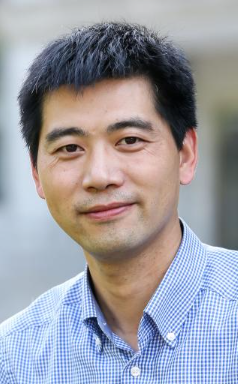 Xue-Wen Chen (陈学文)合作论文数School of Physics, Huazhong University of Science and Technology6
 Rongren Bai合作论文数4Dong Won Jung合作论文数2Yahui Si合作论文数2Bo Zhang (张博)合作论文数2Kexue Du合作论文数1Jiawei Sun合作论文数1GUO Le-le (郭乐乐)合作论文数1Tingting Lian合作论文数1Bingqi Liu合作论文数1Yuqing Du合作论文数1XuDong Zhou (周旭东)合作论文数1
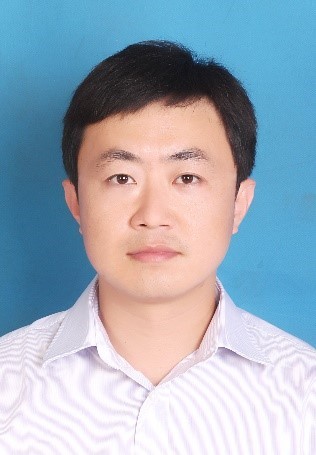 Zhipeng Li (李志鹏)合作论文数School of Metallurgical and Ecological Engineering, University of Science and Technology Beijing1Akiyoshi Osaka (尾坂明義)合作论文数Graduate School of Natural Science and Technology, Okayama University1
 Zheng Zhou (周正)合作论文数College of Materials Science and Engineering, Beijing University of Technology1




