Abstract: To enhance the resistance of the compression surface boundary layer to adverse pressure gradients and mitigate the risk of non-start in air-breathing engines, promoting an early transition to turbulence is crucial. This study investigates the use of wall-injected jets to trigger boundary layer transition on inlet compression surfaces, proposing a novel analytical framework that incorporates Kelvin-Helmholtz (KH) instability. The methodology involves establishing grid independence using the γ-Reθ transition model and validating numerical simulations against wind tunnel data. Key flow parameters, including streamwise velocity and density, were extracted from the near-wall region downstream of micro-jets injecting monatomic gases of varying molecular weights. Analysis of the evolving jet shear layers revealed how the molecular weight of the jet injectant influences the transition process and wall heat flux. By examining the underlying mechanisms through KH instability and vorticity theory, it was determined that higher molecular weights intensify shear layer KH instability. These enhanced disturbances accelerate the boundary layer transition, leading to increased skin friction and wall heat flux. Compared to helium (the lightest gas), krypton (the heaviest) shifted the transition onset and completion locations upstream by up to 32.8% and 55.7%, respectively. Despite the transition promotion, the jets reduced wall skin friction relative to the no-jet case by diminishing Reynolds stress and the wall-normal gradient of streamwise velocity, thereby partially counteracting the associated increase in heat flux. These findings provide valuable theoretical support for advancing active flow control strategies based on jet-induced transition.
给出了一种再生冷却结构非定常换热计算模型,能够支撑超燃冲压发动机再生冷却结构设计和试验研究.对发动机达到热平衡时间和非正规阶段温升时间的计算和测量结果进行了对比分析,计算比较了发动机初始壁面温度分别为300和800 K时达到热平衡的时间.研究表明,建立的再生冷却结构非定常换热计算模型具有一定的适用性,能够用于超燃冲压发动机的传热特性分析.
随着流动马赫数和温度的变化,热力学非平衡对流动的影响也在变化.为研究热力学非平衡对不同飞行马赫数下的超燃冲压发动机冷态流动的影响,对三个经典的超燃冲压发动机模型,包括JAXA M12-02超燃冲压发动机、DLR超燃冲压发动机以及HyshotⅡ超燃冲压发动机进行数值模拟.针对每个超燃冲压发动机,分别采用三种热力学模型进行模拟,包括量热完全气体模型(对应冻结流动),单温度模型(对应热力学平衡流动)以及双温度模型(对应热力学非平衡流动).计算结果表明,热力学模型对超燃冲压发动机内流波系结构的位置有一定影响:从整体上来说,双温度模型计算所得波系位置比量热完全气体模型计算结果靠后,比单温度模型计算结果靠前;不同热力学模型计算所得波系位置在发动机前段相对较为接近,而随着向下游发展,波系位置的差别逐渐增大,这是上游每一道波系位置的差别逐渐累积的结果.在发动机前段,双温度模型计算所得波系位置更接近于量热完全气体模型计算结果.通过分析不同热力学模型计算所得激波角可以对此进行解释.而就本文涉及的三个小尺寸超燃冲压发动机而言,热力学模型对气动力和力矩的影响相对较小.不同热力学模型计算所得气动力和力矩的差别主要来源于计算所得激波串位置的差别.
Abstract The measurement method of the fluid temperature suitable for small channel is given, and a fluid transfer control scheme of the area of injecting holes is designed using the balance equations of fluid mass, energy and entropy. A convective heat transfer experiment is conducted to evaluate the temperature measurement and fluid transfer control methods of the heat absorbing supercritical hydrocarbon fluid. The result shows during the heating process the injecting pressure meets the requirement, and the fluid transfer control system works well. The result can be useful for the design of regenerative cooling for hypersonic propulsion system.
Both the fuel transfer control scheme and the knowledge of fuel temperature and pressure values before injection are important to a scramjet engine. A measurement method of the fluid temperature suitable for small channel is presented, and a fluid transfer control scheme of the area of injecting holes is designed using the balance equations of fluid mass, energy and entropy. A convective heat transfer experiment is conducted to evaluate the temperature measurement and the fluid transfer control design method of the heat absorbing supercritical hydrocarbon fuel. The results show that during the heating process the injecting pressure meets the requirement, and the fluid transfer control system works well. Such results suggest that the design method in the present work would be useful in the design of regenerative cooling for scramjet engines.
The three-dimensional (3D) interactions between crossing shock waves and a turbulent boundary layer (CSWBLI) inside a symmetric double fin are experimentally studied using nanoparticle-based planar laser scattering, supersonic particle image velocimetry, and surface oil visualization. The possibility of controlling the separated flow generated by CSWBLI is considered by employing micro-ramp vortex generators. First, the fractal dimension, velocity profile, and logarithmic law of the incoming turbulent boundary layer at Mach number 2.8 are examined. Then, the flow structure and velocity distribution, which have seldom been presented in previous experiments, are measured in high resolution. The 3D behavior of the boundary layer after CSWBLI shows that the boundary layer becomes thicker behind the shock wave and converges toward the symmetry plane of the double fin. The converged effect contributes to the largest thickness of the boundary layer in the symmetry plane accompanied with a separation region near the wall. Introduction of seven equidistant micro-ramps upstream of the double fin is proved to suppress the separation region, where the arc-like vortices generated by the middle micro-ramps are found to be more sustainable along the streamwise direction. The micro-ramps can increase the momentum exchange between the boundary layer and the surrounding mainstream. At the same time, the momentum exchange induced by the micro-ramps decreases the flow velocity outside the converged region in comparison with the configuration without micro-ramps. The results obtained in this paper can provide an experimental insight into the 3D physical phenomena existing in the CSWBLI and its flow control.
Understanding heat transfer to endothermic hydrocarbon fuels (EHFs) with pyrolysis at high heat flux is a challenging issue for the design of regenerative cooling panels in the fuel-cooled thermal management technology of advanced aircrafts. In this work, the convective heat transfer of supercritical EHFs in pres-ence of pyrolysis reactions was experimentally investigated in horizontal tubes at the heat flux up to 1.836 MW/m(2) under 3.5 MPa. A CFD model with an improved kinetics (Chem Eng Sci 2019, 207, 202214) has been developed and extensively validated to get detailed information on the coupling mechanism of heat transfer and pyrolysis. The heat transfer rate can be enhanced by pyrolysis reactions at relative low heat flux (below 400 kW/m(2)). With increasing heat flux, the rapid and high-degreed pyrolysis near-wall considerably changes the local composition and thus the thermophysical properties, resulting in the significant heat absorption differences in the cross section and local heat transfer deterioration. Typically, Nub decreases from 108.8 to 73.4 (about 30%) when the heat flux increases from 426 to 758 kW/m(2). The possible reasons may be attributed to the weakened near-wall turbulence by the increased fluid viscosity in presence of secondary products, as well as the increased thermal boundary layer effect attributed to the high near-wall heat absorption and huge radial property gradient at high heat flux. (c) 2020 Elsevier Ltd. All rights reserved.
针对燃烧室主动冷却通道高温燃油的密度变化特性进行了分析,给出了燃油温度和压力等参数的测量系统设计方法,利用能量守恒和等熵关系式设计了能够适应燃油密度大幅度变化的喷注压力调控方案.为确定燃油密度变化对调控方案的影响,在直连式燃烧试验平台开展了燃油喷注压力调控试验,试验过程中燃油测控系统工作正常,燃油喷注压力和密度大幅度变化过程与计算结果吻合较好,验证了高温燃油密度计算方法和测控方法的有效性.
为获得地面试验中主动冷却燃烧室在高温状态下的结构总变形和局部应变,基于数字图像相关法开展了非接触测量试验研究.分别采用加速鲁棒特征算法和改进的圆柱曲面数字图像相关法完成了燃烧室结构总变形和局部应变测量及分析.测量结果表明,燃烧室稳定工作条件下,结构轴向总变形约4.8 mm、局部平均应变约0.0049.测量结果与工程粗略估算结果比较吻合,说明所使用的非接触测量方法有效,能够支撑燃烧室热结构设计,测量数据能够用于三维结构强度数值计算的验证.
针对大型球罐内部定检需求设计了一种新的内部定检工作台,该定检工作台主要由顶部回转平台、牵引装置、中央支撑立柱、底部支承支架和回转支撑平台组成.回转支撑臂装配于中央支撑立柱中部,上、下回转支撑臂、载人工作篮和中央支撑立柱构成双摇杆机构,保证载人工作篮在运动过程中始终保持维修员工作位置水平;使用ANSYS Workbench软件对该定检工作台主要受力结构进行了有限元分析,验证该定检工作台满足强度、安全等设计要求性能指标.该定检工作台可对大型球罐内壁进行全方位检查,与原有检修模式相比,省去了搭设和拆除内部脚手架的繁复工作,可以较大幅度节省检修时间和人力、物力、财力消耗,提高检修工作效率和质量.
为了克服传统的基于牛顿-拉夫森迭代的数字图像相关法受迭代初值影响较大等问题,提出了一种结合遗传算法的数字图像相关法.以待测数据点为中心,选取邻域内的若干估值点,通过基于遗传算法的数字图像相关法匹配出变形前后估值点对坐标;随机选取不共线的3组或以上估值点对代入仿射变换模型,依据仿射变换结果估计变形初值,并作为牛顿-拉夫森迭代初值;最后结合牛顿-拉夫森迭代法计算亚像素位移值.结果表明,该方法的匹配时间相对传统方法平均降低37.54%,相较于传统的数字图像相关法在搜索性能、匹配精度等方面更加可靠.该研究为数字图像相关法中迭代初值优化效果对匹配速度和精度的影响提供了参考.
热力学平衡系统连续相变的理论方法,被推广用来讨论圆管内轴对称层流到湍流转捩区间的流动和振荡特性.假设在转捩区间径向脉动速度与充分发展区的湍流在数值上完全相同,在每一个截面上转捩流动可以看成是充分发展区的层流和湍流的合成流动.湍流成分的合成比例作为序参数用来定义合成流动.引入合成比例的振荡后,运用最小熵产生准则得到一个可以描述转捩行为的方程.采用相同的处理方法讨论了加热圆管内转捩区间的对流传热特性.在圆管内的流动和对流传热允许相似和独立的转捩过程,在转捩区间宏观振荡同时具有随机性和确定性.最后与实验进行了对比,包括流动和传热实验得到的测量结果.
A multi-parameter optimization software tool for active cooling panel with high thermal load is established and validated. It can be quickly solved in the constraint range and setting margin, and automatically select the basic geometry size. The minimum mass for active cooling structure matching the complex thermal environment and fuel cooling capacity of the engine is obtained. With the minimum mass as the optimization objective, the constraints such as the allowable stress of the structure, the allowable temperature of the structure, the coking temperature of the cooling fuel, the loss of the cooling fuel flow resistance and the processing limit arc considered. The material is available in the thermal environment with a gas convection heat transfer coefficient of 445 similar to 1800W/m2-K. The feasible solution is converted into a material design space map, which can be used to compare a variety of materials to the safety margin of a given active cooling structure, or to intuitively compare the feasibility of a given material to a variety of active cooling structures. Using these design space maps, the active cooling structure design can be quickly determined according to the given conditions.The feasible solution can be converted to a material weight map, and a minimum weight structural scheme can be visually determined from a variety of scenarios.
The procedures for continuous phase transitions of thermodynamic equilibrium systems are extended to discuss the laminar-to-turbulent transitional flows in circular tubes. The flow in the transition range is treated as a composition of the laminar and turbulent flows assuming that the radial fluctuating velocity has the same value as that of the fully turbulent flow. The composite ratio of the turbulent flow is used as an order parameter to define the composite flow. The fluctuations of the composite ratios are introduced, and the criterion of minimum entropy production is used to derive an equation which can describe the transition behaviors. The convective heat transfer characteristics in the transition range in a heated circular tube arc also discussed adopting the same procedures. Similar and separate processes for the transitions of the flow and convective heat transfer types are allowed in the heated circular tube. Both the probabilistic and deterministic characteristics consist simultaneously in the macroscopic fluctuations in the transition range. The agreements with measurements are given including those obtained in flow and heat transfer experiments.
The natural transition flow and convective heat transfer inside an electrically heated circular tube are analyzed. The transition flow is treated as a composition of fully developed laminar and turbulent flows by assuming the fluctuating velocity in radial direction exists as if the flow is fully turbulent. The composite ratios are used to define the composite flow, and they fluctuate in transition flow. The criterion of minimum entropy production is used to derive an equation which can describe how transition evolves. It is pointed out that the fluctuations of the composite ratios govern the transition behavior. One fluctuation function is given to attain agreements with measurements including those obtained in heat transfer and flow experiments.
The natural transition flow and convective heat transfer inside an electrically heated circular tube are analyzed. The transition flow is treated as a composition of fully developed laminar and turbulent flows by assuming the fluctuating velocity in radial direction exists as if the flow is fully turbulent. The composite ratios are used to define the composite flow, and they fluctuate in transition flow. The criterion of minimum entropy production is used to derive an equation which can describe how transition evolves. It is pointed out that the fluctuations of the composite ratios govern the transition behavior. One fluctuation function is given to attain agreements with measurements including those obtained in heat transfer and flow experiments.
Thermal cracking of hydrocarbon fuel plays a significant role in the regenerative cooling technology development. Hereby, a numerical simulation for pressure effect on thermal cracking of China RP-3 aviation kerosene under supercritical conditions has been conducted based on a complete set of conservation equations. A four-species surrogate for China RP-3 aviation kerosene is introduced to calculate the thermophysical properties. The modified Kumar–Kunzru chemical kinetics model consisting of one primary reaction and twenty-three secondary reactions is adopted to simulate the cracking process. Detailed variations of thermophysical property, thermal cracking behavior, flow and heat transfer processes of the fuel are investigated. Simulation results indicate that the conversion of China RP-3 aviation kerosene is proportional to the pressure when the thermal cracking occurs adequately. Increasing pressure would enhance the heat transfer when the fuel temperature is below 830K and a reversed feature is observed as the fuel temperature further increases. The heat transfer will be weakened when the fuel temperature approaches the critical value if the pressure is lower than 7MPa.
In order to study the regenerative cooling mechanism, a three-dimensional numerical method for supercritical heat transfer of hydrocarbon fuels was established based on the Navier-Stokes equations and a thermophysical properties evaluation code. The supercritical heat transfer behavior of n-decane inside an electrically heated tube and n-dodecane inside a fuel-cooled panel has been computed. Detailed distributions of outer wall temperature and fuel temperature were obtained. The corresponding measurements are adopted to validate the numerical method. The relative deviations of the computational outer wall temperature from the test results are within 6.8%, and those of the fuel temperature are within 1%. Those indicate that the numerical method is reliable, and can be used as an effective tool to investigate the supercritical heat transfer of hydrocarbon fuels.
 Jialing Le (乐嘉陵)合作论文数School of Power and Energy, Northwestern Polytechnical University;China Aerodynamics Research and Development Center17
 Jin Jiang (蒋劲)合作论文数School of Power and Mechanical Engineering, Faculty of Engineering, Wuhan University10
 Lei Zhang合作论文数Sichuan University, Sichuan University7
 guozhu zhao合作论文数5
 Wenyan Song (宋文艳)合作论文数School of Power and Energy, Northwestern Polytechnical University5WANG Xiangyi (王想义)合作论文数4WeiXiong Liu (刘伟雄)合作论文数4
 Xiangwen Zhang (张香文)合作论文数School of Chemical Engineering and Technology, Tianjin University3
 Shide Xiao (肖世德)合作论文数School of Mechanical Engineering, Southwest Jiaotong University3Yu LIU (刘禹)合作论文数2lei zhang (张磊)合作论文数2Yang Yang (杨样)合作论文数2
 Su Wang (王苏)合作论文数Institute of Mechanics, Chinese Academy of Sciences2Jiping Cui合作论文数2
 Li Zaizheng合作论文数1
 Lican Wang合作论文数1Lei ZHANG (张磊)合作论文数1Yiyu Han合作论文数1
 Qian-Cheng Wang合作论文数Natl Univ Def Technol, Sci & Technol Scramjet Lab, Changsha 410073, Hunan, Peoples R China1Yilong Zhao合作论文数1Wei TANG (汤伟)合作论文数1Kai ZHOU (周凯)合作论文数1YuanYuan He (贺元元)合作论文数1JianWen Xing (邢建文)合作论文数1Ying Xiong (熊鹰)合作论文数1
 Guozhu Zhao (赵国柱)合作论文数College of Engineering, Nanjing Agricultural University1Kai Jing合作论文数1
 Guozhu Liu (刘国柱)合作论文数School of Chemical Engineering and Technology, Tianjin University1J. Jiang合作论文数1
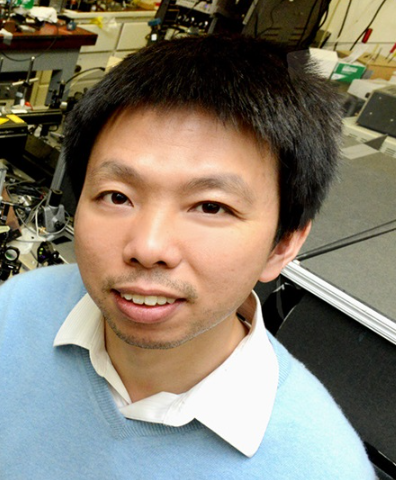 Feng Wang合作论文数Department of Physics, University of California, Berkeley;Materials Science Division, Lawrence Berkeley Lab1
 Yuxin Zhao (赵玉新)合作论文数国防科技大学航天与材料工程学院1ZHANG Rui (张睿)合作论文数1
 Rui Zhang合作论文数Ryerson Multimedia Research Laboratory, Ryerson University, Toronto, Canada
1
Rui Zhang合作论文数Ryerson Multimedia Research Laboratory, Ryerson University, Toronto, Canada
1 Jia-Liang Le合作论文数Department of Civil, Environmental, and Geo- Engineering, College of Science and Engineering, University of Minnesota1




