With continuous growth of power demand and massive renewable integration, tie line power flows in power grid shows significant sequential randomness. Such fluctuations jeopardize not only the secure and stable operation of the grid but also challenge its economic efficiency and the capacity for renewable energy accommodation. This paper proposes a cooperative multi-objective planning approach for transmission network and energy storage that explicitly accounts for the time-series stochastic fluctuations of tie-line power flows. Firstly, a multi-objective calculation model of the power grid is established, which includes operating economic benefits, frequency stability, abundant power supply and renewable energy accommodation indexes. Then, a two-stage robust planning model is established considering the random temporal fluctuation constraints of power flows in the grid, and a solving method of the grid planning model is proposed by employing decomposition and cut-generation. Finally, simulation tests using real power grid data from a Chinese province are implemented to verify the efficacy of the proposed scheme.
With the increasing variety of energy storage types, traditional optimization algorithms face significant challenges in solving adjustable resource allocation models due to exponential growth in computational complexity, slow convergence rates, and tendency to become trapped in local optima. This paper proposes a solution method using the Soft Actor-Critic (SAC) algorithm to address these limitations. First, a comprehensive adjustable resource allocation model is constructed incorporating electric, thermal, and hydrogen storage systems with their respective operational constraints. The SAC algorithm is then configured with carefully designed state space, action space, and reward function specifically tailored for energy storage optimization. Comparative simulation analysis against Proximal Policy Optimization (PPO) and Deep Deterministic Policy Gradient (DDPG) algorithms demonstrates that our SAC-based method achieves 8.3 % higher net revenue (7429k¥ vs. 6861k¥) and better satisfies operational constraints. The results validate that the proposed method can obtain optimal configurations of adjustable resources more efficiently and accurately while ensuring safe and stable power system operation, offering an effective solution for increasingly complex multi-energy storage systems.
This paper innovatively combines cloud computing with Bayesian networks, aiming to provide an efficient and real-time prediction and scheduling platform for power main network scheduling and large-scale user monitoring. The core of the research lies in the development of a set of novel intelligent scheduling algorithms, which integrates multi-objective optimization theory and deep reinforcement learning technology to achieve dynamic and optimal allocation of power grid resources in the cloud environment. By constructing a comprehensive evaluation system, this study verifies the advancement of the proposed model in multiple dimensions: not only does it make breakthroughs in the in-depth parsing and accurate prediction of electric power data, but it also significantly improves the prediction accuracy of the main grid load changes, tariff dynamic adjustments, grid security posture, and power consumption patterns of large users. The empirical study shows that compared with the existing methods, the model proposed in this study effectively reduces energy consumption and operation costs while improving prediction accuracy and dispatching efficiency, demonstrating its significant innovative value and practical significance in the field of intelligent grid management. The innovation of this paper lies in the development of a composite prediction model that integrates the powerful classification and prediction capabilities of Bayesian networks and the efficient learning mechanism of deep reinforcement learning in complex decision-making scenarios.
With the progress of zero carbon, more and more renewable energy sources are connected to the grid, and more and more load resources are participating in the grid interaction. The double uncertainties of sources and loads brings new challenges to power grid dispatching. The load aggregator communicates the power grid and distributed resources, playing an important role in the electricity market. First, the paper analyzes sources of uncertainties and the decision-making process in the electricity market of the load aggregator. Secondly, in order to consider uncertainties and resist risks, a bidding optimization model is established based on conditional value-at-risk (CVaR). Finally, due to the characteristics of the large-scale variables of the optimization model, Benders Decomposition is used to solve.
Electrolytic aluminum industry are biggest single loads in Yunnan province. The precision of power grid electromechanical transient simulation will be effected by the model of electrolytic aluminum loads. The models of rectification system, control system and electrolytic tank of electrolytic aluminum loads are studied. And the dynamic electromechanical transient model of electrolytic aluminum loads is presented. The results of comparing measured data and simulation data show validity of the presented model.
The electrolytic aluminum load is increasing rapidly in the power grids of the western provinces in China, especially in Yunnan. The results of safety and stability analysis in recent years indicate that the current load model adopted by the power grid planning and operation department cannot accurately describe the load characteristics of electrolytic aluminum. The structure of the aluminum electrolytic power supply system, constant current control strategy, and production process principle of electrolytic aluminum were analyzed in detail in this paper. On this basis, a dynamic load model of electrolytic aluminum considering distributed impedance of electrolytic cell series wire and constant current control system was proposed. Based on the measured load characteristic data of PMU, the accuracy of the 30% constant impedance + 30% constant current + 40%constant power static load model, 100% constant current static load model, 95% constant current + 5% motor model, and the dynamic load model of electrolytic aluminum proposed in this paper were compared and analyzed. The results show that the proposed dynamic load model considering distributed impedance of electrolytic cell series wire and constant current control system has the best fitting effect and can describe the dynamic characteristics of electrolytic aluminum load more accurately.
During the 14th Five-Year Plan period, new energy will become the main power supply of the incremental power supply in Yunnan, and the large-scale development of new energy will lead to difficult consumption or even more prominent. Based on the summary and analysis of the current situation of new energy development, the sequential production simulation is used to carry out analysis of the Yunnan’s new energy consumption capacity in this paper, which is combined with the load development and power supply planning situation in Yunnan during the 14th Five-Year Plan period. According to the improvement effect and development conditions of the adjustment measures, this paper proposes key measures and suggestions for the adaptation to the large-scale development and efficient utilization of new energy in Yunnan during the 14th Five-Year Plan period, it can provide some reference for the development planning of new energy in Yunnan.
Guiding load side flexible resources to participate in power system dispatching has good economic and environmental benefits. There are many kinds of loads in the power system, but the current research often only focuses on the regulation of a single type of load, but ignores the coordination of multiple types of loads. In order to solve this problem, an economic dispatching strategy of power system considering the participation of multiple types of schedulable flexible loads is proposed in this paper. Firstly, this paper establishes the mathematical model of voltage sensitive commercial load, describes the power consumption behavior of commercial load by using the voltage power relationship, and introduces the sensitivity analysis method to evaluate the adjustable range of commercial load power. Then the commercial load power regulation margin is incorporated into the industrial load scheduling system as a flexible standby resource to realize the collaborative scheduling of industrial and commercial loads. Finally, the modified IEEE-30 node test system shows that the participation of multiple types of schedulable loads in scheduling can fully explore the scheduling potential of industrial and commercial loads and effectively improve the regional new energy consumption level.
特约专栏寄语 一方面随着新能源的大量接入,对电力系统规划提出了新挑战,另一方面,随着电力系统的不断发展,在规划与建设中面临一些新问题.为分析、研究、解决新型电力系统规划与建设中面临的新挑战、新问题,本专栏从新型电力系统灵活性资源配置、风光储系统最优配置、电网规划建设全过程造价管控、变电工程隔震减震技术等进行了探讨与研究,从规划与建设层面为安全、可靠、经济建设新型电力系统展现了新思路、新方案,将促进新型电力系统建设.
The annual power generation scenario sequence of new energy is the basis of system operation simulation. A new energy probabilistic annual output scenario generation method based on electricity characteristic matching is proposed in this paper. Firstly, the power balance characteristics of historical new energy scenarios are described based on the characteristic index, and then the probabilistic annual generation utilization hour scenario is constructed based on k-means clustering algorithm. Finally, the multi-time-scale electricity distribution curve is matched based on the feature index extraction, and the probabilistic new energy annual output scenarios under different power generation levels are generated. The example is tested based on the historical new energy data of a provincial power grid in China, and the generated new energy sequence scenario is used to calculate the power balance capacity of the system. the results verify the effectiveness and practicability of the proposed method.
New energy stations can meet the relevant assessment requirements for grid connection by configuring energy storage. This paper starts from the actual policy assessment, takes the wind farm volatility stabilization assessment as an example, considers different time scales, different energy storage control strategies and the requirements of different wind farm scales for the energy storage configuration scale, and an actual wind farm in power grid is used as a case to verify the effectiveness of the proposed method.
风电的反调峰特性和电网中调峰资源的不足,导致系统对风电的消纳能力偏低,弃风现象严重.相较于安装储能设备等措施,引导负荷侧参与需求响应是一项经济且高效的手段.考虑到西部地区丰富的可再生能源和众多电解铝企业,本文提出一种引导电解铝负荷参与风电调峰的方法.首先,建立了电解铝负荷的数学模型;以此为基础,借鉴鲁棒优化的思想,引入功率松弛变量,设计了电网-多电解铝负荷的协同调度模型,在电网侧采用模糊机会约束刻画风电出力的不确定性;同时通过交互松弛变量的值,在保证电解铝负荷生产隐私的前提下,实现双方的有效调度;然后,采用纳什合作博弈模型,进行多方利益分配;最后,通过改进的IEEE-30 节点测试系统,验证了本文所提方法的可行性.
Formulating a reasonable and feasible unit maintenance scheme is a promising way to eliminate potential risks and improve the reliability of power systems. However, the uncertainty and volatility of new energy outputs, such as wind power, increase the difficulty of scheme formulation. To overcome the complexity of uncertainty, a robust unit maintenance scheme considering the uncertainty of new energy output and electrolytic aluminum load is established in this paper. Considering the significant time-series characteristics of new energy, this paper first introduces the definition and mathematical model of information granulation (IG), through which the initial new energy output data can be transformed into fuzzy particles used for prediction and analysis. Moreover, a support-vector machine (SVM) regression prediction model is adopted, and a corresponding progressive search algorithm is designed to determine SVM parameters efficiently. Then, a robust unit maintenance model is established considering the upper and lower predicted error. In addition, electrolytic aluminum loads are allowed to participate in power system dispatch. Finally, the modified reliability test system–Grid Modernization Lab Consortium (RTS–GMLC test system) and an actual power grid in Southwest China are used to verify the accuracy and feasibility of the proposed method.
变频空调的应用越来越广泛,其在电力负荷中所占比重越来越高.建立准确的变频空调负荷模型对于提高电力系统仿真的准确度具有重要意义.本文在详细分析变频空调运行原理和各组成元件特性的基础上,提出了变频空调的功率-温差模型,分别建立了变频空调的静特性模型和动特性负荷模型.通过实验室实测变频空调的运行特性,将变频空调负荷模型的响应与实测曲线进行了对比.结果表明,本文所提出的变频空调静特性和动特性模型能够准确地描述变频空调的负荷特性,具有较高的准确度.
随着"双碳目标"提出,新能源占比逐步攀升,大规模新能源特别是风机在低电压穿越期间的控制及保护策略将对电网稳定产生较大影响.本文基于双馈风机(DFIG)低穿及保护策略,通过仿真分析策略关键参数对电网稳定的影响,提出以提高电网动态过程稳定性为目标的DFIG相关参数优化方向.从风机角度为大规模新能源接入后电网稳定运行提供支撑,对电网接纳大规模新能源能力提供支撑.
The proposal of the "dual-carbon" goal has made the penetration rate of renewable energy in the power system continue to increase. The hybrid energy storage technology has been developed rapidly to accommodate the abundant renewable energy. Reliability evaluation of the renewable energy system is of great significance to evaluate whether the system can deal well with the uncertain renewable energy output. However, current research did not consider well the role the flexible resources of source, network and load play in the reliability evaluation, resulting in the inaccurate evaluation results. To address this problem, this paper proposes a hybrid energy storage reliability evaluation model integrated with the flexible resources of source, network and load. The case study results show that the reliability of the power system can be improved greatly considering the flexible resources.
随着新能源装机规模不断增大,电力系统季节性负荷波动情况日益加剧.如何充分调动电源侧机组、发挥发电机组的调节能力,促进新能源大范围消纳成为现阶段亟待解决的问题.本文以水电站群为例,通过分析水电机组的广义储能特性,明确水电站可通过调度其水库内跨月份的水利资源,实现对系统负荷变动的跟踪响应.在此基础上,提出了一种基于广义储能特性的水电站群三阶段发电优化模型,针对水电站进行月度电量分配的初阶优化、进阶优化以及月内逐日电量优化,兼顾考虑水电站经济效益与平抑负荷波动的效益.以澜沧江中下游梯级水电群为例进行中长期发电优化,验证了所提模型和方法的有效性.
电力系统的电力电子化成为新型电力系统的重要特征之一,负荷设备电力电子化也成为发展趋势,电解铝、电动汽车等整流类负荷比重越来越高.随着分布式电源大量接入配电网,大电网负荷特征更加复杂,含有分布式电源的特殊负荷模型亟待研究.本文首先对电力系统负荷建模的两种主要方法——统计综合法和总体测辨法进行了阐述;然后,重点对电解铝、电动汽车、含分布式电源的特殊负荷建模的研究现状进行了分析;最后,对新型电力负荷特性和建模方法进行了展望.
云南省在积极发展水电铝产业,在加强某局部电网向电解铝负荷供电时,出现了短路电流达到断路器遮断容量的情况,其中电解铝负荷提供了较大的短路电流.若采用调整运行方式将降低电网供电能力,若采用加限流装置则将增加工程投资.为此,从理论、电磁暂态仿真、实际故障录波等方面分析了电解铝负荷提供短路电流情况,结果表明,电解铝是整流型负荷,不会向电网提供短路电流.
The optimal operation of cascade power stations is not only one of the main development directions for the comprehensive exploitation, utilization and management of water resources, but also an important strategic direction for the sustainable development of national energy. This article starting with the overview and composition of the cascade power station group, expounds the operation characteristics and task requirements of cascade hydropower under different time scales, and provides a comprehensive overview of the objective functions and constraints of medium and long-term scheduling, short-term scheduling, and day-ahead scheduling. Then this article analyzes and compares the current intelligent solution algorithms for optimal operation of cascade hydropower stations at home and abroad, and finally gives an outlook on the future research about the participation of cascade hydropower in the electricity market.
 Hongchun Shu (束洪春)合作论文数Kunming University of Science and Technology45
 XueYun Chen (陈学允)合作论文数16
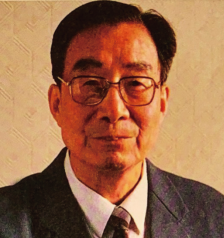 Yaozhong Ge (葛耀中)合作论文数School of Electrical Engineering, Xi’an Jiaotong University13
 Xiangfei Sun (孙向飞)合作论文数12YingChun Qian (钱迎春)合作论文数12
 Yanhui Xu (徐衍会)合作论文数School of Electrical and Electronic Engineering, North China Electric Power University8
 Libao Shi (石立宝)合作论文数清华大学深圳研究生院6Shiyun SUN (孙士云)合作论文数5Sun Qiming合作论文数5Guangzeng You合作论文数5Guangbin Zhang合作论文数4Jinding HE (何金定)合作论文数4
 Yixuan Chen合作论文数South China Univ Technol, Coll Elect Power, Guangzhou 510640, Peoples R China4ZhiQuan Xiong (熊志全)合作论文数4DeJuan Sun (孙德娟)合作论文数4Weizhi Gong (龚伟志)合作论文数北京云电英纳超导电缆有限公司4S. Y. Sun合作论文数3MeiRong Zi合作论文数3
 Shuhao Liang合作论文数3Kun Liu合作论文数3ChunMin Chen (陈春敏)合作论文数3Peng Sun (孙鹏)合作论文数3
 Huanfeng Dong合作论文数Dept. of Electr. Eng., Zhejiang Univ.;c3Zhu, Z.Z.合作论文数3
 Ying Xin (信赢)合作论文数School of Electrical and Information Engineering, Tianjin University3
 Jilai Yu (于继来)合作论文数School of Electrical Engineering and Automation, Harbin Institute of Technology3
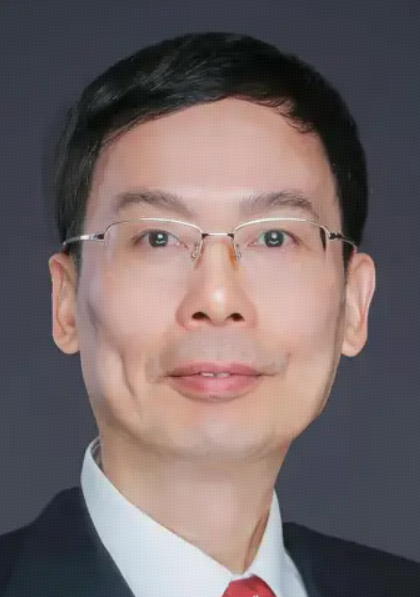 Zheng Xu (徐政)合作论文数College of Electrical Engineering, Zhejiang University3
 Yixin Ni (倪以信)合作论文数Graduate School at Shenzhen, Tsinghua University3Lingfang Li合作论文数2Zilin Deng (邓子琳)合作论文数2Wenyun Li合作论文数2Zhang Bin (张斌)合作论文数2Wenlin Yan合作论文数2Fan Ye合作论文数2
 Facai Xing合作论文数2Hai ZHOU (周海)合作论文数2Jie ZHANG (张杰)合作论文数2DeChao An (安德超)合作论文数2WenLin Shan (剡文林)合作论文数2XingGang Wang (王兴刚)合作论文数2
 Tao Niu (牛涛)合作论文数School of Electrical Engineering, Chongqing University2Anlin Ren (任安林)合作论文数2Pengzan Jiang (蒋鹏赞)合作论文数2
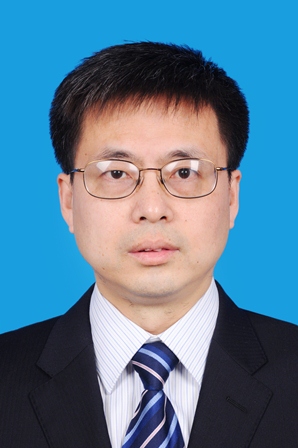 Jizhong Zhu (朱继忠)合作论文数School of Electric Power Engineering, South China University of Technology2Dongwen Xu (徐东文)合作论文数2
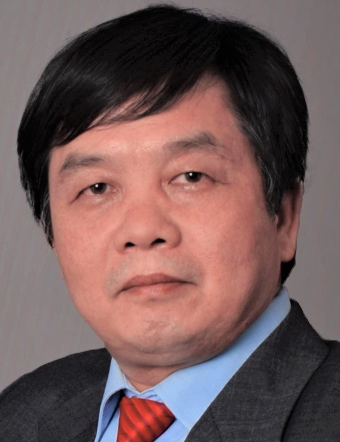 Yaowu Wu (吴耀武)合作论文数School of Electrical and Electronic Engineering, Huazhong University of Science and Technology2LI Lingfang (李玲芳)合作论文数1
 Guoteng Wang (王国腾)合作论文数College of Electrical Engineering, Zhejiang University1




