目的 研究和开发针对非人类免疫缺陷病毒(HIV)人群中结核性脑膜炎和隐球菌性脑膜炎鉴别诊断的列线图模型,并对模型进行验证.方法 回顾性收集西京医院神经内科收治的292名结核性脑膜和隐球菌性脑膜炎患者的临床资料,根据入院时间将240名患者纳入训练组,52名患者纳入验证组.对训练组患者进行单因素和多因素分析,筛选鉴别两种脑膜炎的差异因子.利用R软件构建鉴别诊断列线图模型,并对模型进行验证.在训练组和验证组中绘制ROC曲线和校准曲线对模型进行评价.结果 单因素和多因素分析后发现,患者年龄、发热、自身免疫性疾病、脑脊液初压、脑脊液白细胞计数、脑脊液糖含量是鉴别结核性脑膜炎与隐球菌性脑膜炎的差异因子(P<0.05).模型灵敏度为80%,特异度为76.47%.列线图模型ROC曲线下面积在训练组和验证组中分别为0.853和0.897,模型区分度和校准度较好.结论 在非HIV人群中结核性脑膜炎与隐球菌性脑膜炎的鉴别诊断列线图模型,对于基层医院进行脑膜炎的早期诊断和治疗具有一定的临床应用价值.
目的 针对良性阵发性位置性眩晕(Benign Paroxysmal Positional Vertigo,BPPV)建立智能辅助诊断系统,评估其在临床诊断中应用的价值,协助临床医生建立良好的眩晕诊疗思维,提高BPPV诊断符合率.方法 建立BPPV诊疗知识库,设计BPPV专家系统诊断模型,完成程序研发与实现.通过既往病例对该系统进行验证和优化后,再次通过临床实践验证该系统的诊断效能.结果 成功建立了BPPV智能辅助诊断系统,用100例眩晕专家确诊后的病例对其进行测试,诊断符合率高达98.0%.随后在临床实践中,以专家诊断为金标准(100%),对比相关专业医生、普通大内科医生和智能辅助诊断系统对于BPPV诊断的符合率,分别为73.33%、10%和96.67%.结论 本系统对BPPV诊断符合率明显高于基层医生,可以成为基层临床医生诊断BPPV的得力助手.
目的 探讨肝性脊髓病(hepatic myelopathy,HM)的临床特征、误诊原因及防范措施.方法 回顾性分析2009年11月-2019年6月西京医院收治的24例HM患者的临床资料,并复习相关文献.结果 24例患者均有肝硬化病史,临床表现为双下肢肌力减低,部分实验室检查和影像学检查异常.目前HM尚无统一的诊断标准,根据患者病史、临床特征、实验室检查及影像学检查结果,结合多篇文献和专家意见明确诊断.确诊后1例患者行肝移植治疗,所有患者均给予对症治疗和康复锻炼.出院时3例患者改良RANKIN量表(Modified Rankin Scale,mRS)评分改善.出院后随访3 m,6例患者mRS评分改善.预后与病程有一定相关性.结论 HM的发病率低,临床表现缺乏特异性.详细询问病史、仔细查体并及时行肝功能功能和腹部超声等检查有助于提高早期诊断率,改善患者的临床症状和预后.
Objective: Neurocysticercosis (NCC) is the most common parasitic disease of the human central nervous system (CNS). However, a diagnosis of NCC may be hard to make if the specific clinical and routine neuroimaging manifestations are lacking, which hinders physicians from considering further immunodiagnostic tests. Patients and methods: Seven patients presented with fever, headache, nausea, cognitive decline, confusion, or progressive leg weakness. There were no pathogens found in the cerebrospinal fluid (CSF); patients were clinically suspected of meningoencephalitis or cerebrovascular disease. To clearly determine the etiology, next generation sequencing (NGS) of the CSF was used to detect pathogens in these seven patients. Results: Taenia solium DNA sequences were detected in the seven patients, but not in the non-template controls (NTCs) or the other patients with clinically suspected CNS infections. Based on the patients' medical data and the diagnostic criteria for NCC, seven patients were diagnosed with probable NCC. The unique reads aligning to Taenia solium ranged from 6 to 261064, with genomic coverage ranging from 0.0003% to 14.8079%. The number of unique reads and genomic coverage dropped in three of the seven patients after antiparasitic treatment, consistent with the relief of symptoms. Conclusion: This study showed that NGS of the CSF might be an auxiliary diagnostic method for NCC patients. Larger studies are required.
This data can serve as a reference for other next-generation sequencing (NGS) of the cerebrospinal fluid (CSF). In the related research article, entitled "Next-Generation Sequencing of Cerebrospinal Fluid for the Diagnosis of Neurocysticercosis", we reported NGS of the CSF might be an auxiliary method for neurocysticercosis (NCC) patients who have complicated manifestations and courses to receive early diagnosis and treatment. In this article, we retrieved the available data about the sequencing statistics of the CSF samples and the number of unique reads and genomic coverage aligning to microorganic sequences. The data were generated by the Illumina MiniSeq system for sequencing and computational subtraction of the human host sequences was performed. Finally, the remaining sequencing data were aligned to the Microbial Genome Databases. This data can serve as a reference for other NGS of the CSF.
We found that NGS technology has great significance for the diagnosis of brucellosis in non-epidemic area and can rule out other infections. The number of Brucella gene fragments detected by NGS may be affected by clinical resistance to Brucella treatment and Brucella infection. The sensitivity of SAT to detect Brucella may is limited.
目的 比较隐球菌性脑膜炎(CM)不同检测方法 的诊断价值.方法 选取2012年1月—2018年11月西京医院神经内科脑脊液细胞学检查室CM患者42例的脑脊液样本47份作为病例组,非CM脑脊液样本40份作为对照组,分别使用脑脊液墨汁染色、荚膜抗原胶体金免疫层析法(LFA)、隐球菌培养和宏基因组二代测序(mNGS)进行检测,比较不同检测方法 对CM的诊断价值.结果 47份CM样本中使用抗真菌药物18份(38.30%),未使用29份(61.70%).2组间mNGS和隐球菌培养的阳性率差异有统计学意义(P<0.05).墨汁染色、LFA、隐球菌培养和mNGS的敏感度分别为51.06%、89.36%、79.31%和74.47%;特异度分别为100%、97.5%、100%和100%.墨汁染色的敏感度和准确度与其他3种检测方法 比较差异均有统计学意义(P<0.05),其他检测方法 间比较差异均无统计学意义(P>0.05),仅墨汁染色与LFA的阴性预测值差异有统计学意义(P<0.05),其他检测方法 之间比较差异均无统计学意义(P>0.05).此外,mNGS还在部分样本中检测到其他病原体.结论 LFA的敏感度最高,建议临床首选;墨汁染色操作简单但敏感度较低,需与其他方法 联合使用;隐球菌培养和mNGS对抗真菌药物敏感,需在使用抗真菌药物前进行检测;mNGS可用于CM的早期诊断,还可以检测或排除合并感染.
格特隐球菌性脑膜炎是一种特殊类型的脑膜炎,其流行病学、临床表现、并发症、治疗、预后和实验室检查与新型隐球菌性脑膜炎均有不同,临床对其认识不足.文中主要就格特隐球菌性脑膜炎的临床特征、治疗和实验室检查等研究进展进行综述.
 Guodong Feng (冯国栋)合作论文数College of Chemistry, Jilin University3
 Yun Zhang (张赟)合作论文数3Fang Du (杜芳)合作论文数3XiaoDan Shi合作论文数3Gang Zhao合作论文数3Jian Shi合作论文数2Ting Bian合作论文数2Xingyue An合作论文数2Zhao Di (赵帝)合作论文数2Mengli Wu合作论文数2Xinchao Ji合作论文数2Huimin Zhou合作论文数2Na Liu合作论文数2Zhen Xie合作论文数2Tingting Liu合作论文数2Chao-Yang Li合作论文数2Ying He合作论文数2Yajun Shi合作论文数2XueWu Liu (刘学武)合作论文数2
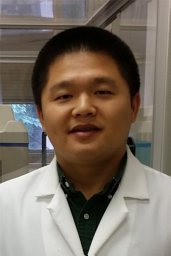 Zheng Cai合作论文数Guangdong University of Technology, Guangdong University of Technology2Ming Shi合作论文数2Yahong Zhang (张雅红)合作论文数2
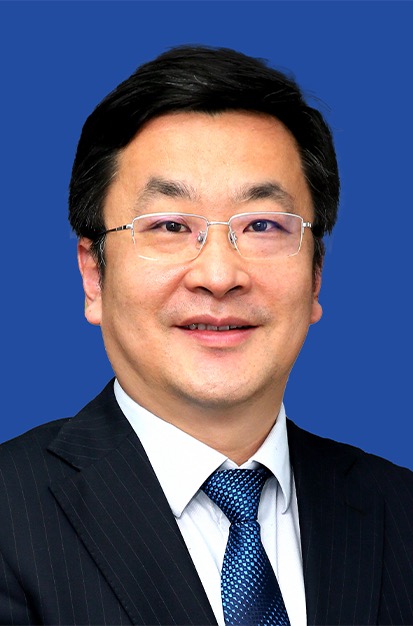 Yining Yang (杨毅宁)合作论文数The First Teaching Hospital, Xinjiang Medical University2Wen Dai合作论文数2Feng HE (何风)合作论文数1Yun-yan JIANG (姜云燕)合作论文数1Wei Fu合作论文数1Yunsong Zhao (赵云松)合作论文数1Zhao-yang LI (李朝阳)合作论文数1Wen-ting WU (吴文婷)合作论文数1MengMeng Hu (胡萌萌)合作论文数1Na Qin (秦娜)合作论文数1Wen Li (李雯)合作论文数1Junliang Han (韩军良)合作论文数1




