Purpose X-ray free-electron laser facilities require high-repetition and high-energy electron beams, which makes the radiation safety become an important issue due to beam loss. Beam collimation is used to protect the undulator and other devices by removing the beam halo in operation, as well as absorbing the off-axis beam in the case of machine failure. Method In this paper, the beam collimation system in the switchyard of the SHINE is presented. Results and conclusion Tracking with an expanded initial beam distribution, the efficiency of the collimation system is shown, and the detailed collimation performance is simulated to evaluate the available limitation from the acceptance of the undulator. Moreover, the accidental beam loss and wakefield effects are also considered to ensure the reliability of the collimation.
Because of its excellent dose distribution, proton therapy is becoming increasingly popular in the medical application of cancer treatment. A synchrotron-based proton therapy facility was designed and constructed in Shanghai. The synchrotron, beam delivery system, and other technical systems were commissioned and reached their expected performances. After a clinical trial of 47 patients was finished, the proton therapy facility obtained a registration certificate from the National Medical Products Administration. The characteristics of the accelerator and treatment systems are described in this article.
BackgroundSuperconducting undulator (SCU) prototype with small magnet gap of 5 mm, long magnet length of 4 m and high magnet field of 1.58 T was being developed at Shanghai High Repetition rate XFEL and Extreme light facility (SHINE). Compared to any other superconducting undulator, there is no cryocooler being installed on the cryostat in this SCU prototype.PurposeThis study aims at the cooling design for the binary current leads for SCU's normal operating.MethodsBinary current leads composed of normal conductive copper leads and high temperature superconducting current leads (HTS) were adopted for SCU to connect superconducting coils inside the cryostat and outer cables. Low-temperature helium gas was used to transport independent refrigerator system to the cooling tubes inside the prototype, hence the binary current leads were cooled. Thermal conduction components installed on the middle of the thermal shield were employed to transfer heat load of normal conductive copper leads, and heat load of copper leads was optimized by simulation. Auxiliary superconducting rods were designed for connecting cold ends of HTS in the cryostat test.ResultsThe temperature difference between hot ends of HTS and low-temperature helium gas is less than 20 K from the result of cryostat test, all binary current leads is operating normally with full current.ConclusionsIt is practicable to use cooling tubes with low-temperature helium gas to cool binary current leads of the SCU prototype by thermal conduction, which is different from cooling solution for current leads in any other SCU being developed presently.
A high-gradient radiofrequency (RF) gun operated in continuous-wave (CW) mode is required in various accelerating applications. Due to the high RF power loss, a traditional normal-conducting (NC) RF electron gun has difficulty meeting the requirement of generating a high-repetition-rate electron beam. The development of a scheme for a CW NC-RF gun is urgently required. Demonstrated as a photoinjector of a high-repetition-rate free-electron laser (FEL), an electron gun operated in CW mode and the VHF band is designed. An analysis of the reentrant gun cavity is presented in this paper to increase the gradient and decrease the power density and power dissipation. Referring to the analysis results, the design of a 162.5 MHz gun cavity is optimized by a multi-objective evolutionary algorithm to achieve better performance in CW mode. Multipacting and thermal analyses are also deliberated in the design to coordinate with RF and mechanical design. The optimized 162.5 MHz gun cavity can be operated in CW mode to generate a high-repetition-rate beam with voltage up to 1 MV and gradient up to 32.75 MV/m at the cathode.
Forty planar superconducting undulators (SCUs) of 4 m length will be used in Shanghai High Repetition rate XFEL and Extreme Light (SHINE) facility. As the longest SCU in developing of the worldwide, they could generate photon in energy range of 10–25 keV. NbTi/Cu wires with the diameter 0.6 mm and the ratio of Cu to NbTi 0.9 have been chosen as the fundamental element of superconducting coils. Coils temperature must be below 5 K when operating current reaches 400 A. Meanwhile, the magnetic gap need to be less than 5 mm to obtain the peak field of 1.58 T. Therefore, beam chamber installation is infeasible in such a small gap. Two parallel copper foils close to the surface of magnetic poles have been designed to shield beam heat load. Furthermore, four liquid Helium tubes located symmetrically around magnetic structure have been designed to cool the copper foils used as beam channel. There is no cryocooler on the SCU because liquid Helium is provided by the cryogenic plant of SHINE.
 Yongmei Wen合作论文数2
 Jidong Zhang (张吉东)合作论文数中国科学技术大学中国科学院长春应用化学研究所2Zhentang Zhao (赵振堂)合作论文数2
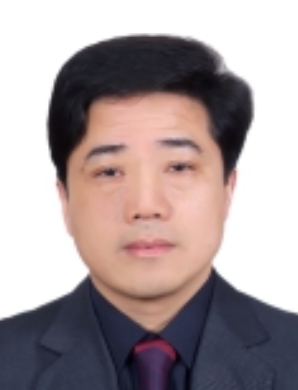 Qiaogen Zhou (周巧根)合作论文数Shanghai Institute of Applied Physics, Chinese Academy of Sciences;University of Chinese Academy of Sciences2
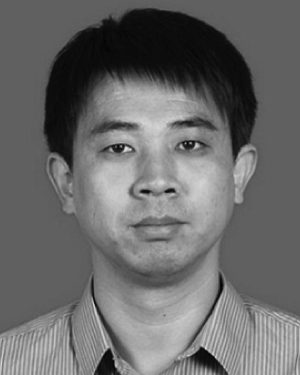 Yi Ding合作论文数Hefei Institute of Physical Sciences, Chinese Academy of Sciences2hai rong zhang合作论文数1Hanwen Du合作论文数1Qingru Mi合作论文数1Renxian Yuan (袁任贤)合作论文数1Chongxian Yin合作论文数1Xiufang Li合作论文数1Ye Lin合作论文数1Zhiling Chen合作论文数1Lin Jin合作论文数1Kun Wang合作论文数1
 He Liu合作论文数1Maofei Qian合作论文数Argonne Natl Lab1Qibing YUAN (袁启兵)合作论文数1Zenggong Jiang合作论文数1Dekang Liu合作论文数1Weimin Zhou合作论文数1Yajuan Liu合作论文数Univ Sci & Technol China, Synerget Innovat Ctr Quantum Informat & Quantum P, Dept Mat Sci & Engn, Hefei Natl Lab Phys Sci Microscale,CAS Key Lab Ma, Hefei 230026, Anhui, Peoples R China1Liying Zhao合作论文数1Si Chen合作论文数1Jingmin Zhang合作论文数1
 Hang Shu合作论文数Chinese Acad Sci, Inst High Energy Phys, Beijing 100049, Peoples R China1TengMa Wu (吴腾马)合作论文数1GeYang Jiang (蒋舸扬)合作论文数1Chunlong Guo (郭春龙)合作论文数Shanghai Institute of Applied Physics, Chinese Academy of Sciences1
 Yuehu Pu (蒲越虎)合作论文数中国科学院大学核科学与技术学院1Deming Li (李德明)合作论文数1Qiang Gu (顾强)合作论文数中国科学院大学核科学与技术学院1
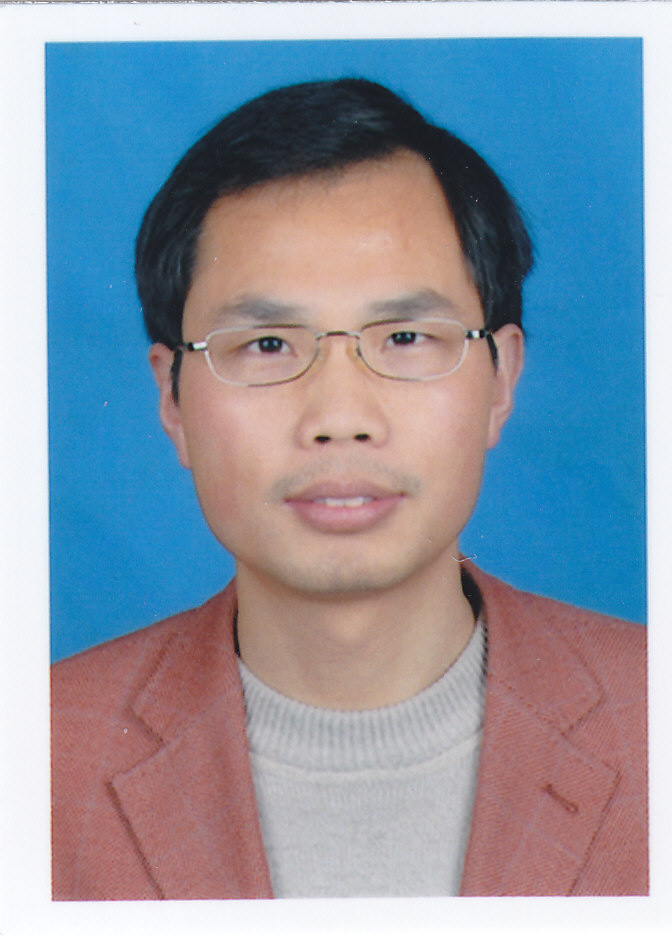 Rui Li (李瑞)合作论文数中国科学院上海应用物理研究所1Haixiao Deng (邓海啸)合作论文数1Zhiqiang Jiang合作论文数1Zhishan Wang合作论文数1Wenzhi Zhang合作论文数1
 Hao Guo合作论文数1
 Shouxian Fang (方守贤)合作论文数Institute of High Energy Physics, Chinese Academy of Sciences1
 Yonghao Liu (刘永好)合作论文数Shanghai Institute of Applied Physics, Chinese Academy of Sciences;University of Chinese Academy of Sciences1
 Ming Liu (刘明)合作论文数Institute of Microelectronics, Chinese Academy of Sciences;China Resources Microelectronics Limited;College of Integrated Circuits & Micro-Nano Electronics, Fudan University1Manzhou Zhang (张满洲)合作论文数1Miao Zhang合作论文数1
 Ming Gu (谷鸣)合作论文数Shanghai Institute of Applied Physics, Chinese Academy of Sciences;University of Chinese Academy of Sciences1
 Lianhua Ouyang (欧阳联华)合作论文数Shanghai Institute of Applied Physics, Chinese Academy of Sciences,;University of the Chinese Academy of Sciences1Weiguo Shi (史卫国)合作论文数军事医学科学院毒物药物研究所1




