22Na(p,γ)23Mg and 19Ne(α,p)22Na are two crucial reactions in the so-called NeNa-MgAl cycle and the rapid-pro-ton process,their astrophysical reaction rates are indispensable inputs in understanding the outburst mechanism and element synthesis of novae.Since many proton resonance levels in odd-A compound nucleus 23Mg may be involved at nova temperat-ure,existing measurements can only provide partial effective information on the 22Na(p,γ)23Mg reaction,large discrepancies still exist in the astrophysical reaction rates of the two reactions.In the present work,22Na+p resonance scattering via thick target inverse kinematics was studied at RIBLL1 radioactive beam line in the HIRFL national laboratory at Lanzhou.Excita-tion functions of 22Na(p,p)are obtained in the energy range of Ec.m.=1.5 to 4 MeV.Obvious resonance structure is observed in the 23Mg compound nucleus,resonance parameters are deduced for 22 proton resonance states in 23Mg via R-matrix analys-is,which will be used for the evaluation of the astrophysical reaction rates of 22Na(p,γ)23Mg and 19Ne(α,p)22Na.
R矩阵理论是研究天体核反应的重要理论工具.为实现相关的数学计算,开发了多种基于此理论的程序,其中的DREAM程序使用了可视化的Basic宏来实现对R矩阵理论的计算,AZURE2程序则是一款利用C++编程语言制作的界面友好、实用性很强的R矩阵拟合工具.为验证不同R矩阵工具的拟合结果,利用DREAM和AZURE2分别对12 C(p,p)12 C和21 Na(p,p)21 Na共振散射实验数据进行了拟合,并对拟合的各项参数进行了对比.对比的结果显示出两种工具的符合情况很好,可达到互相验证的目的.
14 O(α, p) 17 F是天体X射线暴中重要的突破反应。本工作通过厚靶方法测量其逆反应~1H( 17 F,α) 14 O的反应截面来研究这一关键反应。本实验工作是在日本东京大学原子核科学研究中心(CNS)的低能次级束流线(CRIB)上完成的,后续的扣除本底实验是在兰州放射性束流线(RIBLL1)上完成的。CRIB实验是通过~2H( 16 O,n) 17 F转移反应产生 17 F次级束,经过CRIB分离提纯之后,利用该次级束轰击氢气靶。在氢气靶后布置了三套望远镜探测器系统,用以探测不同实验角度的反冲α粒子,在数据处理的过程中经过动力学重构后得到了~1H( 17 F,α) 14 O反应在质心系能区E c.m. =2.7~3.4 MeV的反应截面。实验结果在3 MeV以上的高能区与前人的薄靶实验数据是一致的,在低能区本工作获得了新的实验数据,倾向于支持干涉相消的理论预言结果。
14O (α,p)17F是天体X射线暴中重要的突破反应。本工作通过厚靶方法测量其逆反应1H (17F,α)14O的反应截面来研究这一关键反应。本实验工作是在日本东京大学原子核科学研究中心(CNS)的低能次级束流线(CRIB)上完成的,后续的扣除本底实验是在兰州放射性束流线(RIBLL1)上完成的。CRIB实验是通过2H (16O,n)17F转移反应产生17F次级束,经过CRIB分离提纯之后,利用该次级束轰击氢气靶。在氢气靶后布置了三套望远镜探测器系统,用以探测不同实验角度的反冲α粒子,在数据处理的过程中经过动力学重构后得到了1H (17F,α)14O反应在质心系能区Ec.m.=2.7~3.4 MeV的反应截面。实验结果在3 MeV以上的高能区与前人的薄靶实验数据是一致的,在低能区本工作获得了新的实验数据,倾向于支持干涉相消的理论预言结果。 The 14O(α, p)17F reaction is one of the important breakout reactions in type I X-ray burst. This work reported a new cross section measurement of its reverse reaction of 1H(17F,α)14O. The experiment was performed using the CNS radioactive ion beam separator (CRIB), located at the Center for Nuclear Study (CNS), the University of Tokyo. The sequent background measurement was carried out at Radioactive Beam Line in Lanzhou (RIBLL1). 17F beam was produced via the transfer reaction of 2H(16O, n)17F, subsequently separated and purified by CRIB and bombarded a thick hydrogen H2 gas target. The recoiling α particles were measured by three △E-E silicon telescopes at three different angles. The total cross sections of 1H(17F,α)14O have been derived at Ec.m.=2.7~3.4 MeV based on an isotropic angular distribution assumption. Our results are consistent with the previous ones in the energy region of Ec.m.>3 MeV, and we also obtained some new data in the low energy region, which partly support the destructive interference between the direct and resonant reaction mechanism predicted by the theory.
For the hydrostatic stable burning in stars,the Gamow window is well below the Coulomb barriers for the charged-particle-induced nuclear reaction involved.Such nuclear reaction occurs through the quantum-mechanics tunneling effect,and its cross section drops rapidly approaching the Gamow window.An accelerator which can provide intense beam current is thus required to directly measure the reactions at low energies.An experimental setup for low-energy nuclear astrophysics studies has been recently established at a 320 kV high-voltage platform of the Institute of Modern Physics (IMP),Lanzhou,China.The driver machine of this platform is a very strong ECR ion source employing all-permanent magnets,which can typically supply up to about 100 eμA proton,alpha and many other heavy ions,and ultimately about 30 eμA currents can be achieved at the experimental terminal.The experimental setup includes a target chamber,and the charged-particle and γ-ray HPGe detectors.This work describes the setup established,characteristics of detectors,methodologies,and test results of several reactions with known cross sections.Furthermore,some important results published are shown briefly.We believe that the experimental technologies developed and experiences accumulated at this above-ground platform will be extremely helpful for the Jinping Underground Nuclear Astrophysics laboratory (JUNA) project in China.
In 2014, the National Natural Science Foundation of China (NSFC) approved the Jinping Underground Nuclear Astrophysics laboratory (JUNA) project, which aims at direct cross-section measurements of four key stellar nuclear reactions right down to the Gamow windows. In order to solve the observed fluorine overabundances in Asymptotic Giant Branch (AGB) stars, measuring the key 19 F( p,α ) 16 O reaction at effective burning energies (i.e., at Gamow window) is established as one of the scientific research sub-projects. The present paper describes this sub-project in details, including motivation, status, experimental setup, yield and background estimation, aboveground test, as well as other relevant reactions.
The light output response of BC501A liquid scintillator to γ-rays has been studied. The pulse-height spectra of BC501A (Φ5.08 cm × 5.08 cm) for different PMT high voltages have been measured using 137Cs, 60Co γ-ray sources. The Geant4 simulated pulse-height spectra showed a good agreement with experimental data. The energy resolution functions and energy calibration curves have been obtained by comparing measured light output distribution with simulated one. The position of the Compton edge relative to the position of the maximum and the half height of the spectra has also been studied using Geant4 in detail. The value of Nc/Nmax at the position of Compton edge decreases from 0.8 to 0.7 with the increase of incident γ-rays energy (0.2~3 MeV).
 Ma Shaobo合作论文数6
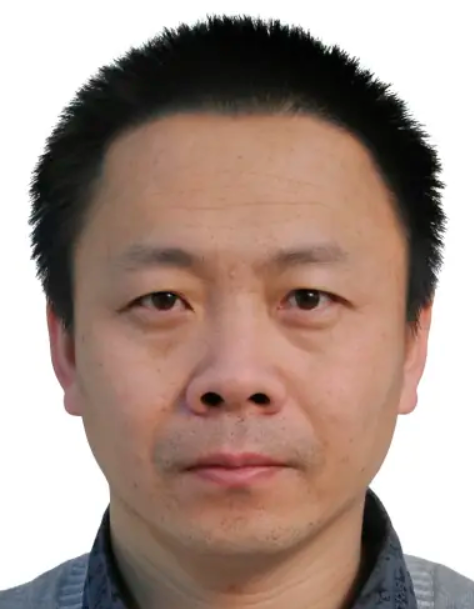 Jianjun He (何建军)合作论文数College of Nuclear Science and Technology, Beijing Normal University;Institute of Modern Physics, Fudan University6
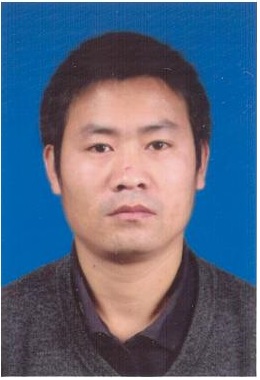 Shiwei Xu (许世伟)合作论文数Institute of Modern Physics, Chinese Academy of Sciences;University of Chinese Academy of Sciences5
 Liyong Zhang (张立勇)合作论文数School of Physics and Astronomy, Beijing Normal University5
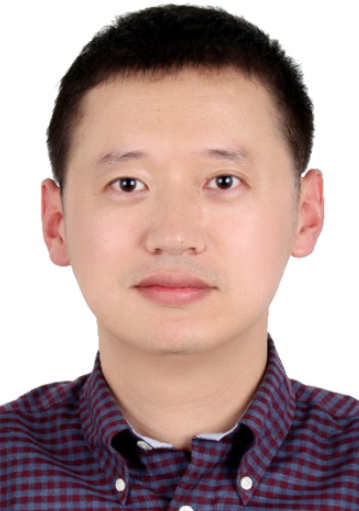 Suqing Hou (侯素青)合作论文数University of Chinese Academy of Sciences;Institute of Modern Physics, Chinese Academy of Sciences4
 Gang Lian (廉刚)合作论文数Institute of Crystal Materials, Shandong University4Shengquan Yan (颜胜权)合作论文数China Institute of Atomic Energy4Li Yun-Ju合作论文数4
 Jun Hu (胡钧)合作论文数Institute of Materiobiology, Shanghai University;University of Chinese Academy of Sciences4
 Weiping Liu (柳卫平)合作论文数China Institute of Atomic Energy4
 Ningtao Zhang (张宁涛)合作论文数Institute of Modern Physics, Chinese Academy of Sciences;University of Chinese Academy of Sciences4
 s. Kubono合作论文数3Yangping Shen (谌阳平)合作论文数3
 Bing Guo (郭冰)合作论文数China Institute of Atomic Energy3
 Jun Su (苏俊)合作论文数School of Physics and Astronomy, Beijing Normal University3
 Tao Zhang (张涛)合作论文数Institute of Nuclear and Particle Physics, School of Physics and Astronomy, Shanghai Jiao Tong University3
 Changbo Fu (符长波)合作论文数Institute of Modern Physics, Fudan University3Xiaopeng Zhang合作论文数3K. I. Hahn合作论文数2d irvine合作论文数2t nakao合作论文数2
 Jianrun Hu (胡健润)合作论文数School of Physics, Sun Yat-sen University2takashi hashimoto合作论文数2H. Yamaguchi合作论文数2D. Kahl合作论文数2
 Hongwei Wang (王宏伟)合作论文数Shanghai Institute of Applied Physics, Chinese Academy of Sciences;University of Chinese Academy of Sciences2Y. Wakabayashi合作论文数2
 Lee Cheol-Soon合作论文数2
 Jung, Han Sung (鄭翰聖)合作论文数Faculty of Dentistry,The University of Hong Kong2
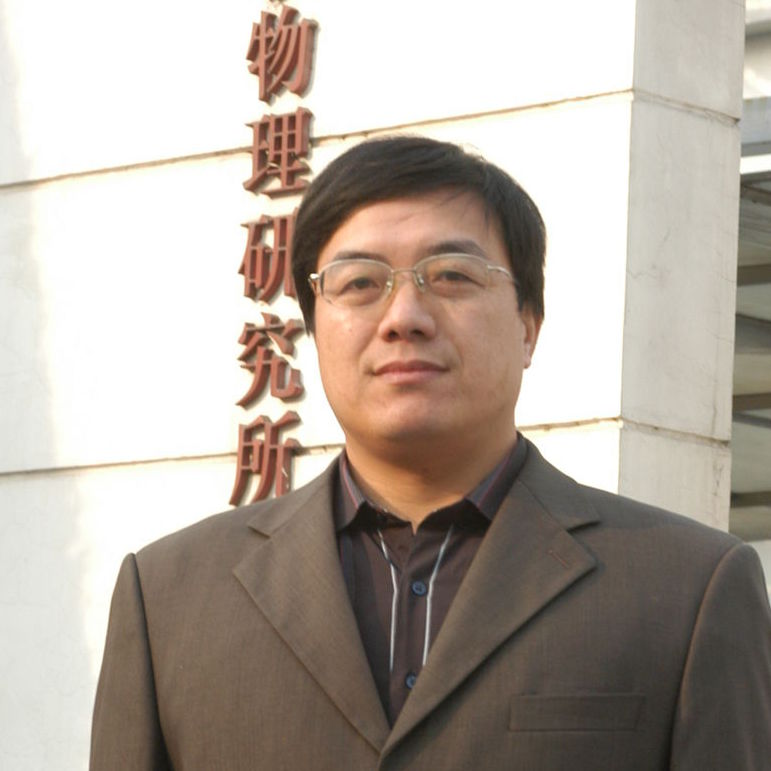 Zhihong Li (李志宏)合作论文数中国原子能科学研究院2
 Y. B. Wang合作论文数Department of Mechanics;Lanzhou University;Department of Mechanics, Lanzhou University2Takashi Teranishi合作论文数2A. A. Chen合作论文数2J. Y. Moon合作论文数2ZHANG Suyalatu (张苏雅拉吐)合作论文数1Tao Li合作论文数1He Jiangjun合作论文数1
 Peng Wang (王鹏)合作论文数Shanghai Astronomical Observatory, Chinese Academy of Sciences1Zhang Xuezhen合作论文数1Junbing Ma合作论文数1Zhang ZiMing合作论文数1Zhao Zuo合作论文数1Xianchao Du合作论文数1
 Liyang Jiang合作论文数1Shi Fu-Dong (石福栋)合作论文数1
 Kuoang Li (李阔昂)合作论文数University of Chinese Academy of Sciences;Institute of Modern Physics, Chinese Academy of Sciences1Yao Yang合作论文数1Qiwei Zhang合作论文数1




