Lignin oligomers were prepared by ultrasonic-assisted depolymerization using corn cob lignin as raw material. The effects of depolymerization conditions on the yield and relative molecular mass of lignin oligomers were investigated, and the lignin oligomers were characterized by gel permeation chromatography(GPC), infrared spectroscopy(FT-IR), two-dimensional nuclear magnetic resonance spectroscopy (2D-HSQC NMR) and nuclear magnetic resonance phosphorus spectroscopy (31P NMR). The results showed that the yield of resultant lignin oligomer reached 40.2% and the number-average molecular weight ( Mn) of obtained lignin oligomer was 710 under the conditions of ultrasonic treatment (frequency 40 kHz, power 240 W) for 3 h and the solid-liquid ratio of lignin to solvent 200:1(g: L) in methanol/water (4:1, v: v) solvent system. The polydispersity index (PDI) was 1.62, which reserved the main molecular structure units of lignin, and the total hydroxyl content was 10.49 mmol/g.
The sulfonated lignin-based chain transfer agent(SL-CTA) was synthesized using pre-sulfonated corn stover lignin, followed by the functional modification of xanthate carbon disulfide and methyl bromoacetate. The SL-CTA was used in the aqueous RAFT polymerization of acrylamide to prepare sulfonated lignin-acrylamide copolymer(SL-g-PAM). Various methods were used to characterize the chain transfer agents and copolymers. The results showed that the arylsulfonation modification was more effective than the sulfomethylation modification. The best modification effect was achieved when 1g of lignin was reacted with 2 g of chlorosulfonic acid at 25 ℃ for 4 h, where the S concentration in sulfonated lignin was 1.83%, the ratio of Mw/ Mn was 1.19, the amount of total hydroxyl groups was 4.86 mmol/g, and the water solubility was good. The chemical structure of the SL-CTA was then investigated by FT-IR and 13C NMR. The results showed that the stretching vibration absorption peak of C—S bond at 900 cm-1 and the characteristic peak at 1 738 cm-1 relating to C=O group were found in the FT-IR spectrum, and the peak at δ 172 corresponding to carbon atom of the C=S appeared in the 13C NMR spectrum, proving the successful synthesis of the chain transfer agent. In addition, the effects of the ratios of monomer/chain transfer agent/initiator, pH value and reaction temperature on the monomer conversion in the aqueous RAFT polymerization system of acrylamide were investigated. The results showed that the conversion rate was as high as 98.5% when the ratio of monomer/chain transfer agent/initiator was 500∶4∶1, pH value was 5, reaction temperature was 70 ℃ and reaction time was 4 h. Under the experimental conditions, the first-order kinetic curve of the polymerization reaction showed a good linear relationship, and the relative molecular mass of the obtained polymer also presented a linear relationship with the monomer conversion rate. At the same time, its polydispersity index was low and the distribution was relatively narrow(1.13-1.43), which all indicated that the reaction had high controllability.
As the richest aromatic renewable resource, lignin has attracted significant attention for fabricating various materials.
采用曼尼希反应,将玉米芯木质素改性制备木质素胺(AL),然后与水性聚酰胺(PAE)、聚乙二醇二缩水甘油醚(PEGDE)混合,以豆粕粉为原料,通过AL/PAE/PEGDE改性制备高固体含量的豆粕基胶黏剂(豆胶).对豆胶性能进行表征和测试,结果表明:复合改性豆胶固化后的红外谱图中酰胺Ⅰ带吸收峰由1632 cm-1处蓝移至1640 cm-1,酰胺Ⅱ带吸收峰由1533 cm-1蓝移至1538 cm-1,此现象说明固化豆胶中形成了结构致密相互交联的网状结构;热重分析结果也说明PAE、PEGDE、AL与蛋白质分子之间形成了结构更为致密的网络结构;流变行为分析显示固化豆胶具有假塑性流体的特征;改性豆胶含固体高达42.5%,而表观黏度仅为3 746 mPa·s,具有较好的涂布性能,适于工业化应用;所得胶合板的胶合强度为0.86 MPa,合格率100%,符合国家Ⅱ类胶合板的标准要求(胶合强度≥0.70 MPa,合格率≥90%).
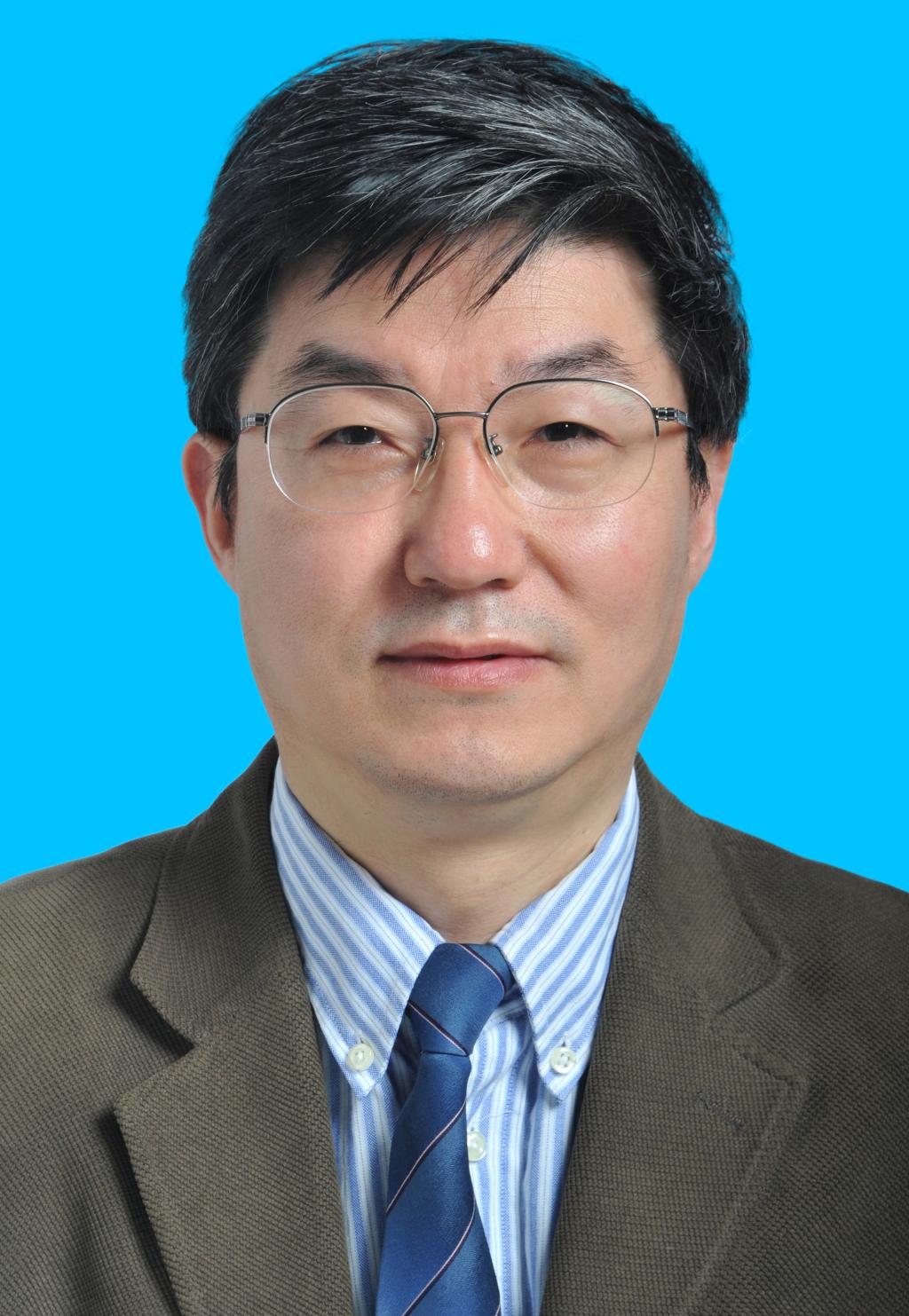 Fuxiang Chu (储富祥)合作论文数Chinese Academy of Forestry4
 Chunpeng Wang (王春鹏)合作论文数Institute of Chemical Industry of Forest Products, Chinese Academy of Forestry Sciences4
 Yuzhi Xu合作论文数4
 Daihui Zhang (张代晖)合作论文数Institute of Chemical Industry of Forest Products, Chinese Academy of Forestry1Xiaoyu Shi合作论文数1Guangbin WANG (王广彬)合作论文数1Ning Li (李宁)合作论文数1
 Mi Li合作论文数1Chenhuan Lai (赖晨欢)合作论文数College of Chemical Engineering, Nanjing Forestry University1
 Arthur J. Ragauskas合作论文数Center for Renewable Carbon, Department of Forestry, Wildlife and Fisheries, School of Natural Resources, The University of Tennessee Institute of Agriculture;Department of Chemical and Biomolecular Engineering, Tickle College of Engineering, The University of Tennessee1




