Objective Early in the postnatal development, inhibitory inputs to lateral superior olive (LSO) neurons switch from being predominantly GABAergic to glycinergic. This study was to explore the effect of auditory deprivation on the physiological switching phenomenon. Methods Using whole-cell voltage-clamp technique, inhibitory postsynaptic currents were recorded in neurons acutely dissociated from the LSO. The ratio of GABAergic and glycinergic currents was observed in postnatal 13-to-15-day-old rats with normal development or deprived auditory function. Results In postnatal 4-to-6-day-old LSO neurons, the GABAergic and glycinergic component was (65.7±5.3)% and (34.3±5.3)%, respectively. In LSO neurons of postnatal 13-to-15-day-old normally developed rats, the GABAergic and glycinergic components were (14.9±5.1)% and (84.1±5.1)%, respectively; while those in the auditory-deprivation animals were about (38.7±5.9)% and (61.3±5.9)%, respectively. The LSO neurons received more GABAergic project and less glycinergic project in auditory deprived animals than normal animals (P0.001 for both). Conclusion The physiological inhibitory synaptic switching phenomenon can be partially blocked in LSO neurons of auditory deprived animals. The auditory stimulus may be related to the development of auditory pathway.
 jing nan xiao zong (静男 小宗)合作论文数12junfu long (隆 君付)合作论文数7songben xi (希 松本)合作论文数5shang zhi zhong chuan (尚志 中川)合作论文数4xiu shu bai tu (秀樹 白土)合作论文数3zhuang tai lang xiao gong shan (荘太郎 小宮山)合作论文数3yi gui gao yan (一貴 高岩)合作论文数2chai tian xiu ming (柴田 修明)合作论文数2gong zi zhong tiao (恭子 中条)合作论文数2shangzhi zhongchuan (中川尚志)合作论文数1jun lang mei qi (俊郎 梅崎)合作论文数1yi xiong an da (一雄 安達)合作论文数1zhao yu yu jiang (昭裕 玉江)合作论文数1zhi shi shan ben (智矢 山本)合作论文数1xiong ben fang yan (熊本 芳彦)合作论文数1he xing shi jin (和幸 石津)合作论文数1de xiao xiao zong (徳孝 小宗)合作论文数1daqiao chong (充 大橋)合作论文数1mei ye hao qi (梅野 好啓)合作论文数1ye kou dun zi (野口 敦子)合作论文数1lai chuan you yi (瀬川 祐一)合作论文数1jiang zi dao mu (匠子 稲木)合作论文数1jun yi lang tian zhong (俊一郎 田中)合作论文数1min fu you ma (敏夫 有馬)合作论文数1zhe ping ye tian (哲平 野田)合作论文数1
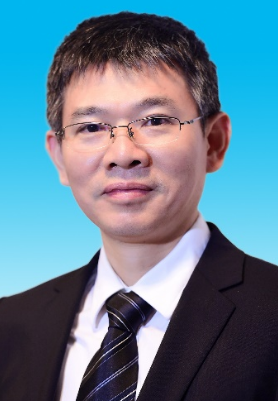 Haibo Shi (时海波)合作论文数School of Medicine, Shanghai Jiao Tong University1
 Shankai Yin (殷善开)合作论文数Shanghai Sixth People’s Hospital Affiliated to Shanghai Jiao Tong University1
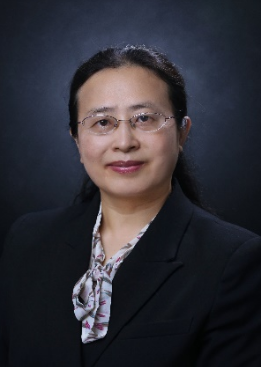 Yanmei Feng (冯艳梅)合作论文数Shanghai Sixth People's Hospital1




