Targeted instruction tuning requires selecting pertinent samples from massive mixed guided by a small reflecting the desired capability, yet efficiently identifying high-quality data amidst noise remains challenging. To address this, we propose (get-aware s, a simple yet effective data selection framework that leverages the model's inherent data understanding. TarGATE computes a token-level Information Retention Ratio () to scale the output of the feed-forward network, where the instance-level average IRR serves as a quantitative metric for data quality. To align gates' preferences with the target task, we employ a joint optimization strategy utilizing the reference set and a subset of candidate data, which encourages the gates to assign higher IRRs to reference-aligned data while suppressing low-quality samples. Extensive experiments across noisy and real-world scenarios demonstrate that TarGATE outperforms related baselines. Furthermore, TarGATE exhibits superior computational efficiency and strong cross-model transferability, enabling smaller selector to effectively curate high-quality fine-tuning data for larger foundation models. The code is available at .
Time series data are prone to noise in various domains, and training samples may contain low-predictability patterns that deviate from the normal data distribution, leading to training instability or convergence to poor local minima. Therefore, mitigating the adverse effects of low-predictability samples is crucial for time series analysis tasks such as time series forecasting (TSF) and time series classification (TSC). While many deep learning models have achieved promising performance, few consider how to identify and penalize low-predictability samples to improve model performance from the training perspective. To fill this gap, we propose a general Amortized Predictability-aware Training Framework (APTF) for both TSF and TSC. APTF introduces two key designs that enable the model to focus on high-predictability samples while still learning appropriately from low-predictability ones: (i) a Hierarchical Predictability-aware Loss (HPL) that dynamically identifies low-predictability samples and progressively expands their loss penalty as training evolves, and (ii) an amortization model that mitigates predictability estimation errors caused by model bias, further enhancing HPL's effectiveness. The code is available at https://github.com/Meteor-Stars/APTF.
Federated graph learning excels in learning graph-structured data that are distributed across multiple clients. However, the partition of graph data results in each client only possessing a subgraph, lacking its neighbor nodes, which significantly degrades accuracy. Although exchanging original nodes can address this issue, it requires interaction with a remote server, not only causing significant communication delays but also leaking data privacy. To tackle this, this paper proposes an edge-server-assisted federated graph learning approach, namely FedEGL, which aggregates and exchanges intermediate features of approximated nodes through a third-party edge server, performing cross-client feature alignment and dynamic weighted aggregation while dynamically allocating privacy budgets with adaptive differential privacy to preserve node privacy. Additionally, differential privacy is introduced to protect the privacy of approximated node features by dynamically allocating privacy budgets. Experimental results show that our method achieves accuracy close to that in centralized settings, with the classification accuracy improved by up to 8% compared to the latest baseline. This method can improve model accuracy while protecting privacy, providing an effective solution to the subgraph partitioning problem in federated graph learning.
Fake orders pose increasing threats to sequential recommender systems by misleading recommendation results through artificially manipulated interactions, including click farming, context-irrelevant substitutions, and sequential perturbations. Unlike injecting carefully designed fake users to influence recommendation performance, fake orders embedded within genuine user sequences aim to disrupt user preferences and mislead recommendation results, thereby manipulating exposure rates of specific items to gain competitive advantages. To protect users' authentic interest preferences and eliminate misleading information, this paper aims to perform precise and efficient rectification on compromised sequential recommender systems while avoiding the enormous computational and time costs of retraining existing models. Specifically, we identify that fake orders are not absolutely harmful—in certain cases, partial fake orders can even have a data augmentation effect. Based on this insight, we propose Dual-view Identification and Targeted Rectification (DITaR), which primarily identifies harmful samples to achieve unbiased rectification of the system. The core idea of this method is to obtain differentiated representations from collaborative and semantic views for precise detection, and then filters detected suspicious fake orders to select truly harmful ones for targeted rectification with gradient ascent. This ensures that useful information in fake orders is not removed while preventing bias residue. Moreover, it maintains the original data volume and sequence structure, thus protecting system performance and trustworthiness to achieve optimal unbiased rectification. Extensive experiments on three datasets demonstrate that DITaR achieves superior performance compared to state-of-the-art methods in terms of recommendation quality, computational efficiency, and system robustness.
Federated Graph Learning is an efficient technique for processing graph data, capable of integrating information from various data sources in a distributed environment. However, graph data from different domains often exhibit significant differences in both features and structures, which is known as the heterogeneity problem of cross-domain federated graph data. Existing methods still have limitations in the underlying extraction and aggregation of structural information for cross-domain federated graphs. To address this issue, we propose FedCHG: Graph Autoencoder Enhanced Federated Learning for Cross-Domain Heterogeneous Graph. Specifically, we combine the Graphlet subgraph algorithm and the random walk diffusion algorithm to extract graph structural information from both local and global perspectives, constructing a universal structural representation. We design a graph encoder-decoder architecture to integrate global structural information while preserving local structural information. Additionally, we introduce a weighted aggregation strategy based on graph structural similarity, which considers structural differences during the aggregation process and enhances the overall performance of the model. Experiments on publicly available multi-domain graph datasets show that compared to current state-of-the-art federated graph learning baselines, the proposed FedCHG improves the accuracy by up to 5% in cross-domain scenarios, demonstrating the effectiveness of FedCHG in collaborative learning scenarios in various graph datasets.
Non-Centralized Continual Learning (NCCL) has become an emerging paradigm for enabling distributed devices such as vehicles and servers to handle streaming data from a joint non-stationary environment. To achieve high reliability and scalability in deploying this paradigm in distributed systems, it is essential to overcome challenges stemming from both spatial and temporal dimensions, manifesting as distribution shifts, catastrophic forgetting, heterogeneity, and privacy issues. This survey focuses on a comprehensive examination of the development of the non-centralized continual learning algorithms and the real-world deployment across distributed devices. We begin with an introduction to the background and fundamentals of non-centralized learning and continual learning. Then, we review existing solutions from three levels to represent how existing techniques alleviate the catastrophic forgetting and distribution shift. Additionally, we delve into the various types of heterogeneity issues, security, and privacy attributes, as well as real-world applications across three prevalent scenarios. Furthermore, we establish a large-scale benchmark to revisit this problem and analyze the performance of the state-of-the-art NCCL approaches. Finally, we discuss the important challenges and future research directions in NCCL.
Low-rank adaptation (LoRA) approximates the update of a pretrained weight matrix using the product of two low-rank matrices. However, standard LoRA follows an explicit-rank paradigm, where increasing model capacity requires adding more rows or columns (i.e., basis vectors) to the low-rank matrices, leading to substantial parameter growth. In this paper, we find that these basis vectors exhibit significant parameter redundancy and can be compactly represented by lightweight nonlinear functions. Therefore, we propose Generative Low-Rank Adapter (GenLoRA), which replaces explicit basis vector storage with nonlinear basis vector generation. Specifically, GenLoRA maintains a latent vector for each low-rank matrix and employs a set of lightweight radial basis functions (RBFs) to synthesize the basis vectors. Each RBF requires far fewer parameters than an explicit basis vector, enabling higher parameter efficiency in GenLoRA. Extensive experiments across multiple datasets and architectures show that GenLoRA attains higher effective LoRA ranks under smaller parameter budgets, resulting in superior fine-tuning performance. The code is available at https://anonymous.4open.science/r/GenLoRA-1519.
The proliferation of Large Language Models (LLMs) has saturated social media platforms with hyper-realistic posts, rendering traditional detection methods that rely on low-level artifacts or unimodal statistics increasingly ineffective. In this work, we identify a fundamental semantic distinction: humans tend to complement visual content with additional context, while LLMs predominantly describe the visual information. To capture this, UMPIRE employs an orthogonal semantic decomposition mechanism that disentangles textual embeddings into redundant and complementary components. An adaptive gating module dynamically weighs these components to reflect diverse communicative styles. To enforce the desired geometric structure, we introduce a latent contrastive redundancy regularization loss that encourages LLM-generated content to exhibit high semantic redundancy, while human-written content emphasizes complementarity. Experimental results demonstrate that UMPIRE significantly outperforms state-of-the-art detection methods across multiple datasets, achieving up to a 5.38% improvement in accuracy.
Low-rank adaptation (LoRA) is a parameter-efficient fine-tuning (PEFT) method widely used in large language models (LLMs). It approximates the update of a pretrained weight matrix $W\in\mathbb{R}^{m\times n}$ by the product of two low-rank matrices, $BA$, where $A \in\mathbb{R}^{r\times n}$ and $B\in\mathbb{R}^{m\times r} (r\ll\min\{m,n\})$. Increasing the dimension $r$ can raise the rank of LoRA weights (i.e., $BA$), which typically improves fine-tuning performance but also significantly increases the number of trainable parameters. In this paper, we propose **Block Diversified Low-Rank Adaptation (BoRA)**, which improves the rank of LoRA weights with a small number of additional parameters. Specifically, BoRA treats the product $BA$ as a block matrix multiplication, where $A$ and $B$ are partitioned into $b$ blocks along the columns and rows, respectively (i.e., $A=[A_1,\dots,A_b]$ and $B=[B_1,\dots,B_b]^\top$). Consequently, the product $BA$ becomes the concatenation of the block products $B_iA_j$ for $i,j\in[b]$. To enhance the diversity of different block products, BoRA introduces a unique diagonal matrix $\Sigma_{i,j} \in \mathbb{R}^{r\times r}$ for each block multiplication, resulting in $B_i \Sigma_{i,j} A_j$. By leveraging these block-wise diagonal matrices, BoRA increases the rank of LoRA weights by a factor of $b$ while only requiring $b^2r$ additional parameters. Extensive experiments across multiple datasets and models demonstrate the superiority of BoRA, and ablation studies further validate its scalability. The code is available at \url{https://anonymous.4open.science/r/BoRA}.
Federated Continual Learning (FCL) enables the continuous acquisition of knowledge from streaming tasks, but inherently struggles with the temporal dynamics of client data distributions. These dynamics naturally induce asynchronous concept drift, where distribution shifts occur independently across clients at unsynchronized times and with varying magnitudes. Such asynchrony generates conflicting updates that destabilize global convergence and exacerbate catastrophic forgetting. However, existing FCL research focuses on static or incremental settings, typically treating all incoming updates uniformly, which obscures concept drift under divergent distributions and fails to adapt to the evolution of learned concepts. To address these limitations, we propose RC-FCL, a retrospective calibration framework for FCL that can effectively distinguish asynchronous concept drift and adjust the learning strategy adaptively. Specifically, RC-FCL leverages a conditional generative model to synthesize class-conditional reference distributions of previously learned concepts for local drift detection. It calibrates local adaptation using a weighting mechanism driven by the local discriminator to prioritize informative samples, and executes a global aggregation strategy based on drift magnitude. Our experimental results demonstrate that RC-FCL achieves competitive performance against state-of-the-art methods.
Data-Centric Sequential Recommendation (DaCSR) has emerged as a promising technique that enhances dataset quality to better capture user preferences without increasing training complexity. However, mining item relations to improve data quality remains challenging due to the intricate nature of interaction sequences. Existing methods predominantly either: 1) optimize models to learn such item relations from fixed datasets at significant training cost, or 2) employ generative models to adaptively learn only interaction patterns, which lack interpretability and cannot guarantee effective data quality enhancement. In this paper, we pioneer a relation-guided dataset augmentation and regeneration framework for sequential recommendation called \textbf{RaSR}. This framework can significantly improve model performance on original datasets while maintaining training efficiency without modifying the model architecture. Specifically, we first preprocess user interactions to construct standardized sequential data and extract semantic representations via a Large Language Model (LLM). We then build a multi-relation graph with manually predefined metrics and semantic representations to generate augmented datasets. Finally, a relation-aware generator can produce regenerated datasets with both the multi-relation graph and the augmented dataset. To verify the effectiveness of RaSR, we conduct experiments on various backbone models and datasets, and achieve significant performance improvement compared to training the model only on the original dataset.
Knowledge Distillation (KD) serves as an effective approach to addressing heterogeneity issues in Federated Learning (FL), leveraging additional datasets to align local and global models better. There are two primary distillation paradigms: feature-based distillation, which utilizes intermediate-layer features of the network, and logit-based distillation, which employs the final layer's logit outputs. However, existing studies often select distillation methods based on intuitive and empirical evidence when facing different heterogeneous settings, neglecting the intrinsic relationship between distillation paradigms and heterogeneity. This oversight may result in suboptimal federated knowledge distillation performance under heterogeneous conditions. In this paper, we propose the Consolidated Distillation for Heterogeneous Federated Learning - FedCD that balances knowledge representations from both feature-based and logit-based distillation to enhance performance. Specifically, to address the misalignment between knowledge conveyed by features and logits, we aggregate features from different layers via cross-layer attention to preserve semantic knowledge, followed by distribution modeling using Gaussian Mixture Models. This process strengthens knowledge distillation by constraining the transformation of different network layers' features under a consolidated distribution, thereby mitigating impacts from both data and model heterogeneity. Extensive experiments demonstrate that FedCD outperforms state-of-the-art methods by over 10.72% and validate the effectiveness of our approach.
Federated Incremental Learning (FIL) aims to learn streaming tasks across distributed clients without catastrophic forgetting while preserving privacy. Most existing methods focus on sample-based replay techniques, which mitigate forgetting by replaying historical data samples. However, such methods often face challenges related to data privacy risks and significant resource overheads, making them impractical and difficult to deploy on edge devices with limited resources. To address this challenge, we propose a novel and \underline{Li}ghtweight \underline{F}ederated \underline{I}ncremental \underline{L}earning framework called \textbf{Li-FIL} that leverages dense features synthesized by a secure generator on the server to enable efficient feature-based replay on decoupled local models. More specifically, each client extracts high-confidence features from the new task, applies mixup to obtain a dense feature representation, and then privatizes these features before uploading them to the server, which reduces both storage and communication overhead. A generator is deployed on the server to learn the distributions of different clients and generate global features for replay. Moreover, to enable clients to better learn from these dense features, we decouple the local model into two components: a feature extractor and a classifier. This design allows feature replay and the alignment between new and previous features to be conducted separately and more effectively. Extensive experiments demonstrate that Li-FIL outperforms other state-of-the-art methods by up to 10.14 in terms of accuracy on both old and new tasks with superior resource efficiency.
Multimodal federated learning (MMFL) has gained increasing popularity due to its ability to leverage the correlation between various modalities, meanwhile preserving data privacy for different clients. However, recent studies show that correlation between modalities increase the vulnerability of federated learning against Gradient Inversion Attack (GIA). The complicated situation of MMFL privacy preserving can be summarized as follows: 1) different modality transmits different amounts of information, thus requires various protection strength; 2) correlation between modalities should be taken into account. This paper introduces an information theory perspective to analyze the leaked privacy in process of MMFL, and tries to propose a more reasonable protection method \textbf{Sec-MMFL} based on assessing different information leakage possibilities of each modality by conditional mutual information and adjust the corresponding protection strength. Moreover, we use mutual information to reduce the cross-modality information leakage in MMFL. Experiments have proven that our method can bring more balanced and comprehensive protection at an acceptable cost.
Despite Federated Learning (FL) employing gradient aggregation at the server for distributed training to prevent the privacy leakage of raw data, private information can still be divulged through the analysis of uploaded gradients from clients. Substantial efforts have been made to integrate local differential privacy (LDP) into the system to achieve a strict privacy guarantee. However, existing methods fail to take practical issues into account by merely perturbing each sample with the same mechanism while each client may have their own privacy preferences on privacy-sensitive information (PSI), which is not uniformly distributed across the raw data. In such a case, excessive privacy protection from private-insensitive information can additionally introduce unnecessary noise, which may degrade the model performance. In this work, we study the PSI within data and develop FedRE, that can simultaneously achieve robustness and effectiveness benefits with LDP protection. More specifically, we first define PSI with regard to the privacy preferences of each client. Then, we optimize the LDP by allocating less privacy budget to gradients with higher PSI in a layer-wise manner, thus providing a stricter privacy guarantee for PSI. Furthermore, to mitigate the performance degradation caused by LDP, we design a parameter aggregation mechanism based on the distribution of the perturbed information. We conducted experiments with text tamper detection on T-SROIE and DocTamper datasets, and FedRE achieves competitive performance compared to state-of-the-art methods.
Federated Continual Learning (FCL) aims to enable sequentially privacy-preserving model training on streams of incoming data that vary in edge devices by preserving previous knowledge while adapting to new data. Current FCL literature focuses on restricted data privacy and access to previously seen data while imposing no constraints on the training overhead. This is unreasonable for FCL applications in real-world scenarios, where edge devices are primarily constrained by resources such as storage, computational budget, and label rate. We revisit this problem with a large-scale benchmark and analyze the performance of state-of-the-art FCL approaches under different resource-constrained settings. Various typical FCL techniques and six datasets in two incremental learning scenarios (Class-IL and Domain-IL) are involved in our experiments. Through extensive experiments amounting to a total of over 1,000+ GPU hours, we find that, under limited resource-constrained settings, existing FCL approaches, with no exception, fail to achieve the expected performance. Our conclusions are consistent in the sensitivity analysis. This suggests that most existing FCL methods are particularly too resource-dependent for real-world deployment. Moreover, we study the performance of typical FCL techniques with resource constraints and shed light on future research directions in FCL.
Federated learning (FL) has emerged as a significant distributed machine learning paradigm. It allows the training of a global model through user collaboration without the necessity of sharing their original data. Traditional FL generally assumes that each client's data remains fixed or static. However, in realworld scenarios, data typically arrives incrementally, leading to a dynamically expanding data domain. In this study, we examine catastrophic forgetting within Federated Incremental Learning (FIL) and focus on the training resources, where edge clients may not have sufficient storage to keep all data or computational budget to implement complex algorithms designed for the server-based environment. We propose a general and lowcost framework for FIL named Re-Fed+, which is designed to help clients cache important samples for replay. Specifically, when a new task arrives, each client initially caches selected previous samples based on their global and local significance. The client then trains the local model using both the cached samples and the new task samples. From a theoretical perspective, we analyze how effectively Re-Fed+ can identify significant samples for replay to alleviate the catastrophic forgetting issue. Empirically, we show that Re-Fed+ achieves competitive performance compared to state-of-the-art methods.
Federated Recommendation System (FRS) usually offers recommendation services for users while keeping their data locally to ensure privacy. Currently, most FRS literature assumes that fixed users participate in federated training with personal IoT devices (e.g., mobile phones and PC). However, users may come incrementally, and it is unfeasible to retrain the whole FRS with the new participating user due to the expensive training overheads and the negligible global knowledge gain brought by a small number of new users. To guarantee the quality service for these new users, we take a dive into the federated recommendation for cold-start users, a novel scenario where the new participating users can directly achieve a promising recommendation without overall training with all participating users by leveraging both transferred knowledge from the converged warm clients and the knowledge learned from the local data. Nevertheless, how to efficiently transfer knowledge from warm clients remains controversial. On the one hand, cold clients may introduce new sparse items, causing a distribution shift from the item embedding converged on warm clients. On the other hand, the user information from warm clients is required to match cold users for a collaborative recommendation, but directly sharing user information is a violation of privacy and unacceptable. To tackle these challenges, we propose an efficient and privacy-enhanced federated recommendation for cold-start users (FR-CSU) that each client can adaptively transfer both user and item knowledge from warm clients separately and implement recommendations with local and transferred knowledge fusion. Specifically, each cold client will train a mapping function locally to transfer the aligned item embedding. Meanwhile, warm clients will maintain a user prototype network in a FedAvg manner that provides privacy-friendly yet effective user information for cold users. Finally, a linear function system will fuse the transferred and local knowledge to improve the recommendation. Extensive experiments show that FR-CSU achieves superior performance compared to state-of-the-art methods.
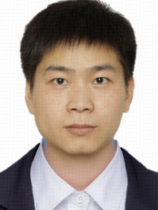 Haozhao Wang (王号召)合作论文数School of Computer Science & Technology, Huazhong University of Science and Technology26
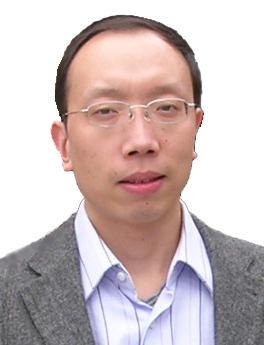 Ruixuan Li (李瑞轩)合作论文数Intelligent and Distributed Computing Laboratory, School of Computer Science and Technology, Huazhong University of Science and Technology;Institute of Parallel and Distributed Computing, Huazhong University of Science and Technology;Concordia Institute for Information Systems Engineering, Concordia University;Institute of Information Engineering, Chinese Academy of Sciences21
 Yining Qi合作论文数12
 Wenchao Xu合作论文数Hong Kong Polytech Univ, Dept Comp, Hong Kong, Peoples R China5
 Shiwei Li (李世伟)合作论文数Intelligent and Distributed Computing Laboratory, Huazhong University of Science and Technology4Rui Zhang (张瑞)合作论文数4
 Yuhua Li (李玉华)合作论文数School of Computer Science and Technology, Huazhong University of Science and Technology3Yijing Shan合作论文数Huazhong University of Science and Technology2Tianzhe Xiao合作论文数2
 Yi Liu (劉毅)合作论文数Department of Computer Science, City University of Hong Kong2
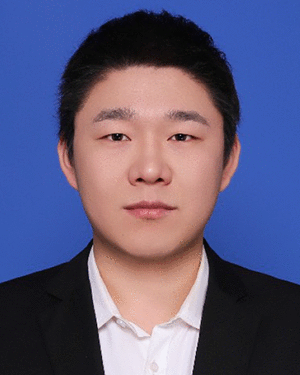 Jiahua Dong (董家华)合作论文数Mohamed Bin Zayed University of Artificial Intelligence2
 Song Guo (郭嵩)合作论文数Department of Computer Science and Engineering, School of Engineering, The Hong Kong University of Science and Technology2
 Xiuying Wang (王修荧)合作论文数Queen Mary University of London;Beijing University of Posts and Telecommunications1Xiandi Luo (罗显迪)合作论文数School of Computer Science and Technology, Huazhong University of Science and Technology1
 Xu Zhang合作论文数Shanghai Key Laboratory of Data Science, College of Computer Science and Artificial Intelligence Fudan University1Hang Su合作论文数Huazhong University of Science and Technology1Yi Wang合作论文数1wangshi.ww合作论文数1Yuying Wang合作论文数1YI LIU合作论文数1Qiyu Qin合作论文数School of Computer Science and Technology, Huazhong University of Science and Technology1Xiaoquan Yi合作论文数School of Computer Science and Technology, Huazhong University of Science and Technology1
 Jiangming Shi (施江鸣)合作论文数School of Computer Science and Technology, East China Normal University1Guannan Zhang合作论文数1
 Cheng Wang合作论文数School of Electronic Information and Communications, Huazhong University of Science and Technology1Juan Zhao合作论文数Intel IAGS SSP, Austin, TX USA1
 Jingcai Guo合作论文数Hong Kong Polytechnic University1
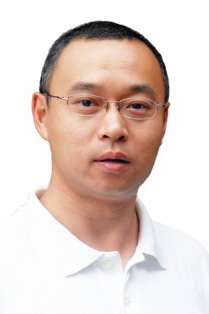 Lei Zhao (赵雷)合作论文数School of Computer Science and Technology, Soochow University1
 Xing Tang合作论文数College of Big Data and Internet, Shenzhen Technology University1
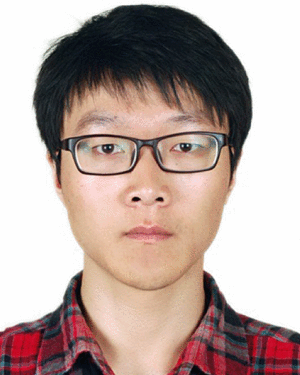 Qunwei Li合作论文数1
 Xiaofang Zhang (章晓芳)合作论文数School of Computer Science & Technology, Soochow University1
 Wei Wang (汪卫)合作论文数Shanghai Key Laboratory of Data Science, School of Computer Science, Fudan University;Intelligent Medicine Institute, Fudan Universtiy1
 Peng Wang (王鹏)合作论文数College of Computer Science and Artificial Intelligence, Fudan University;Shanghai Key Laboratory of Data Science, Fudan University1
 Xin Yang (杨新)合作论文数School of Computing and Artificial Intelligence, Southwestern University of Finance and Economics1
 Wei Liu (刘威)合作论文数School of Artificial Intelligence, Sun Yat-sen University1
 Xiuqiang He (何秀强)合作论文数Institute of Artificial Intelligence Technology, College of Artificial Intelligence, Shenzhen Technology University1
 Shui Yu合作论文数School of Computer Science, Faculty of Engineering and Information Technology, University of Technology Sydney1
 Dugang Liu (刘杜钢)合作论文数College of Computer Science and Software Engineering, Shenzhen University1




