This paper is on the classical Knotting Problem: for a given manifold N and a number m describe the set of isotopy classes of embeddings $N\to S^m$. We study the specific case of knotted tori, i. e. the embeddings $S^p \times S^q \to S^m$. The classification of knotted tori up to isotopy in the metastable dimension range $m>p+\frac{3}{2}q+2$, $p\le q$, was given by A. Haefliger, E. Zeeman and A. Skopenkov. We consider the dimensions below the metastable range, and give an explicit criterion for the finiteness of this set of isotopy classes in the 2-metastable dimension: Theorem. Assume that $p+\frac{4}{3}q+22p+q+2$. Then the set of smooth embeddings $S^p \times S^q \to S^m$ up to isotopy is infinite if and only if either $q+1$ or $p+q+1$ is divisible by 4. Our approach to the classification is based on an analogue of the Koschorke exact sequence from the theory of link maps. This sequence involves a new $\beta$-invariant of knotted tori. The exactness is proved using embedded surgery and the Habegger-Kaiser techniques of studying the complement.
Математические заметкиТом 81 выпуск 3 март 2007 УДК 513.83+515.1 π-π-теорема для пар многообразий с границами Ю. В. Муранов, Д. Реповш, М. Ценцель Препятствие к перестройке нормального отображения в простую пару Пуанкаре (X, Y ) лежит в относительной группе препятствий к перестройкам L * (π1(Y ) → π1(X)).Хорошо известный результат Уолла, так называемая π-πтеорема, утверждает, что в высоких размерностях нормальное отображение многообразия с границей в простую пару Пуанкаре с π1(X) ∼ = π1(Y ) нормально бордантно простой гомотопической эквивалентности пар.Для изучения нормальных отображений в многообразие с подмногообразием Уолл ввел группы препятствий к перестройкам для пар многообразий LP * и группы препятствий к расщеплению LS * .В данной работе для пар многообразий с границами сформулированы и доказаны результаты, которые аналогичны π-π-теореме.Мы даем прямые геометрические доказательства, которые опираются на оригинальные результаты Уолла, и применяем полученные результаты к исследованию перестроек многообразий с фильтрацией.Библиография: 8 названий.
A@ B C3 ED EF HG PI RQ TS TS UQ V XW "Y acb ed f hg pi rq ts vu Tw Pi ru Uq tx "u Ty i aq f hw Pu r x $ w y T f f hq q tx q t y u T q ti r d Ue gf he ji $k Xl nm po 6q rm ps ut pv we jf Rx zy Hm p{ v| ~} t c e j m p u zs r{ z 6 j e e g u c g j z X p p j ¢¡ £ 6 6 u z ¤ ¥ ¦ § X e ¨¤ ¢ ~© j ¦ ¦Ëª 6 «¤ ¥ § X g ¨¤ C¬ ® g g c° ± j ¦ ² " j g¥ c p p § ³ p j 6 c ¦ g µ¦¹ º e n ¨ ¦² n p c c ¥ ¬ ® g g jÄ r c z µ g p ¦ c ¦ ² ² Ä ± p z ¨¤ ¶ •
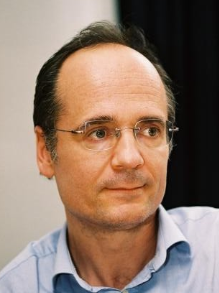 Dušan D. Repovš合作论文数Department of Mathematics, Faculty of Mathematics and Physics, University of Ljubljana;Department of Mathematics and Computer Science, Faculty of Education, University of Ljubljana;Institute of Mathematics, Physics and Mechanics33
 Yury Vladimirovich Muranov合作论文数12Юрий Владимирович Муранов合作论文数12
 Sergei M. Ageev合作论文数Department of Mathematics and Physics, Brest State Pedagogical Institute8Матия Ценцель合作论文数5Matija Cencelj合作论文数5Петр Михайлович Ахметьев合作论文数3Iozhy Maleshich合作论文数3
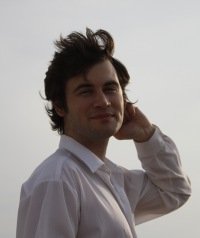 Mikhail Skopenkov合作论文数Faculty of Mechanics and Mathematics, Moscow State University3Михаил Владимирович Зайцев合作论文数2
 Arkadiy B. Skopenkov合作论文数Department of Differential Geometry, Faculty of Mechanics and Mathematics, Moscow State University, Moscow, Russia 119899, e-mail: skopenko@mccme.ru RU2Fulvia Spaggiari合作论文数2Umed H. Karimov合作论文数2Semeon Antonovich Bogatyi合作论文数2Mikhail Zaicev合作论文数2Sergei M Ageev合作论文数2Andrei Yurievich Vesnin合作论文数1pavel vladimirovich semenov合作论文数1
 Andrei Vesnin合作论文数Sobolev Institute of Mathematics 630090 Novosibirsk Russia1




