We study radiation damage accumulation in alphapolymorph of gallium oxide (α-Ga2O3) epitaxial layers under irradiation with 40 keV monatomic P and 140 keV molecular PF4 ions. The distribution of stable structural damage is bimodal in both cases. The growth rate of the surface disordered layer under PF4 ion irradiation is significantly higher than that under monatomic P ion bombardment. At the same time, monatomic ion irradiation is more efficient in the bulk defect peak formation. Thus, the density of displacement cascades strongly affects the formation of stable damage in α-gallium oxide. The doses required to create the same level of disorder in the metastable α-polymorph are higher than that in the thermodynamically stable β-Ga2O3. Mechanisms of damage formation in these polymorphs are different.
An article presents a study of the regularities of the formation of gold up to 8 nm thick, deposited by vacuum thermal deposition on silicon wafers with a natural oxide, its annealing and subsequent deposition of iron oxide by chemical vapor deposition. The stages were accompanied by SEM analysis of the sample surface, as well as fixation of the optical and FTIR spectra, I–V characteristics of the obtained structures.
Formation of metal nanoparticles on silicon substrate by thin gold film irradiation with accelerated atomic and molecular ions is shown. Structures obtained were etched by metal-assisted catalytic chemical technique to get porous silicon structure. Size of gold nanoparticles and the structure of porous siliconstrongly depend on kind of incident species and ion dose. A local increase in the energy release density at the target surface that takes place during molecular ion bombardment significantly reduce the doses required for the formation of predetermined film morphology and the distribution of nanoparticles on the surface, while at the same time molecules exhibit lower radiation effect on the substrate. Luminescent properties of porous silicon do not depend on the kind of ion used, and can be tuned by composition of an etching solution
Structural damage buildup in GaN under irradiation by 1.3 and 3.2 keV/amu F and Ne ions has been studied. It is shown that chemical effects during irradiation with fluorine ions do not enhance formation of stable structural damage on the surface or in the bulk of GaN at all the doses considered.
AbstractMathematical simulation of the cascade of displacements in SiC is used to consider the specific features of Frenkel-pair generation upon the scattering of 8- and 15-MeV protons. The distribution histograms of energies acquired not only by primary knocked-out atoms, but also by recoil atoms generated in displacement cascades, are calculated. An analysis of the histograms considers two energy ranges. In the first range of “low” energies, the spontaneous recombination of genetically related Frenkel pairs is dominant. Recoil atoms in the second range have a higher energy, which enables these atoms to leave the spontaneousrecombination zone and dissociate into isolated components. The compensation of lightly doped n - and p -4 H -SiC samples grown by gas-phase epitaxy is experimentally studied under irradiation with 8- and 15-MeV protons. The carrier removal rates are measured. The calculated and experimental data are compared and estimates are obtained for the size of the spontaneous-recombination zone.
We present the results of studies of the optical, electrical, and mechanical properties of diamondlike carbon films prepared by plasma-chemical vapor deposition from a mixture of methane and diborane in various proportions. Upon reaching the threshold concentration (~12%) of diborane in the mixture, inclusions of a new phase start to form in the structure of the films. This leads to nonlinear dependence of the interior stresses and the surface resistance of coatings on the composition of the mixture with minimum values corresponding to a diborane concentration of about 12%.
The implantation of 85-keV fluorine ions at a dose of 8.3 × 10 14 cm –2 into single crystal Si does not lead to formation of an amorphous layer. Subsequent annealing at a temperature of 1100°C in a chlorine-containing atmosphere is accompanied by the appearance of D 1 and D 2 lines of dislocation-related luminescence. The intensity of both lines decreases as the annealing duration is increased from 0.25 to 3 h. As the measurement temperature is increased from 80 to 200 K, the intensities of these lines decrease and the positions of their peaks shift to longer wavelengths.
Установлено, что имплантация ионов фтора с энергией 85 keV и дозой 8.3· 1014 cm-2 в монокристаллический Si не приводит к формированию аморфного слоя. Последующий отжиг при температуре 1100oC в хлорсодержащей атмосфере сопровождается появлением D1- и D2-линий дислокационной люминесценции. Интенсивность обеих линий уменьшается с увеличением времени отжига от 0.25 до 3 h. С увеличением температуры измерения от 80 до 200 K интенсивности этих линий уменьшаются, а положения их максимумов сдвигаются в длинноволновую сторону.
The dependence of internal residual stresses in thin diamond-like carbon films grown by the PECVD technique on the most important growth parameters such as the power of the exciting RF discharge and the substrate bias potential is considered. The results have shown that the mechanical stresses in films reach the uppermost value of 1.9 GPa at the smallest values of power and potential. The stress decreases with the growth of both parameters and has only a slight dependence on the film thickness in the range 0.1–1 μm. The bombardment of the obtained films by argon ions with energy of 300 keV and phosphorus ions with energy of 200 keV has resulted in the reduction of compressive stress with the ion dose growth down to its inversion. AFM study of the bombarded films has revealed significant changes in their surface morphology.
A model of a decrease in electrical conductivity of GaN and ZnO under the effect of irradiation with fast ions is suggested. The formation of complexes composed of a doping-impurity atom and the simplest defect formed by the ion beam is considered as the main process that leads to a decrease in the free-carrier concentration and an increase in the resistivity. A comparison of the model-based results and experimental data on the origination of isolation that were obtained for n-GaN and ZnO shows that the model can be used to describe satisfactorily the processes that occur.
 Andrei I. Titov合作论文数Bogolyubov Laboratory of Theoretical Physics8
 K. V. Karabeshkin合作论文数5N. N. Karasev合作论文数2VI SAKHAROV合作论文数2
 A. I. Struchkov合作论文数Peter Great St Petersburg Polytech Univ2
 Polina Bespalova合作论文数2
 Maxim Mishin合作论文数2
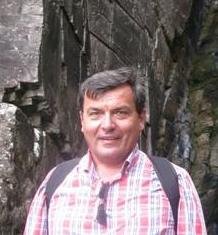 Nikolai A. Sobolev合作论文数Ioffe Physicotechnical Institute, Russian Academy of Sciences2A. Ya. Vinogradov合作论文数2
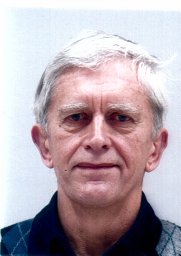 Oleg A. Podsvirov合作论文数St. Petersburg State Polytechnical University2E. I. Shek合作论文数2I. T. Serenkov合作论文数2A. Yu. Azarov合作论文数1IV KORKIN合作论文数1Valentina Andreeva合作论文数1E. N. Shubina合作论文数1В.В. Козловский合作论文数1A. E. Kalyadin合作论文数1А.Е. Калядин合作论文数1
 Alexey Smirnov合作论文数1Vitaly Studzinsky合作论文数1A. E. Vasil'ev合作论文数1
 Ilya Kolesnikov合作论文数Ctr Opt & Laser Mat Res, St Petersburg Univ1
 Sergei O Kucheyev合作论文数Lawrence Livermore National Laboratory1
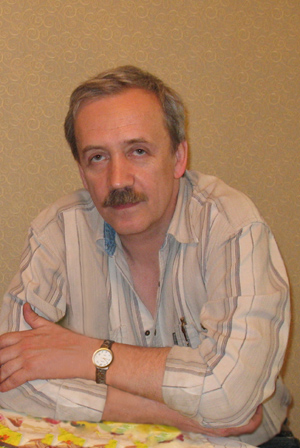 Alexander A. Lebedev合作论文数Laboratory of Semiconductor Devices Physics, Ioffe Institute of Russian Academy of Sciences/St. Petersburg Electrical Engineering University1
 Vladislav Nikolaev合作论文数Joint Institute for High Temperatures, Russian Academy of Sciences1A. I. Pechnikov合作论文数1




