This report presents results of the indirect multivariate "measurements" of model parameters in a task of experimental data description by analytical models with "moderate" nonlinearity. In our "measurements" we follow the recommendations of the GUM-S1 and GUM-52 documents in places where they are appropriate.
HIGH-ENERGY COLLIDER PARAMETERS:e + e - Colliders(I)Updated in September 2013 with numbers received from representatives of the colliders(contact J.Beringer,LBNL).The table shows parameter values as achieved by July 1,2013.Quantities are,where appropriate,r.m.s.;unless noted otherwise,energies refer to beam energy;H and V indicate horizontal and vertical directions;s.c.stands for superconducting.Parameters for the defunct SPEAR,DORIS,PETRA,PEP,TRISTAN,and VEPP-2M colliders may be found in our 1996 edition(Phys.Rev.D54,1 July 1996,Part I).
Revised August 2013 by S.Roesler and M.Silari(CERN).35.1.Definitions[1,2]It would be desirable if legal protection limits could be expressed in directly measurable physical quantities.However,this does not allow to quantify biological effects of the exposure of the human body to ionizing radiation.For this reason,protection limits are expressed in terms of so-called protection quantities which,although calculable,are not measurable.Protection quantities quantify the extent of exposure of the human body to ionizing radiation from both whole and partial body external irradiation and from intakes of radionuclides.In order to demonstrate compliance with dose limits,so-called operational quantities are typically used which aim at providing
Revised August 2013 by M.J.Syphers(MSU)and F.Zimmermann(CERN).29.1.Luminosity This article provides background for the High-Energy Collider Parameter Tables that follow.The number of events,N exp is the product of the cross section of interest,σ exp ,and the time integral
Revised September 2013 by K.A.Olive(University of Minnesota)and J.A.Peacock(University of Edinburgh).22.1.Introduction to Standard Big-Bang Model The observed expansion of the Universe[1-3]is a natural(almost inevitable)result of any homogeneous and isotropic cosmological model based on general relativity.However,by itself,the Hubble expansion does not provide sufficient evidence for what we generally refer to as the Big-Bang model of cosmology.While general relativity is in principle capable of describing the cosmology of any given distribution of matter,it is extremely fortunate that our Universe appears to be homogeneous and isotropic on large scales.Together,homogeneity and isotropy allow us to extend the Copernican Principle to the Cosmological Principle,stating that all spatial positions in the
The Review summarizes much of particle physics and cosmology. Using data from previous editions, plus 3,283 new measurements from 899 Japers, we list, evaluate, and average measured properties of gauge bosons and the recently discovered Higgs boson, leptons, quarks, mesons, and baryons. We summarize searches for hypothetical particles such as heavy neutrinos, supersymmetric and technicolor particles, axions, dark photons, etc. All the particle properties and search limits are listed in Summary Tables. We also give numerous tables, figures, formulae, and reviews of topics such as Supersymmetry, Extra Dimensions, Particle Detectors, Probability, and Statistics. Among the 112 reviews are many that are new or heavily revised including those on: Dark Energy, Higgs Boson Physics, Electroweak Model, Neutrino Cross Section Measurements, Monte Carlo Neutrino Generators, Top Quark, Dark Matter, Dynamical Electroweak Symmetry Breaking, Accelerator Physics of Colliders, High-Energy Collider Parameters, Big Bang Nucleosynthesis, Astrophysical Constants and Cosmological Parameters.
Section 10 of the 2004 edition of the Review of Particle Physics.
THE CKM QUARK-MIXING MATRIX* A. Ceccucci, 1 Z. Ligeti, 2 and Y. Sakai 3 European Organization for Nuclear Research (CERN), Geneva, Switzerland Lawrence Berkeley National Laboratory, Berkeley, CA, USA High Energy Accelerator Research Organization (KEK), Tsukuba, Japan April 2006 *This work was supported in part by the Director, Office of Science, Office of High Energy Physics, of the U.S. Department of Energy under Contract No. DE-AC02-05CH11231. DISCLAIMER This document was prepared as an account of work sponsored by the United States Government. While this document is believed to contain correct information, neither the United States Government nor any agency thereof, nor The Regents of the University of California, nor any of their employees, makes any warranty, express or implied, or assumes any legal responsibility for the accuracy, completeness, or usefulness of any information, apparatus, product, or process disclosed, or represents that its use would not infringe privately owned rights. Reference herein to any specific commercial product, process, or service by its trade name, trademark, manufacturer, or otherwise, does not necessarily constitute or imply its endorsement, recommendation, or favoring by the United States Government or any agency thereof, or The Regents of the University of California. The views and opinions of authors expressed herein do not necessarily state or reflect those of the United States Government or any agency thereof or The Regents of the University of California.
This biennial Review summarizes much of particle physics. Using data from previous editions, plus 2658 new measurements from 644 papers, we list, evaluate, and average measured properties of gauge bosons, leptons, quarks, mesons, and baryons. We summarize searches for hypothetical particles such as Higgs bosons, heavy neutrinos, and supersymmetric particles. All the particle properties and search limits are listed in Summary Tables. We also give numerous tables, figures, formulae, and reviews of topics such as the Standard Model, particle detectors, probability, and statistics. Among the 112 reviews are many that are new or heavily revised including those on Heavy-Quark and Soft-Collinear Effective Theory, Neutrino Cross Section Measurements, Monte Carlo Event Generators, Lattice QCD, Heavy Quarkonium Spectroscopy, Top Quark, Dark Matter, V-cb & V-ub, Quantum Chromodynamics, High-Energy Collider Parameters, Astrophysical Constants, Cosmological Parameters, and Dark Matter.A booklet is available containing the Summary Tables and abbreviated versions of some of the other sections of this full Review. All tables, listings, and reviews (and errata) are also available on the Particle Data Group website: http://pdg.lbl.gov.
 V. V. Ezhela合作论文数12N. P. Tkachenko合作论文数12O. V. Zenin合作论文数8D. Tovey合作论文数8P. Nevski合作论文数8P A Zyla合作论文数8d a edwards合作论文数8K Hikasa合作论文数8T. Basaglia合作论文数8M Silari合作论文数8
 Kathy Copic合作论文数Fieldwork Partners8L. Garren合作论文数8J. Laiho合作论文数8B. Heltsley合作论文数8H. Spieler合作论文数8De Groom合作论文数8Rm Barnett合作论文数8
 John A. Parsons合作论文数Department of Physics, Columbia University8N. Törnqvist合作论文数8
 Daniel Wicke合作论文数Ritzenhoefer & Company8M. G. Vincter合作论文数8W-M. Yao合作论文数8M Tanabashi合作论文数8T. Junk合作论文数8Peter Richardson合作论文数8T. Stanev合作论文数8Maury C. Goodman合作论文数Argonne National Laboratory8J. Holder合作论文数Dept Phys & Astron, Univ Delaware8H BAER合作论文数8L Littenberg合作论文数8Hj Gerber合作论文数8
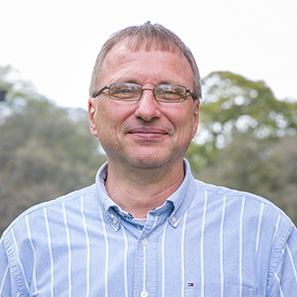 Andreas Piepke合作论文数Department of Physics & Astronomy, College of Arts & Sciences, University of Alabama8
 Paul de Jong合作论文数Institute of Physics, Faculty of Science, Universiteit van Amsterdam;Nikhef8T. M. Liss合作论文数8A Holtkamp合作论文数8T. K. Gaisser合作论文数8
 Mario Antonelli合作论文数Laboratori Nazionali di Frascati LNF, Istituto Nazionale di Fisica Nucleare8
 Bob Kowalewski合作论文数Victoria Subatomic Physics & Accelerator Research Centre, Department of Physics and Astronomy, Faculty of Science, University of Victoria8
 Sunil Golwala合作论文数The Division of Physics, Mathematics and Astronomy, California Institute of Technology8
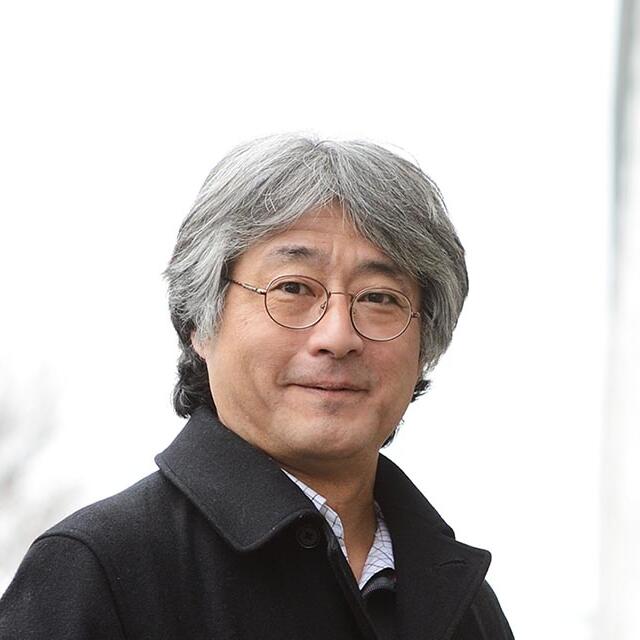 Hitoshi Murayama (村山齐)合作论文数Department of Physics, University of California, Berkeley;Berkeley Center for Theoretical Physics, University of California, Berkeley8
 Marcela Carena合作论文数Perimeter Institute for Theoretical Physics8
 Edward Blucher合作论文数Department of Physics, The University of Chicago;Enrico Fermi Institute, The University of Chicago8
 Oliver Buchmueller合作论文数Department of Physics, Faculty of Natural Sciences, Imperial College London8Daniel De Florian合作论文数Instituto de Ciencias Fisicas, UNSAM-CONICET;Universidad Nacional de San Martin;Universidad de Buenos Aires8
 Brian Foster合作论文数Department of Physics, University of Oxford8
 William Marciano合作论文数Physics Department, Brookhaven National Laboratory8
 Kate Scholberg合作论文数Trinity College of Arts & Sciences, Duke University8
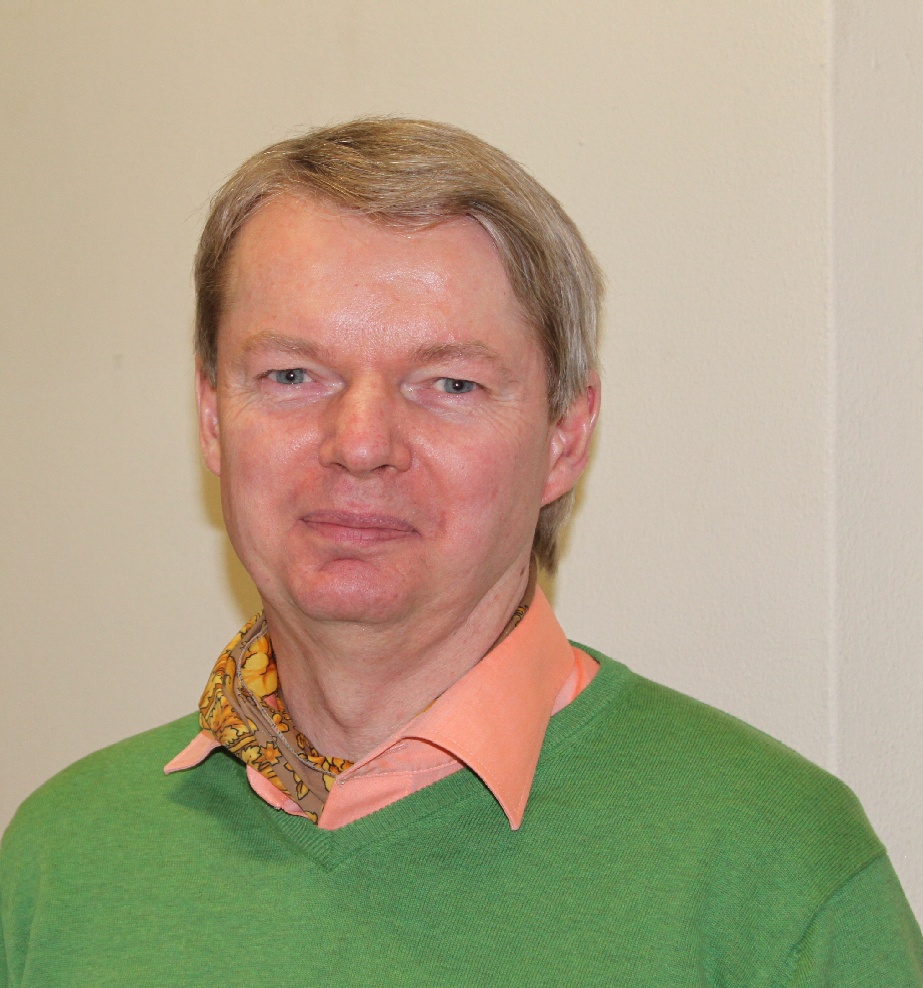 Manuel Drees合作论文数Physikalisches Institut, Rheinische Friedrich-Wilhelms-Universität Bonn8Kenneth G Hayes合作论文数8




