We present experimental study of the bremsstrahlung γ-rays generation in a plasma interacting with 50 fs laser pulse in slightly relativistic regime (intensity ∼2-10 18 W/cm 2 ). A pre-plasma layer on the surface of the molybdenum target is formed by an additional laser pulse with a duration of 8 ns and an intensity of ∼2-10 12 W/cm 2 . The energy and intensity of the artificial pre-pulse exceed those of the amplified spontaneous emission (ASE) pedestal of the main pulse by ∼10 3 and 10 times (for contrast 10 −7 ), respectively. It was shown that the low ASE contrast (>10 −7 ) is the crucial condition for increasing (in comparison to the case without artificial pre-pulse) of the integral γ-rays yield when the nanosecond pulse is ahead of the femtosecond one by >20 ns. Interferometry data show that the reason of the γ-rays yield increasing is a pre-plasma layer initially produced by artificial pre-pulse and re-created by the ASE. The optimum conditions for γ-rays yield achieved if (i) the pre-pulse comes ∼25 ns in advance, (ii) ASE contrast is 10 −7 and lower and (iii) the femtosecond focal point is shifted by ∼100 μm from the center of the nanosecond pre-pulse focal spot and by ∼100 μm above the target surface.
We report an experimental and numerical study of the acceleration of electrons in a plasma interacting with a subterawatt laser pulse (intensity of ∼3 × 10¹⁸ W cm−2 at a pulse duration of 50 fs). A preplasma layer on the surface of a molybdenum target is formed by an additional laser pulse with a duration of 8 ns and an intensity of ∼2 × 10¹² W cm−2. It is shown that an increase in the laser pulse duration to 1700 fs at a constant energy (and a proportional decrease in intensity) leads to an increase in the yield of bremsstrahlung γ-radiation by more than an order of magnitude when the nanosecond pulse is ahead of the femtosecond one by 15 − 25 ns. Interferometry data and results of diagnostics of optical and γ-radiation of a plasma demonstrate that the collisional ionisation of atoms by electrons oscillating in the field of such a laser pulse plays an essential role in the formation of electron density profile. The sensitivity of the described effect to the level of amplified spontaneous emission is determined, despite the nanosecond pulse impact. Numerical simulations show that at a large pulse duration, the acceleration of electrons is stipulated by the beaking of plasma waves excited during stimulated Raman scattering of laser radiation.
The possibility of modifying the scheme of the previously developed three-channel polarization interferometer and creating a device that allows laser probing of plasma with a femtosecond time resolution is demonstrated. The test experiments with a spark in air generated by a nanosecond laser pulse using a probing pulse with duration of 50 fs are carried out. High-contrast interference plasma images making it possible to reconstruct the profile of an electron plasma concentration in a wide range of changes in the delay of the probing pulse with respect to the forming pulse are obtained.
We describe an upgraded version of a three-channel polaris-interferometer, which enables laser-produced plasma probing with femtosecond time resolution. Test experiments are performed with the use of a 50-fs probe pulse and an air spark produced by a driving nanosecond laser pulse. High-contrast interference plasma images are recorded, making it possible to reconstruct the electron density plasma profile with femtosecond time resolution in a wide range of probing pulse delays relative to the driving pulse.
Nonlinear increase of energy deposition results in superfilamentation under femtosecond multifilamentation in air with NA ≪ 10−2 focusing, while for NA & 10−2 it grows linearly with filament number.
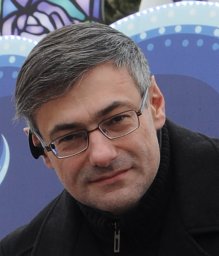 A. B. Savel’Ev合作论文数Physics Department, Moscow State University International Laser Center7
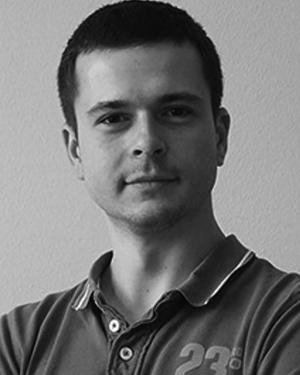 K A Ivanov合作论文数6
 Roman Volkov合作论文数4E A Bolkhovitinov合作论文数3I. N. Tsymbalov合作论文数3A. A. Rupasov合作论文数3S.A. Shulyapov合作论文数2v iu bychenkov合作论文数1N. A. Zhidovtsev合作论文数1E. V. Mitina合作论文数1С.А. Шуляпов合作论文数1D. V. Pushkarev合作论文数1
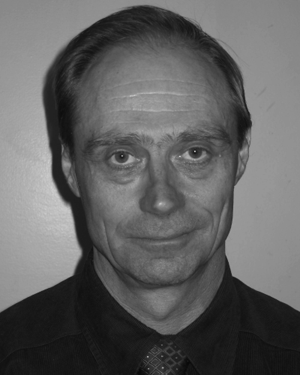 V. Yu. Bychenkov合作论文数1
 Murzanev Aleksey合作论文数1
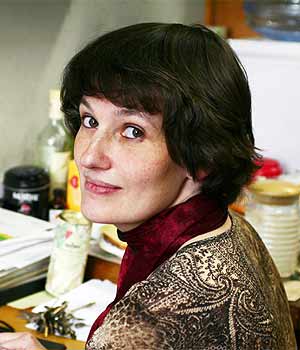 Olga Kosareva合作论文数P. N. Lebedev Physical Institute of the Russian Academy of Sciences;Faculty of Physics, Lomonosov Moscow State University1
 Daria S. Uryupina合作论文数International Laser Center, Faculty of Physics, Lomonosov Moscow State University1




