Polydecylmethylsiloxane–polyperfluorooctyl methylsiloxane (PDec-PFOMS) copolymers are synthesized for the first time. NMR data are used to determine the quantitative substitution of the Si–H bond in the PDec-PFOMS. It is shown that raising the content of PFO expands the wetting angle for n-butanol. It is established that injecting the polymer with 2 mol
The influence of parameters of the dry-jet wet spinning process was studied on properties of porous polysulfone hollow fiber membranes. The air gap distance, the dope extrusion pressure, bore fluid pressure and temperature were chosen as the studied parameters. Their effect on the geometric and morphological properties of membranes was investigated. The optimal parameters were revealed for the formation of polysulfone hollow fiber membranes, promising for use as porous supports of composite membranes. High gas permeability were achieved with pore sizes providing the Knudsen flow regime: carbon dioxide permeability P/l(CO2) = 48.3 m3 m–2 h–1 atm–1, and values of ideal selectivity α = 2.63 and 0.87 for He/CO2 and CO2/N2 gas pairs, respectively.
The membrane distillation process for the concentration of highly saline waters using air-gap distillation apparatuses equipped with Russian-made membranes has been studied. It has been shown that the proposed approach provides a fourfold increase in the concentration of solutions with the simultaneous production of fresh water that is suitable at least for technical needs. The results obtained may be of interest for concentrating water of various origins.
Absorption using aqueous solutions of alkanolamines is the most widely used procedure for removal of carbon dioxide from natural gas, flue gases from power-generating facilities, and other mixtures. Its main drawback is degradation/deactivation of alkanolamine under the process conditions (high temperatures, presence of oxygen and other impurities) with the formation of heat-stable salts consisting of alkanolammonium cation and anions of organic and inorganic acids. The main operation problems caused by heat-stable salts are considered in the review. Three main methods for removal of heat-stable salts from alkanolamine adsorbents are described in detail: distillation, ion exchange, and electrodialysis. The main characteristics of these methods and their advantages and drawbacks are described, and a comparative analysis is made. The history and state-of-the art of studies within the framework of each method are presented.
The structure and properties of ultrafiltration membranes synthesized from bicomponent solutions in N,N-dimethylformamide using five commercial acrylonitrile copolymers of various compositions and molecular masses have been studied. The molecular mass characteristics of the copolymers (Mw, Mw/Mn) have been determined; the viscosity properties of dilute and concentrated solutions have been studied. It has been shown that depending on the chemical composition and molecular mass of the copolymer, the concentration dependence of the water flux is different: for copolymers with a molecular mass of Mw of 76 000–81 000 g/mol, with an increase in the copolymer concentration in solution from 12 to 16%, the water flux of the membranes decreases from 300–500 to 40–150 L/(m2 h) depending on the copolymer composition. For samples with a higher molecular mass (Mw = 99 000 and 107 000 g/mol), the water flux of the membranes hardly depends on the copolymer concentration in the casting solution; it is 150 and 75 L/(m2 h), respectively. The rejection factor of the membranes with a molecular mass of 40 000 g/mol for polyvinylpyrrolidone increases with increasing copolymer concentration in the casting solution regardless of the chemical composition and molecular mass of the copolymer. Scanning electron microscopy studies of the membrane structure have shown that membranes synthesized from copolymers with a higher molecular mass have a denser structure and a thicker selective layer than the respective parameters of membranes synthesized from acrylonitrile copolymers with a lower molecular mass, which are characterized by the presence of large macrovoids in the membrane matrix. These differences in the membrane structure are attributed to different viscosities of the casting solutions at identical copolymer concentrations.
Composite membranes with a thin selective layer based on poly[1-trimethylsilyl-1-propyne] (PTMSP) and crosslinked PTMSP containing 10 wt % of nanoparticles of porous aromatic frameworks (PAF-11) have been synthesized and studied. Monitoring of changes in the gas transport characteristics of the membranes under ambient conditions for 7500 h has revealed that for all the samples, the transport characteristics abruptly decrease within the first 1000–2000 h; after that, the mass transfer constants gradually change over time. In the case of a composite membrane with the selective layer based on crosslinked PTMSP and PAF-11 nanoparticles, stable permeability values after 7000 h are 2.1, 3.5, and 12.9 m 3 /(m 2 h atm) for N 2 , O 2 , and CO 2 ,respectively (at an ideal selectivity of α(O 2 /N 2 ) = 1.6 and α(CO 2 /N 2 ) = 6.1); to date, this is the best published result for thin-film composite membranes based on highly permeable glassy polymers.
Possibility of raising the efficiency of the monoethanolamine purification of gas mixtures to remove carbon dioxide is demonstrated with consideration for the real intermolecular interactions and the structuring in the absorbent solution. The composition and structure of individual aqueous monoethanolamine solutions with various concentrations and of the same solutions saturated with carbon dioxide were examined. The methods of viscometry and conductometry demonstrated that, at monoethanolamine concentrations exceeding 12 ± 2 wt %, micelles are formed on the background of the existence of associates with intermolecular hydrogen bonds. This necessitates use of high temperatures (120‒140°C) in the stage of carbon dioxide desorption. It was found that using a 12 wt % aqueous solution of monoethanolamine in purification of gas mixtures makes it possible to lower the desorption temperature of carbon dioxide to 90°C. This process is more efficient than the standard technology of CO2 removal from a 30 wt % monoethanolamine solution. This is so because, in addition to a lower expenditure of heat, the extraction of carbon dioxide grows by 16% at a simultaneous decrease in the absorbent expenditure by at least a factor of 2.5.
Electrodialysis technology was adapted to removal of heat stable salts from aqueous solutions of alkanolamine absorbents, with monoethanolamine as example. Removal of anions of heat stable salts by electrodialysis from a 30 wt % aqueous solution of monoethanolamine with the degree of carbonation of 0.2 mol of CO2 per mole of monoethanolamine was studied. The two-step removal of heat stable salts by electrodialysis allows the monoethanolamine loss to be reduced and the concentration of residual CO2 in the absorbent solution to be decreased. The suggested two-step electrodialysis treatment scheme allows the concentration of heat stable salts to be maintained on the required level from the viewpoint of their corrosion activity, the total volume of the concentrate to be decreased by 50%, and the monoethanolamine loss to be decreased by 30%. The treatment unit with the circulation volume of the monoethanol absorbent of 100 m3 h–1 was calculated for confirming the efficiency of the two-step electrodialysis treatment scheme. As compared to the one-step electrodialysis treatment scheme, the two-step scheme ensures recovery of 50% of monoethanolamine at the same efficiency of the removal of heat stable salts.
Experimental studies of the specific conductivity (SC) are carried out for aqueous solutions of organic and inorganic acids and salts including those containing different amounts of monoethanolamine (MEA), which model the absorption solutions used in purification of gas mixtures from carbon dioxide and containing heatstable salts (HSS). It is shown that the addition of MEA to binary aqueous electrolyte solutions gives rise to changes in the SC: in the MEA concentration range from 0 to ∼1.5 M, the SC of the resulting ternary solutions increases but decreases again with the further increase in MEA concentration. This behavior of SC is typical also of aqueous binary amine solutions. It is shown that in the presence of MEA, the quantitative removal of dissolved acids and salts proceeds faster with the simultaneous increase in the specific energy consumption by a factor of 7–9 (up to 85.7–93.6 kJ/dm 3 ). It is assumed that the reason for the decrease in SC and the enhancement of energy consumption at electrodialysis of mixed solutions is the probable existence of monoethanolamine both as free solvated ions and neutral molecules and as self-assembled associated structures (ion pairs and more complex particles) which involve also the ions of salts dissolved in amine-containing solutions.
 E. G. Novitskii合作论文数16Vladimir Vladimirovich Volkov合作论文数Institute of Cristallography, Russian Academy of Sciences/A. V. Topchiev Institute of Petrochemical Synthesis, Russian Academy of Sciences16
 Evgenia Grushevenko合作论文数Russian Acad Sci, A V Topchiev Inst Petrochem Synth11Stepan Bazhenov合作论文数AV Topchiev Inst Petrochem Synth RAS10
 George Dibrov合作论文数6А. В. Бильдюкевич合作论文数4D. N. Matveev合作论文数4V. I. Vasil’eva合作论文数4
 Georgiy Golubev合作论文数AV Topchiev Inst Petrochem Synth RAS3I. L. Borisov合作论文数A.V. Topchiev Institute of Petrochemical Synthesis, Russian Academy of Sciences3В. В. Усоский合作论文数2A. A. Shustikov合作论文数2
 Danila Bakhtin合作论文数Russian Acad Sci, Av Topchiev Inst Petrochem Synth2L. A. Kulikov合作论文数2
 Tatiana V Plisko合作论文数2
 Alexey V. Volkov合作论文数Topchiev Institute of Petrochemical Synthesis, Russian Academy of Sciences2
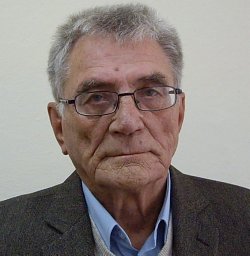 G. N. Bondarenko合作论文数Topchiev Institute of Petrochemical Synthesis, Russian Academy of Sciences2Elena V. Chernikova合作论文数2A. L. Maksimov合作论文数2E. A. Goleva合作论文数1A.V. Nikitin合作论文数1
 A. A. Filippov合作论文数1A. A. Ovcharova合作论文数1Valerii S Khotimskii合作论文数1S. A. Legkov合作论文数1Alexandr V. Bildyukevich合作论文数1
 Igor Sedov合作论文数Chemical Technology Department, Institute of Problems of Chemical Physics, Russian Academy of Sciences;Lomonosov Moscow State University1




