The 10 % substitution of arsenic for phosphorus in FeP represents an excellent example of the preservation of the crystal and helimagnetic structure, accompanied by stabilization of the latter. Although magnetic order in FeP 0.9 As 0.1 forms at lower temperature of 90 K, it turns out to be much more resistant to an external magnetic field. Namely, no spin-reorientation transition was observed up to 12 T, as well as any other distortion of the helical magnetic structure, in contrast to the parent compound FeP.
We report a detailed study of the nature of the RuGa3 in-gap states by means of precision microscopic methods: nuclear quadrupole resonance (NQR), nuclear magnetic resonance (NMR), and pump-probe spectroscopy. We observe a pronounced splitting of 69Ga nuclear spin-lattice relaxation curves below-40 K and between 70 and 145 K, although the corresponding NQR lines remain narrow over the entire tem-perature range under study. The slow relaxing component behaves like a typical phonon-induced relaxation way, while the fast relaxing one demonstrates signatures of paramagnetic (below-40 K) and activation (between 70 and 145 K) mechanisms. Moreover, additional Ga' and Ga" positions with anomalously low electric field gradient were revealed for the first time for IrIn3-type structure gallides, which stay almost unchanged, at least up to 77 K. The observed microscopic features are accompanied with in-gap states saturation or depleting, which is seen as the resistivity mechanism crossover at-180 K and electron lo-calization below 145 K evidenced by pump-probe spectroscopy. Based on our experimental results, we associate this pseudo-gap like behavior with inhomogeneously distributed electronic density defects, which manifest at both micro-(nuclear spin and phonon dynamics) and macroscale (bulk transport properties such as resistivity). (c) 2022 Elsevier B.V. All rights reserved.
A comprehensive study of the intermetallic superconductor Mo8Ga41 was conducted by means of HRPXRD, abinitio calculations, NMR and NQR spectroscopy on Ga-69 and Ga-71 nuclei, as well as tunneling spectroscopy. All experimental methods used demonstrated the presence of an inherent surface superconducting phase in addition to the bulk superconducting phase. For the latter, the s-wave type single-gap superconducting behavior was observed with a slightly increased 2 Delta(0)/k(B)T(c) = 3.89 in agreement with the known enhanced electron-phonon coupling in this compound. From nuclear spin-lattice relaxation experiment, the estimated superconducting gap value of the surface phase was 2 Delta*(0) = 22.2 K, which corresponds to the T*(c) approximate to 6.3 K in the weak-coupling BCS limit. Meanwhile, the tunneling spectroscopy reveals similar values of T*(c) similar to 6.0-7.3 K for this surface phase. Thus, the known evidence of the Mo8Ga41 multi-gap behavior can be explained by the influence of the inherent surface superconducting phase.
The spatial spin modulated structure (SSMS) of the cycloid type present in bulk BiFeO3 prevents the linear magnetoelectric effect. One way to influence this structure is to reduce the crystal size to the nanoscale. Various opinions are circulating in the literature about the effect of nanocrystal size on SSMS, and to investigate this issue, we used a number of methods, with zero-field NMR (ZF NMR) spectroscopy at the forefront. ZF NMR spectroscopy enables the direct observation of the distribution profile of local fields on iron atoms and defines the SSMS presence and its properties. We also examined the synthesized samples using XRD, TEM, and magnetometry. We conclude that SSMS persists as the nanocrystal size decreases to the cycloid period and less, becoming more harmonic. This is accompanied by the change of the anisotropy type from an "easy axis" to an "easy plane". Magnetic measurements show a significant increase in the saturation magnetization, remanent magnetization, coercivity, and exchange bias of nanocrystals with sizes close to the cycloid period, which is probably associated with incomplete spin compensation in the case of an incomplete cycloid period. Despite the fact that SSMS is retained in the samples with decreased size, the magnetic properties experience a sharp increase up to applicable values.
A detailed study of novel intermetallic superconductor Mo4Ga20Sb (Tc = 6.6 K) by means of( 69,71)Ga nuclear magnetic resonance (NMR) and nuclear quadrupole resonance (NQR) spectroscopy was performed to gain insight into the superconducting pairing mechanism and gap characteristics, as well as into the normal -state electronic properties on a microscopic scale. An unexpected step-like increase of the (69)Ga1 NQR linewidth was observed at Tc with decreasing temperature, which may indicate coexistence of several superconducting phases on a microscopic scale with slightly different T-c values. Above 140 K, the NQR linewidth decreases rapidly with increasing temperature due to possible oscillatory and/or rotational modes of the gallium cluster network at the elevated temperatures. Nuclear spin lattice relaxation rate 1/T1 of Ga-69 nuclei in the Ga1 position follows Korringa law characteristic for the compounds with good metallic conductivity. The calculated Korringa ratio S < 1 indicates the presence of antiferromagnetic correlations in Mo4Ga20Sb, in agreement with the magnetic susceptibility data. Below T-c, a pronounced intensive Hebel-Slichter peak was observed indicating s-wave superconductivity without point or line nodes in the k-space (full gap s-wave superconductivity). We have demonstrated that the best fit of the experimental data is achieved using two s-wave superconducting gaps of 13 K and 6 K with relative weights of 0.8 and 0.2, respectively. The obtained weighted average value of 11.6 K is consistent with the specific heat value of delta = 12.05 K. (C) 2022 Elsevier B.V. All rights reserved.
The search for ways to realize the multiferroic potential of BiFeO3-based compounds is being relevant for three decades. The major problem is a magnetic spatial spin-modulated structure (SSMS) that nullifies the net magnetic moment over the sample volume. In this paper, we research the effect of bismuth ferrite doping with magnetic Tb3+ ions. With the help of zero-field nuclear magnetic resonance (ZF NMR) spectroscopy, we reveal a change in the type of anisotropy from "easy-axis" to "easy-plane" even at 1.5 % terbium doping. Moreover, at 8.5 % Tb doping, the magnetic structure becomes collinear, SSMS deteriorates, while the crystal structure remains rhombohedral. We also observe an additional high-frequency line, similar to the lines found in the La- and Sr-doped BFO spectra, at a frequency of 75.85 MHz. Such a combination of characteristics gives this composition every chance of being a promising multiferroic compound.
Based on a Bruker MSL-300 nuclear magnetic resonance (NMR) spectrometer, a method has been developed for upgrading the CXP, MSL, and Avance-I series spectrometers by converting them to a modern digital base and replacing analog signal processing with digital processing while preserving the standard radio-frequency (RF) components as much as possible. The upgrade means retaining the 250-W wide-band amplifier, the RF synthesizer with a frequency band of 0–250 MHz, and the narrow-band preamplifier with the complete elimination of an Aspect computer and the standard DISMSL control program. Outdated units for generating RF pulses and registering signals were modified. This enables to significantly improve the maintainability and reliability of the spectrometer and ensure its connection to a modern computer. Comparative measurements of the signal-to-noise ratio for Cu2O samples on 63Cu nuclei revealed a 1.5-fold increase in the sensitivity of the new scheme compared to the original Bruker MSL-300 NMR spectrometer.
 S. V. Zhurenko合作论文数8
 A. A. Gippius合作论文数Moscow State University7Alexey V. Tkachev合作论文数7
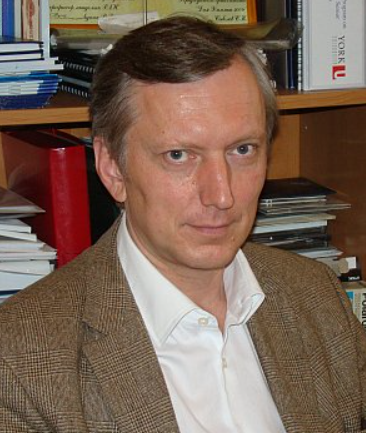 Andrei V. Shevelkov合作论文数Inorganic Synthesis Laboratory, Department of Chemistry, Lomonosov Moscow State University3
 Natalia Gervits合作论文数Corresponding author.2
 Verchenko Valeriy Y合作论文数Department of Chemistry, Lomonosov Moscow State University2Igor V. Morozov合作论文数Inorganic Chemistry Division, Chemistry Department, Lomonosov Moscow State University1
 Chia-Nung Kuo合作论文数Natl Cheng Kung Univ, Dept Phys, Tainan 70101, Taiwan1A. O. Makarova合作论文数1
 Dmitry Danilovich合作论文数1
 M S Likhanov合作论文数Dept Chem, Moscow MV Lomonosov State Univ1
 Tatiana Kuzmicheva合作论文数1
 Sergey I. Pavlov合作论文数1
 Roman Svetogorov合作论文数National Research Center Kurchatov Institute1
 Chih-Wei Luo合作论文数Natl Synchrotron Radiat Res Ctr1
 Victor N Khrustalev合作论文数1
 Chin Shan Lue合作论文数Department of Physics;Texas A&M University;Department of Physics, Texas A&M University1
 Svetoslav A. Kuzmichev合作论文数1
 Alexander Vasiliev合作论文数Kurchatov Institute, National Research Centre;Institute of Crystallography, Federal Scientific Research Centre, Russian Academy of Sciences1
 Natalja Lomanova合作论文数1E. I. Demikhov合作论文数1
 Alexey V. Bogach合作论文数A.M Prokhorov General Physics Institute, Russian Academy of Sciences1
 Vjacheslav Pokatilov合作论文数1




