Thank you for being a part of our specialty section. Our specialty section had an overwhelming response at 2016 SOT Annual Meeting in New Orleans and we were thrilled by the input we received from the participants. I hope you are looking forward to this year’s meeting in Baltimore in March. Our members have organized some great sessions for you all. I strongly encourage all the members to take advantage of these annual meeting as they serve as great professional networking venues and platforms for scientific leadership. This year, in addition to two graduate student travel awards, the CVSS also will be awarding the prestigious Roger O. McClellan Student Endowment Award. This award is designed to encourage veterinarians to become involved in a toxicology career. CVSS encourages all interested veterinary graduate students to apply for this award in 2018.
The paper is devoted to the numerical modeling of the blood flow in the human cardiovascular system with allowance for gravitational action. A model of the operation of the heart and an equation of state are proposed and studied. Modifications of the graph of the cardiovascular system for the simulation of possible positions of the object in conditions of multifold gravitational overloads are considered.
We suggest an original scheme and an algorithm for the numerical solution of the Euler equations of gas dynamics. The construction of the scheme is based on the mass, momentum, and energy conservation laws. The flux computation is carried out by summation of elementary fluxes formed by small-amplitude running waves that satisfy the linearized equations of gas dynamics. The scheme contains no artificial regularizers, has second-order accuracy on smooth solutions, and is quasimonotone in a neighborhood of the discontinuities. Examples of one- and two-dimensional computations are given.
The present paper deals with the numerical simulation of the propagation of pulses of blood pressure and velocity in a blood vessel. The numerical solution of the system of linear hemodynamic equations is formed as a superposition of progressing waves (Riemann invariants) satisfying the transport equations. Considerable attention is paid to the construction of a difference scheme for the linear and quasilinear transport equations. Examples of computations are presented. The suggested algorithm can be generalized to the case of a quasilinear system of equations.
 н в соснин合作论文数30С. И. Мухин合作论文数29
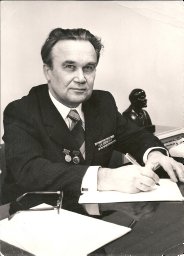 Aleksandr a Samarskii合作论文数Moscow Institute of Applied Mathematics, Academy of Sciences28
 V. F. Tishkin合作论文数22Vm Goloviznin合作论文数14a b khrulenko合作论文数14L.M. Degtyarev合作论文数14I. V. Ashmetkov合作论文数10в б кошелев合作论文数7а я буничева合作论文数7
 Mikhail Abakumov合作论文数7N. N. Tyurina合作论文数6My Shashkov合作论文数6A V Gubarev合作论文数6m iu shashkov合作论文数5A. Ya. Bunicheva合作论文数5а в лукшин合作论文数4Tk Korshiya合作论文数4V. A. Gasilov合作论文数4P. P. Volosevich合作论文数4l m degtiarev合作论文数3n n tiurina合作论文数3A. M. Galanina合作论文数3Vv Nikishin合作论文数3
 Mikhail J. Shashkov合作论文数Los Alamos National Laboratory3E G Gamalii合作论文数3S. P. Kurdyumov合作论文数3
 M. A. Menyailova合作论文数3Vladislav B Rozanov合作论文数3V. A. Isakov合作论文数2s p kurdiumov合作论文数2By Lyubimov合作论文数2AN TIKHONOV合作论文数2Yu. P. Popov合作论文数2E. I. Levanov合作论文数2
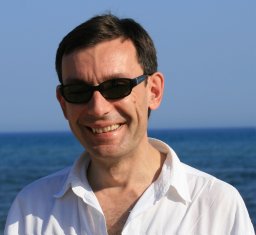 Sergei Ivanovich Mukhin合作论文数Moscow State University Moscow2S. V. Sokolov合作论文数2s a golubev合作论文数1VA GASILOV合作论文数1Samarski.Aa合作论文数1l a zaklyazminskii合作论文数1M. D. Taran合作论文数1a g borzov合作论文数1Nv Mikhailova合作论文数1Av Solovev合作论文数1Ev Soloveva合作论文数1Mi Bakirova合作论文数1Favorski.Ap合作论文数1ZAKLYAZM.LA合作论文数1




