Рассмотрены причины превышения наблюдаемых скоростей распространения волн светового горения в лазерном плазмотроне в аргоне и воздухе над расчетными в предположении теплопроводностного механизма распространения плазменного фронта. Для интерпретации экспериментальных результатов используется ранее полученное аналитическое решение гидродинамической задачи обтекания объема нагретого газа, моделируемого однородной областью низкой плотности со сферической границей. Установлено, что при мощности лазера в 2–3 раза выше пороговой мощности поддержания волн светового горения теплопроводностный механизм с поправочным коэффициентом, предсказанным моделью, дает удовлетворительное описание наблюдаемых скоростей распространения этих волн. При более высокой мощности лазера соответствие расчетных и наблюдаемых скоростей распространения требует учета фактора радиационной теплопроводности. Показано, что аналитическая модель обтекания сферической области горячего газа может быть также применена для описания на порядок более медленного течения газа вокруг непрерывного оптического разряда при термогравитационной конвекции. На основе рассматриваемой модели получена оценка зависимости частоты пульсаций конвективного факела вокруг непрерывного оптического разряда от его радиуса, представляющая собой соотношение подобия, характерное как для оптических разрядов, так и для мерцающих пламен.
The results of experimental studies on registration of the radiative component of the total heat flux by a thermoelectric detector in a reflected shock wave are presented. An increase in the contribution of radiation to the heat flux with an increase in the intensity of the shock wave is estimated. It is shown that the technique can be used in experiments in shock tubes to isolate the radiative component of the total heat flux, and the thermoelectric detector itself can be successfully used to record such parameters.
The aim of the work was to determine the effective ultraviolet (UV) doses required for the disinfection of surfaces contaminated with the SARS-CoV-2 coronavirus using a low-pressure mercury lamp. Materials and methods. To carry out prompt disinfection of surfaces, a specially designed source of UV radiation with a power of 7.5 W at a wavelength of 254 nm in the form of a portable flashlight was employed, which has a high efficiency of UV radiation output and the possibility of long-term autonomous operation from a compact battery. In the studies, a suspension culture of the SARS-CoV-2 coronavirus with biological activity of 5.3∙106 PFU/ml was used. The objects of testing were plastic Petri dishes (disposable) and office paper (grade C, density 80 g/m2 ). Results and discussion. Doses of UV radiation that provide disinfection of surfaces contaminated with the COVID-19 pathogen with an efficiency of 99.0 % (paper) to 99.95 % (plastic) have been determined. The results obtained make it possible to recommend a portable UV irradiator for use in the practice of preventive measures to combat the spread of the disease caused by the SARS-CoV-2 coronavirus.
Various grades of linear polyesters obtained by melt and solution technologies are considered. Changes in the physical and mechanical characteristics and microstructure of the samples were investigated depending on the exposure time in model media simulating the environment of bile ducts. Based on the results of the work that has been carried out, recommendations are given on the selection of a model medium and polymer grade.
The article describes radiation power control of industrial CO2 lasers of Lantan series excited by а nonself-sustained glow discharge in the automatic mode. These lasers are closed-cycle fast gas-transport lasers excited by a nonself-sustained glow discharge with ionization by periodic-pulsed capacitively coupled auxiliary discharge. In this case, ionization and conductivity are provided by periodic-pulsed capacitively coupled discharge. The energy contribution to molecular oscillations is provided by the passage of the main discharge current through the plasma with electron density given by ionization. This permits easy laser power control, provides excellent optical homogeneity and stability of an active volume together with high laser efficiency. A system of a nonself-sustained glow discharge with ionization by periodic-pulsed capacitively coupled auxiliary discharge, the stages of creation and brief characteristics of the Lantan series lasers is presented. The method of controlling the power of laser radiation by changing the frequency of the ionization pulses is determined. This control method allows operating of the laser in continuous and in pulse-periodic modes with adjustable pulse ratio and pulse duration, and also provides switching from one mode to another. In the continuous mode, the radiation power is controlled by changing the frequency of ionization pulses, which are high voltage pulses with duration of 100 ns, given with the frequency of 1-5 kHz. Pulse-periodic radiation control is performed by modulating ionization pulses that consists of pulses being delivered in batches. The frequency of the pulses in a batch determines the radiation power in a pulse. The frequency of the batches following is the frequency of the pulse mode, and the length of the batch determines the pulses duration. Based on the experimental data, the dependence of the radiation power on the ionization pulses frequency was determined. An experimental system is presented and the measuring accuracy of the laser radiation power and the frequency of ionization pulses is determined. Data acquiring and processing of experimental results were performed using the NI 6008 USB data acquisition device in the LabVIEW programs of National Instruments. To study the dependence of the laser power on Мехатроника, автоматизация, управление, Том 21, № 4, 2020 231 the frequency of the ionization pulses, a regression analysis method was applied. Studies have shown that the dependence of the laser power on the ionization pulses frequency is linear in a wide range of parameters. The equation of the direct regression is calculated. The confidence estimates of the coefficients of the direct regression and the confidence estimates of the deviation of the theoretical direct regression from the empirical one are calculated with a confidence level of 95%.
A stable high-power laser is developed for the study and technical applications of a continuous optical discharge (COD). The laser based on the technology of a combined discharge in a scheme with a fast axial gas flow emits 2.2 kW at 10.6 μm per meter of the active medium in continuous and repetitively pulsed regimes with the electrooptical efficiency 20%. The sustaining of the COD plasma in argon and air is demonstrated at the atmospheric pressure. The emission properties of the COD plasma are studied and its possible applications are discussed.
It is shown experimentally that a transverse rf discharge in tubes has a higher plasmachemical activity than a dc discharge, which deteriorates the parameters of rf discharge-pumped CO2 lasers. The output power and efficiency of a sealed off CO2 laser were substantially increased by using a distributed gold catalyst facilitating CO2 regeneration. The output power of 0.77 W cm-1 per unit length of an active medium with efficiency of 18.5% was obtained in an experimental CO2 laser with tubes with a distributed gold catalyst pumped by a 27.1 MHz rf discharge.
 М. Ю. Якимов合作论文数5А. Н. Шемякин合作论文数4A. N. Shemyakin合作论文数4M. A. Kotov合作论文数4V P Zimakov合作论文数3
 Mikhail Yu. Yakimov合作论文数3A. O. Shilov合作论文数2O. A. Legon’kova合作论文数1I. G. Rudoy合作论文数1I A Androshchuk合作论文数1G. A. Dubrova合作论文数1T.I. Vinokurova合作论文数1а м малютин合作论文数1
 Lyudmila A. Marinova合作论文数1В. Ю. Левашов合作论文数1Na Yatsenko合作论文数1Г. Я. Герасимов合作论文数1S. L. Kirillova合作论文数1V. N. Glebov合作论文数1V. B. Kirillov合作论文数1a y kedrov合作论文数1S. Yu. Lavrent’ev合作论文数1A. V. Zhao合作论文数1
 в а кузнецов合作论文数Siberian Federal University1V. V. Kozlov合作论文数1My Yakimov合作论文数1NA GENERALOV合作论文数1Borisevich S V合作论文数1
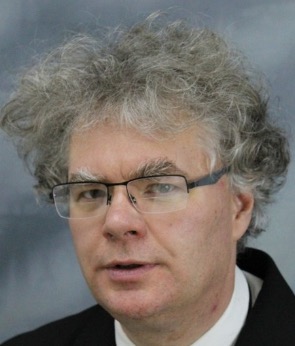 Andrey Kuznetsov合作论文数Department of Mechanical and Aerospace Engineering, North Carolina State University1
 M. Rachkov合作论文数1I G Rudoĭ合作论文数1
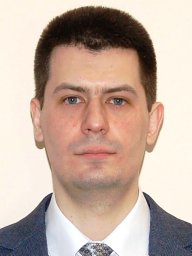 A. V. Chentsov合作论文数Institute for Problems in Mechanics, Russian Academy of Sciences1
 Dmitry Lisovenko合作论文数A.Yu. Ishlinsky Institute for Problems of Mechanics, Russian Academy of Sciences1




