Льву Анатольевичу Животовскому, профессору, доктору биологических наук, выдающемуся учёному, внёсшему большой вклад в популяционную и эволюционную генетику, заведующему лабораторией генетических проблем идентификации Института общей генетики им. Н.И. Вавилова РАН, главному научному сотруднику Отдела молекулярной генетики ВНИРО, лауреату Государственной премии в области науки и техники РФ, заслуженному деятелю науки РФ, лауреату премии в области эволюционной биологии имени И.И. Шмальгаузена РАН 22 ноября исполнилось 80 лет.
Using the example of chum salmon Oncorhynchus keta in the Amur zoogeographic province, we review the principle of subdividing the species into population groups. On the basis of zoogeographic zoning and biological boundaries of chum salmon groups defined by the spawning areas, taking into account the distribution, migration, and reproduction, as well as estimates of their differentiation using microsatellite DNA markers, we identified eight ecogeographic units in the Amur province. In the Amur zoogeographic region of this province, these included the summer chum salmon of the Amur-Amgun ecoregion and the autumn chum salmon of the Lower Amur (Amur-Amgun and Amur-Ussuri ecoregions); in the Shantar zoogeographic region of the province, the Uda-Tugur and Ulban groups; in the Sakhalin part of the Amur province, groups from the northwestern and northeastern Sakhalin, as well as summer and autumn chum salmon from the Poronai River. These ecogeographic units can be considered as basic spawning management units of chum salmon for this part of the species distribution range.
The study includes 41 sample sets of chum salmon from the northern part of its geographic range analyzed at ten microsatellite loci. In the northern part of the range of Asian chum salmon, the following groups of samples are clearly distinguished: “Magadan oblast,” “Northern Kamchatka,” “Penzhina River,” and “Anadyr River basin.” Populations of chum salmon from the Apuka River and the “Koryak Upland” group show low genetic differentiation from other groups. There is a positive relationship between the latitude and the average expected heterozygosity in this part of the range. Chum salmon of the Penzhina River shows close genetic relationship to chum salmon from the Anadyr River basin, probably because of gene flow.
 Marina V. Shitova合作论文数5G. A. Rubtsova合作论文数4Т. А. Ракицкая合作论文数2T. A. Rakitskaya合作论文数2л а животовский合作论文数2
 Svetlana Yu Orlova合作论文数2александр викторович бугаев合作论文数Камчатский научно-исследовательский институт рыбного хозяйства и океанографии2Afanas'ev K I合作论文数2D. V. Politov合作论文数2T. V. Malinina合作论文数2E. V. Podorozhnyuk合作论文数1С. Е. Кульбачный合作论文数1K. I. Afanasyev合作论文数1С. Ю. Орлова合作论文数1A. N. Elnikov合作论文数1E. A. Shevlyakov合作论文数1A. M. Kaev合作论文数1Prokhorovskaia V D合作论文数1Lev A. Zhivotovsky合作论文数1
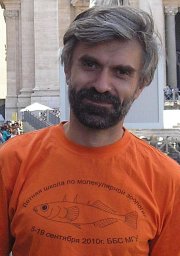 Nikolai Mugue合作论文数1




